Uncategorized

WATCH: University of Fort Hare orders temporary shutdown amid violent protests

Inside Education Reporter

The University of Fort Hare has announced the “immediate temporary shutdown of all operations” at its Alice and East London campuses following what it described as an escalation of “criminal activities associated with the recent protest,” despite a court order prohibiting such conduct.

In a statement released late on Thursday, the university said the decision was taken “with deep regret” after continued acts of intimidation, violence, and destruction of property.

“The University has no alternative but to take this drastic measure in the face of persistent disruption of university business; intimidation and threats directed at staff and students; physical harm to students residing in campus residences; the burning and destruction of University infrastructure (at least six significant university buildings); and ongoing defiance of the court order and the rule of law,” it said.

Tensions initially boiled over on Tuesday after the university announced plans to appoint an interim Student Representative Council (SRC) while amending the institution’s student governance constitution.

Students rejected the move, demanding that the amendments be overseen by a democratically elected SRC. The unrest escalated as demonstrators clashed with security and police.

“There is chaos that has erupted on campus. Students were fighting with Falcon Security, allegedly assisted by police officers. They shot students using real bullets here in Alice Campus. One student was shot on the left knee, and another just above the heart near the shoulder,” student leader Uzusiphe Vuzane told journalists.

At least six buildings were torched. (Video supplied)

The Bhisho High Court issued an interim order on Tuesday that prohibited unlawful activities on the campuses, including unauthorised meetings, blocking access, damaging property, and threatening staff or students. But the institution said these acts “have continued unabated”.

“The University therefore has no option but to suspend all physical academic activities until further notice,” management said, adding that “online academic interactions may continue as directed by the DVC: Teaching and Learning and DVC: Research, Partnerships and Innovation”.

The university said the shutdown was necessary “to safeguard the lives and safety of students, staff, and visitors, and to protect University property from further damage”.

Students have alleged they were shot with live ammunition during protests. (Video supplied)

Expressing “deep disappointment and regret,” the university said the actions of a few individuals had “endangered the safety of the entire University community and disrupted the academic programme”.

It added that the destruction of property pointed to “much bigger issues, with a significant component of sponsored violence and criminality.”

All students have been instructed to vacate university premises by 5pm on 9 October 2025. International students are to contact the international office for assistance with evacuation arrangements.

“Further communication will follow regarding the phased reopening of campuses once it is deemed safe to do so.”

The university called for “calm, restraint, and cooperation from all members of the University community during this period”.

INSIDE EDUCATION

Media City Academy set to launch full operational studio in 2026
Uncategorized

Media City Academy set to launch full operational studio in 2026

By Charmaine Ndlela

South Africa’s first creative academy, the Media City Academy (MCA), based in Randburg, will officially open its doors in February 2026, launching a fully accredited tertiary institution for the creative industries under SAQA and MICT SETA.

Applications for the 2026 intake are now open.

MCA will debut three flagship programmes:

A film and television qualification for Grade 12 graduates,

A film and television foundational programme for Grade 11 learners, and

An online course tailored for working professionals.

Each programme includes an entrepreneurship module, which the academy says shows its commitment to developing job creators and job seekers in South Africa’s growing creative economy.

MCA will be the first creative academy located within a live production studio complex.

Head of School Zenobia Simelane said the campus’s location within an operational complex ensures practical, work-integrated learning.

“With a curriculum weighted at 70% practical training and 30% theory, students work alongside industry professionals, gaining real credits on leading South African productions. This equips them with the confidence, competence and adaptability required for a fast-changing creative economy,” Simelane said.

She added that through MCA’s partnerships with major media production houses including Black Brain Pictures, Seriti Films, and Amafu Productions, students will graduate with more than a certificate. They will leave with a professional portfolio, strong references, and the ability to anticipate and solve real production challenges.

Research consistently shows that workplace readiness remains one of the biggest obstacles facing South African graduates. A Human Sciences Research Council (HSRC) survey found that 31% of companies cite insufficient practical experience as the main reason for not hiring graduates.

Meanwhile, Statistics South Africa recently reported that graduate unemployment rose from 8.7% to 11.7% in just three months. South Africa’s overall unemployment rate stands at 33%, one of the highest globally.

These figures highlight the role institutions like Media City Academy can play in bridging the skills gap.

HSRC researcher Shirin Motala echoed this need for closer industry-academia collaboration. “Colleges and universities must work with industry partners to identify emerging skills needs and integrate them into their curricula to address the country’s skills crisis,” she said.

INSIDE EDUCATION

Uncategorized

Fort Hare protest: Students injured, admin buildings set alight

By Johnathan Paoli

The University of Fort Hare’s Alice campus in the Eastern Cape descended into chaos on Wednesday night as violent protests erupted this week, leaving two students injured and several campus buildings in flames.

Tensions initially boiled over on Tuesday after the university announced plans to appoint an interim Student Representative Council (SRC) while amending the institution’s student governance constitution.

Students rejected the move, demanding that the amendments be overseen by a democratically elected SRC. The unrest escalated as demonstrators clashed with security and police.

“There is chaos that has erupted on campus. Students were fighting with Falcon Security, allegedly assisted by police officers. They shot students using real bullets here in Alice Campus. One student was shot on the left knee, and another just above the heart near the shoulder,” student leader Uzusiphe Vuzane told journalists.

Both injured students were taken to hospital.

Fellow students insist they were shot with live ammunition, a claim that has heightened tensions between protesters, security personnel, and law enforcement. Police have not yet confirmed whether live rounds were fired.

The clashes were followed by acts of arson.

Protesters allegedly set fire to the university’s administration and Student Affairs buildings in retaliation, sending plumes of smoke across the historic campus.

By late afternoon, firefighters had been deployed to contain the blaze, but the full extent of the damage is not yet known.

At the heart of the protest is dissatisfaction with university leadership and governance.

Students are not only resisting the interim SRC plan but are also calling for the removal of Vice-Chancellor Professor Sakhela Buhlungu.

They accuse him of undermining student democracy by pushing ahead with governance amendments without an elected student body in place.

“An interim SRC is not student-centered. Those people are not democratically elected, they are installed by management. They will definitely be controlled by the management, and they will not be bothered about serving students,” said student leader Asonele Magwaxaza.

The university has defended its decision, saying the move was necessary to ensure continuity while amendments to the SRC constitution are finalised.

Spokesperson Jean Pierre Roodt stressed that free elections would be held once the process was complete.

“In relation to the SRC, it was the university council that established an interim SRC while the SRC constitution is being finalised, and free elections will follow,” Roodt said.

He dismissed allegations that the institution’s security was inadequate, adding that statistically, crime is trending down, with each night and day shift having 64 guards patrolling.

Meanwhile, academic activities at the Alice Campus have been severely disrupted.

On-campus classes have been suspended, although some online classes continue. With key administrative buildings damaged and tensions still simmering, the disruptions are expected to persist.

Police presence at the university remained heavy on Wednesday evening, as officers sought to restore calm amid sporadic clashes with protesting students.

INSIDE EDUCATION

Umlazi and surrounding areas triumph at eThekwini Games Grand Finale 2025
Uncategorized

Umlazi and surrounding areas triumph at eThekwini Games Grand Finale 2025

Thapelo Mpatlanyane

District 6, representing Umlazi and surrounding areas, have been crowned overall champions at the EThekwini Games Grand Finale 2025.

Hosted by EThekwini Municipality’s Sports Development and Recreation Division, the event drew large crowds and celebrated weeks of fierce competition across all city wards. The top-performing teams from each district competed in 16 sporting codes, including football, rugby, volleyball, cricket, netball, table tennis, boxing, karate, athletics, basketball, swimming, dance, chess, and indigenous games.

Chairperson of the Community Services Committee, Councillor Zama Sokhabase, commended the athletes for their outstanding performances. “The eThekwini Games reflect the incredible talent and commitment of our young athletes. Through this initiative, we aim to unearth and nurture sporting potential, while fostering social cohesion, discipline, and healthy lifestyles. EThekwini is truly a sports hub, and we are building a brighter future for our youth,” she said.

Sokhabase also applauded coaches, parents, sports federations, and councillors for their continued support of grassroots sports development.

The 2025 edition, supported by MTN and Aquelle, created an electric atmosphere as families and supporters celebrated local talent and community pride.

Final Standings:

1st – District 6
2nd – District 1
3rd – District 3
4th – District 9
5th – District 2
6th – District 10
7th – District 8
8th – District 7
9th – District 5
10th – District 4

Mura Space and UKZN team up for suborbital rocket test launches
Uncategorized

Mura Space and UKZN team up for suborbital rocket test launches

By Lebone Rodah Mosima

South African aerospace firm Mura Space and the Aerospace Systems Research Institute (ASRI) at the University of KwaZulu-Natal (UKZN) have signed an “exclusive agreement” to commercialise the country’s Sounding Rocket Launch Facility at the Overberg Test Range in the Western Cape.

According to UKZN, the partnership will allow for suborbital test launches from the site using existing and mobile launch infrastructure, with operations conducted under strict safety and regulatory oversight.

The agreement marks a significant step in efforts to position South Africa as a hub for aerospace research and investment, according to both parties.

The organisations said the collaboration would help advance local research, support skills development, and promote science and engineering among young South Africans, while also facilitating international technology transfer.

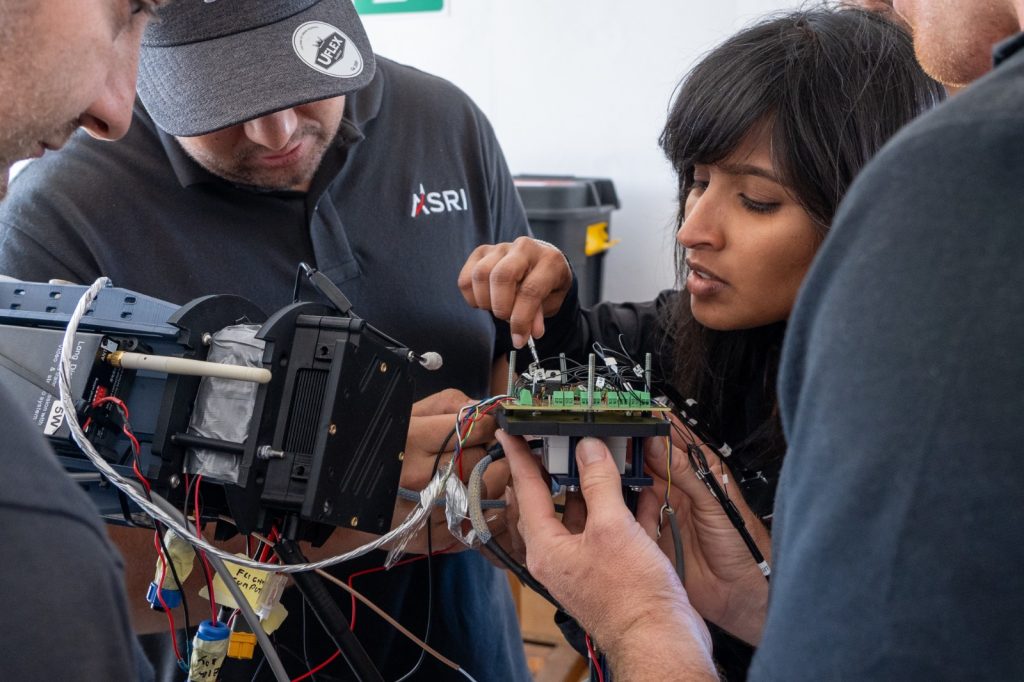
ASRI engineers prepare a Phoenix rocket flight computer before launch.

Mura Space said it has scheduled a series of suborbital rocket launches beginning in 2026, including missions targeting the internationally recognised Kármán line — the 100-kilometre boundary marking the edge of space. The launches are expected to be historic firsts for the African continent.

ASRI Director, Professor Michael Brooks, said the collaboration with Mura Space represented a significant milestone in delivering indigenously developed, sovereign access to space for South Africa and the continent.

“By combining our advanced engineering expertise, in-house manufacturing capabilities, and 16 years of innovation with Mura’s commercial vision for launch, we are opening new frontiers for local research, skills development, and global technology exchange. We are excited about a launch ecosystem that will empower the next generation and position Africa as a key player in the global aerospace sector,” said Brooks.

Mura Space Chief Executive Frederik de Ridder said the partnership with ASRI creates new opportunities for local research and education. “We hope some of these launches will offer new opportunities for select South African micro-gravity research payloads as well as contribute positively to local educational and human capital development programmes in ways previously not possible.”

De Ridder added that the growth of suborbital activity forms the foundation for eventual orbital launch capabilities. “South Africa is walking, and we are excited about working with key space stakeholders to help grow the momentum towards a historic first commercial orbital attempt from African soil,” he said.

The activities will be carried out under the newly established AfriRoC (African Rocketry Challenge) initiative, subject to regulatory and safety approvals. Both Mura Space and ASRI said they are independently committed to developing a credible, safe, and entrepreneurial launch ecosystem that aligns with South Africa’s ambitions to achieve sovereign orbital launch capability.

Mura Space, a privately funded South African company, focuses on commercial investments and partnerships in the aerospace and launch sectors. It is conducting a technical feasibility study and market assessment for the Mura Spaceport, a proposed privately funded, multi-user facility designed to attract international small and medium orbital launchers by leveraging southern Africa’s favourable geography.

The launch of a Phoenix-1E hybrid rocket from the South African Sounding Rocket Launch Facility.

The Aerospace Systems Research Institute, based at UKZN, leads South Africa’s efforts to build indigenous space-launch capacity. Supported by the Department of Science, Technology and Innovation and the university, ASRI has spent more than two decades designing and testing advanced aerospace systems, including liquid and hybrid rocket engines, turbomachinery, green propellants and in-space thrusters.

The institute operates an advanced manufacturing facility equipped with state-of-the-art machinery and provides consulting and product development services globally. Its research and engineering teams have been instrumental in positioning South Africa as one of the few African nations developing home-grown launch capabilities.

INSIDE EDUCATION

Gondwe secures major skills development partnership with Microsoft South Africa
Uncategorized

Gondwe secures major skills development partnership with Microsoft South Africa

By Levy Masiteng 

Deputy Minister of Higher Education and Training, Mimmy Gondwe has signed a public-private partnership agreement with Microsoft South Africa to boost digital and AI skills among local students.

The Memorandum of Understanding (MoU) was signed on Tuesday at Microsoft’s South Africa headquarters in Johannesburg.

According to Gondwe, this is the third agreement she has secured since taking office in July last year.

The partnership focuses on AI and digital skills development, aimed at equipping students with the competencies required in a rapidly evolving economy.

Among others, the partnership also aims to bridge the digital skills gap by equipping students with the competencies required by the economy, while advancing four key focus areas: establishing an AI Engineer pathway in TVET colleges; implementing AI in Leadership programmes for principals and senior officials; rolling out a multi-year Education Transformation Framework (ETF) through Microsoft’s Equity Equivalent Investment Programme; and promoting broad digital upskilling through Digital Literacy and the AI Skills Navigator.

In a statement, the Department said the partnership will see Microsoft offer its self-paced AI Engineer programme to students at TVET colleges, alongside a one-year blended learning course.

The company will also provide AI in Leadership Training to TVET college principals and senior DHET officials.

Gondwe added that Microsoft will collaborate with the DHET on the Education Transformation Framework (ETF), designed to help education leaders navigate sectoral changes, while also strengthening students’ digital capabilities through the Digital Literacy Programme.

“I’m very excited to see this MoU with Microsoft come to fruition. It will significantly enhance skills development in our TVET colleges through Microsoft’s one-year AI engineering programme and broader digital literacy courses,” Gondwe said.

Microsoft South Africa’s National Technology Officer, Asif Valley, welcomed the partnership.

“We believe that digital fluency is foundational to inclusive economic growth. This MoU marks a pivotal step in closing the skills gap and ensuring that students are equipped not just for employment, but for innovation, leadership and impact in a digital economy,” said Valley.

The DHET said the three-year partnership is expected to address the digital skills gap, enhance employability, and contribute to reducing youth unemployment across the country.

The partnership seeks to bridge the digital skills gap and ensure students gain the skills needed by the economy. PHOTO: Supplied

INSIDE EDUCATION

Uncategorized

Manamela appoints governance support team to stabilise College of Cape Town

Higher Education and Training Minister Buti Manamela has appointed a Stabilisation and Governance Support Team (SGST) to address ongoing leadership and governance challenges at the College of Cape Town for TVET.

The SGST will be chaired by Advocate J.B. Skosana (SC) and supported by Professor Busani Ngcaweni, a governance and policy specialist, and Joyce Nkopane, a labour relations expert.

The team will also be assisted by a DHET-appointed secretariat and technical advisor.

Manamela said the team will begin its work within a week, submit an interim report within 21 days, and deliver a final report within 45 days.

“Pending its report, all new disciplinary processes involving the Principal, Council Chair and Deputy Principals will remain suspended to prevent further escalation,” said Manamela.

The college has been plagued by persistent tensions among senior managers, resulting in weak governance, low staff morale, and disruptions to academic programmes.

According to the college Principal, divisions within management intensified following his appointment, after two Deputy Principals who had unsuccessfully applied for the position allegedly fuelled a prolonged power struggle that continues to destabilise the institution.

Despite the turbulence, the college has maintained unqualified audit opinions, improved graduation and certification rates, and built strong partnerships in ICT, business process outsourcing (BPO), and digital skills development.

However, persistent factionalism has reportedly undermined the independence of key stakeholders, including unions and the SRC.

Members of Parliament have also raised questions about charges involving staff recruitment, the selection of interns, and the Principal’s allegations of “overreach” by the DHET Director-General.

In 2023, a complaint was lodged with the Public Service Commission concerning the appointment of service providers at the college.

Manamela reiterated his concern over ongoing governance conflicts despite the institution’s commendable academic performance.

“This intervention is not about taking sides, but about restoring order and protecting the right of students to learn in a stable and functional environment. We must focus our collective energies on education, not on internal conflicts,” Manamela emphasised.

Manamela is expected to table the SGST’s final outcomes before the Parliamentary Portfolio Committee on Higher Education, as required under Section 46 of the CET Act.

INSIDE EDUCATION

Uncategorized

SA’s Ntombozuko Mkizwana shines at African Union teaching awards

By Johnathan Paoli

The South African Democratic Teachers’ Union (SADTU) has hailed the achievement of Eastern Cape teacher Ntombozuko Mkizwana, who brought continental honour to South Africa by winning two prestigious African Union (AU) Teaching Awards in Addis Ababa, Ethiopia.

Mkizwana, a deputy principal at the Nelson Mandela School of Science and Technology in Mthatha, received both the African Union Continental Teaching Award and the African Union Continental Award for Excellence in Rural Teaching at the Pan African Conference on Teacher Education earlier this month.

“SADTU proudly celebrates our member and 2024 National Teaching Awards Best Teacher winner, Comrade Ntombozuko Mkizwana. Her recognition demonstrates the excellence of South African teachers, particularly those working in rural contexts under challenging conditions,” the union stated.

The union framed her victory as a collective achievement for South African educators, emphasising that it reflects the dedication, professionalism, and resilience of teachers working in environments where resources are limited but commitment remains high.

For SADTU, Mkizwana’s recognition underscores the role of teachers not only in classrooms but also as community builders and champions of equality in education.

Her journey to continental recognition began with the National Teaching Awards, where she emerged as South Africa’s Best Teacher in 2024.

That honour earned her the nomination to represent the country at the AU platform, where her story of innovation and impact in rural teaching resonated with judges from across the continent.

The AU event, held in Addis Ababa under the theme “Advancing Strategies for Teacher Training, Recognition, and Professional Development”, was a landmark gathering for educators across Africa.

Beyond the awards, it also marked the launch of the Continental Teacher Community of Practice Platform, a network designed to link teachers, share best practices, and strengthen professional development across borders.

SADTU’s leadership has argued that Mkizwana’s achievements should encourage the government and society at large to value teachers more meaningfully.

The union noted that while teachers often face criticism, their victories on national and international stages show the depth of talent and commitment in the profession.

They also stressed that the recognition of a rural-based educator is particularly important in a country where the gap between urban and rural schooling continues to present challenges.

Director of the Matim Institute of Excellence in Mthatha, Lubabalo Mpongwana, echoed SADTU’s sentiments, saying Mkizwana’s success is proof that excellence in teaching can flourish anywhere.

“She has represented the province and the country, and we are happy to have taken that global stage,” he said.

He added that her achievement should inspire other educators in the Eastern Cape to pursue higher levels of professional development and dedication.

Mkizwana, 49, has been teaching for more than two decades and has developed a reputation for combining academic rigour with compassion and community involvement.

Colleagues describe her as a mentor to younger teachers and a motivator for learners, particularly in science and mathematics, while for SADTU, her story demonstrates what can be achieved when teachers are supported and encouraged to reach their full potential.

The union used her victory as an opportunity to highlight the importance of ongoing teacher training, professional appreciation, and recognition; calling for broader investment in rural education, arguing that teachers like Mkizwana succeed despite, rather than because of, the conditions they work under.

For SADTU, the awards are more than just a personal achievement for one teacher; they are a validation of the union’s long-standing call for recognition of South Africa’s educators as central to the country’s development.

The union said it is proof that South African teachers have the ability not only to compete but also to lead on the global stage.

INSIDE EDUCATION

Uncategorized

Gwarube to address delays in Education Assistants’ stipends

By Lebone Rodah Mosima

Minister of Basic Education, Siviwe Gwarube, on Monday expressed deep concern over delays in stipend payments to Education Assistants employed through the Basic Education Employment Initiative (BEEI).

To urgently address the issue, Gwarube, together with Deputy Minister of Employment and Labour, Jomo Sibiya, has convened a high-level meeting with key stakeholders responsible for administering and disbursing payments under the programme, including the Department of Basic Education (DBE), the Department of Employment and Labour (DEL), and the Industrial Development Corporation (IDC).

The DEL, which represents the Unemployment Insurance Fund (UIF), funds the initiative, while the IDC serves as the programme’s implementing agent.

The meeting aims to identify and resolve the root causes of payment delays, prioritise the processing of outstanding stipends, and strengthen systems to prevent future disruptions.

Gwarube acknowledged the strain these delays have placed on Education Assistants and their families, noting that many rely on these stipends for daily living.

She said the delays had also undermined confidence in a programme that provides vital work opportunities and supports schools nationwide.

“Education Assistants are not only vital to our school communities, they are young people whose livelihoods depend on this initiative. I extend my sincere apologies to every participant affected by these delays. We are working tirelessly with our partners to ensure all payments are finalised without further setbacks,” said Gwarube.

Gwarube reaffirmed her Department’s commitment to ensuring the smooth functioning of the BEEI, safeguarding the integrity of the programme, and upholding the dignity of its participants.

She said an update would be provided to the public once immediate corrective measures have been finalised and implemented.

In a statement released on Sunday, Minister of Employment and Labour, Nomakhosazana Meth, outlined the official payment process under the Service Level Agreement (SLA) signed between the DBE and the Industrial Development Corporation (IDC).

“The Department of Employment and Labour (DEL) stands firm in its unwavering support of the initiative, recognising its vital role in tackling youth unemployment, providing meaningful work opportunities, and supporting schools nationwide,” the statement read.

She added that, as custodians of public funds, DEL operates within the framework of the law, the Multiparty Funding Agreement (MFA), and the Public Finance Management Act (PFMA).

The MFA, signed between the DBE, UIF, and IDC, governs the BEEI and sets strict compliance conditions before any funds are released. Clauses 6.6.3 and 7.1 require verified monthly attendance registers to ensure transparency and accountability, protecting both beneficiaries and government funding integrity.

Under the SLA, the DBE must upload attendance registers by the 15th of each month for DEL to process payments. DEL contributes a total of R4,013,000,000 toward the Presidential Youth Employment Initiative supporting the Education Assistants programme.

To date, a successful transfer of R1,956,500,000 was made on 27 June 2025 to enable programme rollout across all nine provinces.

“For the month of September, the DBE did not submit complete supporting documents, including attendance registers, on time. The UIF requires these registers for verification in line with the MFA to process invoices for payment to 158,000 beneficiaries from 20,000 schools,” the statement said.

A meeting between DBE, DEL, and UIF was held on 29 September 2025, during which DBE committed to submit the required documents.

INSIDE EDUCATION

Uncategorized

Manamela appoints new SETA boards to boost skills governance

By Johnathan Paoli

Higher Education and Training Minister Buti Manamela has welcomed the appointment of new Accounting Authorities (AAs) across all 21 Sector Education and Training Authorities (SETAs), as a critical milestone expected to restore stability, improve governance, and sharpen the focus of SETAs on national skills priorities.

Manamela said the establishment of the new boards was essential to ensure continuity in the execution of SETA mandates.

“The new governance cycle for SETAs provides an opportunity to strengthen accountability, improve performance, and align skills development more closely with the national priorities of job creation, industrialisation, the just energy transition and inclusive economic growth,” he said.

The new AAs have wasted no time in setting to work, with their immediate task being to recommend and appoint interim chief executive officers (CEOs) following the expiry of CEO contracts at the end of September.

Recruitment for permanent CEOs has already commenced, with appointments to be made in line with the provisions of the Skills Development Act and the SETA Standard Constitution.

Manamela confirmed that the department is also fast-tracking the appointment of chairpersons for each newly constituted Accounting Authority, with announcements expected in the coming weeks.

This will complete the governance structures and allow SETAs to fully focus on programme delivery.

The minister emphasised that avoiding leadership vacuums was crucial.

He explained that these appointments will ensure that SETAs remain fully functional and capable of responding to the skills needs of their sectors while broader governance matters are being finalised.

According to Manamela, the newly constituted Accounting Authorities reflect South Africa’s diversity, with gender parity, strong youth representation and significant participation from historically disadvantaged groups.

Members have been drawn from organised labour, business, community development organisations, professional bodies, government, and higher education institutions.

This variety of expertise, the minister argued, will ensure that SETA boards are not only inclusive but also grounded in the technical knowledge required to advance South Africa’s skills revolution.

He stressed the broad composition of the new Accounting Authorities, which gives SETAs the depth of experience and perspective needed to respond effectively to economic and social challenges; saying it would ensure that workers, employers, educators, and communities all have a voice in shaping the skills pipeline.

The announcement comes at a time when South Africa is grappling with high youth unemployment, slow industrial transformation, and the urgent need to develop skills for a just transition to renewable energy.

SETAs, established to drive training and skills development in 21 economic sectors, play a pivotal role in addressing these gaps.

Manamela said the new governance cycle was designed to better align SETA interventions with these pressing national challenges, committing to ensuring that they do not operate in silos but as part of an integrated skills ecosystem that supports growth and inclusion.

He added that the department would provide full support to the new Accounting Authorities to help them meet their responsibilities.

“I wish the newly appointed Accounting Authorities success in carrying out their responsibilities, and I assure them of the department’s full support in delivering on the skills development mandate,” the minister said.

This includes oversight to ensure that the substantial funds managed by SETAs are used efficiently and transparently.

The appointments mark a reset following controversy earlier in the year when former minister Nobuhle Nkabane’s attempt to appoint politically connected SETA board chairpersons sparked public outrage and parliamentary backlash.

That process was eventually withdrawn after allegations of procedural irregularities, leading to President Cyril Ramaphosa removing Nkabane from her post.

SETAs administer billions of rands annually to fund learnerships, apprenticeships, internships, and other training programmes, with their effectiveness being vital to closing the skills gap that continues to hold back economic growth.

Manamela insisted the appointments signal a turning point, insisting that through cooperation, the department can strengthen its skills pipeline and respond more effectively to the needs of the economy and society.

He expressed optimism that the new governance structures would provide the necessary leadership to meet the challenges, saying that the coming months will be crucial as interim CEOs are put in place, permanent appointments are made, and chairpersons formally assume their roles.

INSIDE EDUCATION