Uncategorized

Section 27, provincial data shatters DBE’s 98% pit latrine eradication claim

By Thapelo Molefe

More than seven years after the Sanitation Appropriate for Education (SAFE) initiative was launched with the promise of eradicating pit latrines in schools, Section27 insists the government’s progress claims do not match conditions on the ground.

While the Department of Basic Education (DBE) maintains that 98% of the 3,372 schools identified in its 2018 audit have now been completed, Section27 says the state’s reporting is “inaccurate” and obscures the true scale of unsafe sanitation still facing learners. 

Provinces themselves also concede there are hundreds of schools that continue to rely on pit toilets, contradicting the national narrative of near-total eradication.

Section27 attorney Thato Gaffane, who has been monitoring conditions specifically in Limpopo, told Inside Education that the ongoing presence of pit latrines, more than 30 years into democracy, reflected persistent and constitutional failure.

“We are very concerned about the state of infrastructure in schools, particularly when it comes to pit latrines,” she said. 

“It’s been over 30 years of democracy, over 12 years of the Michael Komape judgment… but unfortunately, they’ve not fast-tracked them. We’re still experiencing the very same issues that we have been fighting against for the past 30 years.”

The concerns Gaffane highlights are grounded in detailed research by Section27.

After the death of five-year-old Komape in a dilapidated pit latrine in Limpopo in 2014, a court ordered the Limpopo Department of Education (LDE) to provide a full list of rural schools with pit toilets. 

Section27 collected data from 86 schools in the province between May and July 2018 and found that nearly half still had unlawful pit toilets, with 19 schools omitted entirely from the LDE’s official list. 

Schools such as Allegraine Primary, Dithamaga Primary, Loboli Secondary, and Utjane Primary were among those not listed, despite unsafe or non-compliant facilities. Many children were forced to use bushes, and some schools were waiting years for replacements.

The DBE insists it has nearly completed the job. Ministerial spokesperson Lukhanyo Vangqa said the department was “determined to turn the page on one of the most painful chapters in our democracy, the use of pit latrines in schools”.

He added that, In April, the minister announced that 96% of the pit latrines identified in the 2018 SAFE Initiative audit had been eradicated and that the figure has since risen to 98%.

According to the DBE, 3,302 of the 3,372 projects listed in the original audit are complete, with the remaining 70 confined to KwaZulu-Natal and the Eastern Cape.

But provincial reporting contradicts that picture.

The Eastern Cape Department of Education confirmed that 427 schools in the province still rely on pit latrines as their primary form of sanitation, a figure vastly higher than the DBE’s national remaining total. 

Provincial spokesperson Malibongwe Mtima said these schools were part of a three-year rollout to replace unsafe sanitation, noting that “60 projects have already been allocated to an Implementing Agent for implementation”.

Mtima said the province was installing Ventilated Improved Pit (VIP) toilets and other dry sanitation technologies, which are “sustainable in rural and remote areas where access to reliable water supply remains a challenge”.

The Eastern Cape also confirmed it inherited 16 stalled projects after donor partners withdrew funding, forcing the province to redirect them to the Schools Infrastructure Backlogs Grant.

“These projects experienced delays,” Mtima said, adding that they have now been reallocated to ensure continued implementation.

KwaZulu-Natal, which originally had 1,377 schools with pit toilets, reported that 1,291 have been upgraded. However, 32 schools remain under construction, and 54 have been closed after being declared “non-viable”. 

Provincial spokesperson Mlu Mtshali said the 32 outstanding schools “were earmarked for completion during the end of 2024/25 financial years,” but budget cuts delayed the work. 

“They are currently undergoing construction and are targeted for completion during 2025/26,” Mtshali said.

Section27 disputes official progress claims, saying they are not credible without independent verification. Gaffane said this was especially evident in Limpopo, where the provincial department reported to court that only five schools still had pit toilets. 

“Regrettably, there’s still far more schools that need adequate infrastructure,” she said.

“That reporting is inaccurate and doesn’t reflect the reality on the ground.”

She added that even in Limpopo, where some new sanitation infrastructure has been installed, dangerous pit toilets remain standing.

“You would think that when you build a different alternative facility… you would abolish the pit latrines. But unfortunately, the department has not been doing that.”

Gaffane said mobile toilets that were intended as short-term stopgaps have, in some cases, become semi-permanent despite poor maintenance. She noted that Limpopo schools were among those affected.

“There’s been prolonged usage in some areas… they are overly used, and they no longer appear to be a temporary measure.”

The DBE acknowledged the complexities of implementing school infrastructure across provinces but maintains that oversight mechanisms are in place. 

“Each project has a dedicated Professional Service Provider (PSP) that provides independent monitoring and management of the construction site,” Vangqa said.

He added that the department conducts regular oversight visits to assess progress, quality and performance.

He admitted, however, that recent changes in education infrastructure financing have weakened national oversight.

“Fiscal reforms… have devolved greater implementation responsibility to provinces,” he said.

“Though this consolidation improves efficiency, it reduces the DBE’s direct oversight of project execution.” 

The department is also “deeply concerned when provinces return unspent infrastructure allocations to the National Treasury while learners continue to endure overcrowded or unsafe school environments.”

The Eastern Cape confirmed it had previously returned unspent funds in 2016, although it did not elaborate on the reasons. 

The province cited several ongoing “challenges”, including poor contractor performance, business forum disruptions, vandalism of new facilities, climate-related disasters, and schools resisting the demolition of unsafe toilets. High-risk districts include Alfred Nzo, OR Tambo and Amathole.

Section27 said that failures in planning, contracting and oversight lie at the heart of the SAFE initiative’s slow progress. 

“The biggest failure was that there was no risk assessment that was done or the risk assessment that was done was inadequate,” Gaffane said. 

She cited cases where contractors went unpaid for months, engineers were not compensated, and work stalled because community members demanded hiring commitments. 

“It really just shows you how the DBE has gone about the project,” she said. 

“You would think that if you’re going to embark on such a big and important initiative… you would do a risk assessment.”

Gaffane said the persistence of pit latrines represents a direct breach of learners’ constitutional rights. 

“You simply cannot say that someone is afforded that particular right if they’re not able to study while enjoying other rights — the right to a clean and safe environment, the right to dignity, the right to equality,” she said.

As deadlines continue to be missed, Section27 warned of the consequences.

“It means more risk to learners… who are going to continue to study with this infrastructure that is being declared inappropriate by the court,” Gaffane said.

She pointed to conditions at Thamsanqa Secondary School in the Eastern Cape as an example.

“Learners are studying in an environment where there’s no roof… the toilet, there’s a pit toilet and at the back of the pit toilet there’s such a huge hole… if you slip and fall, you could literally fall into the pit toilet.”

The DBE maintains it will complete the remainder of the 2018-identified schools by the end of the current financial year.

INSIDE EDUCATION
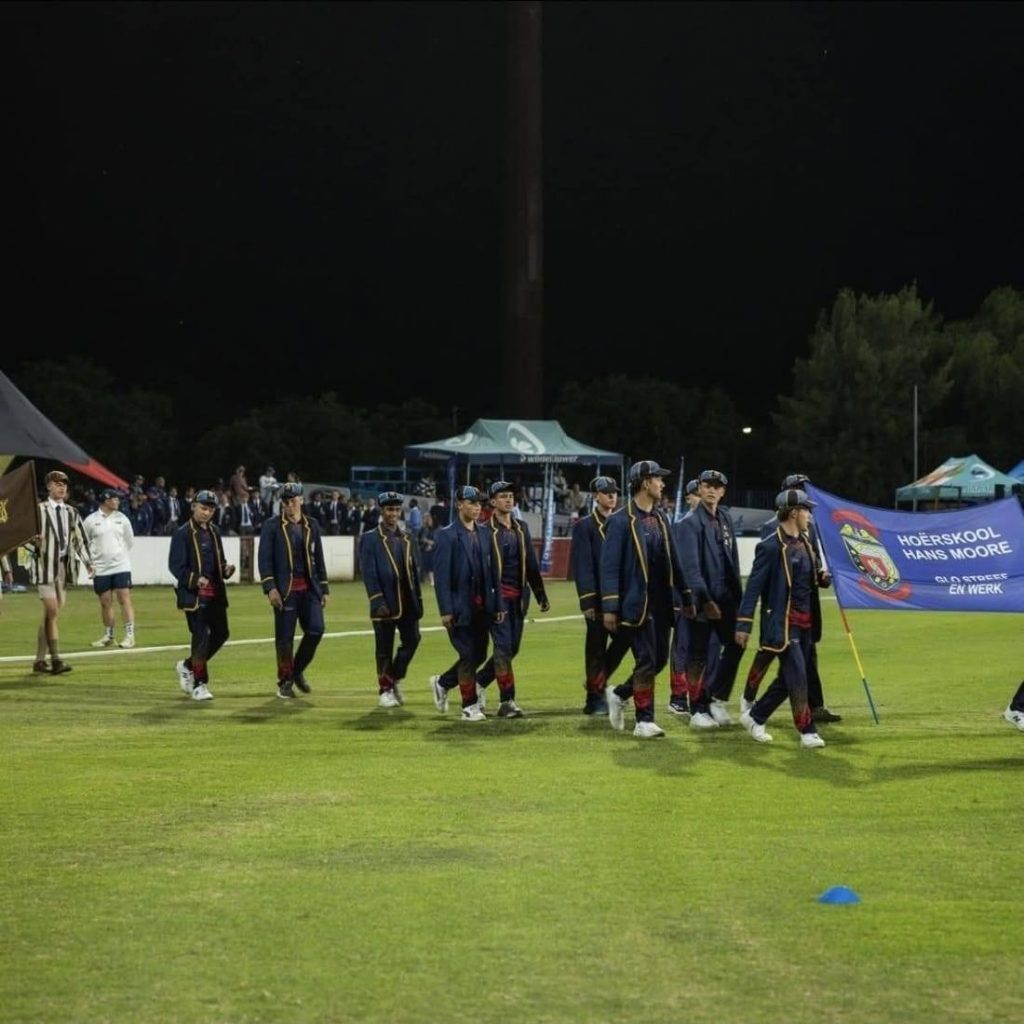
Bishops edge Wynberg in Western Province thriller as Hans Moore storm to Easterns crown
Uncategorized

Bishops edge Wynberg in Western Province thriller as Hans Moore storm to Easterns crown

By Johnathan Paoli

The second volume of the Switch Schools SA20 delivered two absorbing provincial finals over the weekend, showcasing the depth of South Africa’s schoolboy cricket talent.

In Cape Town, Bishops Diocesan College completed a historic clean sweep of regional titles with a nerve-jangling eight-run victory over Wynberg Boys’ High School.

Up in Gauteng, Hoërskool Hans Moore produced one of the most dominant batting displays of the competition to claim the Easterns title with a ruthless 10-wicket win over Hoërskool Marais Viljoen.

A packed Frank Reid Field witnessed a gripping finale on Saturday as Bishops lifted the Western Province Boys’ title.

Put in to bat first, the hosts compiled a competitive 138 runs for 8 wickets thanks to a composed captain’s knock from Alex Vincent.

Opening the innings, Vincent struck 38 off 40 balls, anchoring the innings while partners fell around him.

Cameron Macbeth added a brisk 28, while Litha Mbiko’s lively 28 off 18 balls gave the total a late push.

Wynberg’s bowlers, however, ensured Bishops never fully broke free.

Nicholas Stafford was outstanding in the swirling wind, taking 4/11 from three overs in one of the standout spells of the tournament.

Wynberg’s reply began steadily, with openers Fawaaz Hendricks (18) and Qaeed Shaik (26) laying a solid platform. But the chase began to wobble after both were run out in quick succession.

That sudden shift in momentum left Wynberg’s middle order vulnerable, and Bishops pounced through disciplined bowling and sharp fielding.

Wynberg skipper Michail Tarentaal fought valiantly, crafting a fluent 48 from 37 deliveries to give his team hope.

But with wickets tumbling at the other end and the run-rate climbing, the pressure proved too much.

Vincent returned at the death to claim 2/20, closing out a memorable all-round performance and sealing an eight-run win.

While Bishops celebrated another slice of history, both teams earned qualification for the regional Phase 2 competition in Stellenbosch in January.

It was a day that underlined Bishops’ resilience under pressure and reaffirmed Wynberg’s grit after their semi-final win over Rondebosch.

Vincent’s performance across the day, including 3/24 and a rapid 25 in the semi-final against SACS, earned him Player of the Day honours.

His leadership, strategic bowling changes and willingness to take responsibility in key overs drew praise from supporters and coaches alike.

If the Western Province final was a tightrope, the Easterns final at St Benedict’s College was a steamroller.

Hoërskool Hans Moore powered to a thumping 10-wicket victory over Hoërskool Marais Viljoen.

Bowling first, Hans Moore’s spin-focused attack kept Marais Viljoen in check, restricting them to 123 all out.

Isaac Aube set the tone with a superb 2/15, while Jack Bevolo (2/22) and Kearan Weyers (2/28) provided consistent control.

Marais Viljoen’s batting effort was anchored by Jared Mentz (29), with Rieshaeel Hashim (25) and Hendre Cilliers (21) offering valuable support.

Hans Moore opener Xavier van Biljon delivered one of the most destructive knocks in schools cricket, smashing 83 not out off just 29 balls.

His innings included a staggering 10 sixes and four fours, 76 of his runs coming in boundaries, as he dismantled the bowling with clean, effortless power.

At the other end, Weyers backed up his strong bowling display with an authoritative 35 not out off 23 deliveries.

Together, the pair raced at nearly 15 runs per over, wrapping up the chase in only 8.3 overs to spark jubilant celebrations from the Hans Moore camp.

The emphatic victory not only handed Hans Moore the Easterns title, but also thrust Van Biljon into national attention as one of the most exciting emerging talents of the competition.

As the Switch Schools SA20 regional finals came to an end, both schools have earned a place in the next phase, which will be held next year.

INSIDE EDUCATION

Uncategorized

Gauteng education accuses Sunday World, DA of manufacturing matric security tender claims

By Lebone Rodah Mosima 

The Gauteng Department of Education (GDE) has accused the Democratic Alliance (DA) of an “obsession” and a campaign to assassinate Premier Panyaza Lesufi’s character, following a Sunday World article alleging corruption in school security tenders linked to matric exams.

In a statement issued on Monday, the department said it rejected the “misleading and sensationalist” online article published on Wednesday, 12 November, headlined, “Matric exams at risk amid alleged Gauteng school security tender corruption – DA”.

“This unfortunate article, which appears to rely solely on a statement issued by the Democratic Alliance (DA), irresponsibly questions the integrity of the National Senior Certificate (NSC) examinations in the province”, the GDE said.

Sunday World reported that the DA had received information from an alleged whistleblower claiming senior GDE officials were engaging in systemic corruption in security tenders for “the protection of matriculation exam papers”.

The newspaper wrote that the GDE “preselected certain companies to receive tenders in exchange for kickbacks ranging from 10% to 20%”, based on the whistleblower’s claims.

The GDE said it was “deeply concerning” that Sunday World published the allegations “without any credible evidence”.

The department said the DA had become desperate in its search for “any opportunity to portray the Premier in a negative light”. It said the article was based “purely on hearsay” and had “chained” these allegations as facts without obtaining direct comment from the department.

“This approach reflects a troubling disregard for journalistic ethics and defeats the impartiality that reporting should embody,” the GDE said.

“We strongly believe that the article is misleading. It amplifies speculation and manufactures a crisis where none exists”.

The department said it condemned the spread of unverified information during the matric examination period.

It added that since the start of the NSC examinations there had been no record of “any breach in security that could compromise the integrity or facilitation of the NSC examination process in Gauteng”.

“We can confirm that all storage and distribution points have been allocated adequate security in line with norms and standards”, the GDE said.

The department said it was adamant that no question papers or scripts had been reported as compromised, and that “all papers are handled exclusively by GDE Examination officials, not by any external service providers”.

Gauteng Education MEC Matome Chiloane said it was “unfortunate [and] irresponsible for anyone to opportunistically share information that questions the integrity of the NSC examinations without any basis”.

INSIDE EDUCATION

MEDIA STATEMENT | The GDE vehemently refutes and rejects the misleading and sensationalist article published online by Sunday World on Wednesday, 12 November 2025, with the headline “Matric exams at risk amid alleged Gauteng school security tender corruption – DA”. pic.twitter.com/hUkngZOu5X

— Gauteng Department of Education (@EducationGP1) November 17, 2025

Uncategorized

Grassy Park teenager still missing after being swept to sea in Cape Town

Inside Education Reporter

A 15-year-old boy from Grassy Park remained missing on Monday after being swept to sea at Noordhoek Beach on Cape Town’s Atlantic coast, despite an extensive air, sea and shoreline search, the National Sea Rescue Institute (NSRI) said.

Spencer Oldham, NSRI Hout Bay station commander, said the alarm was raised on Sunday at 4.30pm.

“NSRI Hout Bay duty crew and the CoCT (City of Cape Town) water rescue network crew were activated following eyewitness reports of a teenager being swept out to sea at Noordhoek Beach, Cape Town, below Chapmans Peak Drive.”

The teenager was trying to recover a ball that had washed off nearby rocks when he disappeared in the surf.

“[He] may have been caught in rip currents and he was swept out to sea before disappearing,” said Oldham.

Multiple emergency services were dispatched to the scene.

“NSRI rescue swimmers, CMR (Cape Medical Response), CoCT Law Enforcement, CoCT DRM (Disaster Risk Management) and the SA Police Services responded.”

Two NSRI rescue craft already at sea on routine training joined the search, and further vessels were launched from Hout Bay and Kommetjie.

“NSRI Hout Bay (at sea at the time conducting routine training) dispatched the NSRI rescue craft Nadine Gordimer and Albie Matthews and the NSRI Hout Bay rescue craft Spirit of Gabby was launched while the NSRI Hout Bay rescue vehicle responded.

“NSRI Kommetjie were alerted and launched the NSRI rescue craft Rescue 26 Alpha and the NSRI Kommetjie rescue vehicle responded.

“NSRI Simonstown dispatched NSRI crew and their NSRI rescue vehicle.”

An EMS/AMS Skymed rescue helicopter was deployed to assist with the aerial search, while police water units were put on standby.

“WC Government Health EMS Metro Control dispatched the EMS/AMS Skymed rescue helicopter. Police WPDS (Water Policing and Diving Services) were alerted.”

Oldham said the search took place in difficult sea and weather conditions.

“On arrival on the scene an extensive search commenced for the teenager in the surf zone in strong South Easterly winds gusting to 45 knots.”

By nightfall there was still no trace of the boy.

“Despite the extensive air, sea and shoreline search there remains no signs of the missing teenager. Police WPDS will continue in ongoing search efforts. Thoughts and care are with the family and friends of the missing teenager in this difficult time.”

Noordhoek is a wide, open Atlantic beach facing powerful swells driven by the cold Benguela Current and strong seasonal winds, conditions that can generate strong rip currents and heavy surf, according to safety advisories and the NSRI’s public guidance on coastal hazards.

The NSRI says rip currents are the single biggest danger visitors face at South African beaches and has warned that they can form wherever there are breaking waves, often intensifying around sandbanks, channels and tidal changes.

Travel and safety notes for Cape Town’s coastline describe several Atlantic and False Bay beaches, including Noordhoek and nearby False Bay spots, as exposed areas where rip currents are common and formal lifeguard protection is limited or seasonal, urging swimmers to treat the surf with caution.

The incident at Noordhoek comes after a series of drownings and near-drownings along Cape Town’s coastline over the past two seasons, many of them linked to rip currents.

On New Year’s Day 2024, two men drowned and a third man went missing at Sonwabe Beach on the False Bay side of the peninsula after being caught in rip currents, according to NSRI reports and local media.

In November 2024, a 12-year-old girl drowned and a 34-year-old man who tried to rescue her went missing in strong rip currents at Monwabisi Beach, also on the False Bay coastline, prompting a multi-day search by NSRI crews and police divers.

A December 2024 public advisory by NSRI and community newspapers said an average of about 56 people drown in South Africa each year because of rip currents, and urged beachgoers to visit only lifeguarded beaches and obey safety flags and instructions.

INSIDE EDUCATION

Uncategorized

UP scoops 34 Honours at 2025 MACE Excellence Awards

By Staff Reporter

The University of Pretoria (UP) was the most awarded institution at the 2025 Marketing, Advancement and Communication in Education (MACE) Excellence Awards.

UP secured 34 honours from 47 submissions, outperforming universities across South Africa, with Director of Institutional Advancement Rikus Delport crediting the institution’s success to the passion, discipline and imagination of its communications and marketing teams.

“This achievement reflects the dedication and creativity of our teams, and their commitment to telling UP’s story with excellence, innovation and purpose,” he said.

The MACE Excellence Awards recognise outstanding contributions across the sector and this year drew 309 entries from institutions nationwide.

Celebrated under the theme “The Human Touch”, the awards highlighted creativity, innovation and the ability of universities to connect authentically with diverse audiences.

UP’s achievement stands out not only for its volume of awards but also for the breadth of departments involved, with the Department of Institutional Advancement (DIA), the Department of Enrolment and Student Administration (DESA), and the Strategic Programme Office producing a wide range of high-calibre submissions.

Delport noted that the awards recognise the long hours and strategic planning that go into campaigns and publications which shape the public’s understanding of UP’s achievements, identity and mission.

He highlighted the university’s flagship “Re.Search” magazine, describing its recent issues as evidence of UP’s commitment to showcasing world-class research and innovation.

Issue 11, focused on digital transformation, and Issue 10, celebrating a decade of publication, were the most decorated UP submissions this year, earning multiple Bronze awards across categories.

Delport also praised the university’s student recruitment and fundraising campaigns, alumni engagement initiatives, issue-based communication around topics such as substance abuse, and the university’s strong performance on digital platforms including TikTok and the upgraded UP Mobile App.

These efforts, he said, play a key role in strengthening institutional visibility, supporting student success, and celebrating UP’s diverse and dynamic community.

The judging panel recognised UP’s ability to communicate across multiple formats and audiences, acknowledging the university’s use of digital technologies, multimedia storytelling and creative design.

UP’s upgraded Mobile App was awarded Gold for its role in improving access to learning and reinforcing the university’s international profile.

Also receiving Gold was the digital fundraising campaign centred on raffling a rare 1967 VW Beetle once owned by longest serving former UP Vice-Chancellor CH Rautenbach.

The initiative captured public interest and raised R1 million for missing-middle students.

Another Gold award went to Alumni in Action, a publication designed to welcome graduates into the UP alumni community by emphasising the lifelong bond between alumni and their alma mater.

UP’s digital alumni magazine “Alma Matters” received similar recognition for its role in connecting institutional achievements with alumni success stories and strengthening global alumni networks.

The university was honoured for its scriptwriting in the Shaping You video, which served as the centrepiece of the #ChooseUP event for prospective students and featured an original, aspirational song.

A further Gold recognition was given to the Tuks Alumni Fan Zone initiative, an energetic sports-based engagement platform that has helped deepen alumni loyalty.

Alongside these top honours, UP accumulated numerous Silver and Bronze awards for work across stakeholder engagement, graduation campaigns, student recruitment messaging, printed materials, website design, events management, videography and research-focused news writing.

UP’s strong performance at the MACE Excellence Awards comes at a time when the university continues to excel on global rankings.

It was recently placed seventh in the world for Sustainable Development Goal 17 and ranked first in Africa for SDG 16 in the 2025 Times Higher Education Impact Rankings.

The institution also maintains leading positions in multiple academic disciplines according to international subject rankings.

With more than 56 000 students, nine faculties and a business school, UP’s communication footprint is extensive and critical to its identity.

Delport said the awards reaffirm UP’s place as a frontrunner in innovation and excellence, celebrating a communications environment that aligns with the university’s mission to build a better future through knowledge, inclusion and global partnerships.

INSIDE EDUCATION

Uncategorized

SETAs warn of skills gaps as SA races to build green hydrogen workforce

By Thapelo Molefe

South Africa’s skills authorities have warned that the country must urgently accelerate skills development for the green hydrogen economy or risk falling behind global competitors. 

The warning was issued during a panel discussion at the 2nd Pan-African Green Hydrogen Skills Conference hosted by the Chemical Industries Education and Training Authority (CHIETA) on Friday, where Sector Education and Training Authorities (SETAs), labour and industry leaders outlined the scale of training required for the emerging sector.

CHIETA Chief Executive Officer Yershen Pillay told the panel that South Africa cannot afford to wait for hydrogen projects before preparing the workforce.

Pillay said South Africa must “learn from the Manchester experience” in the United Kingdom, where infrastructure developed faster than local skills. 

“They did not have a skilled workforce ready for green hydrogen… they are importing hydrogen skills in the UK. We don’t want to repeat that,” he said.

“What we’re doing now is preparing for the future so we avoid the Manchester issue in the UK.”

CHIETA announced that three national hydrogen qualifications have been registered with the Quality Council for Trades and Occupations (QCTO).

“We’ve developed three new qualifications… Green Hydrogen Technology Practitioner, Green Hydrogen Production Practitioner, and Green Hydrogen Fuel and Storage Transport,” Pillay said.

These form part of 17 priority skills identified from the national Green Hydrogen Skills Master Plan. Pillay said they are ready for implementation.

“If we don’t produce the green hydrogen, we can’t go to midstream and downstream… we need to make sure we develop the qualifications and prepare the workforce,” He added.

Transport Education and Training Authority (TETA) Chief Executive Officer Maphefo Anno-Frempong said skills planning for hydrogen can no longer happen in isolation.

She said SETAs have now agreed to collaborate through the SETA Integrated High Impact Projects (SIHIP) initiative.

“We started recognising that silos are not the way to go,” Anno-Frempong said. 

“The economy is not divided according to SETA divisions… all of us are needed to support skills development.” 

Hydrogen was identified as the first joint priority under SIHIP.

Mining Qualifications Authority (MQA) Chief Executive Officer Thabo Mashongoane said mine closures are forcing rapid reskilling, which is a central feature of the hydrogen workforce strategy.

“We went back… to capacitate and skill the people who used to work in these coal stations for their own livelihood,” he said. 

“Some of those programmes are going to include renewable energy and the green hydrogen economy.”

But he warned that trained workers often remain unemployed. 

“We prepare skills, but then there’s no work… not all industries are on board.”

Delegates raised concern about collapsing artisan enrolment numbers, warning that the hydrogen workforce cannot be built without repairing the foundation of the skills pipeline.

“We had an APB target of 20,000 artisans… based on two quarters we’ve only enrolled 6,000, and some SETAs are reporting zero,” a delegate said.

They added that “we’re not actually working collaboratively and holding each other accountable.”

Pillay said the system is failing to provide adequate workplace exposure for trainees, even when qualifications are completed.

“We don’t necessarily have a skills gap, we have an experience gap,” he said. 

“You can have the best civil engineer, but without 24 months’ experience in a high-risk plant, they will not be employed.”

He added that certain hydrogen-relevant trades remain in high demand.

“We graduated 80 coded welders… they didn’t even come collect their certificates, they went straight into jobs.”

Energy and Water Sector Education and Training Authority (EWSETA) Acting Chief Executive Officer Robyn Vilakazi said Technical and Vocational Education and Training (TVET) colleges will play a central role in delivering hydrogen skills at scale.

“TVETs are going to play a very important role,” she said, noting that EWSETA is working with local and international partners to reconfigure curricula. 

She added that hydrogen skills planning must not exclude vulnerable groups.

“We’ve learned from renewable energy… we must ensure women, SMMEs and persons with disabilities are not left out,” Vilakazi said.

INSIDE EDUCATION

Uncategorized

Nigeria cancels mother-tongue teaching in primary schools and reverts to English

By Mansur Abubakar

The Nigerian government has announced it is cancelling a controversial policy that mandated the use of indigenous languages for teaching in the earliest years of schooling instead of English.

Education Minister Tunji Alausa said the programme, introduced just three years ago, had failed to deliver and was being scrapped with immediate effect.

Instead, English will be reinstated as the medium of instruction from pre-primary levels through to university.

The now-defunct programme was launched by former Education Minister Adamu Adamu, who had argued that children learnt more effectively in their mother tongue.

At the time, Adamu argued that pupils grasped concepts more readily when taught in “their own mother tongue” – a view supported by numerous UN studies on early childhood education.

Nigeria’s education system is facing serious problems, such as poor-quality teaching, inadequate materials, low pay for teachers and numerous strikes.

Although 85% of children go to primary school, less than half complete their secondary education.

Some 10 million children are out of school in Nigeria, more than in any other country, according to the UN.

Announcing the reversal of the language policy in the capital, Abuja, Dr Alausa pointed to poor academic results from those areas which had adopted mother-tongue teaching.

He cited data from the West African Examinations Council (WAEC), the National Examinations Council (Neco), and the Joint Admissions and Matriculation Board (Jamb).

“We have seen a mass failure rate in WAEC, Neco, and Jamb in certain geo-political zones of the country, and those are the ones that adopted this mother tongue in an over-subscribed manner,” the minister stated.

The abrupt cancellation of the policy has drawn a mixed response from education specialists, analysts and parents.

Some have hailed the government’s decision, agreeing that the implementation was problematic and contributed to falling standards.

Others, however, believe the policy was abandoned prematurely. They argue that such a significant shift requires substantial investment in teacher training, the development of textbooks and learning materials, and a longer timeframe before it can be fairly judged and begin to bear fruit.

Education expert Dr Aliyu Tilde praised the reversal, saying Nigeria isn’t ready for such a move.

“Does Nigeria have trained teachers to teach in the dozens of indigenous languages in the country? The answer is no. Also the major exams like WAEC, Jamb are all in English and not in those mother tongue languages.

“I think what’s needed to improve the quality of our schools is bringing in qualified teachers,” he told the BBC.

A mother who has two children in early education schools, Hajara Musa, said she supported the reversal as it would help young children to learn English at an early age.

“English is a global language that is used everywhere and I feel it’s better these kids start using it from the start of their schooling instead of waiting for when they are older,” she told the BBC.

However, social affairs analyst Habu Dauda disagreed.

“I think it was scrapped prematurely instead of giving it more time. Three years is too little to judge a big shift such as this – the government ought to have added more investment,” he said.

The debate highlights the ongoing challenge in Nigeria of balancing the promotion of its rich linguistic heritage with the practical demands of a national curriculum and a globalised economy where English proficiency is dominant.

BBC NEWS

Uncategorized

From High School to University: First-year students face steep adjustment curve

By Charmaine Ndlela 

A rapid shift from a small, familiar school environment to expansive university classrooms filled with thousands of students is one of the first adjustments students face when moving from high school to tertiary education.

When examining the differences between both stages, it becomes clear that adapting to your new academic and social environment is essential in successfully transitioning to University life. 

Large buildings, diverse groups of students, and thousands of individuals wandering across campus in search of lecture rooms can be overwhelming—let’s not even start discussing the anxiety that comes with it. 

Many first-year students experience culture shock and begin questioning whether they have chosen the right career path. Some are further influenced by peers who may discourage certain degrees by claiming they offer limited financial prospects. As a first-year student, you are already facing numerous challenges, making such doubts even more stressful. 

One of the biggest adjustments students face is the shift in academic expectations. In high school, teachers typically offer close guidance, frequent reminders about assignments, and regular check-ins. 

In contrast, University requires a far greater level of self-direction. Lectures expect students to manage their own deadlines, complete readings independently, and engage with academic material on a deeper level. 

Another concern is the first-year dropout rate with roughly 30% of students completing a 3-year degree in six years.

According to Future SA, beginning of 2025 academic year, between 50% and 60% of South African first-year university students drop out before completing their qualification.

Margi Boosey, Principal at the IIE’s Varsity College said that transition from high school to university is a major hurdle: ” Academically, emotionally and socially, many students simply aren’t prepared or getting support the support they need to navigate the shift.”

Boosey stated that rather than concentrating only on academics, the answer is in overall student development.

The Council of Higher Education (CHE) statistics revealed that  students in three-year degrees starting in 2016, 38% had not graduated by 2021, and most of them dropped out in their first year.

According to Department of Higher Education and Training (DHET), attrition rates in 2016 for first-year students in South Africa have been fluctuating between 33% and 25% in recent years.

Many students report that they felt unprepared for university and ultimately chose to take a gap year to rest or regroup. 

Beyond academics, several non-academic factors contribute to students questioning their choices after enrolling.

Personal challenges such as friendship issues, family problems, roommate conflicts, and financial strains play a significant role in shaping first-year experience. 

For many students, attending university is their first experience living away from home.

Tasks that were once managed by parents—like cooking, cleaning, and budgeting—now become daily responsibilities.

This newfound independence can feel both free and challenging. Learning to balance freedom with responsibility becomes an important part of the transition. 

Small routines can make a significant difference. Preparing simple meals, doing weekly laundry, or tracking expenses contributes to stability and helps students better manage both academic and social demands. 

Students also note that technology is used more extensively in university compared to high school. Additionally, they often struggle to keep up with the pace of the curriculum. Many observe that there is less collaborative work in university, whereas basic schooling often encourages group activities and peer support. As a result, university students may feel confused or isolated in their academic journey. 

Financial aid through the National Students Financial Aid Scheme (NSFAS) is a critical intervention, with studies showing that NSFAS-funded students often have lower dropout rates than non-funded registered students.

For example, many institutions provide orientation programs, academic advisors and counselling services to help students to adjust.

Recognising these challenges, universities and external bodies offer various support mechanisms to address challenges faced by first-year students in ensuring they adapt and avoid falling behind

The University of the Free State offers a First-Year Seminar (FYS), a mandatory module designed to equip students with the knowledge, skills, and confidence needed to adjust to university life and prepare for academic and career success. Blended learning support services assist staff and students integrating technology meaningfully into education.

Peer advisors are also available to assist first-year students in connecting with career support services, with academic advice offered to approximately 13,000 students each year. 

Similarly, Wits University introduced the Gateway to Success (GTS), a two-week program designed for first-year students that takes place before the academic year begins. This mandatory blended program assists students in adapting to the university environment, connecting with peers, accessing support services, and building a strong foundation for academic success. 

As part of the Gateway to Success program, first-year students are also required to participate in a two-week course focused on digital skills.

This course aims to enhance students’ confidence in using various digital tools and to explore a wide range of content and opportunities available online. Participants will learn about digital wellbeing, cybersecurity, Microsoft Office, and information literacy. 

The University of Johannesburg (UJ) reported steadily increasing retention of first year students in 2013, the result of a series of initiatives to reduce the institution’s drop-out rate.

In 2012, the university recorded an improved first year success rate of 80%, up from 75.6% in 2011.

UJ introduced a part-academic, part-psychosocial programme with an accent on students mentoring fellow students, called the First Year Experience (FYE) programme, which was introduced in 2010. 

FYE offers academic skills reinforcement through an Academic Development Centre and psycho-social assistance through the university’s Centre for Psychological Services and Career Development (PsyCaD).

 In addition, the university’s Management Executive Committee approved substantial strategic funding to further develop the tutor programme.

UJ also introduced academic advisors in university residences and approved off-campus accommodation facilities. Under the Academic Excellence Programme, 250 student advisors are serving 2 000 first years of 25 residences.

Personal experiences from students across institutions highlight the realities of this transition:

Puleng Motholo, from the University of the Free State, shared that his journey was particularly difficult.

Coming from a challenging background and moving to a new province with very little made adjusting even harder.

He explained: “University life was overwhelming at first. Coming from a poor background with little, it made it difficult to adjust. NSFAS delays added stress, but I learned to be independent. support programs helped, though often overstretched.” 

Noxolo Thobekile Ndlela, a first-year postgraduate student at the University of the Witwatersrand, described her experience as a rollercoaster.

Although this was not her first time entering university, adapting to a new environment still came with challenges.

She said: “Transitioning from a strong Matric pass to university life is a big shift while a good high-school result opens the door, success at tertiary level depends on learning new study habits, managing time, and dealing with practical challenges such as limited digital skills, delayed NSFAS payments and the feeling of being alone in a large, competitive campus.” 

She emphasised the importance of families, noting their role in providing tutoring, financial assistance, and emotional support. 

“Many students still struggle due to a lack of sufficient support. While university programs such as orientation, mentoring, and counseling can be helpful, they are often under-resourced. Therefore, the most effective approach is to seek help early, actively utilise campus resources, and build a small network of peers and mentors to bridge this gap between the structured cycle of school and the independent reality of higher education,” said Ndlela. 

Regaugetswe Makgoba from Boston College in Johannesburg stated that the high expectations many students have entering university often clash with harsh realities.

She explained: “The transition from high school to varsity is a big drastic change. The reality of independence and being alone in the world isn’t something someone can ever prepare themselves for, especially at such a young age. The main factor of not being able to afford to have education due to the lack of financial stability from home has become such a disadvantage and most of these student bursaries aren’t enough to cover all students. Already looking end, the future doesn’t look bright like it used to due to the harsh realities.” 

She added that cultural and social isolation can be deeply challenging. 

“This can be mentally frustrating and lead to making life decisions that might have possible implications such as having a ‘sugar daddy’ that will give you the lifestyle that you want. Most students get overwhelmed by the reality of what life brings to them,” she said. 

Lungi Litshani, also from Boston College, highlighted that experiences differ widely based on personal backgrounds.

She said: “The reality is that people from misfortunate backgrounds will have so many disadvantages to their social and cultural lives. This also trains you as an individual to surpass your personal needs and goals for future success. The reality in varsity and high school is completely different. At varsity, you are there to grow yourself and choose your own path whereas in high school, you do what you are told and what is expected of you.” 

Pamela Ngaleka, from Wits University, spoke about the non-academic challenges she faced. 

“My first year was horrible for 7 months, whereby I had issues with my NSFAS. I had to move from office to campus residence to an on-campus residence because my NSFAS status was still on appeal submitted. After 6 months I got my money and that is when everything started to become better and I saw the light. After all those horrible 6 months I was finally happy, I met friends who were supportive and assisted one another in terms of exams and fun,” said Ngaleka. 

Ashley Ndlela, from Rhodes University in the Eastern Cape, shared that her first-year experience was both overwhelming and exciting. 

“There were a lot of cultural shocks that I encountered that left me questioning the life that I have lived in Johannesburg. University is way different from High School, and that threw me off a bit because the work ethics required were way beyond what I had anticipated,” said Ndlela. 

Despite the pressure, Ndlela eventually adapted well to her new environment and enjoyed her experiences in the lecture hall.

With layers of support put in place to endure the adaptation from transitioning from high school to higher institute, first-year dropout remains an international concern.

INSIDE EDUCATION

Uncategorized

Godongwana says government debated shutting down the NSFAS

By Thebe Mabanga 

Finance Minister Enoch Godongwana has revealed that government has held behind-the-scenes discussions about shutting down the National Student Financial Aid Scheme (NSFAS), but said “vested interests” are likely to prevent the move from going ahead.

Godongwana disclosed this at a Rand Merchant Bank “Think Budget” event on Thursday, a day after presenting the Medium-Term Budget Policy Statement (MTBPS) in Parliament.

He said the closure of NSFAS was “debated for an hour” at the National Treasury’s Targeted and Responsible Savings but concluded that “vested interests” would prevent the closure.  

Godongwana says his frustration with NSFAS, which has an annual budget of R50 billion, is that they “take money from the Department of Higher Education and give it to universities” who do what they need for their operations.  

This sounds like an oversimplification of how the student financier operates.
The NSFAS was established in 1996 as a South African government student financial aid scheme which provides support to undergraduate students.

While NSFAS receives funds from the Department of Higher Education Training, they pay institutions, and students directly as well as service providers, most notably for accommodation.  

Godongwana then noted that NSFAS “then outsources some of its functions,” a move which he suggests justifies the closure.

In a suggestion that the issue was discussed with President Cyril Ramaphosa, he pointed out that the CEO earns in the region of R4 million per annum, more than the President himself.  

Under outgoing chair Dr Karen Stander and acting CEO Waseem Carrim, NSFAS has been reviewing its operating model, deciding which functions will be handed to institutions and negotiating with service providers for student payment and accommodation and extricating the organisation form onerous, costly contracts and looking to decentralise to campuses.  

But Godongwana says he decided against the move because “there would be protests on campuses” if he announced the closure of NSFAS.  

NSFAS has an annual budget of R50 billion and has a historical debt of R 45 billion.  

INSIDE EDUCATION

Uncategorized

Manamela calls for skills-led transition to drive South Africa’s green hydrogen economy

By Thapelo Molefe

Higher Education and Training Minister Buti Manamela says South Africa’s just energy transition will only succeed if it is driven by a strong skills base that empowers young people to take charge of the country’s shift towards cleaner energy.

Delivering the keynote address at the 2nd Pan-African Green Hydrogen Skills Conference held in Pretoria on Thursday, Manamela said South Africa’s energy future will depend not only on technology but on the capacity of its people to design, operate and own the systems that power the new economy.

The two-day conference, hosted by the Chemical Industries Education and Training Authority (CHIETA), brought together representatives from government, labour, academia and industry to strengthen collaboration around the development of a green hydrogen skills ecosystem.

“A transition without skills is not a transition, it is a handover from us to others,” Manamela said. 

“We could build infrastructure and attract investment, but still fail if our young people are not ready for the future.”

He said the Department of Higher Education and Training (DHET) is working closely with Sector Education and Training Authorities (SETAs) to modernise qualifications and align them with emerging technologies such as hydrogen production, renewable energy, electric vehicles and smart grids.

“We cannot power the future with the skills and architecture of the past,” he said. 

“What we are doing here, building the hydrogen skills ecosystem and aligning SETAs with industry is exactly the kind of coordinated, skills-led transition our country needs.”

Manamela said the department had established two key structures, the Just Energy Transition (JET) Skills Desk and the JET Skills Advisory Forum, under the Human Resource Development Council chaired by the Deputy President.

These structures aim to create a single, coordinated national skills framework to support the energy transition by bringing together government, business, labour, academia and civil society.

The JET Skills Work Plan, currently under national consultation, identifies green hydrogen, renewable energy, and new energy vehicles as key priority areas for targeted training and investment.

Manamela said this would help South Africa avoid fragmented efforts and ensure the country builds a national pipeline of skilled workers capable of driving the green economy.

He described green hydrogen as a “nation-building project” with the potential to reindustrialise South Africa, create dignified jobs and position the country as a continental leader in clean manufacturing.

“We have the political commitment to pursue hydrogen not as a niche experiment but as part of a broader strategy of green industrialisation,” he said. 

“But resources do not build industry, people do, and so do institutions and skills.”

The minister said the country’s natural advantages, such as world-class solar and wind resources, platinum-group metals critical to hydrogen production, and an established science base, give South Africa a unique opportunity to anchor hydrogen production for local use and export.

Manamela emphasised that the transition must benefit workers across all levels of the value chain, not just engineers and scientists.

“If taxis are going to be using green hydrogen, taxi drivers have to benefit from that,” he said, adding that the department is encouraging SETAs and industry to promote training that supports artisans, technicians and operators as well.

He said CHIETA’s leadership, along with other SETAs such as TETA and the Mining Qualifications Authority, had already led to the establishment of a Green Hydrogen Centre of Specialisation in partnership with the CSIR.

Future plans include developing a hydrogen sector skills plan, creating skills development zones, and embedding training programmes in regions such as the Northern Cape and Mpumalanga, where the transition will be most visible.

Speaking after the event, Manamela said South Africa’s institutions were ready to deliver the new qualifications developed with the Quality Council for Trades and Occupations (QCTO).

He said universities, TVET colleges and community colleges will work together to train students across the entire green hydrogen value chain, supported by new bursary and career development initiatives.

“It’s not about one institutional type. It’s about how all these institutions collaborate to create skills across the green chain,” he said.

“With new qualifications, funding programmes and centres of specialisation, we want to excite young people to take up studies in these areas.”

Closing his address, Manamela urged delegates to ensure that South Africa’s energy transition becomes a platform for empowerment rather than exclusion.

“We must ensure that the energy transition is not a handover to others, but a generational opportunity for our people. If we build the jobs, we will also build a country worthy of the young people who depend on us,” he said.

INSIDE EDUCATION