Uncategorized

48% of Gauteng schools face severe overcrowding

By Thapelo Molefe

Nearly half of Gauteng’s public schools are operating above capacity as overcrowding continues to worsen across the province.

Gauteng Education MEC Lebogang Maile, briefing the media on Tuesday, said 1,021 of the province’s 2,111 public schools are over-subscribed, representing 48% of all schools. This includes 41% of primary schools and 64% of secondary schools.

Learner enrolment in the province has more than doubled over the past three decades, rising from 1.4 million in 1995 to 2.8 million in 2026. The system continues to grow by more than 50,000 learners each year, driven by migration and rapid urbanisation.

ALSO READ: Manamela charts path for sustainable higher education funding

“The issue is widespread and systemic rather than isolated to a few districts,” Maile said.

The province faces a shortage of school space, particularly at secondary level, where there is a deficit of more than 88,000 places. At the same time, 252 schools are not at full capacity, highlighting imbalances in learner distribution.

“The rate of infrastructure delivery is not keeping pace with the growing demand for learner placement in the province,” Maile said. 

High-pressure areas include townships and urban centres in Johannesburg, Tshwane and Ekurhuleni, where demand continues to outpace infrastructure delivery.

Maile said Gauteng requires at least 200 new schools to stabilise the system, but current funding allows for only about seven new schools to be built each year.

ALSO READ: Malatsi withdraws draft AI Policy

“We are implementing a range of interventions to expand capacity, but the scale of demand continues to outstrip available resources,” he added. 

To address the crisis, the provincial government is rolling out interventions including new school construction, partnerships with the Development Bank of Southern Africa, and the use of prefabricated classrooms as a temporary measure.

Maile urged communities and the private sector to help protect school infrastructure and support efforts to address the overcrowding.
INSIDE EDUCATION

Uncategorized

Manamela charts path for sustainable higher education funding

By Marcus Moloko

Minister of Higher Education and Training, Buti Manamela, has outlined a solid plan to secure the future of the country’s universities, acknowledging both the achievements and the challenges of the current funding model.

Speaking at the 11th Annual Conference of the Centre for Global Higher Education (CGHE) at Kellogg College, University of Oxford, on 23 April 2026, Manamela described what he called a “paradox” in South Africa’s higher education system.

“The South African state has never spent more on higher education, and the South African university has rarely felt more fragile,” he said to delegates.

He explained that while the government paid tuition fees for approximately 62 percent of undergraduate students, universities themselves had grown poorer in real terms.

The block grant that sustained academic salaries and research had grown below inflation, infrastructure budgets were cut, and student debt ballooned to R23 billion, much of it unrecoverable.

The Minister traced this paradox back to the #FeesMustFall movement of 2015 – 2016, which led to the introduction of fully subsidised higher education for students from low-income households in 2017.

While he praised the policy’s impact, he noted that NSFAS‑funded students completed their degrees at rates about ten percentage points higher than the general cohort.

ALSO READ: Deputy Minister Gungubele strengthens digital partnerships

“Young people from working‑class and rural households who, a decade ago, would simply not have been at university, are now there, and are succeeding,” Manamela said.

He acknowledged that the grant‑based model had, however, squeezed other parts of the higher education budget, diverting funds away from infrastructure and research.

To address this, Manamela announced the department had prepared a four‑tier student funding framework for Cabinet approval, with implementation targeted for 2027.

This framework included:

  • Full grants for the poorest students.
  • Income‑contingent loans for the “missing middle.”
  • Bursaries for scarce and critical skills and
  • A reformed tier of private contributions.

Manamela emphasised that lessons from international research, particularly on the risks of poorly designed loan schemes, would shape the policy.

He also committed to a complete overhaul of NSFAS, citing late payments and fraud in accommodation funding.

“We are not tweaking that system. We are rebuilding the student financial aid administrative architecture for the long term,” he said.

On tuition fees, he called for a formal regulatory framework to replace the current annual compact with vice‑chancellors. This, he argued, would help narrow inequalities between historically advantaged and disadvantaged institutions.

ALSO READ: Maile to conduct oversight visit at Bovet Primary School

Beyond financing, Manamela indicated the need to rebuild public trust in universities. He warned that graduate unemployment and perceptions of elitism threaten the political coalition sustaining public funding.

He also highlighted plans to expand access through differentiation and articulation, integrating agricultural colleges, strengthening TVET pathways, and creating dignified alternatives to traditional universities.

“A gross enrolment ratio of approximately twenty‑five percent is too low for a country with our demographic pressure and our skills deficit. We will not get to forty percent by building more universities of the 1960s kind,” he said.

The minister urged the international audience to see South Africa not only as a cautionary tale but also as a country committed to treating higher education as a public good.

“Poverty cannot be a fee a student pays to remain poor,” he said.

“I would rather govern a higher education system that is trying, imperfectly and sometimes clumsily, to make education a public good, than govern one that has given up on the attempt.”

INSIDE EDUCATION

Maile to conduct oversight visit at Bovet Primary School
Uncategorized

Maile to conduct oversight visit at Bovet Primary School

By Marcus Moloko

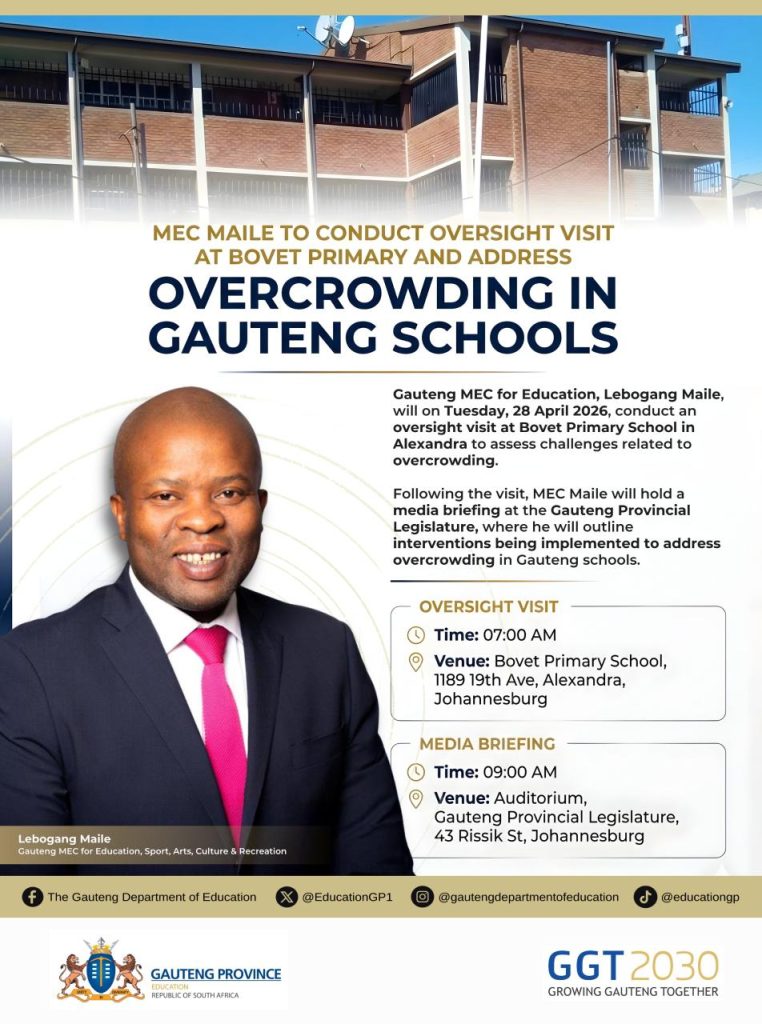
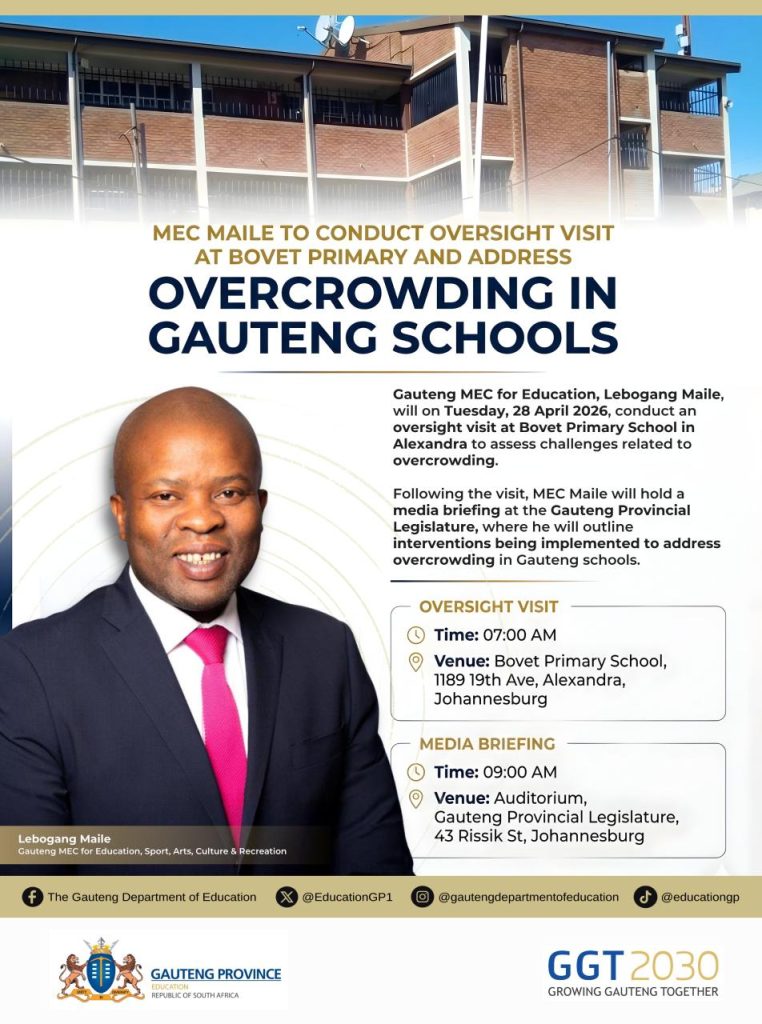
Gauteng MEC for Education, Lebogang Maile, is set to lead an oversight visit at Bovet Primary School in Alexandra on Tuesday.

The visit comes amid mounting concerns about overcrowding in Gauteng schools, particularly in densely populated areas such as Alexandra and Ivory Park.

Following the school inspection, MEC Maile will brief the media at the Gauteng Provincial Legislature Auditorium at 09:00 AM, where he is expected to outline interventions aimed at easing classroom congestion and improving learning conditions.

ALSO READ: Deputy Minister Gungubele strengthens digital partnerships

The Gauteng Department of Education has acknowledged that overcrowding undermines teaching quality, learner safety, and long-term educational outcomes.

Maile’s briefing is anticipated to address both immediate relief measures and long-term infrastructure plans.

INSIDE EDUCATION

Uncategorized

Malatsi withdraws draft AI Policy

By Marcus Moloko

Communications and Digital Technologies Minister Solly Malatsi has withdrawn the Draft National Artificial Intelligence (AI) Policy after it was revealed that the document contained fictitious references, raising serious questions about oversight in South Africa’s digital policy environment.

The draft policy, which was approved by Cabinet on 25 March 2026 and published in the Government Gazette on 10 April 2026 for public comment, was intended to guide the country’s approach to artificial intelligence.

ALSO READ: Maile to conduct oversight visit at Bovet Primary School

Members of the public had until 10 June 2026 to submit feedback. However, the process has now been halted following confirmation that the reference list included fabricated sources.

“This failure is not a mere technical issue but has compromised the integrity and credibility of the draft policy. As such, I am withdrawing the Draft National Artificial Intelligence Policy,” Malatsi said.

The Minister explained that internal investigations revealed the most plausible explanation was the inclusion of AI‑generated citations without proper verification. He said this lapse undermined the importance of human oversight in the use of artificial intelligence.

ALSO READ: Deputy Minister Gungubele strengthens digital partnerships

“South Africans deserve better. The Department of Communications and Digital Technologies did not deliver on the standard that is acceptable for an institution entrusted with the role to lead South Africa’s digital policy environment. This unacceptable lapse proves why vigilant human oversight over the use of artificial intelligence is critical. It’s a lesson we take with humility,” Malatsi said.

The draft policy had sought to extend South Africa’s initial AI framework by embedding principles of intergenerational equity, ensuring that innovation benefits both current and future generations. It also aimed to establish national priorities and sector-specific strategies across manufacturing, energy, infrastructure, transport, and trade.

Earlier this month, Deputy President Paul Mashatile highlighted the importance of the policy during the launch of the Fourth Industrial Revolution (4IR) lab and a Centre of Specialisation in Mpumalanga for artisan training. He said government was developing a comprehensive response to AI, positioning it as a tool to drive economic growth and competitiveness.

ALSO READ: DUT stars again selected for 2026 Telkom Netball League

Malatsi has confirmed that consequence management would follow for those responsible for drafting and quality assurance.

Malatsi concluded by reaffirming the government’s commitment to digital transformation, but acknowledged that the credibility of future policies must be safeguarded through stronger verification measures.

INSIDE EDUCATION

Deputy Minister Gungubele strengthens digital partnerships
Uncategorized

Deputy Minister Gungubele strengthens digital partnerships

Marcus Moloko

The Department of Communications and Digital Technologies (DCDT) has reaffirmed its commitment to advancing South Africa’s digital transformation agenda through closer collaboration with industry leaders.

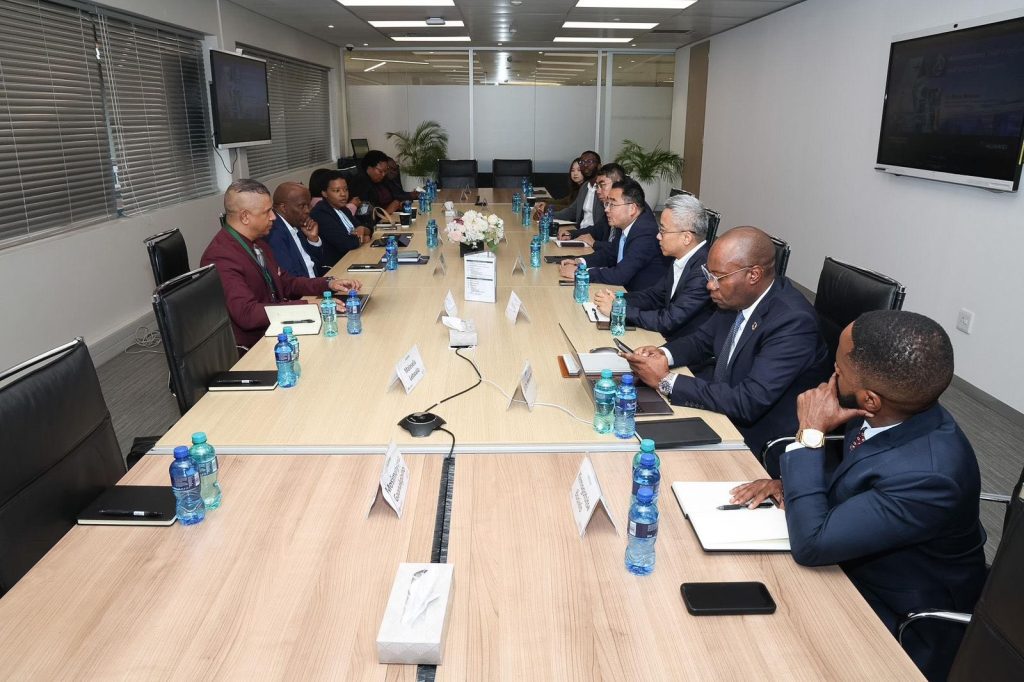
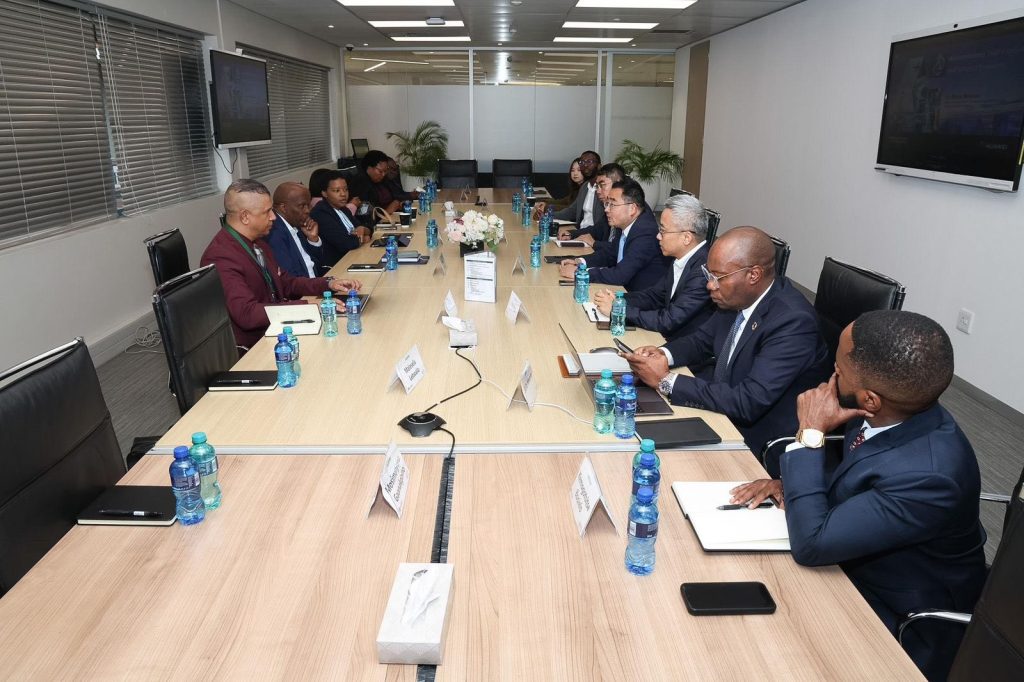
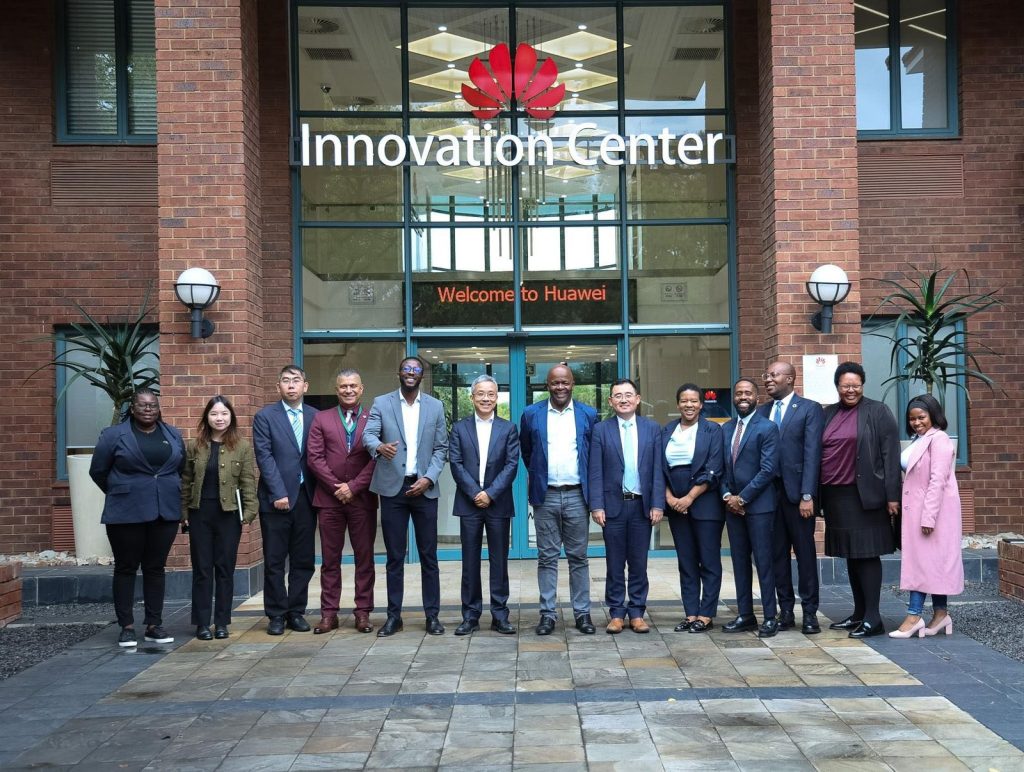
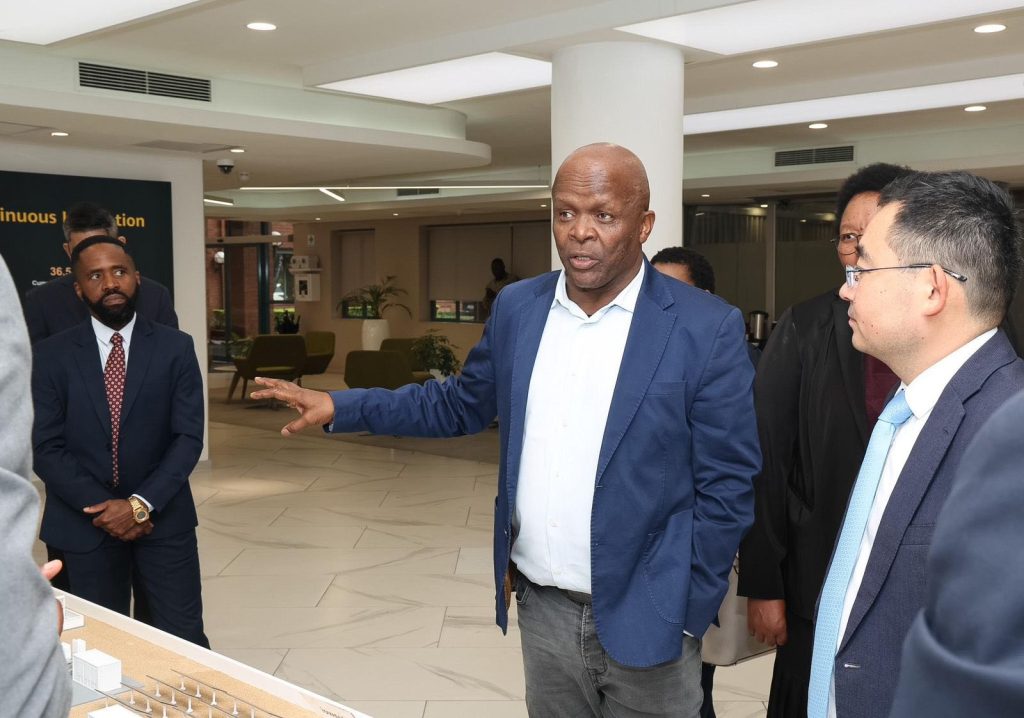
On an official invitation, Deputy Minister Mondli Gungubele visited Huawei Technologies South Africa’s Office Park in Woodmead this week.

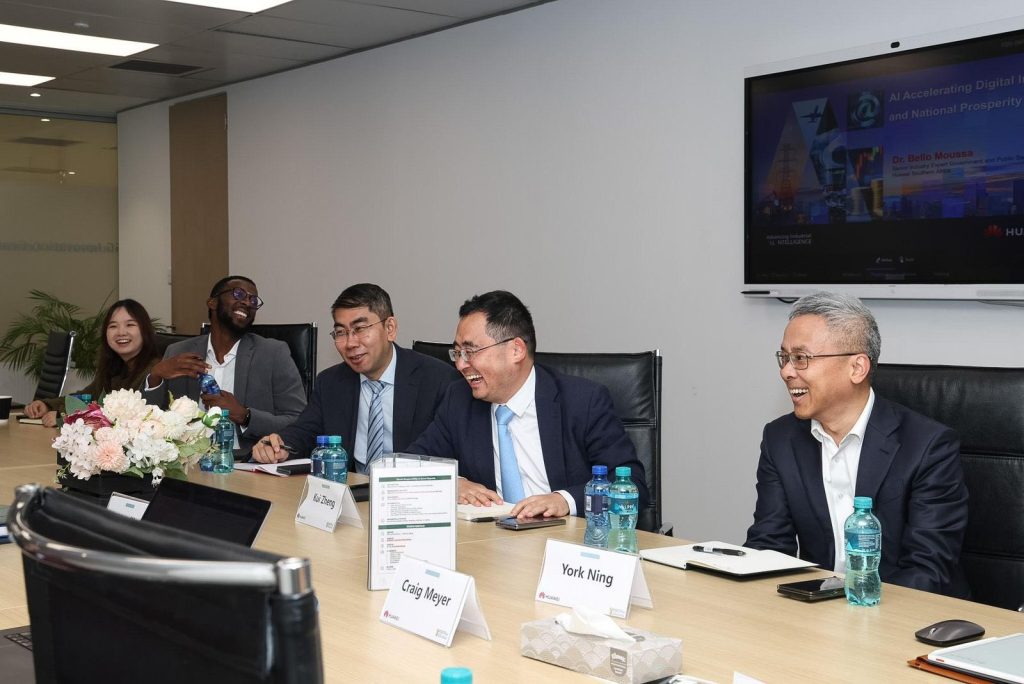
During the engagement, the Deputy Minister met with Mr. Kui Zheng, the newly appointed CEO of Huawei Enterprise South Africa.

ALSO READ: WATCH: Morolong closes North West media Summit with call for collaboration and sustainability

Discussions focused on ICT priorities, digital infrastructure, technology transfer, and strategies to accelerate digital inclusion.

“This visit presents an opportunity to strengthen the partnership between government and industry, engage on current ICT priorities, and gain insights into Huawei South Africa’s latest developments and capabilities,” the Department said.

Deputy Minister Mondli Gungubele visited the Huawei Office Park in Woodmead following an official invitation. Photo:

The Huawei engagement formed part of a broader programme of strategic site visits, which also included AM Hengtong Africa Telecoms in Kempton Park. There, discussions centered on leveraging projects such as the PEACE Cable system to expand international connectivity and position South Africa as a regional digital hub.

ALSO READ: EFF sub regional secretary Loyiso Mangisa laid to rest

The department said partnerships of this nature are vital for implementing the National Digital Economy Masterplan, which aims to build a connected, inclusive, and globally competitive digital society.

“Engagements of this nature are critical in fostering innovation, accelerating digital inclusion, and building a connected South Africa,” the Department said.

INSIDE EDUCATION

Uncategorized

DUT stars again selected for 2026 Telkom Netball League

By Levy Masiteng 

Two of Durban University of Technology’s (DUT) standout netball players, Nkanyezi Makhubela and Nokwanda Zulu, have once again earned selection to represent KwaZulu-Natal’s Kingdom Queens for the second and third consecutive year at the prestigious Telkom Netball League.

The 2026 edition of the league will take place on home ground at the Fred Crookes Sport Centre on DUT’s Steve Biko campus.

It started on Friday and runs to 2 May.

“Their selection reflects our ongoing dedication to nurturing talent that excels both academically and on the sporting stage,” the university said, adding that hosting the tournament makes the moment even more special for the DUT community.

Makhubela, a third-year Diploma in Somatology student from Glenwood, Durban, will make her second appearance in the league. 

“To be one of the players to represent KZN is deeply emotional because it reminds me how far I have come and how much this opportunity means. It pushes me to play with passion and purpose, knowing that I am representing something bigger than myself,” she said.

Makhubela plays the position of defender and joined the DUT netball team in 2021. 

Zulu will be making her third appearance in the competition. 

 The university said the Public Administration graduand from eNseleni in Richards Bay will bring experience, leadership and renewed energy to the squad as she prepares to graduate at DUT’s upcoming autumn ceremony.

“It is super exciting to be back. I hope my presence can actively contribute to my team’s performance as I am always cheering, encouraging, positive and competitive,” Zulu said.

DUT Netball Coordinator Pamela Magubane praised both players for elevating the university’s profile.

She also encouraged supporters to attend the matches in large numbers and rally behind the teams during the tournament.

“We are honoured to be hosting the league at DUT and we urge supporters to come out in large numbers to enjoy the matches and support the teams,” Magubane said. 

 “I hope my journey will inspire other young ladies to believe in themselves and that their dreams are valid,” Makhubela said. 

INSIDE EDUCATION

Uncategorized

Gwarube tells SA to read its way out of literacy crisis

By Levy Masiteng 

Basic Education Minister Siviwe Gwarube has called on all South Africans to take urgent action to build a stronger reading culture by reading at home, supporting book clubs, visiting libraries and sharing books with children.

Gwarube made the call during the national World Book and Copyright Day commemoration held at Cape Town High School and the Centre for the Book in Cape Town.

The DBE said the country’s literacy crisis demands collective action beyond symbolic celebrations.

“Reading must not be reserved for one day on the calendar. It must become part of daily life in every home, every classroom and every community.”

The department together with partners including the National Library of South Africa, Room to Read, the City of Cape Town, Iziko Museums and Book Dash, marked the international observance.

The appeal comes as South Africa continues to battle a literacy crisis among young learners. 

According to the 2021 Progress in International Reading Literacy Study (PIRLS), 81% of Grade 4 learners in South Africa cannot read for meaning in any language, which is a statistic that has long raised alarm across the education sector.  

This means many children are entering higher grades without the reading skills needed to succeed academically, making early reading interventions increasingly urgent.

“Simple actions can make a meaningful difference — reading at home, starting reading clubs, visiting libraries, donating books and encouraging children to write and tell their own stories,” the department said.

At the Cape Town event, learners took part in author engagements, storytelling sessions, guided reading activities, book exhibitions and cultural performances, while discussions on copyright awareness highlighted the need to protect the work of authors and creators.

Significant focus was also placed on indigenous languages, with officials stressing that mother-tongue reading improves comprehension, strengthens cultural identity and promotes inclusion.

“Every child must be able to see themselves in the stories they read and hear their own language reflected in books,” the DBE said.

The event also saw support from other stakeholders beyond the DBE. 

In the Western Cape, provincial education authorities challenged learners to read at least one book for pleasure this year.

“Read one book, cover to cover, this year. Not for school, but for the joy of it. And when you have finished that book, read another,” said Western Cape Education MEC David Maynier. 

The National Library of South Africa donated books worth R20, 000 to help strengthen school library resources in the province.  

“Once you create a culture of valuing reading and books, you are actually crafting an individual who will be responsible enough to respect other people’s rights,” said Aphiwe Sigadi, a Cape Town High School teacher. 

Globally, the day proclaimed by UNESCO in 1995 celebrates books, authors, and the protection of intellectual property. 

This year’s international observance also saw Rabat, Morocco, named UNESCO’s World Book Capital for 2026, with global programmes aimed at widening access to books and promoting reading ecosystems.  

The DBE said World Book and Copyright Day should serve not only as a celebration, but as a practical intervention to address literacy poverty and build a generation of readers.

“Through collective effort, South Africa can become a society where reading is part of everyday life,” it said.

INSIDE EDUCATION

Uncategorized

KZN Education denies Hlomuka interfered in district office lease deals

Staff Reporter

The KwaZulu-Natal Department of Education has denied allegations that MEC Sipho Hlomuka interfered in lease agreement processes for district offices, saying the claims are “incorrect and dangerously misleading”.

The department said Hlomuka’s role was limited to policy oversight and strategic leadership, including his 2025 budget vote commitment that the department would focus on reducing costs linked to office rentals and other accommodation.

“The MEC’s role does not extend to operational involvement in bid adjudication, supplier selection, or contractual negotiations,” the department said in a statement.

It said Hlomuka had not interfered in any procurement or lease agreement process, adding that all leasing and procurement decisions were conducted in line with the Public Finance Management Act, National Treasury regulations, and internal supply chain management procedures.

“At no point has the MEC interfered in any procurement or lease agreement processes,” it said.

The department said the allegations appeared to be based on an unsigned letter from a supposed whistleblower, which it said contained “wild and unrealistic allegations” against both the department and the MEC.

It said it respected the role of whistleblowers and the media in promoting accountability, but said such claims should be subjected to “logical verification of facts and timelines” and, where necessary, investigated through proper channels before being presented as fact.

“We do not intend to counter or respond directly to the letter or the articles on which they are based, but to highlight the baselessness of the accusation, which makes it clear that the letter was written to create a media storm rather than to bring attention to any real misconduct,” the department said.

The department said the lease contracts in question were entered into long before Hlomuka was appointed as the MEC responsible for education in KwaZulu-Natal.

It also rejected allegations that WhatsApp messages showed Hlomuka giving a direct instruction about the lease to the Deputy Director-General responsible for Infrastructure Development.

“The Department places on record that the DDG referenced in these claims is not responsible for office accommodation or leasing matters within the Department,” it said.

The department said office accommodation functions were managed through a separate directorate and handled in line with prescribed supply chain management processes.

It said any alleged communication with the DDG could not have influenced the lease agreement process because the function did not fall within that DDG’s area of responsibility.

“The suggestion of interference is therefore based on a fundamental misunderstanding of the Department’s organisational roles and responsibilities,” the department said.

It described the alleged WhatsApp communication as “a complete fabrication”.

The department said it remained committed to transparency and accountability and would cooperate fully with any formal investigation.

“We are confident that any such process will confirm that the contents of the letter have no basis in fact of logic,” it said.

The department said it remained willing to engage the media on developments of public interest and would continue focusing on its mandate of delivering quality education while ensuring administrative processes were conducted with integrity and in the best interests of the province.

INSIDE EDUCATION

Uncategorized

Revised isiXhosa Bible sent to print in milestone for language standardisation

By Charmaine Ndlela

The Pan South African Language Board (PanSALB) and the isiXhosa Bible Review Committee of the Bible Society of South Africa on Thursday handed over the revised isiXhosa Bible for printing.

The revision forms part of PanSALB’s ongoing efforts to preserve, protect and promote multilingualism, as well as to advance the development and use of South Africa’s official languages.

In a statement, the board said its language programmes aim to strengthen compliance with spelling and orthography rules across all official languages.

“Among other institutional initiatives, the verification and authentication of terminology is one of the programmes aimed at ensuring that institutions comply with the principles and regulations governing spelling and orthography in all official languages,” PanSALB said.

The initiative, it added, seeks to ensure “the effective utilisation of the country’s language resources through standardised and formal language use.”

Key stakeholders at the handover included members of the isiXhosa National Language Bodies (XNLB), the South African Council of Churches, and executives from the Bible Society of South Africa.

During the event, the isiXhosa Bible Review Committee honoured PanSALB with a certificate of recognition for its contribution to the development of the revised Bible.

The revision is seen as a significant step in strengthening isiXhosa language use, particularly given the Bible’s status as one of the most widely read texts in African languages.

“The handover marks an important milestone in reinforcing the role of isiXhosa spelling and orthography as the standardised framework for official writing,” PanSALB said.

It added that adherence to revised isiXhosa spelling and orthography rules is critical for the language’s development and standardisation, especially as the Bible continues to play a central role in shaping written isiXhosa.

PanSALB also highlighted the Bible’s historical contribution to language development, noting that it helped establish and evolve the first isiXhosa orthography.

The organisation said it remains committed to supporting all official languages through standardisation programmes that promote multilingualism.

Speaking to Inside Education, PanSALB head of marketing and communications Ntombentle Huluhulu said the revised Bible is expected to be available to the public within six months.

She added that verification and authentication processes are ongoing for other languages, including Sesotho, Khilobedu and Khwedam, a Khoi and San language.

INSIDE EDUCATION

Uncategorized

WATCH: Access, not talent, is holding girls back in tech, says OWLAG

By Charmaine Ndlela

The Oprah Winfrey Leadership Academy for Girls (OWLAG) on Thursday marked International Girls in ICT Day with a call for greater access, exposure and confidence for young women in technology and innovation.

This year’s theme, “AI for development: Girls shaping the digital future,” highlights the role girls and young women are expected to play in shaping an increasingly digital world.

Observed annually on the fourth Thursday of April, International Girls in ICT Day is a global initiative aimed at encouraging girls to pursue studies and careers in information and communications technology (ICT).

The day was established by the International Telecommunication Union (ITU), a specialised agency of the United Nations, following the adoption of Resolution 70 at the 2010 Plenipotentiary Conference in Guadalajara, Mexico.

Michelle Williams, Head of Academics at OWLAG, told Inside Education the day was a reminder that the challenge was not a lack of talent among girls, but limited access and exposure.

“Many girls don’t step into ICT simply because they haven’t had enough exposure to it early on,” she said.

Williams said systemic inequalities across Africa continued to affect girls’ participation in STEM fields, particularly in under-resourced schools, where limited access to technology, language barriers and a lack of confidence all contributed to the gap.

“The gap doesn’t start in the workplace, it starts in schools. That’s where we need to focus if we want to see real change,” she said.

At OWLAG, STEM education goes beyond subject knowledge and focuses on developing independent and critical thinkers, she said.

She said learners were encouraged to question, analyse and engage deeply with content through an inquiry-based approach.

“Our approach is quite intentional. We move learners beyond procedural learning into more analytical and reflective thinking,” she said.

She said technology at the academy was used to support learning rather than replace it, and that with the rise of artificial intelligence (AI), the school placed strong emphasis on ensuring learners thought critically about the information they engaged with.

“AI is used as a support tool, but learners are always expected to think independently and take ownership of their work,” Williams said.

Sustaining interest in STEM subjects depended on both exposure and success, she said, adding that confidence deepened when learners began to see themselves succeeding.

Mentorship and relatable role models also played a key role in encouraging girls to pursue careers in ICT and STEM fields.

“Girls need to see examples of people who have followed similar paths and succeeded. It helps them believe that they belong in these spaces,” she said.

As part of the day’s activities, OWLAG learners are taking part in hands-on STEM projects, including building 3D-printed cars with robotic components, in an effort to strengthen practical skills and real-world application.

Williams encouraged girls across the continent to remain open to opportunities in ICT, regardless of when they began their journey.

“You do not need to have started early to succeed in ICT or STEM. What matters is your willingness to engage, to learn, and to persist,” she said.

“Our role is to ensure that girls do not just enter the future, but are confident and capable of shaping it.”

INSIDE EDUCATION