Uncategorized

UKZN athletes scoop provincial honours, national accolades

By Levy Masiteng 

Athletes from the University of KwaZulu-Natal (UKZN) had secured a string of provincial honours and national recognition, with Zakithi Nene named KZN Sportsman of the Year and netball coach Precious Mthembu winning her second KZN Coach of the Year title.

Varsity Shield player Freddy Malgas was named Suzuki Rookie of the Year, while Impi flyhalf Sphesihle Fihlela was voted the 2026 FNB Varsity Cup Overall Player That Rocks as well as Back That Rocks.

Netball players Asanda Ndaba and Tyra Scott have also been selected for the KZN Kingdom Queens squad for the upcoming Telkom Netball League.

UKZN Executive Director for Corporate Relations Normah Zondo congratulated the athletes, saying: “We celebrate your achievements for all that they represent. You are not only winning for yourselves but also inspiring many young athletes who are watching your success and seeing what is possible.”

Nene and Mthembu were honoured at the 2026 KZN Sport Awards, announced by KwaZulu-Natal MEC for Sport, Arts and Culture Mntomuhle Khawula. Winners were selected based on performances during the qualification period from January 1 to December 31, 2025, the university said.

Nene, a Bachelor of Commerce graduate from UKZN’s School of Economics, was nominated in both the Sports Personality of the Year and Sportsman of the Year categories.

“I was extremely chuffed to have been nominated in both categories and to win a Sportsman of the Year award. It was a highly contested category and each nominee was highly deserving. It means a lot to have won,” he said.

The university said his 2025 season included running 43.76 seconds over 400m at the Kip Keino Classic in Nairobi, the third-fastest time in the world that year, making him the second-fastest South African of all time and ranking him 18th globally.

He also recorded podium finishes on the Diamond League circuit in London, Rome and Rabat.

“The people I align with, my coach and medical personnel among others, believe in me even when I don’t see it. They push me and support me. This award is as much theirs as it is mine,” Nene said.

UKZN said he is set to travel to Kenya this week to compete in the 2026 Kip Keino Classic.

Mthembu, a former national netball player with 97 caps, was praised by the university for her work in developing student-athletes. UKZN said she had expressed appreciation for the institution’s support, particularly scholarships that allow athletes to pursue both academic and sporting success.

Ndaba and Scott are due to compete in the Telkom Netball League from April 24 as part of the Kingdom Queens team.

Ndaba, the UKZN Netball Central captain and a final-year Bachelor of Education student, said: “I feel privileged to represent UKZN at this level. I’m ready for the league and hoping for a first-place finish.”

She said that the team hoped to qualify for and compete in the Netball Varsity Cup this year.

Scott, the team’s vice-captain and a Bachelor of Social Science student, said: “Netball is something I absolutely love, it brings out such a joyful side of me. I’ve put in a lot of hard work and excited to finally see it all come together.”

Malgas, an inside-centre for UKZN Impi and a Bachelor of Arts in Psychology student, also received two Player That Rocks accolades during the Varsity Shield season.

“I don’t know how to feel about the award (Rookie of the Year) because I wasn’t playing with the intention of chasing any awards when the season started. We had a goal as a team, and that was it. Same as for the two Player That Rocks awards, it was a big surprise because I was the new kid on the block.

“Also, that game was my Varsity Shield debut, and what a way to cap it off with an Award in front of the home crowd. It’s just so special to be able to experience all of that in my first game. I am beyond grateful for the opportunity and platform UKZN and Varsity Shield have given me,” he said.

Fihlela, a final-year Bachelor of Science in Computer Science and IT student, said the recognition had encouraged her to keep pushing in both sport and academics.

“Being recognised as an Overall Player That Rocks, especially after just one year in rugby, is something I’m incredibly grateful for. It’s been a journey of growth, discipline, and learning, and this award feels like a reminder that the hard work is paying off.

“What makes it even more special is balancing this with my final year Bachelor of Science in Computer Science and IT. It hasn’t always been easy managing both academics and sport, but moments like this make it all worthwhile.”

INSIDE EDUCATION
Uncategorized

US funding cuts hit critical science projects, says Gina

By Lebone Rodah Mosima 

United States funding withdrawals have affected critical joint science projects, increasing pressure on a research system already operating in a tight fiscal environment, Deputy Minister of Science, Technology and Innovation Nomalungelo Gina said.

She was presenting the department’s annual performance plan for 2026/27 to the portfolio committee on science, technology and innovation this week, when she made the comments.

The funding cuts have severely affected HIV prevention programmes in South Africa, among others, just as government starts rolling out lenacapavir, a new long-acting prevention drug.

The US had previously funded about 17% of South Africa’s HIV budget.

“We are presenting [the performance plan] against the backdrop of a number of strategic challenges, some of which include a highly uncertain geopolitical and economic environment, a constrained national fiscal environment, a decline in our expenditure on research and development as a percentage of GDP, and not so long ago, the withdrawal of funding by the US government of critical joint science projects,” she said.

Gina told the committee that the performance plan was more than an administrative exercise, saying it should help the state respond “innovatively and in a sustainable way” to pressures arising from domestic and global conditions.

The department, she said, wanted to “raise the scale and impact” of programmes launched in the previous financial year rather than retreat in the face of tighter finances.

A central target remains lifting South Africa’s gross expenditure on research and development to 1.5% of GDP by 2030, she said.

The department said in October last year that South Africa’s R&D-to-GDP ratio remained flat at 0.62%.

Gina said the department would keep trying to strengthen policy coordination across the national system of innovation with support from the National Advisory Council on Innovation, including through the STI Presidential Plenary and an inter-ministerial committee.

She also reported on the transformation of the research workforce, telling the committee of the launch last week of 41 new research chairs aligned with the department’s decadal plan.

That programme is intended to build research capacity at historically disadvantaged institutions, universities of technology and emerging universities, she said.

It would help produce more young, black, and female researchers and scientists.

Energy and health security were also high on the department’s list of priorities, she said.

Gina said the department would continue to back the Hydrogen South Africa research, development and innovation strategy and the Hydrogen Society Road Map in support of the just energy transition.

She also said COVID-19 had reinforced the need to strengthen “pandemic preparedness capacity” and expand vaccine manufacturing capabilities.

She said that the department would deepen innovation compacts with science-intensive departments, agencies and state-owned enterprises.

The South African National Space Agency would be used to support disaster prevention and disaster management through satellite mapping, damage assessment and geospatial flooding tools.

She also said the government would continue to maintain and upgrade strategic science infrastructure, including the Square Kilometre Array and the Nuclear Medicine Research Infrastructure (NuMeRI).

To fund the agenda, Gina said the department would continue trying to mobilise additional resources for programmes in artificial intelligence, energy security, space, vaccine innovation manufacturing and indigenous knowledge systems.

INSIDE EDUCATION

Uncategorized

Tests detect E. coli in drinking water at 20 SA schools

By Thapelo Molefe

At least 20 schools across South Africa have been found to have dangerously unsafe drinking water contaminated with E. coli, according to the latest findings from the WaterCAN Schools Water Testing Project.

The results, released on Tuesday, show that nearly a third of the 72 participating schools recorded high levels of contamination, with 12 of the unsafe samples taken directly from taps used by learners.

ALSO READ: KZN Education advertises 3,002 school leadership posts

WaterCAN said the findings point to possible faecal contamination and pose a direct health risk to both learners and staff.

Several of the affected schools are located in provinces including the Eastern Cape, Free State, Cape Town, KwaZulu-Natal and Mpumalanga.  

WaterCAN Citizen Science and Training Coordinator Nomsa Daele described the results as “highly concerning,” warning that the presence of E. coli in drinking water could lead to serious illness.

“The presence of E. coli in drinking water is particularly serious and requires urgent attention, as it may lead to waterborne illnesses. Ensuring safe drinking water in schools is critical to protecting the health, dignity, and wellbeing of children,” said Daele.

She added that although the tests are indicators, they serve as an early warning of contamination. 

ALSO READ: KZN schools get table tennis boost from China

“We have advised the schools to exercise caution and avoid using the water for drinking purposes until the matter is resolved,” she said.

Of the 20 unsafe samples, eight were sourced from water storage tanks, highlighting infrastructure and maintenance challenges in some schools.

The testing forms part of a citizen science initiative in which schools use WaterCAN testing kits to assess their own water quality and upload results to a central database. The project ran from 16 to 27 March, with some schools continuing testing into April.

The findings come amid growing concern over South Africa’s deteriorating water and wastewater systems. WaterCAN said the results reinforce broader national reports pointing to declining water quality and failing infrastructure.

Access to clean drinking water is essential for both learning and basic hygiene, and contamination could force schools to rely on alternative water sources or suspend normal usage.

“Given the potential risk to children’s health, we urgently need a prompt response and action on this matter,” Daele said.

ALSO READ: Broken school-to-work transition leaves youth uncertain and fragmented, Presidency warns

The organisation has also called on authorities to conduct confirmatory water quality tests, identify the source of contamination and take corrective action to ensure the water is safe.

Participation in the project has grown significantly, with 2026 seeing nearly double the number of schools involved compared to the previous year. The initiative now spans all nine provinces.

Using the MapMyWater portal, schools upload their results for real-time analysis, contributing to one of the country’s largest independent datasets on water quality.

Daele said the initiative is particularly relevant as Earth Day is marked on 22 April.

“The 2026 Earth Day theme, ‘Our Power, Our Planet,’ underscores that environmental progress depends on community action, innovation and local solutions, not only national policy,” she said.

WaterCAN works with several partners, including research institutions and environmental organisations, to expand testing and awareness.

INSIDE EDUCATION

Uncategorized

KZN Education advertises 3,002 school leadership posts

By Levy Masiteng 

The KwaZulu-Natal Department of Education has advertised 3,002 school-based promotional posts, including positions for departmental heads, deputy principals, and principals, in a move aimed at filling leadership vacancies across the province’s public schools.

The department listed the vacancies under HRM Circulars 10 & 11 of 2026 on its official recruitment pages. The advertised posts comprise 1,784 departmental head posts, 545 deputy principal posts and 673 principal posts.

ALSO READ: Broken school-to-work transition leaves youth uncertain and fragmented, Presidency warns

KwaZulu-Natal Education MEC Sipho Hlomuka said the appointments were intended to strengthen capacity in the school system.

“We are resolute in our mission to build a resilient and high-performing education system in KwaZulu-Natal. These appointments will not only fill critical vacancies but will also inject strategic leadership into our schools, ensuring that the interests of learners remain at the centre of everything we do,” said Hlomuka.

At the start of the academic year, teacher unions such as the SA Democratic Teachers’ Union (Sadtu) and the National Professional Teachers Union (Naptosa) warned that more than half of schools in KZN were not ready to reopen due to the non-delivery of learning materials and delayed financial allocations. 

In some cases, schools were unable to begin teaching because they had not received basic stationery, with unions even threatening legal action against the department.

Concerns over larger class sizes and fewer teachers raised fears about declining teaching conditions and learner outcomes.

The department said the newly advertised posts are aimed at stabilising schools and improving leadership at all levels.

ALSO READ: Public Protector finds maladministration in Unisa security appointment

Hlomuka said that strengthening leadership is key to addressing persistent challenges and driving improved performance across the province’s schools.

Eligible educators have been urged to consult the circular and submit their applications within the stipulated timeframe.

INSIDE EDUCATION

KZN schools get table tennis boost from China
Uncategorized

KZN schools get table tennis boost from China

By Levy Masiteng 

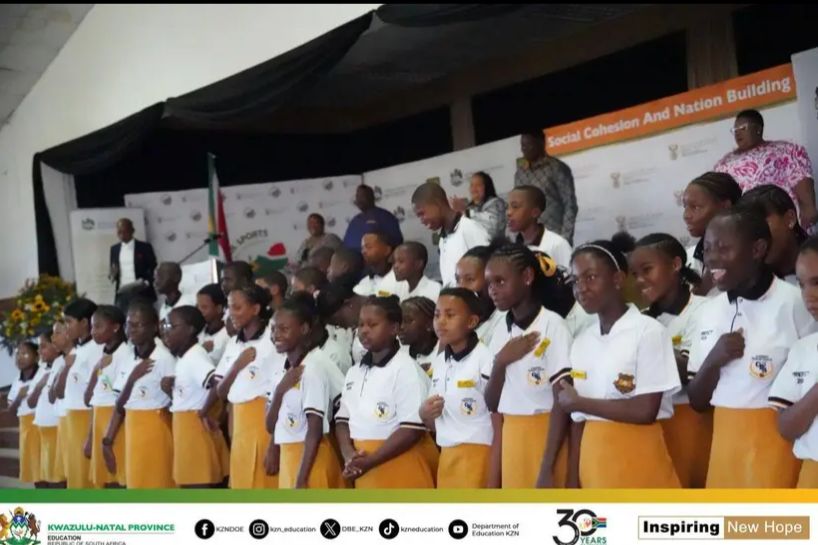
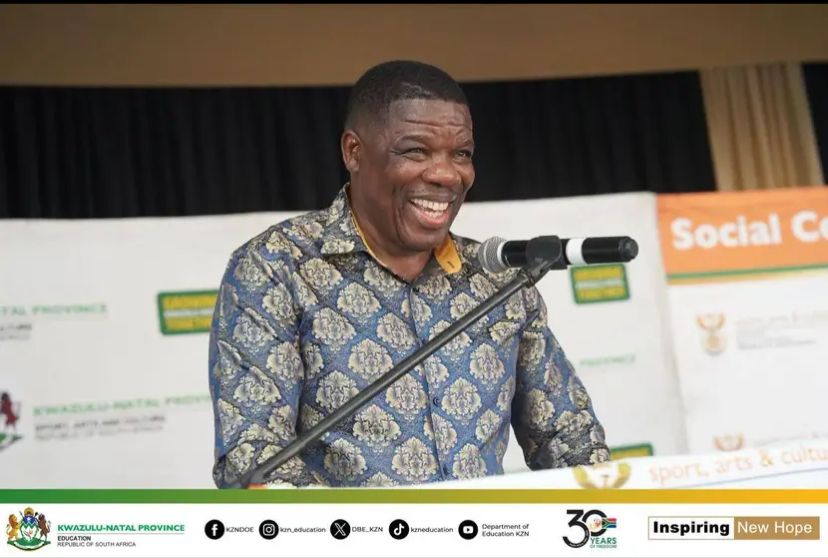
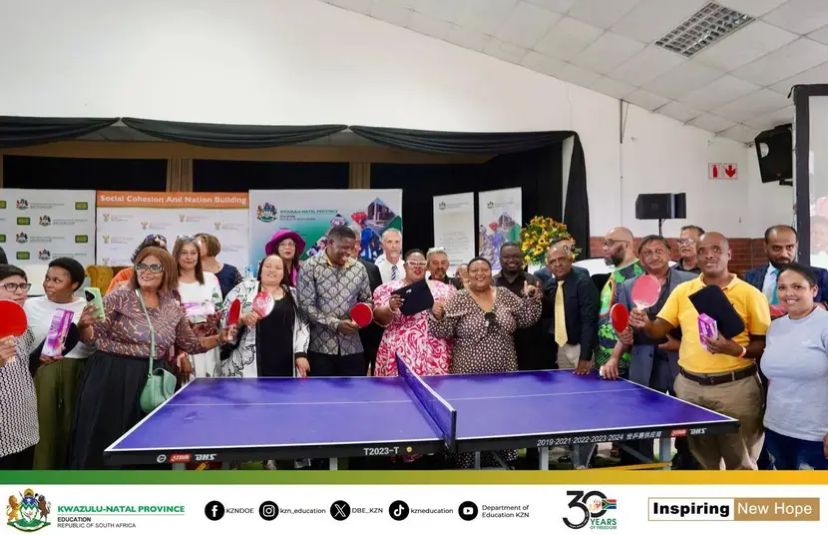
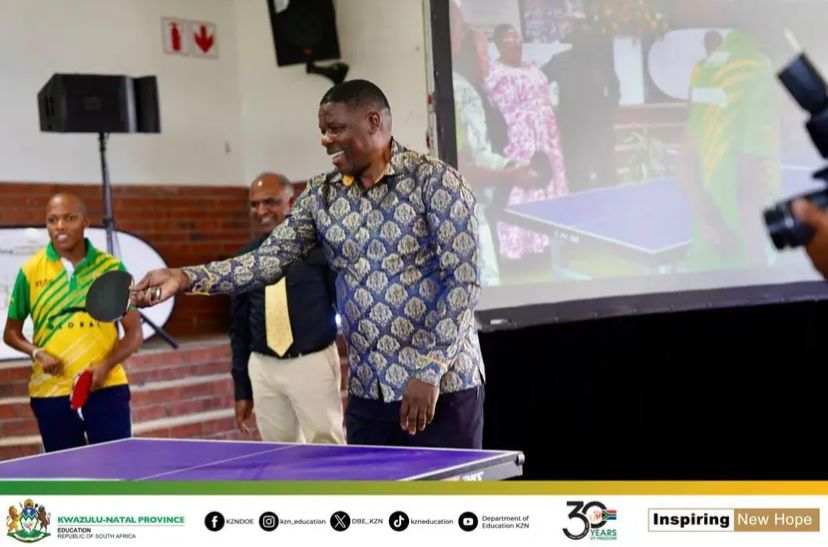
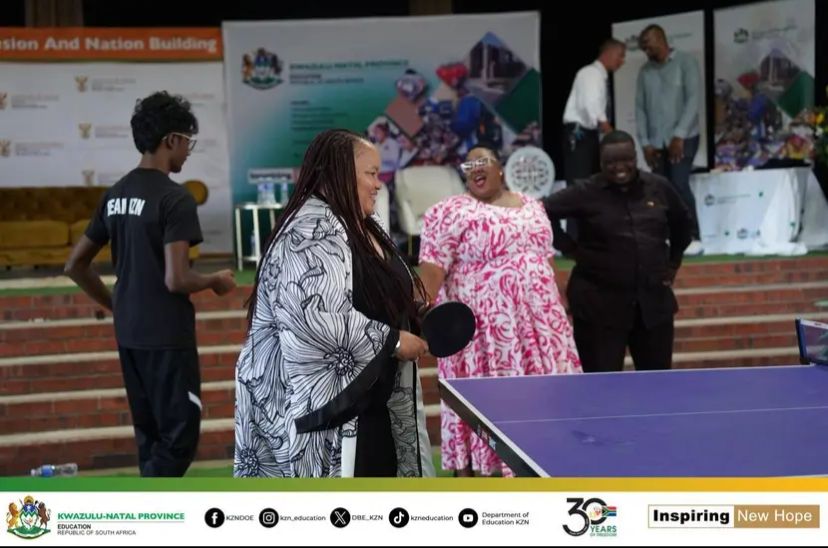
Twenty-five schools in KwaZulu-Natal received new table tennis equipment this week, during an official handover led by Deputy Minister of Sports, Arts and Culture Bertha Peace Mabe at Gardenia Primary School.

The equipment, donated by the People’s Republic of China, included 26 professional foldable tables and full accessories.

“The initiative aims to expand access to sport and encourage learner participation across the province” said the KZN Department of Education.

Addressing the event, Mabe said the programme was aimed at creating equal opportunities for learners across the province.

ALSO READ: Broken school-to-work transition leaves youth uncertain and fragmented, Presidency warns

“The aim is to make sure every learner participates in at least one sporting code,” she said, adding that sport plays a vital role in “building discipline, teamwork and confidence.”

KwaZulu-Natal MEC for Sport, Arts and Culture Mntomuhle Khawula described the donation as “a meaningful investment in the future of young people,” and highlighted the role of global partnerships in advancing youth development.

“Use the equipment responsibly and share it with neighbouring schools so the sport can grow across the province,” said Gugu Madlala, who was representing the Department of Education.

“This initiative is more than just a donation of equipment, but rather an opportunity that places a brighter future in the hands of the learners who receive it,” Mabe said.

INSIDE EDUCATION

Uncategorized

Broken school-to-work transition leaves youth uncertain and fragmented, Presidency warns

By Thapelo Molefe

Gaps between education and employment are leaving many young South Africans struggling to enter the labour market, Deputy Minister in the Presidency Nonceba Mhlauli said on Tuesday, warning that the current system is failing to provide clear pathways into work.

Speaking at the fourth anniversary of the Presidential Youth Employment Initiative (PYEI) at the University of the Western Cape, Mhlauli said the transition from education into employment remains one of the weakest points in South Africa’s skills pipeline.

“For too many young people, the transition from education into employment remains uncertain and fragmented,” she said.

ALSO READ: Public Protector finds maladministration in Unisa security appointment

Her remarks highlight a growing concern within government that, despite multiple programmes and interventions, young people continue to fall through the cracks after leaving school, college or university.

Mhlauli said the disconnect between training and labour market demand means that many young people are not equipped with the skills or experience required by employers.

“This includes strengthening the link between training provision and labour market needs, so that young people are not trained for opportunities that do not exist,” she said.

She added that part of the problem lies in the lack of structured pathways that allow young people to move seamlessly between learning and earning.

“We must build systems that allow young people to move more easily between different forms of learning, and between learning and work, without losing momentum or opportunity,” Mhlauli said.

The PYEI was introduced as a coordinated response to youth unemployment, bringing together government, academic institutions and the private sector to create entry points into the labour market through work experience and skills development.

However, Mhlauli said the focus must now shift towards ensuring that these opportunities translate into long-term employment outcomes.

“It is not sufficient to report on how many young people have participated in programmes. The critical question is how many have transitioned into sustained employment,” she said.

ALSO READ: Summit calls for stronger standards and support in ECD sector

A key intervention identified is the expansion of work-integrated learning, including internships, apprenticeships and workplace-based training, which provide practical experience alongside formal education.

“These experiences are often the bridge between education and employment. Without them, young people struggle to gain entry into the labour market,” she said.

Mhlauli also pointed to fragmentation across programmes as a major barrier, with initiatives often operating in isolation rather than as part of a cohesive system.

“Too often, initiatives operate in isolation, leading to duplication in some areas and gaps in others,” she said, calling for a more coordinated approach across sectors.

Within this framework, she highlighted the role of Technical and Vocational Education and Training (TVET) colleges, saying they could help close the transition gap if better integrated into the broader system.

“TVET colleges have the potential to serve as engines of inclusion,” she said, but added that stronger links with universities and industry are needed to ensure graduates are work-ready.

She said clearer articulation pathways between institutions and closer collaboration with employers would help ensure that training reflects real workplace requirements.

Mhlauli also stressed the importance of adapting the skills system to changes in the global economy, including technological shifts and the rise of digital industries.

“The world of work is undergoing profound change,” she said, warning that many future jobs do not yet exist.

She said this requires a more flexible and responsive system that combines technical skills with foundational capabilities such as literacy, numeracy, problem solving and communication.

At the University of the Western Cape, the PYEI-linked programme has placed 65 graduates into work opportunities over four years, with more than 200 completing internships.

While describing these figures as meaningful, Mhlauli said they highlight the scale of the challenge.

ALSO READ: DUT secures eight national research chairs to boost innovation, skills development

“While 65 placements are meaningful, they must be seen as a foundation upon which to build something much larger,” she said.

She called for expanded partnerships with employers to create more workplace opportunities and for improved coordination across programmes to scale impact.

In closing, Mhlauli said fixing the transition from education to employment is critical to addressing youth unemployment and unlocking economic growth.

“Programmes and policies are important, but what ultimately matters is whether a young person is able to move from education into work, from work into a career, and from a career into economic security,” she said.

INSIDE EDUCATION

Uncategorized

Summit calls for stronger standards and support in ECD sector

By Akani Nkuna

Experts at the inaugural National Education Summit called on Monday for South Africa’s early childhood development sector to be professionalised, saying stronger standards are needed to improve the curriculum while preserving play-based learning.

“It is important for us to start with the curriculum to ensure that it is engaging and creative, but also to make sure that there is capacity building so that ECD practitioners are properly trained,” said Victor Ngobeni, Director of School Leadership and Management at the Matthew Goniwe School of Leadership and Governance.

ALSO READ: Manamela tells summit SA education system must produce job creators

“For the longest time, it has been Gogos who love children that have been running ECDs,” said Ngobeni, who was speaking as part of a four-person panel.  

He said the ECD sector needed to be professionalised so that those working in it were properly qualified and understood their role, adding that the content must be robust, engaging and appropriate for children.

The summit was held at the Gordon Institute of Business Science (GIBS) and brought together government officials, civil society leaders, professors, lecturers, and ECD practitioners under the theme, “Fixing the Education Pipeline: From Early Childhood to Transformative Livelihoods”.

The panel also included Department of Basic Education Director for Reading Dr Nompumelelo Nyathi-Mohohlwane, ICAN4IR founder, Dr David Molapo, and Cotlands CEO Dr Monica Stach.

Molapo, an apartheid struggle stalwart who was exiled as a teenager, said the ECD sector had not adapted to changing societal needs, drawing parallels between how it operated in the early years of democracy and how it continues to function more than 30 years later.

He also said the sector’s lack of funding remained a major obstacle to efforts to strengthen it, pointing to years of government neglect. 

ALSO READ: Maritzburg College crush Pretoria Boys High 61-5 in 1st XV clash

“Things do not end wrong, they start wrong. ECD is very, very important…my assessment is that we are too late, but there is still an opportunity to stop talking [and implement solutions to counter it],” said Molapo.

The panellists also advocated for the integration of technology, experience and literacy normally associated with youthful practitioners who have undergone formal education in the field.

As opposed to out-phasing seasoned ECD practitioners with no formal education that have been practising in the field for many years – some from their back-rooms and garages with little to no infrastructure – the panellists said that the collaboration of formal education and love for children needed to be embraced.

“A quick fix is that you get these sharp young men and women who love children, [combine this with] technology and then suddenly you would be surprised at the creativity that is in these children,” Ngobeni said.

In his keynote address, Higher Education and Training Minister Buti Manamela highlighted the significance of ECD, saying that it exposes children to effective learning systems critical for their development, which sets them apart for a lifetime.

“Only 42% of South African children are developmentally on track by age five, which means inequality is not simply reproduced later in life, it is reproduced early; it is produced in access to nutrition, stimulation, language development and quality early learning,” Manamela said.

He expressed concern about the lack of access to and low enrolment in ECD programmes, saying that this hindered the overall development of the child.

He said that government had established interventions to enhance ECD through intentional investments such as the R18.4 billion allocated to it in 2026. This had heightened access to early learning for over 300 000 children, he said. 

ALSO READ: SA’s skills pipeline fails youth and economy, summit finds

The summit resolved to adopt ECD declarations that include increased investment in parents.

It also declared that parents should receive compulsory ECD education during a child’s first 1,000 days, so parents can in turn support their children’s development from the earliest stage.

The summit further declared that principals should be capacitated through leadership development, and that mentorship and support for practitioners should be strengthened.

INSIDE EDUCATION

Uncategorized

Public Protector finds maladministration in Unisa security appointment

By Thapelo Molefe

A whistleblower complaint has led the Public Protector to find that Unisa irregularly appointed retired employee Johannes Peu Matlala to a senior security post, bypassing the university’s own rules in what was deemed maladministration.

The findings relate to Matlala’s appointment as manager of physical security services on a fixed-term contract after he had already retired from the University of South Africa.

ALSO READ: Summit calls for stronger standards and support in ECD sector

Public Protector Kholeka Gcaleka found the allegations were substantiated, concluding that the appointment process did not comply with Unisa’s own procedures for contract and fixed-term appointments and amounted to maladministration.

At the centre of the findings is the conduct of the university’s Vice-Principal for Operations and Facilities, Matsiababa Motebele, who initiated and approved the process that led to Matlala’s appointment, raising concerns about impartiality and internal oversight.

“The conduct ‘failed to maintain a high standard of professional ethics, accountability and transparency,’” the Public Protector said.

Matlala, a long-serving Unisa employee, had already retired after reaching the age of 65, yet was brought back into the institution through a fixed-term contract that did not follow prescribed procedures.

The Public Protector said the case highlights how breakdowns in governance processes can occur even in the absence of overt corruption.

“The issue is not always corruption in its most obvious form, but the steady breakdown of governance processes,” Gcaleka said.

ALSO READ: Manamela tells summit SA education system must produce job creators

“Preventative governance is more effective, and these can be achieved if government institutions strengthen internal controls and oversight and ensure compliance with legislation and policies.”

“These reports validate the Public Protector’s role in upholding accountability while recognising good-faith corrective steps by institutions,” the report states.

“Where systemic issues recur, the emphasis is on sustainable reforms rather than isolated sanctions.”

Following the findings, Unisa Vice-Chancellor Puleng LenkaBula was directed to implement corrective measures and take disciplinary steps against those responsible for the flawed appointment process.

The report forms part of the Public Protector’s fourth-quarter releases for the 2025/2026 financial year and has been published on the watchdog’s website.

INSIDE EDUCATION

Uncategorized

Manamela tells summit SA education system must produce job creators

By Charmaine Ndlela

Higher Education and Training minister Buti Manamela has said that all 59 public TVET colleges in South Africa are now offering entrepreneurship programmes, as government ramps up efforts to equip young people with skills to create their own opportunities.

In his address at the National Education Summit 2026, hosted by Inside Education in Sandton on Monday, Manamela said more than 47,000 students participated in entrepreneurship programmes in 2024, with the National Skills Fund supporting youth enterprises, particularly in the digital and green economy

“There are not enough jobs to absorb young people. We must build a system that does not only prepare job seekers, but produces job creators,” Manamela said.

Manamela stressed that entrepreneurship is not just about business knowledge but about building “a capability, a mindset and the confidence to act”. Three key pillars were exposure, opportunity, and confidence, he said.

“Exposure means real experience — students running real businesses, making real decisions and facing real consequences. Opportunity means access to markets and funding. Confidence comes from mentorship, networks and believing success is possible,” he said.

He added that structural barriers in the economy must also be addressed. “Entrepreneurship will not thrive in an economy that is structurally closed.”

The discussion was further deepened by a panel of education experts, including Dr Sikhumbuzo Maisela, Professor Nixon Teis and Dr Mukovhe Masutha, who offered critical perspectives on the role of entrepreneurship in education.

Not just business creation

Masutha argued that entrepreneurship should be understood within a broader socio-economic context, not just as business creation.

“Entrepreneurship education is as much about running a successful enterprise as it is about the survival of society,” he said.

He emphasised the need to align education with South Africa’s economic strengths and challenges. “If we discuss skills development outside of an industrial strategy, we are missing the point. These things must speak to the country’s competitive advantage.”

Masutha also pushed back against negative narratives about young people’s abilities.

“Our children are not as incapable as they are often portrayed. In fact, they are extraordinary. The entrepreneur must be someone who believes in themselves before they can sell anything to anyone,” he said.

Highlighting the urgency of practical skills, he said; “Our young people must be able to produce, transport and sell, not just hold qualifications. Entrepreneurship, for many, is about survival.”

Teis stressed the importance of integrating entrepreneurship across the education system rather than isolating it within certain subjects.

“Entrepreneurship should not sit in one corner of the curriculum. It must be embedded across all disciplines, especially in technical and engineering education,” he said.

He added that a cross-cutting approach would better prepare students for real-world challenges. “We need to move from treating entrepreneurship as an add-on to making it a core part of how we teach and learn.”

Maisela focused on the gap between education and the labour market, warning that many students are not adequately prepared to turn ideas into viable opportunities.

“Students leave school and university without the ability to identify opportunities, exploit them and monetise them into sustainable livelihoods,” he said.

Early entrepreneurship education is key

He stressed that entrepreneurship education must begin early. “As soon as learners enter the classroom, we should be nurturing creativity and innovation. Waiting until university is too late.”

Maisela also highlighted the urgency of reform. “Entrepreneurship education is not something we can delay; it is an urgent intervention if we are serious about addressing unemployment.”

Held under the theme “Fixing the Education Pipeline from early childhood to transformative level,” the summit tackled persistent challenges in entrepreneurship education, including limited access to funding and markets for young entrepreneurs, a disconnect between classroom learning and real-world application, and the late introduction of entrepreneurial skills in the schooling system.

Discussions also highlighted structural barriers in the economy that make it difficult for small and emerging businesses to thrive, as well as the need for stronger industry alignment and mentorship to support students in turning ideas into sustainable enterprises.

INSIDE EDUCATION

Uncategorized

Maritzburg College crush Pretoria Boys High 61-5 in 1st XV clash

Staff Reporter

Maritzburg College delivered a commanding 61-5 victory over Pretoria Boys High in their 1st XV rugby match in Pietermaritzburg on Saturday, breaking the contest open in the first half and never allowing the visitors back into it.

College set the tone almost immediately when Liyema Tsoko crossed in the second minute and Dom du Toit added the conversion for an early 7-0 lead.

Pretoria Boys High struck back in the 11th minute through Aya Mabuza, but the missed conversion left them 7-5 behind and that proved to be their only score of the afternoon.

From there, Maritzburg College took full control.

ALSO READ: SA’s skills pipeline fails youth and economy, summit panellists agree

Driven by a dominant pack and sharp execution behind the scrum, the home side repeatedly turned pressure into points and ran in tries from across the park. By halftime, College had opened up a 40-5 lead, leaving Pretoria Boys High with a mountain to climb.

The hosts continued in the same vein after the break, maintaining their tempo and accuracy as they pushed further clear. Even with a number of substitutions early in the second half, there was no drop in intensity as College closed out an emphatic win.

Maritzburg College’s scorers reflected the breadth of their attacking display. Tsoko got the early breakthrough, while Mumbere Vyambwera and Du Toit each scored twice. Further tries came from Smith, Caleb Scheepers, Stanton and Boshoff. Du Toit also proved reliable off the tee, landing eight conversions from nine attempts.

The final margin underlined College’s superiority in all areas. They were more direct and physical up front, more precise in their finishing and far more ruthless once chances opened up.

For Pretoria Boys High, the result was a heavy setback after briefly narrowing the gap to two points in the opening quarter. But once College settled, the visitors struggled to contain the sustained pressure and were unable to match the home side’s pace and control.

INSIDE EDUCATION