Uncategorized

Money, poor performance drive dropouts among older learners

By Thapelo Molefe

Nearly half of older learners who leave school before completing Grade 12 are affected by financial pressure or barriers to progression, with a lack of money for fees emerging as the single biggest stated reason for non-attendance among 16 to 18-year-olds.

The findings are contained in the Department of Basic Education’s latest analysis of the 2024 General Household Survey (GHS), released in August, which shows that while the country has made progress in keeping children in school, “the drop-out problem in South Africa is mainly among older learners”.

According to the report, 23% of 16 to 18-year-olds who were not attending an educational institution in 2024 said the main reason was a lack of money for fees. A further 12% said they had not been accepted for enrolment.

The report found that the risk of dropping out rises sharply in the later grades.

For the most recent cohort, covering young people born between 1998 and 2000 and surveyed between 2022 and 2024, the grade-specific dropout rate increased from 11.9% after Grade 10 to 20.9% after Grade 11. By comparison, dropout rates remained below 4% from Grades 1 to 6.

The report states that dropout rates are “low in the primary school grades and increase with each grade, peaking after Grade 11”.

This means learners are generally more likely to remain in school during their primary years, but the pressure becomes much greater as they approach the end of secondary school.

It also found that 29.8% of those in the latest cohort who reported completing Grade 11 did not complete any further education and were therefore assumed to have dropped out.

The DBE said, however, that the reasons learners give for not attending school should not automatically be regarded as the underlying causes of dropout.

“The main predictor of dropping out is poor quality early education,” the report states.

It explains that the reasons reported by learners may instead be immediate triggers for leaving school, particularly among those already struggling academically.

The report notes that these factors may not necessarily result in dropout among learners who are progressing well, “especially if they are in a good quality school”.

The findings come against a general improvement in school survival rates. Among young people aged 22 to 26, the proportion completing Grade 12 increased from 38% among those born between 1979 and 1981 to 60.3% among those born between 1998 and 2000.

The report says the improvement in survival rates is particularly evident among younger generations. For the latest cohort, the survival rate was 92.2% by Grade 9, 86.5% by Grade 10 and 76.2% by Grade 11, before falling to 60.3% at Grade 12.

Overall, the number of children aged seven to 18 who were out of school declined from about 435,292 in 2013 to approximately 405,718 in 2024.

Among 16 to 18-year-olds, the number fell from about 325,166, or 11%, in 2013 to approximately 265,723, or 8.6%, in 2024.

The financial pressure on older learners nevertheless stands out in the 2024 findings. This is despite the expansion of the no-fee school policy, which has increased the proportion of public-school learners paying no school fees from about 50% in 2009 to approximately 71% in 2024.

“The main reason (97,5%) given for not paying fees by learners in public schools was that the school did not ask for fees,” the report states.

The increase in no-fee schooling means that the cost of school fees is not affecting all learners in the same way. However, the GHS findings show that money remains a barrier for a significant group of older learners who are already outside the education system.

The proportion of seven to 15-year-olds outside the education system has remained relatively stable at around 1.2%.

Among seven to 15-year-olds, disability was the main reason identified for non-attendance. The report notes, however, that about 87% of learners with disabilities do attend an educational institution.

A smaller group of learners also said they were out of school because they regarded education as having no value.

INSIDE EDUCATION

The post Money, poor performance drive dropouts among older learners appeared first on Inside Education..
Uncategorized

153 Gauteng learners out of class as special-needs placements lag

Staff Reporter

At least 153 Gauteng learners needing specialised schooling are out of class while they wait for placement.

Gauteng Education MEC Lebogang Maile said on Thursday during an update on the status of inclusive education in the province that 702 learners were being supported while awaiting placement in Special Schools.

Of those, 419 were currently attending school, while 153 were out of school and receiving support through Resource Centres, together with their families.

ALSO READ: Maile turns up heat on schools after Vaal raids

A further 52 learners were in Special Care Centres, while 140 learners were expected to enter Special Schools offering the Technical Occupational Curriculum in 2027.

The largest group awaiting placement comprised 213 learners with autism, or 30.3% of the total, followed by 164 learners with severe intellectual disabilities, and 140 with mild to moderate intellectual disabilities.

Another 112 learners had specific learning disabilities. Together, those four categories accounted for almost 90% of identified placement demand, the department said.

“Placement is not determined simply by whether an empty classroom exists. It requires appropriate specialist capacity, transport, hostel availability where necessary, therapeutic services, proximity to families and a suitable match between the learner’s needs and the services available at a particular school,” Maile said.

The province has expanded the number of Special Schools from 94 in 2012 to 131, an increase of 37 schools, or 39.4%, but said demand continued to place pressure on available capacity.

Gauteng has more than 2.8 million learners across more than 2,200 public schools, with about 43,000 learners attending Special Schools.

ALSO READ: Gwarube keeps Foundation Phase catalogue suspension in place for 2027

A further 9,735 learners with disabilities are accommodated in ordinary mainstream schools, while another 38,304 learners identified through annual screening are receiving additional support.

The department said more than 91,039 learners were receiving direct inclusive education and support interventions across the province.

Gauteng is also preparing another 69 mainstream schools for designation as Full-Service Schools, which are equipped to support learners with mild to moderate support needs.

The province currently has 51 Full-Service Schools. The planned expansion would take the total to 120, an increase of about 135%.

Maile said specialist support could not depend solely on expanding the number of Special Schools.

The province currently has 30 Special Schools operating as Resource Centres, which provide assessments, educator development, reading interventions, assistive devices and other support to surrounding mainstream schools.

Special Schools recorded a 95.57% matric pass rate in 2025, when 453 of the 474 learners who wrote the National Senior Certificate examinations passed. That was up from 93.16% in 2024.

“Progress must never become an excuse for complacency,” Maile said.

“We must continue building a Gauteng in which a learner’s disability or support needs do not determine the limits of their future, and where no child is denied the opportunity to learn because the education system was unable to respond to their needs.”

INSIDE EDUCATION

The post 153 Gauteng learners out of class as special-needs placements lag appeared first on Inside Education..
Uncategorized

Grade 7 learner electrocuted to death at Limpopo school

By Akani Nkuna

A Grade 7 learner died on Thursday after being electrocuted at Mokutupi Primary School in Limpopo’s Mopani West District during lunch break.

According to preliminary investigations by the Limpopo Department of Education, the learner was electrocuted next to a mobile classrooms on the school premises.

ALSO READ: Ramaphosa motivated by impeachment consequences, court hears

The learner was certified dead at the scene following the arrival of emergency services, despite efforts by members of the school and paramedics to save the child’s life.

The department said an investigation was underway to determine the circumstances that led to the incident.

“The department extends its deepest condolences to the learner’s family, friends, fellow learners, educators and the entire Mokutupi Primary School community during this difficult time, while currently working with the relevant authorities to establish the full circumstances surrounding the incident,” said the department in a statement on Friday.

ALSO READ: Ntuthuzelo Vanara replaces Johnson at IDAC as acting head

It said assessments would be conducted to ensure that the safety and security of learners and staff were not compromised.

It also called for calm at the school and in the community while investigations continue.

The department said psychosocial support would be provided to affected learners and staff members to assist them in dealing with the trauma caused by the incident.

INSIDE EDUCATION

The post Grade 7 learner electrocuted to death at Limpopo school appeared first on Inside Education..
Uncategorized

Santa Shoebox pledging opens with more than 84,000 children listed

By Levy Masiteng 

The Santa Shoebox Project has opened its 2026 pledging season, with the children’s charity aiming to deliver festive-season Shoeboxes to more than 80,000 children as it celebrates its 20th anniversary.

A total of 84,663 children’s names were made available for pledging when the campaign opened this week.

The Cape Town-based project said the milestone year would be marked by an ambitious collective goal of bringing joy to thousands of children across South Africa.

ALSO READ: ‘I am incorruptible’: Lebeya fires final salvo at Madlanga Commission

“A pledge is a promise made to a specific child,” Santa Shoebox Project CEO Deb Zelezniak said.

The project’s 2026 campaign centres on the theme #WhatAPledgeStarts.“When someone chooses a child by name, age, and gender, they aren’t just shopping for supplies. They are creating an experience where a child in their community, whom they’ve never met, feels important and loved,” Zelezniak said.

The pledging process begins when donors visit the Santa Shoebox website and select a specific child. Donors are provided with details including the child’s name, age, gender and clothing size, allowing them to put together a personalised Shoebox.

Once the Shoeboxes have been prepared, local volunteers receive them at designated drop-off points during October and November.

The boxes are inspected for safety before being sorted according to the beneficiary facilities they are destined for.

The Shoeboxes are then handed over to children at schools and care facilities during November and December.

ALSO READ: DIRCO clears Sooklal of role in private Zuma-Gupta meetings

Each Santa Shoebox contains eight specified items: soap, a washcloth, toothpaste, a toothbrush, new clothing, educational supplies, a toy and sweets.

The organisation said the items were intended to address practical needs while also giving children an experience centred on dignity, excitement and joy.

“The children carry that feeling in their hearts, and many, once they are grown up, pay it forward to another child,” Zelezniak said.

The project also offers Virtual Santa Shoeboxes throughout the year, with surplus funds from their sale and other donations supporting its SSP Legacy programme, which includes early childhood development infrastructure, teacher training and reading initiatives.

Established in 2006, the Santa Shoebox Project says its work has reached more than 1.5 million children through its Shoebox and Legacy programmes.

This year, its SSP Legacy programme completed its eighth school build at Reaiteka Pre School in Maruping in the Northern Cape, while the organisation plans to build more rural schools during the coming decade.

“The Santa Shoebox Project is one big #beautifulstory – made up of more than a million and a half beautiful chapters of giving and receiving joy since 2006,” Zelezniak said.

This year, 10,000 Snugglehead toys were ordered from Kya Crafts, an upliftment and skills-development project run by NPO Project Purpose.

The latest order brought the total number of handcrafted toys ordered from the initiative to 27,400.

Other organisations Santa Shoebox has partnered or collaborated with include Book Dash, ORT SA Cape, The Reach Trust, Breadline Africa, the Centre for Early Childhood Development, Singekwenza and Taking Care of Business, as well as numerous crèches and early childhood development centres.

Supporters can also contribute to the project’s longer-term work by selecting the Santa Shoebox Project as their cause through Woolworths’ MyDifference programme, allowing them to support its Legacy initiatives at no additional cost when shopping.

“With 70 drop-off points around the country, in every single province, and thousands of volunteers and donors making the magic happen, we are truly grateful for the collective impact of our incredible community,” Zelezniak said.

INSIDE METROS

The post Santa Shoebox pledging opens with more than 84,000 children listed appeared first on Inside Education..

Uncategorized

Gwarube keeps Foundation Phase catalogue suspension in place for 2027

By Thapelo Molefe

Basic Education Minister Siviwe Gwarube has maintained the suspension of the new Foundation Phase National Catalogue for Grades 1 to 3, saying the decision is necessary to protect the 2027 academic year while concerns over the procurement process are addressed.

The Department of Basic Education (DBE) said on Wednesday that the existing catalogue of previously approved Foundation Phase learning materials would remain available to provinces and schools for procurement for the 2027 school year.

The decision follows an independent investigation into the development, evaluation and implementation of the new catalogue.

ALSO READ: Santa Shoebox pledging opens with more than 84,000 children listed

According to the department, the investigation identified material areas of non-compliance, governance weaknesses and potential risks relating to procurement and financial management.

“My first responsibility is to protect our learners and ensure that schools are ready for the 2027 academic year. I will not allow uncertainty around a procurement process to become uncertainty in our classrooms,” Gwarube said.

The minister has instructed the department to continue with the legal verification and rectification of the new catalogue.

The DBE said the legal implications of the investigation’s findings and the appropriate remedies still require independent legal advice. Gwarube has therefore enlisted the State Attorney to obtain advice from Senior Counsel.

The department said the interim arrangement would allow provinces and schools to secure previously approved learning materials while the new catalogue undergoes legal scrutiny and remediation.

“The investigation has identified material problems that cannot be ignored. At the same time, millions of children cannot have their education placed on hold while those findings are properly addressed,” Gwarube said.

“We can and must do both: protect the integrity of the process and ensure that schools have the materials they need.”

Provincial education departments and schools with procurement powers will remain responsible for purchasing the materials in accordance with applicable legal requirements.

The DBE said it would coordinate with provinces and other stakeholders to ensure that ordering and distribution timelines were not disrupted ahead of the 2027 academic year.

The department said the decision was also intended to provide certainty to teachers, who need clarity about the learning and teaching support materials available to them.

It said delays in procurement could affect teachers’ ability to plan effectively, while parents and taxpayers had a direct interest in ensuring that public funds were spent responsibly and transparently.

The DBE said the arrangement would remain in place while the legal processes surrounding the new catalogue were completed.

INSIDE EDUCATION 

The post Gwarube keeps Foundation Phase catalogue suspension in place for 2027 appeared first on Inside Education..

Uncategorized

KZN records highest rate of corporal punishment in schools

By Thapelo Molefe

KwaZulu-Natal has recorded the highest rate of corporal punishment by teachers in South Africa, with 21.1% of learners in the province reporting that they were subjected to physical punishment at school in 2024.

The figure is contained in the Department of Basic Education’s General Household Survey 2024: Focus on Schooling report, based on Statistics South Africa’s General Household Survey, which was released in August.

ALSO READ: Gwarube keeps Foundation Phase catalogue suspension in place for 2027

The rate is more than three times the national rate of 6.9%.

KwaZulu-Natal was followed by the Eastern Cape, where 11.3% of learners reported experiencing corporal punishment by a teacher. The Free State and North West recorded rates of 5.3% and 5.4%, respectively.

The department said corporal punishment by teachers remained the most commonly reported form of violence experienced by learners in 2024.

“This trend is evident in all the provinces,” the report states.

Corporal punishment has been prohibited in South African schools for almost three decades.

Section 10 of the South African Schools Act states that “no person may administer corporal punishment at a school to a learner”. Anyone who contravenes the provision commits an offence and can, on conviction, face a sentence that could be imposed for assault.

KwaZulu-Natal also recorded the highest rate of physical violence by teachers, at 4%, compared with 1.1% nationally.

The province had the highest reported rate of verbal abuse by teachers at 3.6%, more than three times the national rate of 1%.

ALSO READ: Dale College beat Ooskus 33-12 to lift Lilyfontein Sevens title

Learners in KwaZulu-Natal also reported violence from fellow learners, with 3.5% experiencing verbal abuse by other learners and 0.4% reporting physical violence by fellow learners.

Overall, only 78.2% of learners in KwaZulu-Natal reported that they had experienced no violence at school.

The Eastern Cape had the second-lowest proportion of learners reporting no violence, at 87.8%, followed by the Free State at 92.7% and North West at 93.3%.

At the other end of the scale, Gauteng recorded the highest proportion of learners reporting no violence at 97.6%, followed by Western Cape at 97% and Limpopo at 96.9%.

The national picture was considerably better than KwaZulu-Natal’s, with 91.6% of learners reporting that they had experienced no violence at school in 2024.

Despite the disparities between provinces, the DBE said the overall proportion of learners experiencing violence had been declining.

“It is encouraging to observe, however, that the overall percentage of individuals experiencing violence has been declining,” the report states.

The survey found no significant difference between male and female learners in the prevalence of experiencing corporal punishment or verbal abuse at school.

The DBE report said the General Household Survey asks learners whether they experienced violence, corporal punishment or verbal abuse at school during the three months preceding the survey, as well as the type of violence they experienced.

The findings therefore provide a snapshot of learner experiences during that period rather than a measure of every incident of violence occurring in schools across the province.

INSIDE EDUCATION 

The post KZN records highest rate of corporal punishment in schools appeared first on Inside Education..

Maile turns up heat on schools after Vaal raids
Uncategorized

Maile turns up heat on schools after Vaal raids

By Levy Masiteng 

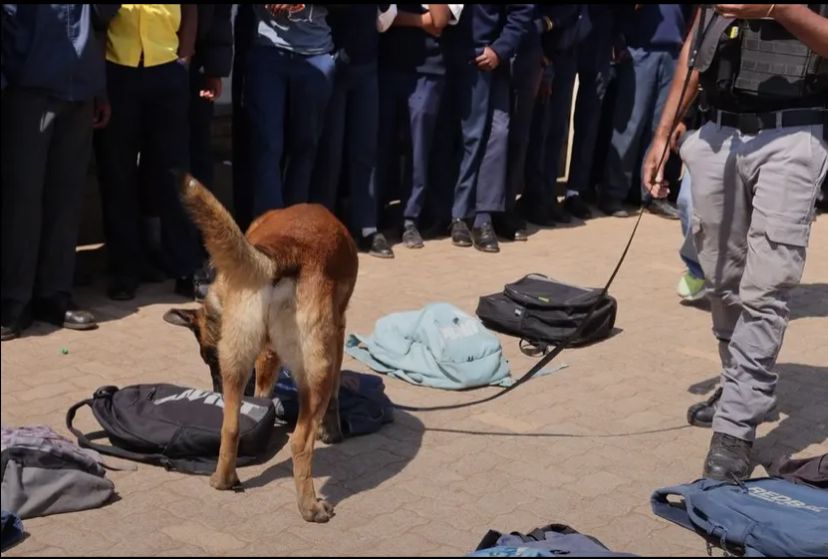
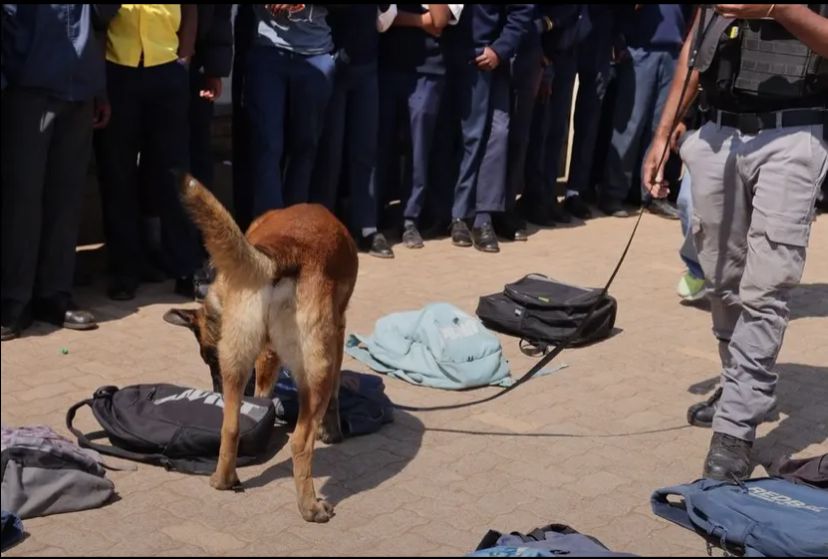
Gauteng Education MEC Lebogang Maile said that school safety cannot be left to government and police alone, calling on parents, School Governing Bodies (SGBs) and educators to take greater responsibility after another round of search-and-seizure operations uncovered more than 120 prohibited items at six schools in the Vaal.

Maile, who joined South African Police Service (SAPS)-led operations in Sebokeng, Vanderbijlpark, Bophelong and Sharpeville on Wednesday, said the department would increase the raids and the number of schools targeted each day.

ALSO READ: Gwarube keeps Foundation Phase catalogue suspension in place for 2027

“We want the parents and SGBs to be there and help us in tackling issues in schools,” Maile said.

“There were schools where some of the educators were not in class. We also have an educator problem. It is not just the learner problem. We are playing our part and we request everyone to play their part. We will not get tired, we will increase the number of schools we raid per day.”

The latest operation saw six schools searched which included Sehopotso Secondary School and Botebo-Tsebo Secondary School in Sebokeng, Residensia Secondary School in Vanderbijlpark, Sapphire Secondary School in Bophelong, Mahareng Secondary School in the Vanderbijlpark area, and Lekoa Shandu Secondary School in Sharpeville.

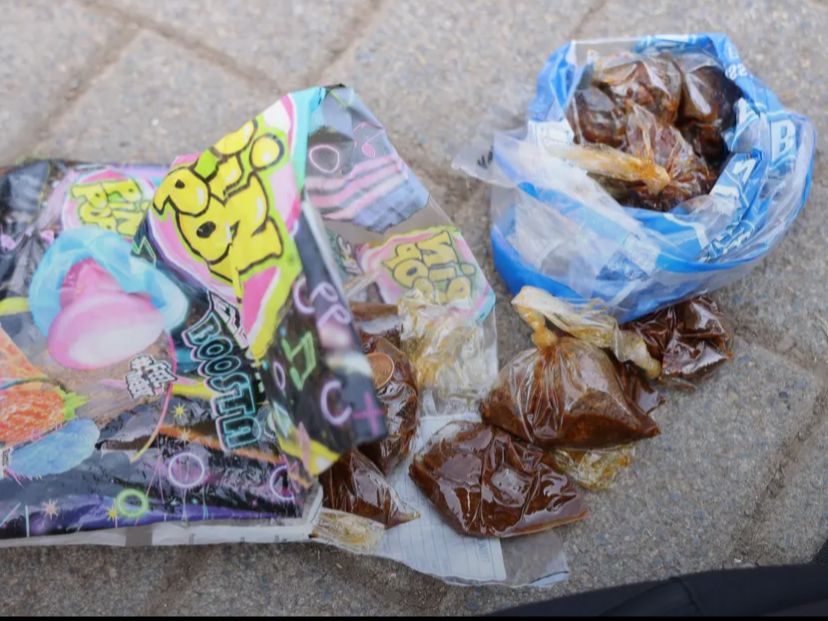
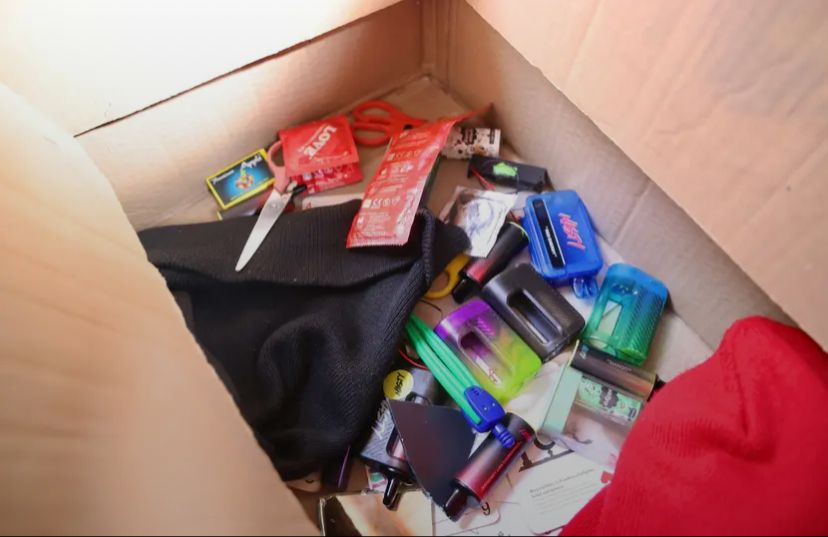
A total of 123 prohibited items were recovered, including 43 disposable vapes, 29 pairs of scissors, four knives, 10 broken mirrors, five boxes of matches, 30 items containing oil spice, a mathematics instrument and a “space cookie”.

The operation also came a day after Maile alleged that learners at Sapphire Secondary School had humiliated the principal by pouring water over him.

Maile also raised a separate concern over food being sold or found at schools.

“We have seized unregulated food items which have not been tested and if one [child] gets sick and dies from them, it will be our responsibility as the department,” he said.

ALSO READ: OPINION| Student data matters most when it enables early intervention

“That is why we are going to ask the MEC for health that they should start coming to schools and check the food that the department provides and cooks for learners, look at the school kitchens, cleanliness of those kitchens, because we give 1.7 million learners meals, breakfast and lunch every day in Gauteng.”

He said that although no incidents had been reported, the department wanted preventative measures in place.

The latest searches brought the number of Gauteng schools targeted through the ongoing operations to 23.

In August, Inside Education reported that searches at three Alexandra high schools resulted in the seizure of more than 109 prohibited items, including suspected dagga, disposable vapes, cigarettes, broken glass, scissors and other objects.

The department subsequently reported that searches at another five schools brought the provincial total to 17, with authorities recovering suspected dagga, nyaope and abortion pills.

In one case, a learner was allegedly found with dagga, while another learner reportedly told officials that a drug dealer had recruited him to sell the substance.

The department has previously identified crime, violence, bullying, gangsterism, substance abuse and dangerous weapons among the major threats facing Gauteng schools.

“Parents have a critical role to play in teaching children discipline, responsibility and respect. We must all take responsibility for creating an environment in which our children can learn, grow and thrive,” Maile said.

INSIDE EDUCATION

The post Maile turns up heat on schools after Vaal raids appeared first on Inside Education..

Uncategorized

Unisa appoints Professor Mpho Ngoepe as new vice-principal

By Thapelo Molefe

The University of South Africa (Unisa) has appointed Professor Mpho Ngoepe as its new Vice-Principal for Teaching, Learning, Community Engagement and Student Support.

Ngoepe, a C2-rated researcher by the National Research Foundation (NRF), will take up the position on 1 October following approval of his appointment by the university council.

His appointment was made after the council considered reports and recommendations from the Selection Committee, as well as advice from the Executive Committees of the Senate and Institutional Forum.

Ngoepe has more than 28 years of academic, professional and leadership experience in library and information services, higher education, research, archives and records management, corporate governance and community engagement.

He joined Unisa in August 2012 and has held several senior academic and leadership positions at the university, including Director of the School of Arts, Acting Deputy Executive Dean, Head of the Department of Information Science and Head of the Centre for Applied Information and Communication.

He currently serves as Acting Vice-Principal for Research, Postgraduate Studies, Innovation and Commercialisation.

Unisa said his new portfolio would draw on his experience in academic leadership, research, postgraduate supervision, professional development and knowledge creation.

Ngoepe has published more than 100 journal articles, seven conference proceedings, 11 book chapters and three academic books. His research has focused on archives and records management, digital records, corporate governance, indigenous knowledge and languages, literacy and freedom of information.

His international academic standing was recognised in 2023 when he was included among the top 2% of scientists worldwide for career impact in a ranking by Elsevier and Stanford University based on authors published in Scopus-indexed journals.

Between 2013 and 2018, Ngoepe served as Director of Team Africa for the International Project on Permanent Authentic Records in Electronic Systems (InterPARES) Trust, coordinated by the University of British Columbia in Canada.

During that period, the Africa team conducted research on digital records and archival education, including compiling a directory of higher education institutions offering archival studies in 38 African countries.

In 2016, the International Council on Archives appointed Ngoepe to convene a meeting of archival educators from across Africa, contributing to the organisation’s education strategy for the continent.

He has also supervised 28 master’s and 34 doctoral students to completion.

Ngoepe has also contributed to the promotion of African languages and literature. He has published two award-winning anthologies of Northern Sotho short stories, which were recommended for Grade 8 learners by the Limpopo Department of Education. He also authored a biography of 2012 Comrades Marathon champion Ludwick Mamabolo.

His professional leadership has included roles in the South African Society of Archivists, the Eastern and Southern African Regional Branch of the International Council on Archives, the National Archives Advisory Council, the Gauteng Provincial Archives Advisory Council and the Archival Education Research Institute.

He has received several awards, including the IVAISLIP/SABINET Information Officer of the Year Award in 2004, recognition from the South African Human Rights Commission and Open Democracy Advice Centre in 2007 for his work in implementing the Promotion of Access to Information Act, the Unisa Chancellor’s Prize for Excellence in Research in 2020 and the South African Society of Archivists Lifetime Achiever Award in 2022.

Unisa principal and vice-chancellor Professor Puleng LenkaBula said Ngoepe’s experience would be important as the university pursued its strategic priorities.

“Unisa wishes Professor Ngoepe every success in this important new role, which carries the significant responsibility of accelerating the pace of cultivating the Catalytic Niche Areas,” LenkaBula said.

INSIDE EDUCATION

The post Unisa appoints Professor Mpho Ngoepe as new vice-principal appeared first on Inside Education..

Uncategorized

18 aspiring doctors selected for Gauteng’s Cuba medical programme

By Charmaine Ndlela

The Gauteng Department of Health has selected 18 young people from disadvantaged communities across the province to study medicine in Cuba through the Nelson Mandela Fidel Castro (NMFC) Medical Training Programme.

The latest cohort, comprising 10 males and eight females, was selected from 2,480 applicants following a competitive recruitment process launched in May 2025.

Among those selected is 20-year-old Zezethu Swelindawo from Cosmo City in Johannesburg, who described the opportunity as a life-changing step towards her dream of becoming a doctor.

The candidates were selected from all five Gauteng districts — Tshwane, Johannesburg, Ekurhuleni, Sedibeng and the West Rand.

Of the 2,480 applications received, 740 candidates met the qualifying criteria and progressed to the next stage. A further 91 were shortlisted based on their academic performance, socio-economic circumstances and potential contribution to the healthcare sector.

The shortlisted candidates came from households with an annual income of R350,000 or less, with preference given to learners from Quintile 1 to 3 schools.

The final selection followed an assessment process that included home visits, interviews and background evaluations.

The department said academic performance was not the only consideration, with candidates also assessed on their commitment to serving their communities and improving healthcare outcomes in South Africa.

The successful candidates will undertake medical studies in Cuba before returning to South Africa for clinical integration at local universities.

They are expected to join the public healthcare system and contribute to improving access to healthcare, particularly in underserved communities where shortages of medical professionals remain a challenge.

The NMFC programme was established through an agreement between former South African president Nelson Mandela and former Cuban president Fidel Castro to help address the shortage of doctors in South Africa, particularly in rural, underserved and previously disadvantaged communities.

The Cuban medical training model places strong emphasis on primary healthcare, disease prevention and health promotion, which the department said aligns with South Africa’s healthcare priorities.

The Gauteng Department of Health said the programme was helping build a pipeline of medical professionals to strengthen primary healthcare and improve service delivery.

To date, 463 Gauteng students have graduated through the programme and are employed at public healthcare facilities across the province.

The department said the graduates were contributing to patient care and service delivery, while the latest cohort would continue the programme’s focus on addressing socio-economic barriers to medical education and the unequal distribution of healthcare professionals.

INSIDE EDUCATION

The post 18 aspiring doctors selected for Gauteng’s Cuba medical programme appeared first on Inside Education..

Uncategorized

OPINION: Student safety cannot end at the campus gate

By Yusuf Cassim

When a parent puts their child on a bus and sends them to university, they are making an enormous leap of faith.

They are trusting the university, but they are also trusting a much bigger system: the residence, the municipality, law enforcement, transport providers, accommodation operators and government.

That trust comes with a heavy responsibility. Our responsibility cannot simply be to draft policies, hold meetings or receive reports. When a system is failing, our responsibility is to change it.

ALSO READ: West Coast TVET launches joint safety forum to tackle campus crime and GBVF

This is why we must rethink how we understand student safety in South Africa.

A student does not stop being a student when they leave the campus gate. They remain a student when they walk to their residence, wait for a taxi, cross a municipal road, visit a shop or return home at night. No one can have freedom if they live in fear and the campus gate cannot become the boundary of our responsibility.

Beyond the campus gate

The tragic murder of Uyinene Mrwetyana made this painfully clear. Her story is a stark reminder that the route between where a student lives and where they study is just as critical to their safety as what happens inside the lecture hall.

Nearly seven years later, remembrance remains important, but remembrance must ultimately drive action. The question we should ask is not simply whether we remember Uyinene, but whether we have actually changed anything. That requires moving beyond a culture of responding to incidents after they happen and toward a culture of prevention.

Governance driven by outcomes, not labels

It also requires government to work differently. Serving as a Democratic Alliance deputy minister in a Government of National Unity, I recognise that South Africa’s political traditions do not always agree on how government should operate. That diversity is part of our governing reality.

However, higher education is precisely where we should be judged less by the labels we carry and more by the outcomes we deliver.

For me, that demands a practical approach: go where the problem is, listen to the people experiencing it, bring the relevant institutions together and ask whether the intervention actually works.

I have applied that principle when responding to severe student accommodation and funding challenges. At Western TVET College, more than 60 students were displaced. At the Central University of Technology’s Welkom Campus, 1392 students faced accommodation allowance crises and the immediate prospect of eviction. These are not abstract policy debates; they determine whether a student has somewhere safe to sleep and whether they can continue their education.

ALSO READ: Manamela steps in as arson, violent student protests shut down CPUT campuses

Safety requires that same ground-level intervention.

We can install cameras, deploy drones, improve street lighting and leverage technology to track risks. These tools matter, but technology alone will never keep a student safe. We need eyes in the sky, but we also need eyes on the ground. We need responsive teams when a risk is identified and clear channels to ensure help reaches the student in time.

Breaking institutional silos

Most importantly, we must stop managing student safety in institutional silos.

A university understands its students. A municipality understands its streets. The South African Police Service understands crime patterns. Accommodation providers understand residences. Private security understands immediate physical surroundings. Student leaders understand the lived reality.

Students themselves know where the risks are. They know which pathways feel unsafe, which residences have broken gates, where harassment occurs and which reporting mechanisms work versus those that exist only on paper. That knowledge is an essential asset.

Students should not be consulted only after decisions are finalised or after a tragedy occurs. They must be active partners in identifying risks, shaping interventions, and assessing results.

A compact for action                                      

This is why South Africa needs a practical national student safety compact.

This cannot be another empty declaration that disappears after a summit. It must be an operational framework with defined, measurable responsibilities for universities, municipalities, law enforcement, accommodation providers and student leadership, backed by a mechanism for reporting progress publicly. If sector leaders gather again next year, success should not be measured by the speeches made, but by what actually changed on the ground.

This is where the principle of #NoStudentLeftBehind becomes tangible. A student struggling with funding is not just a funding case. A student facing eviction is not just an accommodation case. A student walking through an unsafe neighbourhood is not just a policing case. Students are human beings whose safety and success depend on the whole system working together.

Their lives do not fit into tidy departmental or municipal jurisdictions. While our administrative systems divide their problems into separate buckets, the student experiences them as a single reality. The ultimate test of our work is straightforward:

  • Is the student safer?
  • Can a young woman leave her residence for a lecture and return unharmed?
  • Can a parent in Limpopo, KwaZulu-Natal, the Eastern Cape, Gauteng, the Free State, the North West or the Western Cape send their child to university confident that everything reasonably possible is being done to keep them safe?

For a country navigating a Government of National Unity, this is an area where the politics must remain simple. Different parties bring different philosophies to the table, but when a student leaves home in pursuit of knowledge and opportunity, they should not need to know which party governs which municipality or which agency owns which piece of the problem. They should simply know that the system around them will protect them.

Student safety is not a party-political issue. It is a fundamental test of whether government can put the student at the centre and cross institutional boundaries to deliver.

That is not an ambition; it is the minimum we owe them.

Yusuf Cassim is the Deputy Minister of Higher Education and Training.

INSIDE EDUCATION

The post OPINION: Student safety cannot end at the campus gate appeared first on Inside Education..