Uncategorized

National drive launched to shield students from gambling harm

By Lebone Rodah Mosima

Nine national institutions, including NSFAS and the National Gambling Board (NGB), have formed a task team to tackle rising gambling-related harm among students, many of whom depend on state financial aid.

The National Task Team (NTT) for the Risk to Responsibility Campaign says the initiative marks one of the most coordinated efforts yet to protect student wellbeing, financial futures, and academic success nationwide.

ALSO READ: Public Protector launches student accommodation investigation

In February, the NGB and NSFAS said in a joint statement that there was “growing concerns about the increasing exposure of young people to gambling, particularly illegal online platforms, and the unintended use of student allowances for gambling activities”.

“Research indicates that financial pressure, aggressive digital advertising, ease of online access, and targeted promotional offers have contributed to increased gambling participation among youth, potentially affecting academic performance, financial stability, and overall well-being,” they said at the time.

The NTT launched the campaign this week.  

“As online accessibility continues to expand, young people are increasingly exposed to illegal gambling platforms, impulsive behavioural influences, and harmful social environments that may negatively impact their financial wellbeing, academic performance, mental health, and future opportunities,” the NTT said.

“The Risk to Responsibility Campaign therefore seeks to create greater public awareness while promoting prevention-focused education, responsible behavioural awareness, financial wellness, and healthier decision-making among students and youth communities across South Africa.”

Members of the NTT include the African Lotteries and Gaming Association (ALGA), National Student Financial Aid Scheme (NSFAS), National Gambling Board (NGB), Council for Scientific and Industrial Research (CSIR), National Liquor Board Authorities, Mpumalanga Economic Regulator (MER) – Chair of the Provincial Task Team (PTT), Higher Health, South African Technical Vocational Education and Training Student Association (SATVETSA), and the South African Union of Students (SAUS).

ALSO READ: What went wrong at UNIVEN? Independent assessor tasked with finding answers 

“As part of the campaign rollout, the initiative will also introduce the Future Leaders Responsible Gambling Forum, a national student leadership platform designed to empower nominated student representatives from universities across South Africa to become advocates for financial wellness, responsible behavioural awareness, and youth safeguarding within their institutions and communities,” the NTT said.

INSIDE EDUCATION

The post National drive launched to shield students from gambling harm appeared first on Inside Education..
Uncategorized

Public Protector launches student accommodation investigation

By Thapelo Molefe

The Public Protector has launched a separate systemic investigation into student accommodation after inspections at sampled higher education institutions uncovered concerns about unsafe and poor living conditions.

Public Protector Advocate Kholeka Gcaleka announced the investigation on Tuesday during a briefing in Pretoria on her broader investigation into systemic failures at the National Student Financial Aid Scheme (NSFAS).

The separate investigation will examine concerns including delays in the payment of accommodation allowances, weaknesses in the accreditation and verification of private accommodation, and risks of fraud, exploitation and student housing instability.

Gcaleka said the accommodation concerns emerged during the broader NSFAS investigation but would not form part of the current investigation.

“No findings or pronouncements are made herein,” she said.

However, she warned that government should not wait for the outcome of the new investigation before taking action.

“Given the dire circumstances already observed by the Public Protector relating to the unsafe and poor state of student accommodation, government ought to initiate processes to urgently address the needs of students and not await the outcomes of the Public Protector’s investigation,” Gcaleka said.

The Public Protector’s broader investigation also found that students who had completed their studies were being denied access to their academic qualifications because of unresolved tuition accounts.

Gcaleka said higher education institutions should adopt less prejudicial methods of recovering student debt.

“The Public Protector is accordingly of the view that the higher education sector should adopt less prejudicial debt-recovery mechanisms,” she said.

The investigation found that 12 students who lodged complaints with the Public Protector had tuition-related accounts that had been underpaid by NSFAS by a combined R601,000.

Although the students had completed their studies, they were unable to obtain their certificates.

Following intervention by the Public Protector, the accounts were eventually settled.

Gcaleka said the withholding of qualifications had consequences beyond the outstanding debt.

“Although these students have completed their studies, the withholding of certificates limits their ability to access employment, pursue further studies and participate meaningfully in the labour market,” she said.

The Public Protector has called on the Minister of Higher Education and Training and tertiary institutions to reconsider their debt recovery methods within 90 days of receiving the final report.

The recommended approach would allow graduates access to the qualifications needed to become economically active while providing for debt recovery mechanisms that could operate once affected students become income earners.

Gcaleka also highlighted a measure introduced by the Department of Public Service and Administration (DPSA) in 2024 that could provide relief to graduates whose certificates are being withheld.

The DPSA directive allows government departments to verify qualifications using verified academic records where applicants do not possess certificates.

“This progressive initiative will bring about much needed relief to students affected by student debt, as it would enable them to apply for posts in the public service utilising their confirmation letters and academic transcripts,” Gcaleka said.

The Public Protector has proposed that tertiary institutions conduct an audit of academic certificates being withheld and provide information on affected graduates, including the amount owed and the year they completed their studies.

Higher Education and Training Minister Buti Manamela welcomed the Public Protector’s findings, saying government interventions at NSFAS were ultimately aimed at protecting students and strengthening the institutions responsible for supporting them.

“At the centre of the Minister’s intervention is the overriding interest in the wellbeing of students and Post School Education and Training institutions,” Manamela said.

He said NSFAS existed to ensure that students who could not afford higher education were able to access and participate in the post-school education and training system.

“Every intervention must therefore ultimately contribute to ensuring that students receive the funding and the complete support they need to access higher education without unnecessary administrative failures,” he said.

The accommodation investigation will separately examine problems affecting students’ access to safe and secure housing.

The Public Protector said the investigation would consider the administration of accommodation allowances, as well as the systems used to accredit and verify private accommodation.

The probe will also examine risks of fraud and exploitation linked to student housing.

Gcaleka said the decision to launch the separate investigation followed the broader assessment of the higher education funding system and inspections conducted at institutions.

The Public Protector’s wider investigation found that accommodation instability was among the consequences experienced by students when funding and allowance payments were delayed.

The new investigation will determine the extent and causes of the accommodation problems and whether systemic failures by relevant institutions and government entities amount to maladministration or improper conduct.

INSIDE EDUCATION

The post Public Protector launches student accommodation investigation appeared first on Inside Education..

Uncategorized

Public Protector finds systemic maladministration at NSFAS, students prejudiced by funding failures

By Thapelo Molefe

More than 40,000 students at 76 higher education institutions were improperly funded by the National Student Financial Aid Scheme (NSFAS), at a cost of approximately R5.1 billion, with more than R2 billion recovered so far, Public Protector Advocate Kholeka Gcaleka said on Tuesday.

The figures form part of an investigation by the Public Protector into systemic maladministration at NSFAS, which found that failures in the student financial aid system went beyond administrative shortcomings and caused direct and foreseeable harm to students.

Gcaleka made the findings while briefing the media in Pretoria on the progress of her systemic investigation into alleged maladministration at NSFAS.

She said information presented by the Special Investigating Unit (SIU) to Parliament’s Standing Committee on Public Accounts was among the developments that raised concerns about NSFAS and contributed to the investigation.

The investigation found that allegations of systemic deficiencies in the administration, governance, funding, coordination and oversight of student financial aid were substantiated.

Gcaleka said students had experienced recurring delays in funding decisions, appeal outcomes and allowance payments, with the consequences extending beyond inconvenience.

“These delays caused direct and foreseeable prejudice, including food insecurity, accommodation instability and exposure to unsafe living conditions,” she said.

The investigation found that the problems affecting students were not isolated incidents but reflected recurring failures across the higher education sector.

The Public Protector said the investigation began after complaints against NSFAS concerning administrative deficiencies affecting students’ access to financial aid and, consequently, higher education.

However, as the investigation progressed, the office identified broader systemic challenges, including inadequate access to tuition funding, inefficiencies in existing funding mechanisms, delays in allowance payments and problems with the administration of funding criteria.

“The recurrence and consistency of these concerns strongly suggested the existence of systemic rather than isolated administrative deficiencies,” Gcaleka said.

The investigation also found persistent instability at NSFAS, which the Public Protector said had weakened the entity’s ability to fulfil its statutory mandate effectively.

The office pointed to leadership and governance disruptions dating back several years, including the suspension and termination of former CEO Andile Nongogo in 2023, the dissolution of the NSFAS board in 2024 and renewed governance difficulties after a new board was appointed in 2025.

NSFAS has also been placed under administration three times in the past eight years — in 2018, 2024 and 2026.

The Public Protector said independent reviews, including a 2021 Ministerial Committee of Inquiry, had found that NSFAS had operated in a “near-permanent state of crisis”.

Gcaleka said the instability had contributed to repeated failures in the administration of student funding.

“The evidence gathered depicts NSFAS as an institution affected by persistent governance instability, administrative weakness and inadequate systems,” she said.

Higher Education and Training Minister Buti Manamela welcomed the Public Protector’s report, saying its findings were consistent with longstanding concerns about NSFAS.

“The issues identified in the report are not new. They are among the longstanding governance, administrative and operational challenges at NSFAS that have been a matter of concern to the Minister,” Manamela said.

He said these challenges had contributed to his decision to place NSFAS under administration.

The investigation found that students continued to face delays in funding confirmations, allowance payments and appeals.

The Public Protector also raised concerns about NSFAS’s ability to assist students when they sought help.

NSFAS reported that it was unable to resolve 80% of queries received through its contact centre without escalating them to internal units.

The Public Protector found that the entity’s limited accessibility and ineffective query-resolution arrangements undermined students’ ability to obtain assistance on matters directly affecting their access to higher education.

Gcaleka said NSFAS’s limited accessibility had affected its ability to provide students with effective assistance.

“The inability to establish accessible and responsive administrative mechanisms capable of providing students with effective assistance in relation to matters that directly affect their constitutional right to further education, is in conflict with section 195(1)(e) and (g) of the Constitution,” she said.

The investigation further found that delays in eligibility verification were linked to NSFAS’s reliance on third-party data sources and weak interfaces with institutions and state entities such as Home Affairs, SASSA and SARS.

These weaknesses contributed to delays in funding determinations and resolving eligibility disputes.

Mid-year defunding and funding reversals were also found to have caused serious disruption to students who had already enrolled and started their studies.

The Public Protector said such decisions exposed students to severe financial, academic and personal prejudice, particularly where funding was withdrawn after the academic year had begun.

The investigation found that NSFAS needed to address eligibility verification delays and ensure that students received timely decisions, adequate notice and an opportunity to respond before adverse funding decisions were implemented.

Appeal backlogs added to the problem, with students left unable to secure support while waiting for their cases to be resolved.

The investigation also criticised the pace at which government had implemented recommendations contained in the 2022 Ministerial Task Team report on student funding.

The Public Protector found that three years after the report was tabled before Cabinet, limited progress had been made in converting its recommendations into an operational and coherent funding reform programme.

“Three years after the report was tabled to Cabinet, the evidence indicates limited progress in converting the recommendations into an operational and coherent funding reform programme,” Gcaleka said.

The so-called “missing middle” was among the unresolved issues.

The Department of Higher Education and Training (DHET) reported that NSFAS had been capitalised with R3 billion over a three-year cycle from 2024 to 2027 to support students in this category.

However, despite receiving 43,261 applications from students eligible for the funding, NSFAS could not roll it out because it needed to procure a new loan system.

The Public Protector also found that recommendations on funding postgraduate studies had not been implemented.

Gcaleka said the collective conduct of NSFAS and DHET impaired the practical realisation of the constitutional right to further education and constituted maladministration.

Manamela said the findings were consistent with concerns raised in a report he received earlier this month from NSFAS Administrator Professor Hlengani Mathebula, which identified a range of challenges requiring urgent intervention.

He said his concerns about NSFAS had also intensified after a March meeting with the Auditor-General of South Africa over the scheme’s financial management and governance.

The Auditor-General had issued NSFAS with a disclaimer of opinion, with Manamela saying its accounting records and supporting evidence were so inadequate that the AGSA could not determine whether the financial statements were reliable.

“Measures to remedy the situation will continue to be explored,” Manamela said.

He said the administration of NSFAS formed part of a broader effort to restore stability, strengthen systems and ensure the scheme could fulfil its mandate.

The investigation is now at the stage where affected and implicated parties have an opportunity to respond to the Public Protector’s notice before the findings and proposed remedial action are finalised.

The parties have 60 calendar days from receipt of the notice to submit written representations, including any records, information or evidence they want the Public Protector to consider.

Gcaleka cautioned that the findings contained in the notice are not yet final and may change after the affected parties have made their representations.

The Public Protector has proposed several remedial measures, including requiring NSFAS to clear appeal backlogs, strengthen financial controls and improve its systems for processing funding decisions.

NSFAS would also be required to identify officials or former officials responsible for governance breaches, maladministration and control failures that caused prejudice to students, with consequence management to follow where warranted.

INSIDE EDUCATION

The post Public Protector finds systemic maladministration at NSFAS, students prejudiced by funding failures appeared first on Inside Education..

Uncategorized

AdvTech and Cricket South Africa seal three-year partnership to grow youth cricket

By Levy Masiteng

AdvTech Limited and Cricket South Africa (CSA) have entered into a three-year partnership aimed at expanding opportunities for young cricketers and strengthening the development pathway for men’s and women’s cricket.

Under the agreement, AdvTech will become the official sponsor of CSA’s Youth Weeks and the Proteas Women’s inbound Test series, while also serving as an associate partner of Proteas Men’s Test cricket.

CSA said the partnership will cover the National U13 Boys Week, U16 Boys and Girls Weeks, U19 Girls Week and the Khaya Majola Cricket Week, bringing education and cricket together to help young players develop both on and off the field.

“We are excited about teaming up with AdvTech. This partnership goes beyond what happens on the field,” CSA chief executive officer Pholetsi Moseki said.

“For CSA, it is important that our work has meaningful social impact, and partnering with AdvTech strengthens the connection between cricket, education and the development of young people throughout our pathway.”

The partnership is expected to provide additional support to CSA’s youth structures while contributing to the development of future cricketers and coaches.

AdvTech said CSA’s U16 and U19 Youth Weeks brought together 850 players from all nine provinces in 2025, with more than 350 matches played across the competitions, highlighting the scale of the national development platform.

AdvTech’s involvement will also extend to women’s cricket, with the education group planning to introduce specialised girls’ cricket programmes at selected schools.

The initiative is intended to strengthen the pathway for young female players to progress from school cricket to the elite level.

“Our partnership with Cricket South Africa extends across the sport, from grassroots to the elite Men’s and Women’s teams,” AdvTech CEO Geoff Whyte said.

“It represents a powerful investment into South Africa’s most inclusive sporting code that will also significantly benefit our brands.”

AdvTech operates across primary, secondary and tertiary education, as well as training and placement, and said the partnership provides an opportunity to leverage its position in the education sector to support sporting development.

CSA said the partnership aligns with its broader objective of developing a sustainable cricket pathway, from the KFC Mini-Cricket programme and Youth Weeks through to the professional game.

By combining AdvTech’s education expertise with CSA’s national cricket development structures, the three-year agreement is expected to support the next generation of South African cricketers while emphasising the importance of education alongside sporting excellence.

INSIDE EDUCATION

The post AdvTech and Cricket South Africa seal three-year partnership to grow youth cricket appeared first on Inside Education..

What went wrong at UNIVEN? Independent assessor tasked with finding answers 
Uncategorized

What went wrong at UNIVEN? Independent assessor tasked with finding answers 

By Thapelo Molefe

An independent investigation into the governance and management of the University of Venda (UNIVEN) has been ordered, with Professor Norman Duncan given 90 days to get to the bottom of problems that have raised concerns about the institution’s Council, executive management, finances and internal governance.

Duncan was appointed as an Independent Assessor by Higher Education and Training Minister Buti Manamela in terms of sections 44 and 47 of the Higher Education Act, with his appointment published in the Government Gazette on 11 August.

His investigation will go beyond a general review of the university’s administration.

The terms of reference require him to examine specific decisions and disputes that have affected UNIVEN, including the Council’s handling of the precautionary suspension of Vice-Chancellor and Principal Professor Bernard Nthambeleni and Chief Operating Officer Botwe Kraziya, as well as litigation affecting the university.

Duncan must also assess whether the Council has been able to properly discharge its statutory responsibilities and examine the functioning and effectiveness of the Council and Executive Management.

The terms of reference require him to consider the relationship between the two structures and whether it has affected the governance and administration of the university.

He will also investigate whether members of the Council and Executive Management have been able to fulfil their statutory and fiduciary duties.

Financial decisions and concessions made by the Council will also come under scrutiny, including legal fees and their impact on the financial sustainability of the university.

Duncan has further been tasked with investigating governance challenges involving the university’s Convocation, including matters relating to its Constitution.

He may also investigate any other matter he believes has a bearing on the effective governance, management or administration of UNIVEN.

The investigation follows months of growing tensions at the university, including allegations against Nthambeleni and Kraziya and a dispute over their precautionary suspension.

At a Council meeting on 16 July, Nthambeleni and Kraziya were placed on precautionary suspension pending the finalisation of an independent forensic investigation.

The suspensions followed an anonymous letter containing allegations of corruption, maladministration and nepotism against the two officials. The allegations have not been established as fact.

The suspensions further escalated a dispute that had already involved threats of suspension and litigation.

The developments had already prompted Manamela to intervene.

The minister met with UNIVEN’s management and Council on 5 June after the anonymous letters containing allegations against Nthambeleni and Kraziya contributed to strained relations at the university.

The meeting considered the allegations and broader governance challenges at the institution. The parties agreed that the matters should be addressed through the university’s governance structures rather than through litigation, with the Council expected to report back to Manamela on progress.

However, the matters were not resolved and instead escalated.

In July, Manamela formally notified the Council of his intention to appoint an Independent Assessor and gave it an opportunity to make representations.

The Council submitted its representations, which were considered by Manamela before he made the final decision to appoint Duncan.

The minister said an independent assessment was warranted to establish the source and nature of the governance and management challenges facing UNIVEN and to advise on measures required to strengthen good governance and management.

Manamela stressed that Duncan’s appointment should not be interpreted as a finding against any person or structure at the university.

“The appointment of an Independent Assessor is not a punitive measure and should not be interpreted as a finding against any individual or structure of the University,” Manamela said.

“It is an independent fact-finding process intended to establish the facts and assist us in determining what measures, if any, are required to strengthen governance and management at UNIVEN.”

The appointment of Duncan does not place UNIVEN under administration.

He will not displace the university’s Council or Executive Management, which remain responsible for their lawful duties while the investigation is under way.

Instead, Duncan will report directly to Manamela on his findings and recommend measures he believes are necessary, together with reasons for those recommendations.

His investigation must be conducted in accordance with section 45A of the Higher Education Act, the Promotion of Administrative Justice Act and the principles of procedural fairness.

Manamela has called on the Council, Executive Management, staff, students, Convocation and other stakeholders to cooperate fully with Duncan and provide the information necessary for the investigation.

He has also urged all parties to allow the assessor to carry out his responsibilities independently and without interference.

The minister said the investigation should not distract the university from its core academic responsibilities.

“Our overriding responsibility is to protect the academic mandate of the University and the interests of its students, staff and the broader public,” Manamela said.

“The University must remain focused on teaching, learning, research and student support while this process is under way.”

INSIDE EDUCATION

The post What went wrong at UNIVEN? Independent assessor tasked with finding answers  appeared first on Inside Education..

Uncategorized

UCT suspends measures against VC Moshabela pending High Court review

By Charmaine Ndlela 

The University of Cape Town (UCT) Council has suspended four resolutions concerning Vice-Chancellor Professor Mosa Moshabela pending the outcome of his judicial review application in the Western Cape High Court.

The decision follows a special Council meeting held on Saturday to consider the legal proceedings brought by Moshabela against four resolutions adopted by Council on 30 May.

Council said it had considered legal advice on the matter before resolving to suspend the implementation of the four resolutions pending the final determination of the judicial review proceedings.

The latest development comes after an investigation whose mandate ultimately encompassed 34 complaints concerning Moshabela, according to his court papers.

Council reportedly decided against instituting disciplinary proceedings against the Vice-Chancellor following the investigation, but adopted four separate resolutions concerning him. Moshabela is challenging those four resolutions, Resolutions 3 to 6, in court. The separate resolution not to institute disciplinary proceedings is not part of his challenge.

The dispute has also brought renewed attention to complaints recorded by UCT’s Ombud, Nashira Abrahams.

According to Moshabela’s court papers, UCT Council member Malcolm Campbell informed the Vice-Chancellor on 30 June 2025 that the Ombud had received 21 complaints from staff relating to his “interactions with them”.

By December 2025, the Ombud had recorded 39 visits by staff and students concerning Moshabela, with eight matters marked as closed and 31 as open.

The court documents caution that these 39 recorded visits do not necessarily represent 39 different complainants.

Six of the open matters were categorised as three sexual harassment complaints, two complaints relating to discrimination based on culture and one relating to discrimination based on gender.

Council adopted a resolution on 14 February 2026 mandating that the 31 open matters be formally investigated.

UCT has said that it is constrained in what it can disclose publicly because of confidentiality obligations relating to matters before the Ombud and Council, as well as the ongoing court proceedings.

In its statement issued following Saturday’s meeting, Council said it would first follow the preliminary processes prescribed by the Rules of Court and await Moshabela’s supplementation of his court papers before deciding whether to oppose the review application.

Council also confirmed that it was willing to participate in mediation in an effort to resolve the dispute.

The decision to suspend the four resolutions means that the measures adopted by Council on 30 May will not be implemented while Moshabela’s legal challenge is before the High Court.

Council said its decision was intended to ensure that the litigation is handled in an “orderly, fair and legally appropriate manner”.

Council chairperson Norman Arendse said the governing body remained committed to protecting the rights of all parties involved, including UCT officers and institutions and the office of the Ombud.

“Council remains committed to acting in the best interests of UCT and to discharging its governance responsibilities in accordance with the law, the principles of fairness and accountability, and the values of the university,” Arendse said.

INSIDE EDUCATION

The post UCT suspends measures against VC Moshabela pending High Court review appeared first on Inside Education..

Uncategorized

Century-old Afrikaans archive enters digital era

By Charmaine Ndlela 

The University of the Free State (UFS) has ceremonially handed back to the South African Academy for Science and the Arts (SAAWK) an archival collection documenting more than a century of the Akademie’s history and its role in the development of Afrikaans language, literature, the arts and science, as the two institutions move to digitise the material for wider research access.

Established in Bloemfontein in 1909, the SAAWK has played a significant role in the development and standardisation of Afrikaans in the fields of language, literature, the arts and, later, science and technology.

More than a century after its establishment, the Akademie’s archival collection is entering a new phase as the institutions collaborate on its digitisation, creating wider access to material that has been preserved at the UFS for more than 50 years.

The collection was entrusted to the UFS under an agreement concluded between the two institutions in 1972. Since then, the university has been responsible for its safekeeping, preservation, arrangement, description and access for research.

On 13 August 2026, the UFS and SAAWK marked the next stage of their longstanding relationship with the ceremonial handover of the collection and the signing of a Memorandum of Agreement that will facilitate continued collaboration on its digitisation.

For SAAWK Chief Executive Officer Dr Annelise de Vries, the collection provides an important window into the Akademie’s history and the development of Afrikaans as a language capable of carrying scholarship and scientific knowledge.

“The collection gives us an opportunity to look at the history of language planning and how Afrikaans developed into a language that could be used in science and scholarship,” she said.

“By making this material accessible through digitisation, we can create new opportunities for research and for understanding that history.”

The digitisation project is expected to take the collection beyond the confines of its physical archive, allowing researchers and students to engage more easily with material that has historically been primarily accessible through the University’s archival facilities.

Prof Vasu Reddy, Deputy Vice-Chancellor for Research, Innovation and Postgraduate Studies at UFS, described the occasion as an important milestone for both institutions.

“This event is historic and important,” Reddy said.

“The Akademie Collection is more than a collection. It is both a record of our intellectual past and a resource that will help shape responsible societal futures.”

Reddy said the partnership also demonstrated how heritage and scholarship could be brought together to support future knowledge creation.

“It is also about strengthening a partnership that connects heritage, scholarship, and future knowledge creation with one of our oldest Science Councils,” he said.

“I see this digitisation initiative as an investment in future scholarship, opening new pathways for research, discovery, and public engagement.”

For the UFS Library and Information Services (LIS), caring for the collection over the past five decades has involved balancing preservation with the need to make the material accessible to researchers.

Charlie Molepo, Head of Research and Scholarly Communications at LIS, said the responsibility of preserving such a significant collection was substantial.

“It’s quite a huge responsibility, because we had to make sure that the collection is preserved in an environment that is sustainable for its long-term preservation, while also making sure that it is accessible for research, both locally and internationally,” Molepo said.

LIS has developed metadata to make the collection more discoverable and introduced measures aimed at protecting the archival material from natural and human-made disasters.

Digitisation will add another layer of preservation while significantly expanding access.

“Digitisation opens up new opportunities for access, because researchers all over the world can easily access the collection, and our students can also access it,” Molepo said.

“It also allows us to preserve it because, as technology and software change, we need to be able to adapt to those changes.”

The project also highlights the evolving relationship between the UFS and SAAWK. Rather than simply transferring responsibility for the collection, the two institutions are continuing to work together to determine how the archive can be used to support research, teaching and scholarship.

Molepo said the collaboration could create opportunities for increased research activity at the University, including postgraduate work.

“Ultimately, it opens up new opportunities for the University to have more research within the institution, whether through collaboration or supervision of postgraduate students, because the Academy also has a lot of excellent researchers,” he said.

The significance of the collection therefore extends beyond its value as a historical archive. Its digitisation could create opportunities for researchers to revisit the history of Afrikaans, language planning, scholarship and the intellectual development of South Africa through primary archival material.

For students and academics, increased digital access could also make it easier to incorporate the collection into research and teaching, while allowing scholars outside South Africa to engage with material previously accessible primarily through the physical archive.

According to the university, the handover marks a significant transition for a collection that has spent more than five decades in the care of the UFS.

Reddy said the institutions’ responsibility was not simply to protect the past, but to ensure that the archive continued to contribute to contemporary scholarship.

“Our responsibility is not only to safeguard the archives, but to activate them as living resources for learning, research, and public understanding,” he said.

“When we preserve knowledge and make it accessible, we create opportunities for innovation, collaboration, and lasting societal impact.”

Through the digitisation partnership, the UFS and SAAWK are seeking to ensure that an archive built over more than a century does not remain confined to history books or physical shelves, but continues to inform research and scholarship.

“Together, the UFS and SAAWK are building a legacy that honours the past, enriches the present, and inspires future generations of scholars,” Reddy said.

INSIDE EDUCATION

The post Century-old Afrikaans archive enters digital era appeared first on Inside Education..

SA’s Africa United conquer Madrid to lift Elite U20 International Cup
Uncategorized

SA’s Africa United conquer Madrid to lift Elite U20 International Cup

By Levy Masiteng 

Africa United have conquered Spain, with the South African youth side crowned champions of the 2026 Madrid Elite U20 International Cup after overcoming Spanish opposition in a dramatic final.

Africa United secured the title on Sunday, defeating Albacete Balompié in a penalty shootout at Campo La Mina in Carabanchel, Madrid, after the final could not be separated in regulation time.

The tournament organisers officially confirmed Africa United as champions, with Albacete finishing runners-up.

ALSO READ: CUT Vice-Chancellor Pamela Dube to retire early after four years at the helm

The triumph capped an impressive campaign for Africa United, who arrived in Spain determined to test themselves against some of the country’s youth football talent and left Madrid with the trophy and one of the tournament’s biggest individual awards.

Africa United’s route to the final was built on a strong group-stage campaign.

They opened their tournament with a 1-1 draw against Rayo Vallecano A on 14 August before producing a commanding 6-0 victory over Madrid Euro Soccer Academy the following day. They also drew 1-1 with Albacete Balompié.

Those results saw Africa United finish second in Group A with five points from three matches, scoring eight goals and conceding only two.

They remained unbeaten throughout the group stage, conceding only two goals in three matches.

The knockout stage provided an even bigger test.

Africa United faced CD Alameda in the second semi-final on Sunday morning at Campo La Mina. The match was scheduled for 11am, with the winners advancing to the afternoon final against the winners of Albacete Balompié and RCD Carabanchel.

Africa United’s ability to navigate the pressure of the knockout rounds ultimately proved decisive as they reached the final and faced an Albacete side they had already encountered in the group stage.

The final, played at 1pm on Sunday, went all the way to penalties. Africa United held their nerve when it mattered most to claim the championship and complete an unbeaten tournament.

Ohhiria Unoisejiolagbon was named the tournament’s best player, another major recognition for the South African delegation and a sign of the quality within the squad.

INSIDE EDUCATION

The post SA’s Africa United conquer Madrid to lift Elite U20 International Cup appeared first on Inside Education..

Major boost for nursing education as KZN College wins approval for degree
Uncategorized

Major boost for nursing education as KZN College wins approval for degree

By Lebone Rodah Mosima 

The KwaZulu-Natal Department of Health has welcomed the approval granted by the South African Qualifications Authority (SAQA) NQF Qualifications Committee at its recent meeting, paving the way for the province’s College of Nursing to offer a Bachelor of Nursing qualification at NQF Level 8, with a minimum of 480 credits.

Health MEC Nomagugu Simelane congratulated the college on the milestone.

“[I]t bears testimony to the excellent work that is being done by the management and staff of the college, who continue to ensure that we produce nurses who are well equipped to serve our people,” Simelane said during an official KZN Health Chat podcast.

She said the timing of the achievement made it even more meaningful, as it came during Women’s Month.

She said that nursing remains a women-intensive profession and paid tribute to the many women who have dedicated their lives to caring for others.

“At the same time, we continue to encourage more men to enter the nursing profession and help us build a stronger and more representative nursing workforce,” she said.

The Bachelor of Nursing degree will also establish a stronger and more direct academic pathway for nurses wishing to advance their careers and specialise.

Unlike the previous pathway, where nurses required completion of lower-level qualifications before progressing academically, the new degree offers graduates an NQF Level 8 qualification, putting them in a more advantageous position to pursue postgraduate studies and specialist nursing programmes.

While the department did not say when the college submitted this specific Bachelor of Nursing qualification for approval, the milestone comes after years of difficulty nationally in moving public nursing colleges into the higher education system.

ALSO READ: From engineering to agriculture: Muthikhitha builds thriving macadamia business in Limpopo

The transition to new nursing qualifications began in 2015, and by 2019 the KZN College of Nursing was among 10 public nursing colleges designated to offer qualifications, including bachelor’s degrees, under the new higher education framework from 2020.

In a parliamentary reply in July 2026, the Department of Higher Education and Training said nursing colleges had been designated to offer qualifications aligned with the Higher Education Qualifications Sub-Framework since 2020, but that their migration into the national higher education system was still under way and faced legal, budgetary, structural and infrastructure challenges.

Concerns over the slow process date back even further. In 2016, Nursing Education Association chief executive Nelouise Geyer said public nursing colleges, which were responsible for about 80% of nursing graduates at the time, were struggling to meet the requirements for recognition as higher education institutions and that progress in accrediting new nursing programmes had been slow.

In 2022, Nursing Education Association chairperson Dr Sue Armstrong said difficulties getting curricula approved had made public colleges reluctant to start the new degree programme, reducing their ability to produce professional nurses. At the time, she said universities were the institutions offering the course required to qualify as a professional nurse, while problems with progression between qualification levels were also restricting career and specialisation opportunities for some nurses.

Nursing unions have also repeatedly raised concerns about the effect of accreditation and training delays on an already stretched health system. Young Nurses Indaba Trade Union chairperson Lerato Mthunzi said in 2022 that the sluggish transition was “holding the profession ransom” and affecting the quality of healthcare that could be provided.

The Democratic Nursing Organisation of South Africa (DENOSA) has more recently linked nursing education reform to the shortage of health workers. At its national congress in March 2025, the union called for the “immediate accreditation of nursing institutions” as part of efforts to address a critical shortage of trained healthcare professionals.

Simelane said that nurses can progress more efficiently towards higher-level and specialist qualifications.

“We need more specialists in our health system, and strengthening the academic pathway for our nurses is an important part of achieving this,” she said.

She added that the college has provided the province with several reasons to be proud in recent months, including the launch of the Nephrology Nurse Specialist programme, which is among the first of its kind in South Africa’s public nursing education sector.

ALSO READ: Mohono replaces Motsumi as North West education MEC

“These achievements show that our college is growing, innovating and positioning itself to meet the specialist skills needs of our healthcare system,” she said.

She said the department would continue to support the college as it expands nursing education and develops the next generation of healthcare professionals.

“This is good news for nursing, good news for our healthcare system and, ultimately, good news for the people of KwaZulu-Natal,” she said.

“We congratulate the college and look forward to seeing this new chapter unfold.”

INSIDE EDUCATION

The post Major boost for nursing education as KZN College wins approval for degree appeared first on Inside Education..
Uncategorized

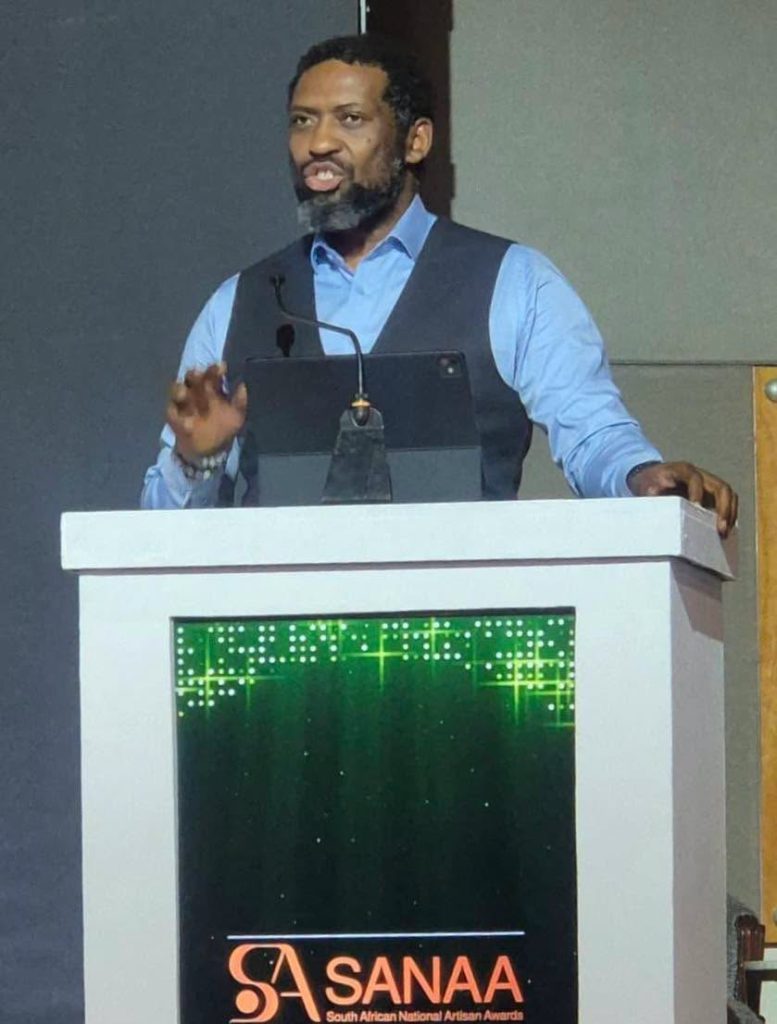
CUT Vice-Chancellor Pamela Dube to retire early after four years at the helm

By Levy Masiteng 

The Central University of Technology, Free State (CUT) Vice-Chancellor and Principal, Professor Pamela Zibuyile Dube, will take early retirement at the end of 2026, bringing her tenure at the university to an end after four years at the helm.

The CUT Council has accepted Prof. Dube’s decision to retire early, with her retirement taking effect on 31 December 2026.

The announcement was made by the university through the council, which said it would now begin considering the governance and leadership arrangements needed to ensure a smooth transition.

“Prof. Dube’s tenure has been characterised by visionary leadership, resilience and a steadfast pursuit of institutional excellence,” the university said.

According to CUT, Dube’s leadership saw the university strengthen its academic and research profile, expand strategic partnerships, promote innovation and entrepreneurship, advance student success and accelerate the implementation of its Vision 2030 strategy.

Dube was appointed as CUT’s Vice-Chancellor and Principal after an extensive selection process, with her appointment announced in October 2022.

She formally took up the position on 1 January 2023, succeeding Professor Alfred Ngowi, who had served as acting vice-chancellor during the leadership transition.

Her appointment marked a historic moment for the institution.

Dube became the first woman to serve as Vice-Chancellor and Principal of CUT, as well as the first female vice-chancellor in the Free State. She was formally inaugurated on 17 February 2023.

Before joining CUT, Dube served as Deputy Vice-Chancellor for Student Development and Support at the University of the Western Cape.

Her career in higher education and public-sector leadership has included positions at the University of Siegen in Germany, the University of KwaZulu-Natal, Wits University, the former National Department of Education, the South African Nuclear Energy Corporation and the University of Johannesburg.

In 2025, Dube was appointed Deputy Chairperson of the Universities South Africa Board of Directors, effective from 1 January 2026 to 31 December 2027. She had also served on the USAf board since March 2023.

In April 2026, CUT also announced Dube’s appointment as Chairperson of the Technological Higher Education Network South Africa (THENSA) Board of Directors, with her term running from 1 April 2026 to 31 March 2028.

Dube described her time at CUT as a privilege and thanked the university community for its support.

She reaffirmed that, although she would be stepping down from her role, she would continue to support the success of CUT and the higher education sector.

Council said it would consider the governance implications of the notice of retirement, including arrangements for an acting vice-chancellor and principal and the process for appointing new leadership.

The university said the transition process would be guided by the need to “preserve business continuity, sustain strategic momentum and minimise disruption” to CUT’s operations.

“On behalf of the university, we extend our sincere appreciation to Prof. Pamela Dube for her dedicated service, visionary leadership, and unwavering commitment to the advancement of CUT,” council said.

INSIDE EDUCATION

The post CUT Vice-Chancellor Pamela Dube to retire early after four years at the helm appeared first on Inside Education..