A 19-year-old Grade 10 learner was shot dead at Ndengezi Intermediate School near Pinetown on Monday.
KwaZulu-Natal police said the victim and the suspect were seen entering the school grounds together before the shooting. The suspect was reportedly dressed in the same school uniform as the learner.
The learner was shot several times and declared dead at the scene. Police have opened a murder case and said the motive for the killing was not yet known.
KwaZulu-Natal Education MEC Sipho Hlomuka said the department had received a preliminary report on the shooting.
“According to a preliminary report received by the Department, the male learner was shot on the school premises and subsequently succumbed to his injuries,” he said.
Police and education officials attended the school after the shooting, while forensic teams processed the scene.
“The loss of a learner is always devastating, but for such a tragedy to occur within the school environment is particularly distressing,” said Hlomuka.
“I am deeply saddened by the tragic loss of this young learner. My heartfelt condolences go to the learner’s family, friends, fellow learners, educators and the entire Ndengezi Intermediate School community during this extremely difficult time.”
Police said the suspected shooter left the school after the attack and the investigation was continuing.
“The department will continue to provide the necessary support to the affected school community and work with all relevant stakeholders to promote safety in our schools,” said Hlomuka.
Earlier this year, Hlomuka said the province had experienced an increase in incidents of crime and criminality in and around schools, which he said was undermining efforts to maintain safe learning environments.
Police have not disclosed what may have led to Monday’s shooting and have not publicly identified the suspect.
The Education Department said it would avoid speculating on the circumstances of the killing while the police investigation continued.
“I urge everyone to allow law enforcement officials to conduct their investigation without interference,” Hlomuka said.
“I also appeal to members of the community to refrain from sharing unverified information, particularly on social media, as this may cause further pain and distress to the bereaved family and the school community.”
Basic Education Minister Siviwe Gwarube has told South Africans to look beyond the political disputes and crises of the day and focus on reforms that can protect the country’s future by improving what education makes possible for every child.
Addressing the Cape Town Press Club on Monday, Gwarube said meaningful reform required the government to confront institutional weaknesses, protect public money and strengthen education from early childhood rather than relying on the matric pass rate as the main measure of success.
“Our children do not get a second childhood while we put our institutions in order. I came into this office to help change what education makes possible for a child — not simply to manage disputes about it,” Gwarube said.
She said this was the purpose of her “Strong Foundations, Strong Futures” strategy, which seeks to improve learning from the earliest years of a child’s education.
Gwarube said South Africa had made progress, including an 88% national matric pass rate in 2025, but added that this could not obscure deep weaknesses in foundational learning.
“Extra lessons and support for matric learners remain important. But support must begin much earlier. A child who struggles to read will struggle to learn from a textbook. A child who lacks confidence with numbers will find later Mathematics and Science increasingly difficult,” she said.
“I do not believe that a child in a poor community has less potential than a child in a wealthy one. I believe we have a responsibility to stop allowing unequal opportunities to decide how much of that potential is realised.”
She said the reform agenda was built around early childhood development, the Foundation Phase, language and literacy, teacher development, safer schools, infrastructure and stronger governance.
She said the government had registered more than 13,300 early learning centres in 2025, exceeding its target of 10,000, while the subsidy rate had increased from R17 to R24 per funded child per day.
The department was also targeting 10,000 Foundation Phase teachers for focused training in reading, writing and early Mathematics during 2026.
Gwarube said reform also meant confronting the way public money was spent, citing her decision to maintain the suspension of the new Foundation Phase National Catalogue after two final reports by independent investigating firm Rakoma identified serious weaknesses in the process.
The catalogue has been at the centre of controversy over Lighthouse Publishers, a relatively new company that secured a significant share of approved titles. Gwarube acknowledged that the investigation had not substantiated some of the allegations surrounding the process and that the reports recognised strengths in the assessment of learning materials, but said the wider review had also identified serious shortcomings.
The investigation found problems including undisclosed rules around price comparisons and how these would affect the allocation of orders, non-compliance with a compulsory supplier-document requirement and an extension and withdrawal of a submission deadline without the required approval.
The reports also raised potential financial misconduct implications, although Gwarube stressed that this did not amount to a finding of guilt against anyone.
“I chose to act on the findings and recommendations of the investigation reports I have received. I chose to protect public money. I chose to keep preparations for 2027 moving. I will not choose between getting books to children and protecting the integrity of the process. My responsibility is to do both,” she said.
She said preparations for the 2027 school year would continue, with provinces and schools purchasing the materials they needed using the existing catalogue as a reference while the legal implications of the investigation findings were considered.
Gwarube also rejected suggestions that insisting on proper procurement processes amounted to an attack on transformation.
She said she supported a publishing sector where emerging businesses, including black-owned and women-owned companies, had a fair opportunity to compete, but argued that transformation had to extend beyond contracts and reach classrooms.
“Transformation cannot stop at the contract. It must reach the classroom. For me, transformation means that a child in a rural village can receive the same quality of early education as a child in an affluent suburb,” she said.
She said the Government of National Unity also had a role to play in creating the stability needed for long-term reform, arguing that cooperation did not mean avoiding difficult questions.
“Stability is not the absence of difficult questions. It is the confidence that an institution will face them honestly and keep delivering. Addressing a weakness is not an attack on an institution; it is an investment in its future.”
She said the government also needed to measure education outcomes more honestly, with greater attention paid to reading, Mathematics, learner retention and subject performance rather than simply the final matric pass rate.
She highlighted the operationalisation of the National Education and Training Council as part of efforts to build reform that could survive political cycles.
The council has produced four substantial reports containing 33 recommendations covering foundational learning, school resourcing, assessment and progression, and reducing teachers’ administrative burden.
Gwarube said lasting reform would require political leaders to confront vested interests, acknowledge what was not working and remain guided by evidence.
“I did not become Minister to make powerful people comfortable. I became Minister to serve the children of South Africa,” the minister said.
She said the ultimate test of her office should not be how many policies or announcements it produced, but whether those interventions changed what children experienced in classrooms.
“The problems are real. They do not have to be permanent,” Gwarube said.
“Strong foundations. Strong futures. That is the work before us.”
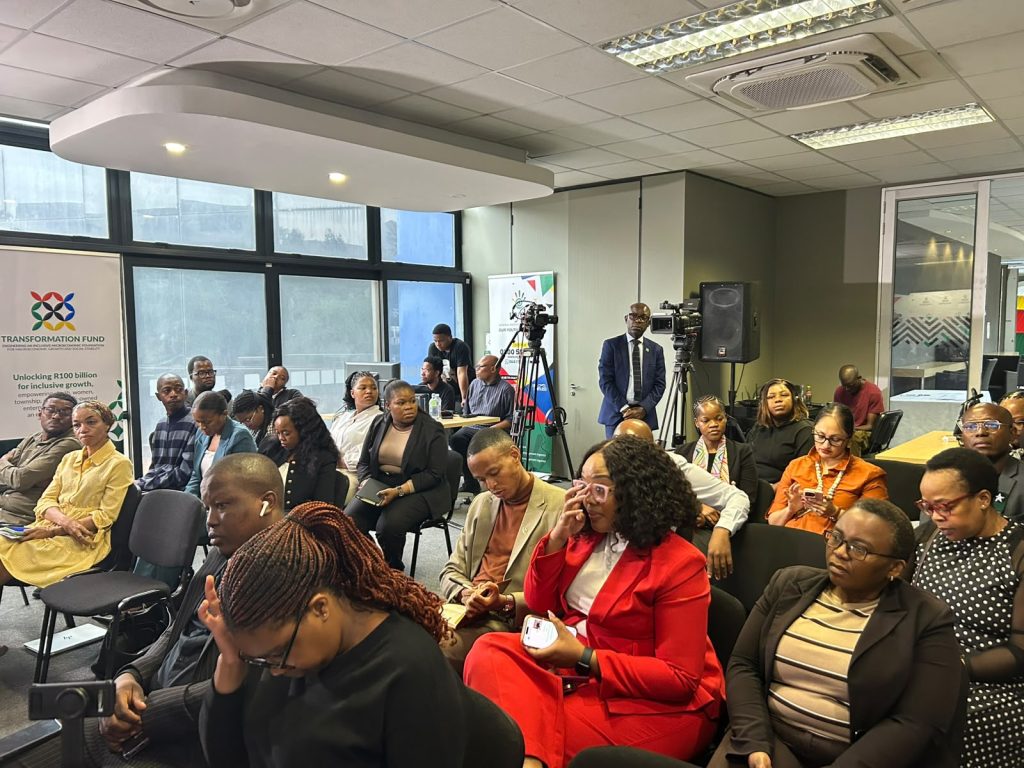
The National Youth Development Agency (NYDA) and National Empowerment Fund (NEF) have committed an initial R100 million to a National Youth Fund aimed at expanding finance for youth-owned businesses as unemployment among young South Africans remains at crisis levels.
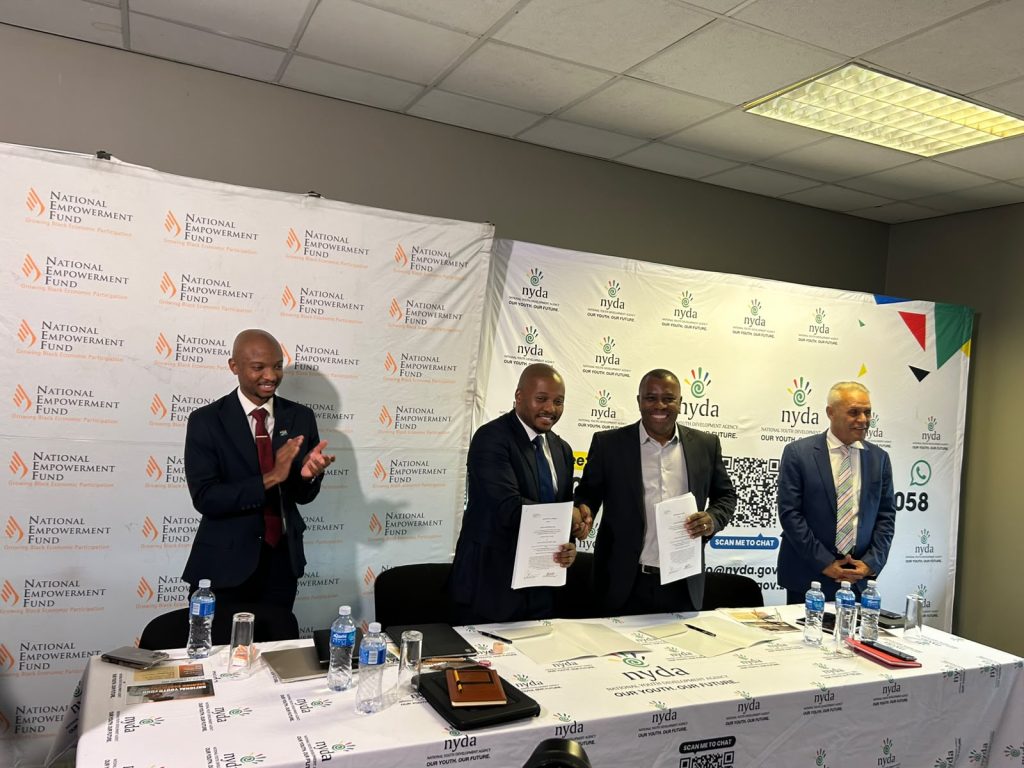
The two agencies signed a partnership agreement at the NYDA’s offices in Sunninghill, Johannesburg, on Monday, with NYDA Executive Deputy Chairperson Bonga Makhanya saying the NYDA would contribute R10 million and the NEF R90 million.
The agreement is intended to help operationalise the National Youth Fund, an initiative already provided for in the NYDA’s strategy, by combining NYDA grant support with NEF loan finance and business development assistance.
The partnership comes as South Africa’s official unemployment rate rose to 33.6% in the second quarter of 2026, according to Statistics South Africa.
About 3.8 million South Africans aged 15 to 24 were not in employment, education or training in the second quarter of 2026. This is a separate measure from unemployment among the broader 15-to-34 age group, where about five million young people were officially unemployed.
The NYDA said the fund would target economic opportunities across sectors including manufacturing, infrastructure, renewable energy, the green economy, digital industries, agriculture and small and medium-sized enterprises.
It is intended to support youth-owned businesses at different stages of development and help them grow, create jobs and enter established value chains.
Makhanya said the agreement demonstrated to young South Africans that the government was serious about expanding their participation in the economy.
He said the fund also raised the question of how government could move beyond fragmented interventions and develop a financing pathway capable of supporting young people to establish, grow and scale productive enterprises.
“The answer to that question was simply not another programme but a more comprehensive approach to funding in South Africa, which required us to project different stages of enterprise development from early stage support, business development to investment readiness and to large-scale growth capital,” Makhanya said.
“This was a very important conceptual choice because young entrepreneurs face different constraints at different stages, and we identified that our interventions alone address the very particular stage of their businesses which is a very valuable intervention.”
Makhanya said the NYDA was engaging other Development Finance Institutions (DFIs) to explore partnerships that could expand financing and business opportunities for young South Africans.
He said different institutions had distinct roles to play, with the NYDA able to develop a pipeline of young entrepreneurs while the NEF and other DFIs could provide specialised financial instruments and support businesses seeking to expand.
He said the NYDA’s Annual Performance Plan had set targets around accountability, governance and stakeholder engagement to improve coordination.
“We accept that our mandates are very broad. We are responsible for 25 million young people, and 25 million South Africans have a claim to this institution in any shape or form,” he said.
“It becomes very difficult to serve all of those, and if you go a little bit deeper, about 3.5 million who are not in employment, education and training would argue to have a greater claim to this institution.”
He said the R100 million remained small compared with the wider financing needs of small businesses in South Africa, where estimates have placed the national MSME financing gap at about R350 billion.
“Young people have no assets, they have limited collateral, they have shorter business track records and a lack of capital to finance their capital expenditure needs,” he said.
“This is why one of the most important conceptual designs was to move away from the one-size-fits-all approach to youth enterprise finance.”
He said the fund should not merely finance youth-owned businesses, but should direct investment towards sectors capable of expanding productive capacity and creating jobs.
He said these included manufacturing, industrialisation, renewable energy, the green and digital economies, infrastructure, construction and creative industries, as well as mining, agriculture and agro-processing.
Makhanya said the fund would be subject to governance measures intended to ensure public money was properly managed and reached young people who needed access to financing.
“This is a fund that must benefit the most dejected and downtrodden youth of this country, who have no hope in getting finance – by providing access to create a platform where those young people can access opportunities that they previously could not have access,” he said.
He called on businesses, banks and other institutions to contribute to the fund.
“We are also saying to government institutions, including the PIC, the DBSA, and all other DFI’s that there’s a fund in South Africa that they can model, look at, or either pour into or create their own, but the NYDA is also there to ensure that we oversee and support the work of ensuring that there’s youth set aside across South Africa to grow youth funding in the country,” he said.
“We are also not stopping there, we are going to go to all provinces and municipalities and demand that they also set aside new funds in South Africa. Premiers, MECs who have monies for youth, the NYDA is there to work with youth and to show that we can create a pipeline and support many more young people.”
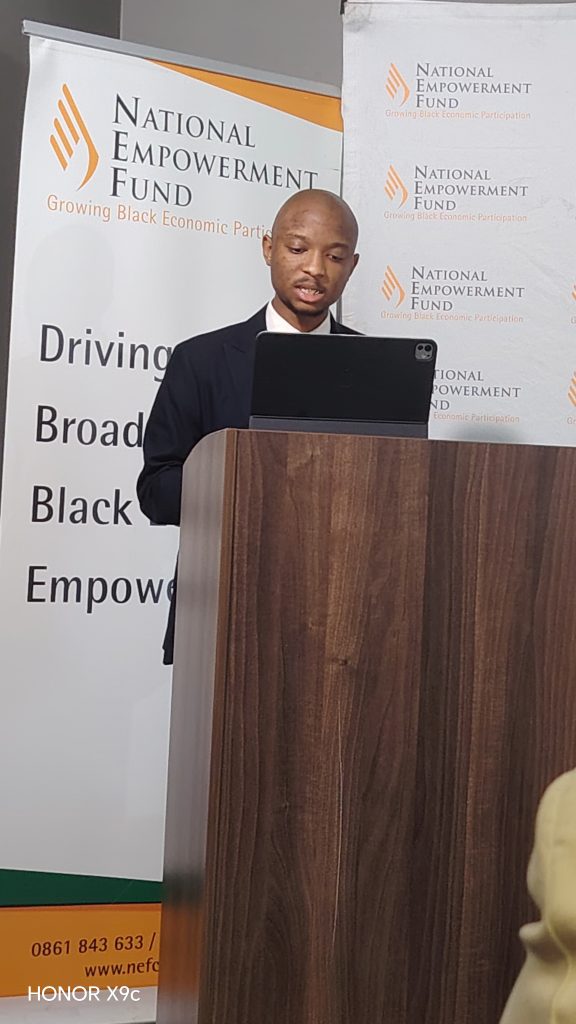
NEF board member Mohammed Bhabha said the agreement’s responsibilities included ensuring that public resources were properly managed and that the institutions reported on the results of their interventions.
He said improving skills alone would not solve unemployment.
“The economy must create opportunities for those skills to be used,” Bhabha said.
“Businesses must be able to grow, employers must create entry points into the workplace, and entrepreneurs must have a reasonable prospect of accessing customers.”
He said the partnership sought to combine the different capabilities of the two agencies, with the NYDA providing youth enterprise development, grant funding, training, mentorship and market-linkage support, and the NEF providing enterprise finance, investment assessment and ongoing business support.
“The partnership is intended to connect financing with this practical assistance,” he said.
Bhabha also cited existing youth development programmes, including the EastCape Academy initiative, which supported 50 beneficiaries in the Painting Artisan Trade over six months.
“It speaks to what we mean when we describe the NEF as a funder with a soul,” he said.
“The Altitude Group Contact Centre programme provided 50 young people with practical workplace experience in communication and customer service. The pilot achieved full employment absorption and generated an additional 38 jobs.”
He said the City of Johannesburg’s Waste-to-Work Programme supported 210 beneficiaries through skills development and enterprise support.
Across the NEF’s skills development initiatives, Bhabha said 405 new jobs were created during the 2025/26 financial year.
He said the NEF planned to expand partnerships involving artisan, technical and digital skills as well as entrepreneurship programmes.
Bhabha said entrepreneurship was only one part of the response to youth unemployment because not every young person wanted to start a business, while successful entrepreneurs could themselves become employers.
“The partnership provides for a steering committee with representatives from both institutions,” he said.
“This should help the teams monitor progress, resolve difficulties and keep their respective responsibilities clear.”
Bhabha said the approach was aligned with the broader objectives of the government’s Transformation Fund by seeking to connect capital, business capability and access to markets while maintaining governance and monitoring outcomes.
The Democratic Alliance has demanded that Higher Education and Training Minister Buti Manamela put a concrete, funded rescue plan for the National Student Financial Aid Scheme (NSFAS) on the table, saying that universities and students cannot continue carrying the cost of the scheme’s financial crisis.
DA higher education spokesperson Delmaine Christians said Manamela’s acknowledgement of a projected NSFAS shortfall was not enough, and called for urgent measures to deal with billions of rands owed to universities as well as a sustainable funding model.
“It is no longer sufficient for the Minister to acknowledge that NSFAS has a funding problem. Students and institutions need to know how he intends to fix it,” Christians said.
The DA’s call comes after Parliament was told last month that NSFAS owed universities about R10.49 billion in 2026 tuition payments, with only 61.5% of university allocations having been paid at that stage.
Manamela has warned that the scheme’s financial shortfall could reach R33 billion by 2029 if the current funding model remains unchanged.
Speaking to the media last week, Manamela said government was already engaging the National Treasury over an estimated R15 billion shortfall.
“Last year it was R13 billion. The year before it was R7 billion. The year before it was R5 billion. The first year when we introduced the policy was R2.5 billion. Estimates are that by 2029, we would have a shortfall of R33 billion at NSFAS,” Manamela said.
He said that the problem cannot be attributed solely to governance instability at NSFAS, saying the underlying funding policy itself is unsustainable.
But Christians said talk is cheap and that the figures demonstrated the urgency of producing an immediate intervention and a long-term solution.
“Despite repeated talk shops, the Minister has failed to provide an interim crisis plan to pay money owed, and a long-term sustainable funding model solution to the absolute disaster that is NSFAS. This cannot become another crisis simply rolled into the next academic year,” she said.
Manamela said about R56 billion of his department’s budget was directed towards the scheme.
He warned that a failure of NSFAS would have consequences extending beyond students who rely on monthly allowances.
The minister acknowledged that the scheme still funded hundreds of thousands of students, but said any failure to pay even one student was unacceptable.
Manamela said the government was also considering an income-contingent loan system as part of efforts to develop a more sustainable funding model.
Under such a system, students would not pay upfront and would begin repaying once their income reached a predetermined threshold.
He cited Australia as an example, but said any South African model would have to be adapted to local conditions.
Manamela said stabilising NSFAS and preparing it for the 2027 academic year were immediate priorities.
Gauteng has intensified its crackdown on illegally operating independent schools, with 32 schools served with closure letters since the beginning of the year and two school directors arrested.
The figures were revealed by Gauteng MEC for Education, Sport, Arts, Culture and Recreation Lebogang Maile during a media briefing on the state of independent schools in the province on Sunday.
According to the Gauteng Department of Education (GDE), officials visited 61 schools suspected of operating illegally between January and September 2026, with 32 subsequently served with closure letters.
“Between January and September 2026, 61 schools were visited and 32 were served with closure letters. Of the schools dealt with in 2026, seven were found to have ceased operating, four subsequently applied for registration with the department and two school directors were arrested,” Maile said.
The crackdown comes as Gauteng’s independent school sector continues to expand, with the province now having 1,083 registered and operational independent schools, up from 961 in 2021.
“The department does not regard the closure of an illegal school as the end of the matter because the learners still require education,” it said.
When an institution is found to be operating unlawfully, it is instructed to cease operating and the relevant closure process is followed.
The GDE said it does not simply shut down illegal schools without considering the learners affected.
Following a closure, the relevant education district is required to work with parents to place affected learners in lawful schools, ensuring that they do not lose access to education.
Maile said concerns about illegal schools could be raised by parents, community members or other government institutions.
“Officials then visit the premises and verify the institution’s registration and compliance documents before determining whether it is operating lawfully,” he added.
The department has urged parents to verify the registration status of independent schools before enrolling their children or paying fees.
“A school building, uniform, website or advertisement does not on its own prove that an institution is legally operating,” the department said.
Parents are advised to request the school’s Education Management Information System (EMIS) registration certificate and ensure that the EMIS number and physical address correspond with the school their children will attend.
“While GDE registration gives an independent school legal authority to operate, Umalusi accreditation relates to quality assurance for schools offering qualifications that fall within its mandate,” Maile said.
The issue has become increasingly significant as Gauteng’s independent school sector continues to grow.
Maile said the province had 1,083 operational independent schools in 2026, compared with 961 in 2021 — an increase of 122 schools over five years.
“These institutions currently educate 379,727 learners and employ 24,974 educators.”
However, the sector’s growth has also brought an increase in complaints from parents and learners.
Between 2024 and August 6, 2026, the department received 3,688 cases relating to independent schools.
Of these, 550 concerned registration, 518 involved outstanding fees linked to suspension or expulsion, and 422 related to outstanding fees and the withholding of transfer certificates or learner reports.
“The department also received 458 disciplinary and bullying cases, 345 admission or refusal-to-re-enrol cases and 312 curriculum and assessment queries,” Maile added.
“The government has a responsibility to ensure that its processes are applied consistently and transparently.”
The department said it monitors registration, governance, financial management, teaching and learning, learner and educator attendance, safety and examination requirements.
Independent schools may also be subjected to unannounced departmental visits to monitor leadership, governance and curriculum delivery.
“Parents should check a school’s legal status before enrolling a child,” Maile said.
Mamelodi Sundowns sent a warning to Kaizer Chiefs in the Gauteng Development League (GDL) title race, scoring 13 goals in two matches over the weekend as the defending champions closed to within three points of the leaders.
The Brazilians first demolished Africa School of Excellence 8-0 at Clapham High School, Tshwane on Saturday before returning to action on Sunday to hammer Tshwane rivals Rockefvs 5-0 at the Association of the Portuguese Community (ACCP) Sports Grounds.
Chiefs, meanwhile, suffered a damaging setback in their pursuit of the league title in Naturena, south of Johannesburg, going down 3-1 to Siwelele on Sunday.
The results have intensified the pressure at the top of the GDL, with Chiefs sitting on 56 points and Sundowns three points behind.
Crucially, Sundowns have two games in hand, giving the reigning champions a significant opportunity to overhaul the leaders.
Sundowns’ weekend started with an eight-goal demolition of Africa School of Excellence.
Ntokozo Madondo opened the scoring in the ninth minute after being set up by Thato Moalusi, before Thabang Makoba doubled the lead two minutes later following good work from Siyabonga Mbongo.
Makoba and Mbongo combined again in the 16th minute to make it 3-0, before Mbongo got on the scoresheet himself in the 39th minute, with Madondo providing the assist.
Mbongo completed his brace before half-time, again benefiting from Moalusi’s delivery, as Sundowns went into the break five goals ahead.
After the break, Liano Snyders made it 6-0 in the 51st minute after receiving a through pass from Mbongo, before Junior Masoeu struck twice to complete the rout.
Snyders provided the assist for Masoeu’s first goal just two minutes later and again supplied the final pass in the 76th minute as Masoeu completed his brace.
Having scored eight on Saturday, Sundowns returned to the field less than 24 hours later and produced another great performance against Rockefvs.
Madondo again found the net in the ninth minute before Zayyaan Nizamdin, Kgaogelo Monanyane and Inganathi Simana added goals to give Sundowns a commanding 4-0 lead at half-time.
Makoba added the fifth after the break to complete a six-point weekend for the champions.
The results came at the perfect time for Sundowns, who had been chasing Chiefs at the top of the table while carrying games in hand.
Chiefs’ defeat to Siwelele means the gap has now narrowed further, with the Phefeni Glamour Boys unable to match Sundowns’ momentum.
Siwelele took control of Sunday’s match through Lizalize Mahumza, who opened the scoring in the 18th minute after an assist from Kabelo Mofokeng.
Mahumza struck again three minutes before half-time to put Siwelele 2-0 ahead.
Chiefs found a late lifeline when Lebo Dhlamini scored in the 89th minute, but any hopes of a comeback were ended when Onthatile Lemao scored in the fourth minute of stoppage time to seal a 3-1 victory.
The defeat is a blow to Chiefs’ hopes of completing a successful GDL campaign. The club have already won the GDL Top 8 title and the Gauteng Engen Knockout Challenge this season, but their pursuit of the league championship is now under serious threat.
Elsewhere in the under-19 division on Saturday, Prestige Football Academy and Remember Elite Sport Academy drew 1-1, while Panorama beat Rockefvs 2-1.
Jomo Cosmos defeated the University of Pretoria (Tuks) 2-1, Pitso Mosimane Youth Football beat Highlands Park 2-1 and Randburg overcame Future of Africa 3-1.
Kathorus Hyper Academy defeated Seven’s Academy 2-0, while Joburg City and Wits Juniors drew 1-1.
Sundowns also enjoyed strong results across the younger age groups, beating Africa School of Excellence 5-2 in the under-17s, 2-0 in the under-15s and 6-0 in the under-14s.
Their under-13 side completed an extraordinary weekend by beating Rockefvs 10-1.
With Sundowns having two games in hand on Chiefs, the champions now have the league leaders firmly within their sights.
The two wins have reduced the deficit to three points, while the 13 goals provided further evidence that the title race could be heading for a dramatic finish.
The Mpumalanga government has ordered officials to urgently resolve problems with scholar transport after the introduction of new contracts left learners stranded and triggered protests in parts of the province.
The provincial departments of Public Works, Roads and Transport and Education said outstanding problems should be addressed before the end of this week following the introduction of the new scholar transport contracts, which they said came into effect on 1 September.
The departments convened a high-level joint meeting on Sunday to assess the rollout and the disruptions that have followed it.
That meeting was directed by Public Works, Roads and Transport MEC Thulasizwe Thomo and Education MEC Lindi Masina.
The intervention follows complaints from several communities since the new arrangements took effect.
More than 200 learners in Spelanyane and Buyelani in the KaBokweni area were reported to have been left without transport for three days earlier this month after several operators allegedly lost their routes under the new contracting system.
Residents barricaded roads with burning tyres on 4 September, demanding the provincial government step in. The Department of Public Works, Roads and Transport said at the time that the contracts had been awarded through a formal tender process to operators who met the tender requirements.
Learners and community members in Vukuzenzele near Delmas also protested on 3 September over complaints that some pupils had been left behind and that buses were not reaching parts of their designated routes.
The procurement process covered five-year scholar transport contracts in Mpumalanga’s Ehlanzeni, Gert Sibande and Nkangala districts.
The two departments said on Monday that despite the disruptions, scholar transport was operating “normally” in most parts of the province, while acknowledging that problems had affected some learners.
“The meeting therefore adopted a coordinated and solutions-driven approach to address these challenges,” the departments said.
“This includes closely monitoring the developments on the ground, identifying areas requiring immediate intervention, and putting in place practical measures to resolve outstanding challenges.”
Officials from both departments have been instructed to strengthen monitoring, engage directly with affected schools and communities and work with scholar transport operators and other stakeholders to resolve problems.
The departments appealed for cooperation and constructive engagement while officials work to resolve the problems.
“The identified challenges must not be allowed to undermine the broader mission of ensuring quality education and creating an enabling environment in which every learner can learn and thrive,” the departments said.
“The safety and wellbeing of learners remain paramount and every effort is being made to ensure smooth operations of scholar transport in the Province,” the departments said.
The government also appealed to affected communities not to resort to intimidation, threats, violence or deliberate disruption of scholar transport operations.
“Such actions place learners, drivers, operators, and members of the public at risk and undermine the collective responsibility to protect the right of learners to education.”
The National Student Financial Aid Scheme (NSFAS) has restored funding for 182 Tshwane University of Technology (TUT) students who were defunded under the N+ rule after incorrect qualification codes were entered or updated.
The funding was restored after the Office of Deputy Minister of Higher Education and Training Yusuf Cassim intervened following more than 300 complaints submitted by TUT students through his help desk.
“Although these issues might seem administrative, for students they are highly personal, affecting their ability to register, access allowances for meals, transport or accommodation, and continue their studies. No student should miss academic time due to incorrect data or unresolved issues between the institution and NSFAS,” Cassim said.
The cases submitted to the help desk primarily concerned students who had been defunded under the N+ rule, pending GAP investigations, dual registrations and data-sharing problems between TUT’s financial aid office and NSFAS.
The N+ rule limits NSFAS funding to the minimum duration of a qualification plus one additional year, or two additional years for students with disabilities.
After receiving the cases from Cassim’s office, TUT and NSFAS worked through the individual files and identified 182 students whose qualification codes had been incorrectly updated.
The university subsequently made the necessary corrections, allowing NSFAS to restore the affected students’ funding.
TUT has confirmed that the funding has been fully restored and that September allowances have been paid to the 182 students.
Cassim visited TUT on Wednesday, accompanied by officials from the Department of Higher Education and Training’s university branch and NSFAS.
The delegation met TUT’s senior management, led by vice-chancellor Professor Tinyiko Maluleke, as well as representatives of the institution’s Student Representative Council.
The engagement also uncovered a separate problem involving more than 1,300 students whose accommodation payments remain unresolved.
According to the ministry, 1,212 students had been placed in accredited accommodation after the NSFAS portal closed, but their accommodation costs had not subsequently been paid.
A further 115 students had their NSFAS funding approved after the portal closed and consequently faced the same accommodation payment problem.
Cassim has written to the NSFAS board, asking that the cases be investigated without delay and that affected students be assisted immediately.
The intervention comes as NSFAS continues to work through a broader backlog of funding and allowance disputes affecting students at universities and TVET colleges.
The scheme has confirmed that payments have been processed for students whose GAP investigations were successfully concluded.
Nationally, funding has been reinstated for 2,476 TVET college students, with payments for students with valid registrations processed and issued from 25 August.
A further 3,234 university students have had their funding reinstated.
Cassim’s office said the deputy minister had been consistently following up on students whose funding was restored after the conclusion of GAP investigations to ensure they also received their outstanding allowances.
NSFAS has indicated that students whose GAP investigations have been successfully concluded but who have not yet received their allowances can approach the help desk to have their cases escalated.
Dual registrations have also emerged as a significant source of funding problems.
NSFAS received 2,982 records involving students who were registered at more than one institution. Of these, 1,303 cases have been confirmed and are being paid.
At TUT, 16 cases of dual registration had already been resolved, but the students’ funding had not yet been restored.
Cassim has urged NSFAS to prioritise the outstanding cases.
The ministry said the issues highlighted during the TUT engagement demonstrated how administrative and data-management problems can have immediate consequences for students’ ability to remain at university.
The latest intervention follows growing pressure on NSFAS and universities to resolve funding disputes quickly, particularly where students face disruptions to accommodation, transport and living allowances.
The first five years of life lay an important foundation for children’s future schooling, health and earnings. Yet over 77% (table 2) of children in sub-Saharan Africa don’t have access to early childhood care and education. This places them at risk of not reaching their development potential.
In response, governments across Africa are increasingly committing to expanding enrolment in pre-primary school.
But research suggests that expanding enrolment is not enough. It’s also important to create healthy, nurturing learning environments that help prepare children for primary school.
Economists like us have an interest in this because we want to be able to help design effective and scalable early childhood education programmes and policies. We need to know:
What types of pre-primary education programmes are offered?
What effects do these programmes have on children’s developmental outcomes?
Which components of pre-primary education bring about these effects?
We set out to answer these questions by reviewing the most recent evidence available on pre-primary education programmes in low- and middle-income African countries. Our research examined why some pre-primary education programmes may be more successful than others.
Our study identified and reviewed the findings from six programmes carried out by local governments in The Gambia, Ghana, Kenya, Malawi and Mozambique. Most were in poor, rural and remote areas.
We found that most programmes focused on play-based learning. And, on average, they generated positive effects on children’s development. The research also suggests that programmes that offer support for parents may generate the largest impacts on children’s development outcomes.
This points to the need for programme planners to recruit high-quality teachers and personnel who can effectively engage with both children and parents.
Studies of child development
To address our research questions, we began by searching for studies on the effects of pre-primary education programmes in low- and middle-income countries in Africa. We only reviewed studies with large enough populations to be meaningful and that used rigorous ways of evaluating the results.
Six programmes met our inclusion criteria. There was one each in four countries – The Gambia, Mozambique, Kenya and Malawi – and two in Ghana.
In particular, we examined the effects on two categories of children’s development: cognitive and socioemotional.
Cognitive development. This refers to a child’s thinking process. This outcome is measured by assessing children’s numeracy, literacy, spatial ability, language, communication and executive function skills, such as attention and working memory.
Socioemotional development. This encompasses a child’s social and emotional competence, temperament and behaviour regulation. It is measured by assessing children’s awareness of other people’s feelings and how they behave towards others.
On a broad level, we focused on the quality of the classroom environment and the quality of instruction. In particular, we looked at interventions designed to improve teaching practices and teacher-child interactions through play-based learning.
All programmes included teacher training. Some also provided teachers with resources such as basic play and learning materials or teacher guides. In addition, two programmes offered a monthly stipend to teachers who completed training. Teachers did not typically earn a salary.
Most also engaged with parents about school-related activities or educated parents about positive caregiver practices. For example, they encouraged parents to read and play with children, reduce harsh discipline and understand their influence on child development.
Success of programmes
On average, the programmes were successful in improving children’s cognitive, social and emotional development. This finding is important because improvements in these skills early in life are associated with better educational, employment and economic outcomes later in life.
These longer-term benefits can be substantial. For example, in the United States, every dollar invested in the Perry Preschool Program, an early childhood education programme targeted at low-income youth, is estimated to have generated approximately US$7–US$12 in benefits to society.
To explain the positive effects in low- and middle-income African countries, evidence points to the importance of both the classroom and the home environment.
First, successful programmes generally improve teacher practices and classroom quality. Our research shows that teacher training can decrease teacher burnout, increase the use of appropriate instruction materials and improve the quality of teacher-child interactions.
For example, in Ghana, training encouraged teachers to consider children’s ideas during lessons and create opportunities for children to reason and solve problems.
Second, programmes that engage parents may be even more effective in improving children’s development. For example, a programme in Malawi that integrated group-based parenting education sessions into pre-schools with trained teachers brought about even greater gains in children’s language skills and prosocial behaviours.
This programme focused on teaching parents tools for stimulating children’s development and promoting health, such as reading and playing with children and washing hands.
Third, the quality of implementation matters. Recruiting high-quality, experienced teachers is important for the success of the programme.
Where the researchers didn’t find positive programme outcomes, it may have been attributed to inexperienced staff in The Gambia or the difficulties personnel in Ghana experienced in communicating with parents about new approaches to early childhood education.
Implications for policy and practice
The findings suggest that positive caregiving practices should be delivered by qualified personnel who can effectively communicate and engage with caregivers who may have low levels of education or limited access to resources.
Our research has implications for Sustainable Development Goal 4.2. The goal is to provide all children with access to quality pre-primary education by 2030 so that they are ready to enter primary school.
Katherine Theiss is Assistant Professor of Economics, Radford University. Subha Mani is Professor of Economics, Fordham University. This article was first published by The Conversation.
The Department of Higher Education and Training is considering expanding its Entrepreneurship Development in Higher Education (EDHE) programme to TVET colleges as government seeks to equip more students with the skills and support to start businesses and create jobs.
Deputy Director-General for the University Education Branch at the department, Professor Thandi Lewin, said discussions were already under way on how the programme, or a similar model, could be introduced in TVET colleges.
Lewin was speaking to Inside Education on the sidelines of the 2026 EDHE Absa Studentpreneurs Indaba at the Birchwood Hotel and OR Tambo Conference Centre in Boksburg on Thursday.
The two-day national gathering brought together about 500 student entrepreneurs, academics, investors, university leaders, industry stakeholders and entrepreneurship ecosystem partners.
Lewin said the expansion was particularly important as TVET colleges increasingly move towards occupational programmes.
“But I think as the TVET colleges go more into the occupational programmes and into that space, we need to really think about how this programme, or a similar programme, can be set up in the TVET colleges. So it is something we’re talking about as a department,” Lewin said.
She said TVET colleges could draw on the experience gained from implementing the programme at universities.
The EDHE programme is currently funded through the University Capacity Development Programme, with a portion of the subsidy allocated to universities being used to support the initiative.
“At the moment, the funding for this programme comes through the University Capacity Development Programme, so it’s specifically a portion of the subsidy that we provide to universities that is top-sliced for this programme,” Lewin said.
“It’s something that could have huge traction in TVET colleges and we can learn a lot from how we’ve used the university programme to implement it in TVET colleges.”
The programme is aimed at making entrepreneurship a broader part of the higher education experience, rather than focusing only on students who already run businesses.
Lewin said it had three main pillars.
The first supports student entrepreneurship through programmes designed to help students start and develop businesses.
The second seeks to embed entrepreneurship in the curriculum so that students, regardless of their field of study, are exposed to entrepreneurial thinking.
The third focuses on developing entrepreneurial universities that can turn research, teaching and innovation into real-world solutions.
“The idea of the programme is to ensure that university students get access to entrepreneurship education throughout their degrees, regardless of which field they’re going into,” Lewin said.
She said the broader objective was to ensure students could either find employment after graduation or create employment for themselves and others.
However, balancing entrepreneurship with academic responsibilities remains a challenge for students running businesses while studying.
Lewin said universities provided various forms of academic and student support, while mentorship through EDHE could help student entrepreneurs manage competing demands.
“The difficulty that probably students who are also running businesses face is the same that students who also work are facing: how to balance your academics with earning money if you are working on the side?” she said.
She said students who chose entrepreneurship needed to develop the ability to manage both their studies and businesses.
“Through this programme, I think some of the mentorship work that gets done through the EDHE programme really helps with that,” Lewin said.
The department also acknowledged that entrepreneurship training alone was not enough, particularly when students and graduates need funding, mentorship and other support to grow their businesses.
Lewin said government departments and agencies would need to work together to ensure young people could access the support needed to turn entrepreneurial ideas into sustainable businesses.
“We also need to work across government to ensure that when people do graduate, and even if they don’t, that they have access to funding opportunities and to mentorship and support that they can gain access to,” she said.
This includes agencies such as the National Youth Development Agency, the Department of Trade, Industry and Competition and the Department of Small Business Development.
The push comes as government increasingly looks to entrepreneurship and skills development as part of its response to high youth unemployment.
Lewin said graduates were generally less likely to be unemployed than young people without higher education qualifications, but the department wanted universities to prepare students to enter the labour market or create opportunities for others.
“The fact is that if you graduate from university you’re far less likely to be unemployed than if you are not making it into university. So graduate unemployment is not as high. Obviously, what we want is to create young people at universities who are able to go out into the world and either find employment or create employment for themselves and for others,” she said.