Uncategorized

OWLAG honours teachers behind 100% matric success

By Charmaine Ndlela 

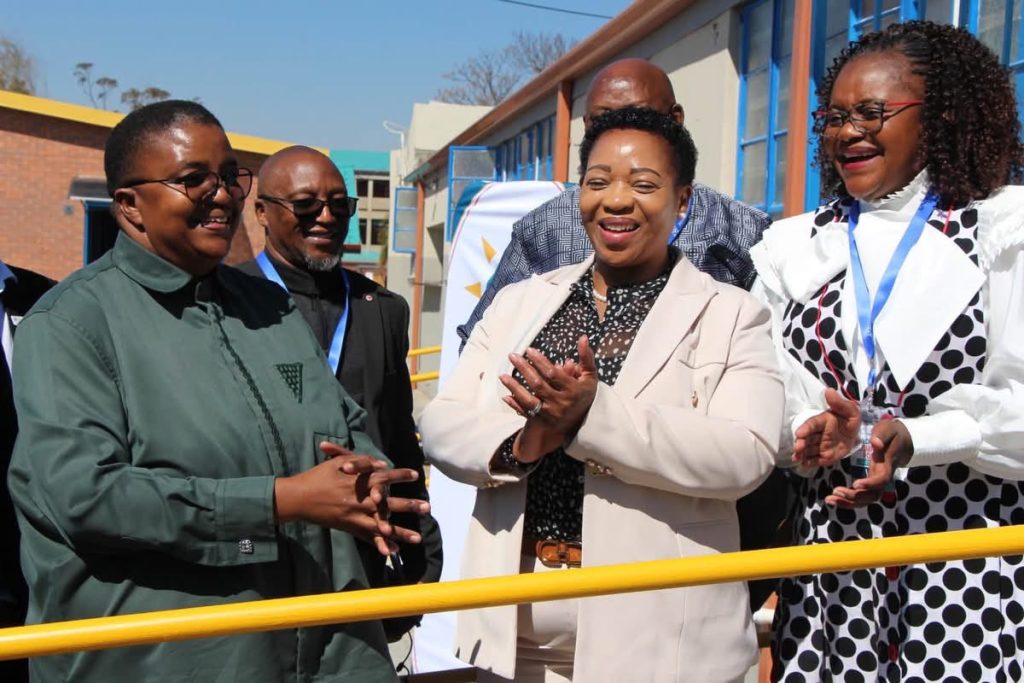
The Oprah Winfrey Leadership Academy for Girls (OWLAG) on Monday honoured its teachers for their outstanding contribution to the Class of 2025’s exceptional matric performance.

The Class of 2025, also known as the Zenith cohort, achieved a 100% pass rate and a 100% Bachelor’s pass. All 44 learners passed, with a group average of 76% and an average of 2.98 distinctions per learner. More than half of the class obtained three or more distinctions, while 5% ranked among the top 1% nationally in IEB subjects. 

The awards recognised departmental teaching excellence using measurable indicators drawn from the Independent Examinations Board (IEB), aligned with national best practice.

Head of Academics Dumisani Tshabalala said the awards reflect the extraordinary journey of the cohort. He said that many learners joined the academy later than usual and experienced disrupted schooling due to the COVID-19 pandemic.

Unlike a typical five-year academic journey at OWLAG, some learners spent only two to three years at the school, having faced significant gaps in their foundational education. Tshabalala emphasised that teachers played a critical role in closing these gaps through “compensatory education”.

“In the space of a few years, teachers spent countless hours beyond the normal school day, including weekends, to support learners academically,” he said. 

“What they have achieved is nothing short of extraordinary.”

The Teacher Awards, presented at departmental level, highlighted the collective effort behind learner success.

Among the top-performing departments were:

  • The Languages Department (Afrikaans FAL & English HL) produced learners in the national Top 1%
  • Physical Sciences was recognised as the most improved subject
  • IsiZulu First Additional Language achieved 100% distinctions, exceeding the national average by over 13%
  • Life Orientation contributed the most distinctions, with all learners scoring above 80%
  • Mathematical Literacy recorded 100% of learners above 70%
  • Sesotho First Additional Language exceeded the national average by more than 15 percentage points.

A total of 14 teachers were recognised across categories, reflecting a strong culture of collaboration and shared accountability, according to the school.

Guest speaker Chumani Nyati praised teachers for their transformative role, saying the theme “Great Teachers, Greater Impact” reflected the lived reality of education.

“A great teacher does far more than deliver lessons. They create curiosity, inspire belief, and shape the future one learner at a time,” Nyati said.

She added that teachers play a crucial role in fostering belonging and confidence among learners, particularly those from disadvantaged backgrounds.

The school said Monday’s event marked its first year of honouring teachers for their role in the pass rate, and that it would continue to do so moving forward.

INSIDE EDUCATION

The post OWLAG honours teachers behind 100% matric success appeared first on Inside Education..

Uncategorized

R5m boost for KZN learning centre as Gondwe backs second-chance education

By Lebone Rodah Mosima

The Department of Higher Education and Training (DHET), in partnership with Services SETA, has secured R5 million to support the further refurbishment and upgrading of the Emlandeleni Community Learning Centre in Ndwedwe, KwaZulu-Natal.

DHET deputy minister Dr Mimmy Gondwe announced the investment during a visit to the centre on Monday.

“Today is not only about announcing key infrastructure upgrades to Emlandeleni Community Learning Centre. It is about restoring dignity, reclaiming opportunity, and affirming to the people of Ndwedwe that you have not been forgotten,” Gondwe said.

She said the centre formed part of an effort to repurpose underutilised public infrastructure for community development.

Following the rationalisation of schools by the KwaZulu-Natal Department of Basic Education, a number of facilities were transferred to the department.

“Through the support of the national Department of Public Works and Infrastructure, this facility has been refurbished and prepared for its new purpose and is now operating as the Emlandeleni Community Learning Centre,” Gondwe said.

The centre serves out-of-school youth and adults who are not in employment, education or training, and is intended to give people a second chance to learn and gain skills.

“Across our country, there are many young people and adults, who for different reasons, did not complete their schooling. Some were held back by poverty, whilst others were held back by circumstances, and others were held back by the responsibilities they had to carry too early in life. But none of them should be written off,” she said.

“Learning centres such as this one exist to say that it is never too late to learn, never too late to rebuild, and never too late to participate meaningfully in the economy of your community and your country.”

She said South Africa could not afford to have a generation disconnected from learning, skills and opportunity.

“That is why CET Colleges are not a ‘by the way’ or a side initiative. They are central to how we respond to unemployment, inequality, and the NEET crisis.”

The centre and its satellite sites have enrolled more than 1,000 students this year.

According to Gondwe, the enrolments were across “a range of academic, skills, and occupational programmes, ranging from foundational learning to practical training in areas such as workplace readiness, first aid, baking, sewing, and other critical income-generating skills”.

Gondwe said access alone was not enough.

“What we provide, as the PSET system, must be meaningful and impactful. It must build confidence, restore dignity, and create real pathways into employment, entrepreneurship, or further education,” she said.

INSIDE EDUCATION

The post R5m boost for KZN learning centre as Gondwe backs second-chance education appeared first on Inside Education..

Uncategorized

NSFAS placed under administration

By Johnathan Paoli

The National Student Financial Aid Scheme (NSFAS) has been placed under administration following the resignation of two board members, including acting chairperson Mugwena Maluleke.

The student funding agency has been grappling with governance instability, audit failures and disruptions to funding processes affecting thousands of beneficiaries.

NSFAS has also operated without a permanent chief executive for more than 30 months, a vacuum widely cited as a key factor behind tensions between the board and the minister over the appointment of a permanent CEO.

Manamela announced the appointment of Professor Hlengani Mathebula as administrator on Monday, in a move he said was aimed at restoring stability at the embattled scheme.

“This decision was not taken lightly. It follows a long process of engagement, legal assessment, governance intervention and consideration of alternatives,” Manamela said.

“We took this step because the government cannot ignore potential legal irregularities in the constitution of a statutory body entrusted with billions of rand in public funds and the futures of millions of students.”

Manamela outlined a series of governance and operational failures that led to the intervention, including a disclaimer audit outcome for the 2024/25 financial year, material irregularities flagged by the Auditor-General, and persistent weaknesses in internal controls.

A March directive from the minister highlighted “serious data integrity concerns”, unresolved student appeals due to system deficiencies, delays in ICT modernisation, and student accommodation failures “affecting student dignity and safety”.

“The real question became this: was NSFAS, as an institution, functioning effectively, sustainably and credibly in the interests of students and the country?” he said.

He said in light of the increasing instability within the board, each remaining board member was written to individually and afforded an opportunity to give their take on the challenges of the institution, possible alternatives and whether intervention was necessary.

In addition, he said the department also considered possible alternatives to placing NSFAS on administration.

These included filling vacancies, appointing further interim leadership, continued directives, intensified departmental oversight and allowing more time for governance processes.

But, the minister said no satisfactory alternative to administration was found.

“Ultimately, however, I was not satisfied that the ordinary governance arrangements were capable of adequately stabilising the institution within the urgency and seriousness of the challenges confronting NSFAS,” he said.

“I was also not satisfied that continued Board-led governance, in the prevailing circumstances, would provide the level of assurance required to restore institutional stability, protect students and safeguard public resources,” he added.

Manamela said Mathebula brings more than three decades of experience across governance, finance and higher education leadership, positioning him to lead the turnaround.

“[The] government is therefore confident that Professor Mathebula possesses the experience, independence, leadership capacity and institutional understanding necessary to stabilise NSFAS during this period,” he said.

Mathebula currently serves as the Director of Tshwane University of Technology’s Business School and has held senior roles in institutions including the South African Reserve Bank (SARB) and the South African Revenue Service (SARS).

According to the minister, Mathebula’s mandate will centre on “stabilisation, accountability, operational continuity and institutional renewal”, including strengthening governance, addressing audit weaknesses, accelerating ICT reforms, and resolving student funding and accommodation challenges.

The administrator will also be empowered to appoint specialist expertise in areas such as audit remediation, ICT systems, governance, finance and legal services.

Manamela moved to reassure students and institutions that the intervention would not disrupt funding operations.

“Let me state this clearly: student funding will continue. Allowances will continue. Appeals processes will continue. Universities and TVET colleges will continue engaging NSFAS operationally,” he said.

He added that the administration was a temporary but necessary step to rebuild credibility.

“The purpose of the intervention is precisely to protect continuity and restore confidence. This intervention is not about personalities. It is not about factions. It is about protecting students, stabilising a critical public institution, restoring accountability, and ensuring that NSFAS performs its mandate effectively and lawfully,” he said.

He also pointed to ongoing challenges in student accommodation, noting that while many universities have taken over provision, private providers remain part of the system.

“So the reality is that for some of the challenges to be resolved, we have to design an ecosystem that responds, you know, to the prevailing material conditions in our institutions, and to make life easier for students,” he said.

In closing, Manamela acknowledged the role of former and remaining NSFAS board members, saying many had served “under challenging circumstances and engaged the process in good faith”.

He reaffirmed the government’s commitment to ensuring NSFAS fulfills its mandate to poor and working-class students.

“Government remains fully committed to ensuring that NSFAS succeeds. We will continue engaging institutions, students, Parliament, National Treasury and the public as this process unfolds,” he said.

INSIDE EDUCATION

The post NSFAS placed under administration appeared first on Inside Education..

Uncategorized

Waterkloof edge Collegiate to claim Belgotex girls hockey title

By Johnathan Paoli

Hoërskool Waterkloof has won the 2026 Belgotex Sport Girls Hockey Challenge title with a 1-0 victory over Collegiate Girls’ High School.

Playing at the Western Province Cricket Club in Newlands on Sunday, Waterkloof secured the win by a late goal from Elaine Haycock in a tightly contested final.

The decisive moment came in the 57th minute of a match that appeared destined for a penalty shootout.

With both teams locked in a tactical battle and struggling to break each other down, Haycock found a gap in Collegiate’s defence and fired home the only goal of the match.

Her strike capped off an unbeaten run for the Pretoria-based side, who recorded six consecutive victories en route to lifting the prestigious under-19 title.

Waterkloof’s triumph sees them being the second winners of the tournament, succeeding Paarl Gimnasium.

Waterkloof coach Omari Pienaar-Geyer, speaking after the match, praised her team’s resilience and unity.

“We are incredibly proud of the girls for winning the Challenge. Our midfield worked super hard. It could’ve been anyone’s game, but we’re happy it was ours,” Pienaar-Geyer said.

The final lived up to expectations, with both teams trading attacking phases but failing to convert their chances.

Collegiate, known for their tactical discipline, restricted Waterkloof’s attacking freedom for much of the encounter.

Pienaar-Geyer acknowledged the challenge posed by their opponents, noting her side had to adapt under pressure.

“At times, we had to reset and dig deep defensively, but every player held their role and stood strong. We defended with real grit when it mattered and scored some unbelievable team goals that came from everyone contributing,” she said.

Collegiate coach Michael Abrahams said his team had relied on structure and cohesion throughout the tournament.

“We made sure that we stuck to our processes and principles. We also made sure that we were always team-oriented and just supporting one another,” he said.

Despite falling short in the final, Collegiate reinforced their status as one of the top schoolgirl hockey teams in South Africa this season.

Their campaign included notable wins over Rhenish, Oranje Girls High school, and Diocesan School for Girls (DSG) Makhanda, following a strong showing at the National All Girls Festival earlier in the year.

Individual honours at the tournament reflected standout performances across multiple teams.

Waterkloof midfielder Lenique Vogel was named Player of the Tournament, while Paarl Gimnasium striker Alanda Rademeyer secured the Top Goalscorer award after netting 12 goals.

DSG Makhanda goalkeeper Abigail Meihuizen earned recognition as Goalkeeper of the Tournament.

Waterkloof’s route to the title included a dramatic quarterfinal victory over St Mary’s DSG Kloof, where they advanced 3-2 via a penalty shootout, before edging defending champions Paarl Gimnasium 3-2 in the semifinals.

Durban Girls’ College claimed the Plate title with a 2-1 win over St Anne’s, while St Andrew’s School for Girls secured the Bowl after a penalty shootout victory against St Mary’s Waverley.

The four-day tournament also featured under-16 and under-14 divisions, showcasing emerging talent from across the country.

Paarl Gimnasium successfully defended their under-16 crown with a commanding 4-0 win over St John’s DSG, while Bloemhof captured the under-14 title with a 2-1 victory over Rhenish.

INSIDE EDUCATION

The post Waterkloof edge Collegiate to claim Belgotex girls hockey title appeared first on Inside Education..
Uncategorized

Tolashe tells parents not to accept compensation from child abusers

By Charmaine Ndlela

Social Development Minister Sisisi Tolashe has told parents not to shield those who exploit children by accepting money, cattle or goats as compensation.

Tolashe made the call as government launched Child Protection Month in KwaZulu-Natal. She told those at the event that communities, civil society and law enforcement agencies should work together to protect children from abuse, violence, statutory rape and exploitation.

The launch took place at the Prince Mangosuthu Sports Field in the eDumbe Local Municipality.

Delivering her keynote address, Tolashe said South Africa needed a whole-of-society response to ensure children are safe.

“Today we come here to fight a battle of different kind, the most vulnerable in our society, children. We are here today to fight child abuse, violence against children, statutory rape and child exploitation in our society,” she said.

Tolashe called on parents to prioritise children’s safety over compensation from perpetrators.

“[N]o matter how poor your family is, stop shielding the perpetrators by accepting money, cattle or goats as inhlawulo (compensation). Those who sexually exploit vulnerable girls and boys from vulnerable families must be identified, reported, prosecuted and face the consequences of their heinous actions.

“Dealing decisively with the scourge of gender-based violence and femicide, which President Cyril Ramaphosa has rightfully declared a national disaster, starts with reporting and robust prosecution of statutory rapists and ensuring that every child in South Africa knows his or her rights,” she said.

Various stakeholders, including children, civil society groups, NGOs and the United Nations Children’s Fund, were at the launch.

UNICEF delivered a message of support, saying that government alone cannot win the battle against violence affecting children. It said child protection starts at home with parents, continues at schools with teachers, and requires the involvement of society as a whole.

KwaZulu-Natal MEC for Social Development Mbali Shinga called on South Africans to play an active role in protecting children.

“Child Protection is a call to action that reminds all of us to create a safe environment for children. In KZN, we are working every day to protect children, together with all stakeholders. I call on all South Africans to work together with law enforcement to create a safer environment for children,” she said.

The Department of Social Development said the launch marked a heightened period of action by various stakeholders, but warned that child protection should not be treated as a once-off event.

It said the campaign would include engagements with children, traditional leaders, religious leaders, parents, caregivers and other stakeholders, all aimed at ensuring children are protected.

INSIDE EDUCATION

The post Tolashe tells parents not to accept compensation from child abusers appeared first on Inside Education..

Uncategorized

UJ brings ancient Melville Koppies smelting site to life with AR

Staff Reporter

The University of Johannesburg (UJ) has launched an augmented reality heritage experience at the Melville Koppies Nature Reserve.

The project uses digital technology to reconstruct a 500-year-old African smelting site without disturbing the protected landscape.

Launched on Workers’ Day, it was developed in collaboration with the Melville Koppies Management Committee and led by Dr Izak Potgieter and Dr Herman Myburgh of UJ’s Metaverse Research Unit.

It allows visitors to use their smartphones to scan QR codes and view a historically grounded, three-dimensional reconstruction of the ancient smelter overlaid on the existing remains.

Through animation and narration, the site is presented as an immersive learning environment focused on early African engineering, resource use, and environmental awareness.

UJ said the project pays tribute to the labour, craftsmanship and metallurgical knowledge of the pre-colonial ancestors of today’s Sesotho and Setswana-speaking communities, placing indigenous innovation at the centre of the heritage experience.

The university’s Department of History and Language Unit also worked on the project to ensure that the experience is academically rigorous and accessible through multilingual narration.

“Melville Koppies has long stood as a place of deep historical and cultural significance. For many of the present generation, these histories can feel distant and this project steps in as not just a technological achievement but an intellectual and cultural bridge.

“Through augmented reality we can reconstruct, reanimate and re-experience a vital aspect of our shared history,” said Professor Kammila Naidoo, Dean of the Faculty of Humanities, at the launch.

UJ said the technology had been designed to be affordable and widely accessible, with even low-cost smartphones able to access the QR code and view the animated storytelling experience.

Potgieter said the project showed how history was embedded in the landscapes people inhabit and the communities they build.

“The site offers a rare opportunity to represent pre-colonial African technological knowledge in-situ,” said Dr Potgieter. “By animating the past, we enable visitors to engage with history in a way that is immediate, accessible, and deeply meaningful.”

The AR experience will also be made available at all UJ libraries in an effort to attract students to the site.

Jenny Grice, of the Melville Koppies Management Committee, said the project would add to the range of activities already taking place at the reserve and help draw more visitors, young and old.

UJ said the initiative could set a new standard for preserving cultural memory through digital storytelling while protecting conservation landscapes.

INSIDE EDUCATION

The post UJ brings ancient Melville Koppies smelting site to life with AR appeared first on Inside Education..

Uncategorized

Ticket sales open for Joburg Zoo Mother’s Day Concert

By Lebone Rodah Mosima

Johannesburg Zoo is expecting more than 8,000 people at its annual Mother’s Day Concert on Sunday, 10 May 2026, with Ami Faku set to headline the four-hour live music event.

Johannesburg City Parks and Zoo (JCPZ) said that the concert will take place at the zoo and will combine live music, family activities, guided tours, and picnic spaces.

This year’s line-up includes The Soil, Bongi Archi, Phoebe Mgxaji, Matthew Mole, Chubby Cheeks, and The Phoenix Orchestra, conducted by Richard Cock.

JCPZ said the event would “blend world-class entertainment, culture and family-friendly activities into a truly unique celebration of mothers”.

The concert will run from 12:00 to 16:00, following a morning programme of guided heritage tours through the zoo from 09:15 to 11:45. Gates will open at 08:30.

The event will also include a kiddies corner with face painting, jumping castles, arts and crafts, and interactive animal experiences.

Other activities include heritage tours, an adopt-an-animal initiative, food vendors and picnic-friendly spaces.

“Guests are encouraged to bring picnic baskets or enjoy curated food offerings available on-site,” JCPZ said.

Entry will be controlled through designated gates, and JCPZ has encouraged visitors to arrive early “to ensure a seamless guest experience”.

JCPZ said the concert would continue to play a role in promoting social cohesion and strengthening its position as a community-centred organisation.

The event will be supported by a safety and operations plan aimed at ensuring a secure and smooth experience for attendees.

“The Mother’s Day Concert at Joburg Zoo has become a signature highlight on Johannesburg’s events calendar, a space where music, nature and community come together to honour mothers in a meaningful and memorable way,” JCPZ said.

Tickets are available via Webtickets at https://bit.ly/41iNTDr.

Adult tickets cost R150, while tickets for children aged three to 12 and pensioners cost R80.

INSIDE EDUCATION

The post Ticket sales open for Joburg Zoo Mother’s Day Concert appeared first on Inside Education..
Uncategorized

OPINION| Artificial Intelligence in Education: Why South African schools and universities must adapt

By Robyn Shepherd

Artificial intelligence (“AI”) is no longer a distant technological concept; it has become an everyday tool in workplaces, homes, and, increasingly, classrooms. Students today have access to AI-powered tools that can assist with research, summarising information, drafting written content, analysing data, and solving complex problems.

While these technologies create new opportunities for learning and efficiency, they also present significant challenges for educational institutions. Many schools and universities have responded cautiously, with some attempting to restrict or ban AI use entirely. 

However, in the South African context, such an approach is unlikely to be sustainable.

Artificial intelligence is rapidly becoming integrated into modern life and the future workforce.

Instead of avoiding AI, educational institutions must focus on developing digital literacy and implementing clear policies to regulate the responsible use of these technologies.

The Evolution of Technology in Education

Education has historically evolved alongside technological advancements. Tools that were once viewed with suspicion, such as calculators, computers, and the internet, are now essential components of the learning environment.

Artificial intelligence represents the next stage in this evolution.

Students entering professional fields such as law, finance, engineering, healthcare, and technology will inevitably encounter AI in their daily work.

If educational institutions fail to equip students with the skills needed to navigate these technologies responsibly, graduates may find themselves unprepared for the realities of the modern workplace. For this reason, the focus should not be on eliminating AI from education, but rather on teaching students how to use it responsibly, critically, and ethically. 

The Importance of Digital Literacy

A key component of adapting to artificial intelligence is developing digital literacy. Digital literacy goes beyond simply knowing how to use technology; it involves understanding how digital systems operate, recognising their limitations, and critically evaluating the information they produce.

In the context of artificial intelligence, students must learn that AI-generated outputs are not inherently accurate or unbiased. 

AI systems rely on data patterns and algorithms, which means they can produce incorrect, misleading, or incomplete information. Without the ability to critically assess AI outputs, students may become overly reliant on automated tools, undermining independent thinking and academic integrity.

Teaching AI literacy is therefore essential to ensuring that students remain active participants in the learning process rather than passive consumers of automated information.

Developing Clear Institutional AI Policies

Alongside digital literacy, educational institutions must develop clear and comprehensive policies governing the use of artificial intelligence. One of the primary concerns surrounding AI in education is academic integrity.

Institutions must therefore clearly define when the use of AI tools is permissible and when it may constitute academic misconduct.

For example, using AI to generate ideas or assist with research may be acceptable, while submitting entirely AI-generated work as one’s own would undermine the purpose of academic assessment.

Establishing transparent guidelines helps students understand the boundaries of acceptable conduct while allowing technology to remain part of the educational process.

Transparency is also an important element of responsible AI use. Institutions may consider requiring students to disclose when AI tools have been used in the preparation of assignments, research, or projects.

Such disclosures encourage honesty and accountability while acknowledging that AI can be a legitimate support tool when used appropriately.

In addition, traditional assessment methods may need to evolve. Greater emphasis may be placed on oral presentations, in-class assessments, and practical demonstrations of understanding to ensure that students are genuinely engaging with the material.

The South African Legal Framework

From a legal perspective, the use of artificial intelligence in educational institutions must also be considered in the context of South African law. The Constitution of the Republic of South Africa, 1996, protects fundamental rights that may be implicated in the digital learning environment, including the rights to dignity, privacy, and access to education.

These rights remain relevant in online and technologically mediated environments, meaning that educational institutions must ensure that the adoption of AI technologies does not compromise students’ rights.

In addition, the Protection of Personal Information Act 4 of 2013 (POPIA) plays a significant role in regulating the collection, storage, and processing of personal data.

Many AI platforms operate by analysing large volumes of data, which may include students’ personal information. Schools and universities must therefore ensure that any AI technologies used within their systems comply with POPIA’s requirements relating to lawful processing, consent, and data security.

Failure to do so could expose institutions to legal risk and undermine students’ privacy rights.

Balancing Innovation and Protection

Ultimately, the challenge facing educational institutions is not simply technological, but also ethical and regulatory.

Schools and universities must balance the need to prepare students for a rapidly evolving digital world with the responsibility to protect them from the risks associated with emerging technologies.

Achieving this balance requires thoughtful policy development, ongoing educator training, and collaboration between academic institutions, legal professionals, and technology experts.

Conclusion

Artificial intelligence will continue to shape the future of education and the broader professional landscape. Attempting to ignore or prohibit these technologies may hinder rather than protect students.

A more effective approach is to embrace the reality of AI while equipping students with the knowledge and skills needed to use it responsibly.

By prioritising digital literacy, implementing clear policies, and ensuring compliance with South Africa’s legal framework, educational institutions can create learning environments that both safeguard students and prepare them for the demands of a technologically advanced society.

Written by Robyn Shepherd, Attorney, SchoemanLaw Inc 

The post OPINION| Artificial Intelligence in Education: Why South African schools and universities must adapt appeared first on Inside Education..
Soshanguve learners unveil home-built electric vehicle
Uncategorized

Soshanguve learners unveil home-built electric vehicle

By Levy Masiteng 

Learners at Lethabong Maths, Science and ICT School of Specialisation in Soshanguve have unveiled a home-built electric vehicle, the EV LMSI 1000.

The Gauteng Department of Education said international media visited the school to observe the impact of partnerships aimed at advancing innovation, skills development and quality education.

“The unveiling marks a significant milestone for the department’s Schools of Specialisation programme, as learners demonstrated not only technical skills but the ability to design and build solutions aligned with the future of mobility,” it said.

The EV LMSI 1000 is the latest in a series of learner-led innovations at the school, which focuses on automotive studies, science and ICT.

The institution was established as part of Gauteng’s drive to equip young people with industry-relevant skills, particularly in the automotive sector linked to the Tshwane economic corridor.

Learners have previously developed projects including a solar-powered transport system and autonomous vehicle models designed and built on campus, reflecting a growing foundation in engineering and digital technologies.

As South Africa expands its electric vehicle ecosystem, including charging infrastructure initiatives led by Eskom, such projects position learners within a rapidly evolving industry.

Educators and partners said the EV LMSI 1000 is not only a school project but a symbol of what can be achieved through collaboration between education, industry and policy.

Photos: X/DBE

INSIDE EDUCATION

The post Soshanguve learners unveil home-built electric vehicle appeared first on Inside Education..
Uncategorized

Woman who drove into a tea party outside a London school charged over death of 2 girls

A woman who drove a Land Rover into a tea party outside a London primary school celebrating the last day of classes in 2023, killing two 8-year-old girls and injuring several other people, was charged Friday with dangerous driving, authorities said.

Prosecutors said they decided to charge Claire Freemantle, 49, with two counts of causing death by dangerous driving and seven counts of causing serious injury by dangerous driving after the Metropolitan Police reopened its investigation and discovered new evidence.

The London police force apologized for how it initially treated the crash and said it had referred its own officers to a watchdog agency looking into police misconduct.

Freemantle was originally not charged after prosecutors said she had an epileptic seizure. She had issued a statement expressing her “deepest sorrow” but said she had no recollection of what occurred.

Defense lawyers questioned why prosecutors reversed their original decision not to charge Freemantle and said she will plead not guilty when she makes her first court appearance June 16 in Westminster Magistrates’ Court.

It’s not clear what new evidence police found, but the reinvestigation came after complaints by the parents of Nuria Sajjad and Selena Lau, who were killed in the crash outside the private Study Preparatory School in Wimbledon, south London, on July 6, 2023.

The driver plowed through a fence and into the side of the school building. More than a dozen people were treated for injuries at the scene and 10, including several pupils, were taken to the hospital for treatment.

AP

The post Woman who drove into a tea party outside a London school charged over death of 2 girls appeared first on Inside Education..