North West Premier Lazarus Mokgosi has appointed Dr Sebonta Francinah Desbo Mohono as the province’s new MEC for Education, replacing Viola Motsumi following a cabinet reshuffle.
Mohono, the former Speaker of the North West Provincial Legislature, was sworn in on Friday and takes over the education portfolio with learners and schools engaged in examinations.
The North West Department of Education said the appointment marked a significant transition and that Mohono brought experience in education, organised labour, public administration and political leadership to the role.
Mokgosi said the appointment was important for the province’s education fraternity, including parents, learners, educators, principals and the broader education community.
“Premier Mokgosi emphasised that Dr Mohono is no stranger to the education sector, having served as a teacher and as a shop steward within the South African Democratic Teachers’ Union (SADTU),” the department said.
“Her experience has afforded her a deep understanding of the various dynamics within the education environment, including teaching, management, organised labour, and politics.”
The department said Mokgosi was confident Mohono’s appointment would bring stability and progress while strengthening its ability to respond to the needs of communities across the province.
Mokgosi also acknowledged the contribution of Motsumi, saying Mohono would take over and build on the work undertaken during her predecessor’s tenure.
“Accepting her new responsibility, Dr Mohono said she did not take lightly the significant responsibility entrusted to her,” the department said.
“She called on the entire education community to offer their support and work collectively with her to advance the province’s education agenda.”
Mohono committed herself to building on existing programmes and initiatives aimed at improving the quality of education and supporting learners, educators and communities.
The department said she stressed that its success would depend on cooperation between educators, principals, parents, learners, labour unions and education officials.
“She said the transition must therefore be managed with the necessary focus and stability to ensure that learners remain supported during this important period in the academic calendar,” the department said.
“Her appointment brings to the Education Department a leader with first-hand experience of the classroom, organised labour, public institutions, and political leadership.”
The department said Mohono’s experience positioned her to engage with the range of stakeholders involved in the province’s education system.
Two weeks into a Mechanical Engineering degree at Wits University, Thiofhi Muthikhitha realised he was studying for the wrong career.
A classroom exercise asking new students to reflect on whether their chosen fields matched their backgrounds prompted Muthikhitha to reconsider a life already deeply rooted in farming.
“That session completely changed my life. Soon after I narrated my story, it suddenly dawned on me that growing up in a village where I was assisting my parents in practicing farming successfully without any academically acquired skills and knowledge, agriculture would have been my natural choice for a field of further education,” Muthikhitha said.
He abandoned Mechanical Engineering and enrolled for an Agricultural Engineering degree at the University of Venda, where the course had just been introduced. He became its first and only student for that academic year.
Years later, Muthikhitha holds a doctorate from the University of KwaZulu-Natal, runs agricultural consultancy Agricre — short for Agriculture and Rural Engineers — and owns a 27-hectare macadamia farm near Makhado in Limpopo.
The Department of Trade, Industry and Competition (dtic), which profiled Muthikhitha this week, said the entrepreneur had built a business spanning agricultural consulting, farming, agro-processing and exports.
“It has been a long journey, but I am grateful that everything I went through has been worth its while. My trials and tribulations, and labour of love for what I believed in and am passionate about, have yielded good returns. I always tell people that agriculture found me,” Muthikhitha said.
After establishing Agricre, he spent several years helping macadamia, avocado and honey farmers connect with markets.
His business took a significant step forward in 2022 when he partnered with British conservation charity Rainforest Concern to establish a foundation aimed at training farmers in sustainable fruit-production methods.
“Through the foundation we managed to bring together 53 subtropical fruit farmers around the Vhembe district in Limpopo and trained them on productive and sustainable farming methods. We also used Radio Phalaphala to extend our training to a wide range of farmers. At one point our 30-minute educational programme that was broadcast at 4:30 in the morning had 54 000 listeners,” Muthikhitha said.
The initiative later developed into a commercial opportunity for Agricre.
“Our work as a foundation developed into a business deal in which our business, Agricre marketed fruits produced by farmers that we had developed into sustainable and profitable farmers,” he said.
A further opportunity opened in 2023 when the dtic assisted Muthikhitha to spend three weeks in Germany through the Partnering in Business with Germany Programme.
The programme, a partnership between the dtic and the German government through the German Corporation for International Cooperation, commonly known as GIZ, is aimed at promoting trade and investment links between Germany and South Africa by training and mentoring emerging South African exporters seeking access to the German market.
“While in Germany I had successful negotiations with representatives of Rewe, a supermarket chain in Germany with around 3 800 stores across the country. We subsequently clinched a deal with their distributor that saw us exporting 518 tonnes of macadamia nuts to Germany, with the help of mainly the small-scale farmers that we had worked with,” Muthikhitha said.
The deal convinced him of the commercial potential of macadamias and prompted him to buy his farm near Makhado.
Muthikhitha with bottles of pure macadamia oil. (Photo supplied)
According to the dtic, the 27-hectare property has 11,700 macadamia trees with a production capacity of 37 tonnes of nuts. It employs six people permanently and as many as 20 seasonal workers.
“I realised that macadamia is the bestselling product of all the subtropical fruits in our area. The agroprocessing part is even more profitable, hence we have quickly moved into processing the nuts and producing pure macadamia nuts oil that is flying off our shelves,” he said.
Agricre has expanded beyond selling raw nuts into processing macadamia oil through cold pressing.
“There is a high demand for the oil because it is produced through cold pressing, meaning that you put the nuts in the machine and press, nothing is added. It is organic. And that is what the market is looking for. Consumers use it for cooking, skin and hair. Beauty parlours are our biggest customers,” Muthikhitha said.
The company is also trying to expand its footprint in domestic and international markets.
In October 2025, Muthikhitha participated in an exhibition in Johannesburg with dtic assistance and secured orders from Japan, Egypt and Saudi Arabia, according to the department.
Agricre is now experimenting with other products derived from macadamia nuts, including milk and flour, while making use of available land on the farm for crop and vegetable production.
“We are also experimenting with new products such as milk and flour that we can produce from our macadamia nuts as part of diversifying our offerings. We are utilising the space available on the farm for crash crops and vegetable production that my wife, Mashudu, who is our sales manager, is responsible for. We are happy to be making a modest contribution in creating employment for the people of Makhado, and it is our plan to grow this company and create more job opportunities,” Muthikhitha said.
Gauteng Education MEC Lebogang Maile has rejected claims that money meant for schools was spent on office accommodation, saying the Gauteng Department of Education (GDE) does not procure or lease office space.
Maile said office accommodation is procured and managed by the Gauteng Department of Infrastructure Development, which serves as the custodian of provincial immovable assets in terms of the Government Immovable Asset Management Act. The GDE, however, is responsible for rental payments for leased district office accommodation.
“The Gauteng Department of Education does not procure office accommodation, enter into lease agreements for such accommodation, or administer a budget for the procurement of office accommodation,” he said in a statement issued on Thursday.
Maile’s rejection follows claims by Democratic Alliance Gauteng education spokesperson Michael Waters that the provincial government spends more than R230 million a year on rented and operating costs for GDE district offices while schools face significant funding shortfalls.
Waters said in July that 10 of the GDE’s 15 district offices were housed in privately owned buildings, citing a written response by Maile to questions tabled in the Gauteng Provincial Legislature.
According to the information, the province spends R15.27 million a month, or R183.2 million a year, on rent for the 10 privately owned district offices.
A further R47.2 million is spent annually on municipal services, bringing the total to more than R230 million a year.
Waters questioned why government-owned buildings were not being used for the district offices, particularly while schools were facing funding pressures.
“The fact that two-thirds of the department’s district offices are housed in privately leased buildings raises serious questions about whether the Provincial Government is making the best use of its own property portfolio or unnecessarily enriching private landlords at taxpayers’ expense,” Waters said.
He said the spending was concerning because it came at a time when the GDE had reduced the per-learner allocation to affected Quintile 5 schools by about 64%.
“The Premier Panyaza Lesufi-led government cannot claim there is no money while spending millions of rand on leasing office space,” Waters said.
But the department said in its statement: “Any suggestion that the Gauteng Department of Education has spent money on office accommodation at the expense of school funding is mischievous and misleading.”
Maile said the GDE remains responsible for funding schools in accordance with the South African Schools Act and the National Norms and Standards for School Funding.
For 2026, the national target amounts are R1,835 per learner for Quintile 1 to 3 schools, R919 per learner for Quintile 4 schools and R315 per learner for Quintile 5 schools.
“The Gauteng Department of Education has not deviated from these prescribed funding requirements,” the department said.
“School funding has not been reduced or redirected by the Department for the procurement of office accommodation.”
The GDE has previously said the reduction in the Quintile 5 per-learner allocation was a realignment to nationally prescribed funding targets rather than an arbitrary cut to the education budget.
Waters has called for further investigation into why the district offices are housed in privately leased buildings and whether suitable government-owned properties could be used instead.
The National Student Financial Aid Scheme (NSFAS) Board says its immediate focus will be on stabilising the student funding scheme and strengthening governance after a Pretoria High Court ruling suspended the appointment of administrator Professor Hlengani Mathebula and reinstated the board.
“The NSFAS Board will resume its duties with immediate effect and will focus on stabilising the institution, strengthening governance, and fulfilling its statutory mandate to provide financial assistance to eligible students across South Africa,” it said in a statement.
The court on Friday interdicted Mathebula from continuing as NSFAS administrator pending the finalisation of Part B of the board members’ application, which seeks to have Higher Education and Training Minister Buti Manamela’s decisions to dissolve the board, place NSFAS under administration and appoint Mathebula as administrator reviewed and set aside.
Manamela dissolved the NSFAS board and appointed Mathebula as administrator in May.
The board welcomed the interim relief and its return to NSFAS’s governance structures.
“The NSFAS Board welcomes [Friday’s] judgment of the Pretoria High Court granting interim relief suspending the appointment of the NSFAS Administrator and reinstating the Board pending the final determination of Part B of the review application,” it said.
It said it had noted concerns and issues that had emerged publicly about the institution and would address them as a priority.
It said that where wrongdoing, misconduct or unlawful conduct was identified, appropriate action would be taken in accordance with the law and applicable governance processes.
“The Board further reaffirms its commitment to working constructively with the Minister of Higher Education and Training and all relevant stakeholders in addressing the challenges facing NSFAS and the broader higher education sector.”
The board said it would not comment further on the litigation while Part B remained before the court.
Learners from Pretoria-Tuine Ingenieurskool van Spesialisasie demonstrated their practical technical and problem-solving skills during the school’s official launch as an Engineering School of Specialisation on Friday.
From fitting and machining to electrical systems, construction, plumbing and automotive technology, the Gauteng Department of Education said learners brought their technical training to life through a series of practical demonstrations.
Led by MEC Lebogang Maile, the department said the launch marked Gauteng’s 39th School of Specialisation, another step in creating pathways for young people to pursue technical careers and contribute to the province’s future.
“Pretoria-Tuine Ingenieurskool van Spesialisasie is opening new pathways for learners to turn talent into technical expertise and practical skills through Civil Technology, Mechanical Engineering, and Electrical Technology, with practical training in woodwork, plumbing, construction, fitting and machining, automotive, digital technology, power systems, and electronics,” the department said.
“By investing in specialised, hands-on education, Gauteng is empowering young people with the skills, confidence, and opportunities to build successful careers and contribute to the province’s growing economy.”
The department said the learners were applying their skills by building a storeroom for the technical centre, gaining hands-on experience in planning, measuring, building and problem-solving.
Maile also joined the learners, laying a brick with their guidance.
“This is what practical, skills-based education looks like,” the department said.
Higher Education Minister Buti Manamela has been pressed by MPs to explain who authorised the remuneration of four advisers appointed to assist National Student Financial Aid Scheme (NSFAS) administrator Professor Hlengani Mathebula after confirming that Finance Minister Enoch Godongwana had not approved their pay.
The issue arose during a briefing by the NSFAS to Parliament’s Portfolio Committee on Higher Education on Wednesday on progress in stabilising the entity since it was placed under administration.
Committee member Sihle Lonzi repeatedly questioned Manamela about the appointment and remuneration of the four advisers supporting Mathebula.
Manamela confirmed that the advisers were appointed under Section 17B of the NSFAS Act.
However, when Lonzi asked whether the Finance Minister had approved their remuneration, Manamela replied: “No.”
The response raised questions about how the advisers’ remuneration had been authorised and whether the process complied with Section 17C of the NSFAS Act.
Lonzi pointed to Section 17C, which states that the Minister, with the approval of the Finance Minister, may determine the remuneration and allowances paid to the administrator and any other person appointed under Section 17B.
Lonzi then pressed Manamela to explain what he had approved when he concurred with the appointment of the four advisers.
Manamela said his approval related to the appointment of the advisers and the conditions attached to their appointments, but he did not have the detailed submission before him.
“I don’t have the letter request or the submission. It’s quite a detailed submission. But what I have is the letter that confirms that the advisers can be appointed, and the conditions which need to be followed in line with the appointment of those advisers,” Manamela said.
He said the department would provide the committee with the relevant information.
Lonzi had earlier challenged Manamela after the minister initially appeared unable to provide details of what had been approved for the advisers.
He told the minister that the committee was specifically asking about remuneration, rather than the minister’s authority to approve the appointments.
“I’m not talking about appointments, and I think I’ve stressed this point enough. I’m talking about the remuneration of the Advisers,” Lonzi said.
Manamela responded that information on how much the advisers had been paid and the process relating to their remuneration would be furnished to the committee.
The issue of who authorised the financial commitment was also raised by committee member Delmaine Christians.
Christians asked Manamela who had authorised the financial commitment for both the administrator and the advisers.
“For the administrator, we’re waiting for the Minister of Finance and for the advisers, as I said, I think we’ll just have to provide you with all of those information,” Manamela said.
Christians said the committee needed a full account of how the process unfolded, including the appointment of the administrator and advisers, their remuneration packages and the Treasury concurrence process.
“We need to have an understanding as a committee how that all transpired,” Christians said.
Committee member Karabo Khakhau questioned the chronology of the appointments, asking how the administrator could have been appointed and started working while his remuneration was still being finalised, before subsequently requesting four advisers whose combined cost was also under consideration.
Khakhau questioned whether the government should have established the financial implications of the appointments before proceeding with them.
Manamela rejected what he described as loaded insinuations but explained the sequence of events.
He said the administrator was appointed first, with the department seeking concurrence from the Finance Minister on the administrator’s costs. Mathebula then assumed office and recommended four additional advisers, whose appointments Manamela subsequently approved.
The department was still waiting for confirmation from the Finance Minister on the administrator’s remuneration.
Manamela maintained that his department’s interpretation of the legislation was that Treasury concurrence applied to the administrator’s remuneration rather than separately to the advisers.
He said the administrator was appointed on 4 May 2026, after which Mathebula recommended four people to assist him.
“Based on practise, the recommendation from the Administrator only requires concurrence from the Minister of Higher Education. And that we do not need any further concurrence outside of that,” Manamela said.
Committee chairperson Tebogo Letsie summarised the minister’s position as meaning that Manamela had not sought Treasury concurrence under Section 17C for the advisers because his interpretation was that such concurrence was required only for the remuneration or conditions of employment of the administrator.
The interpretation was challenged by committee members, who argued that Section 17C expressly refers not only to the administrator but also to “any other person appointed in terms of Section 17B”.
Manamela said the department had obtained legal advice on the interpretation of the provisions and would provide further information to the committee.
The minister also acknowledged that the process around the administrator’s remuneration had taken longer than it should have.
He said Mathebula’s appointment and the subsequent determination of his remuneration were separate processes, with the department still engaging Godongwana on the matter.
Manamela said Mathebula’s appointment had been gazetted with effect from 4 May 2026 under sections 17A to 17D of the NSFAS Act.
He stressed that the Finance Minister’s concurrence related to the remuneration payable following the appointment and did not determine whether Mathebula had lawfully been appointed as administrator.
Manamela also acknowledged the unusual position in which the administrator had been working without payment while the remuneration process remained unresolved.
He said the department was engaging Godongwana urgently to finalise the matter and that he would account to the committee and the public once the process had been concluded.
The minister said the situation had exposed gaps in the framework governing institutional administrations and highlighted the need for clearer guidelines covering appointments, remuneration, support arrangements, expenditure controls and exit arrangements.
He said similar delays had occurred in previous administrations and that the department would have to work on regulations to create a standard framework for future interventions.
“This is quite regrettable,” Manamela said, referring to the delay in finalising the administrator’s conditions of service, while thanking Mathebula for continuing to work without payment.
Letsie agreed that the experience had exposed gaps in the current legislative framework governing administrations.
He said the committee needed to consider how the legislation could be improved so that remuneration, conditions of service and other administrative arrangements were dealt with more clearly when an institution was placed under administration.
Manamela also said the department had requested a complete account of everyone appointed or contracted to support the administrator, including documentation on their remuneration and contracts.
“Everything that happens at the NSFAS has to happen within the law,” Manamela said, adding that the department would examine whether the processes followed in appointing the supporting team complied with the law.
The minister maintained that the department remained supportive of Mathebula and his administration, while stressing that support did not remove the need for proper oversight.
He said the department’s responsibility was to ensure that decisions taken at NSFAS complied with both the spirit and letter of the law.
The committee is expected to receive further information from the department on the appointment process and remuneration arrangements involving Mathebula and the four advisers.
Higher Education and Training Minister Buti Manamela has called on businesses to open their workplaces to technical and vocational education and training (TVET) students, saying stronger industry partnerships are essential to improving graduates’ employment prospects.
Manamela made the call on Thursday while officially launching TVET Month 2026 at Esayidi TVET College in KwaZulu-Natal, where he highlighted work-integrated learning as a key component of efforts to strengthen the country’s skills pipeline.
The launch, held under the theme “TVET: The Inclusive Home of Occupational Excellence, Driving the Skills Revolution”, brought together Grade 9 to 12 learners, TVET students and alumni, government representatives, industry partners and community members.
Manamela said government could not bridge the gap between skills training and employment on its own and urged companies to treat workplaces as places of learning.
“Our focus is to make sure that students spend some time … in the classroom, you spend some time in the workshop, you also spend some time in a workplace,” Manamela said.
He said South Africa could learn from countries with established dual training systems, but these systems worked because industry played an active role in training students.
“We cannot alone as government resolve the connection between skills and training,” he said.
“But all of those countries work because industry opened their doors, and the workplace is also seen as a learning place.”
Manamela called on businesses across sectors to take in students for workplace-based learning.
“If you’re running a farm, get students who are doing agricultural work. If you’re running a hair salon, get a student who’s doing hairdressing and beauty,” he said.
“So we really want to call on you as industry to adopt students and ensure that those students are placed in the workplace.”
The minister said the department was working with organisations such as the Department of Health and private-sector providers to create practical training opportunities for TVET students.
He also pointed to improvements in TVET college infrastructure and the quality of lecturers, saying students needed exposure to modern equipment and real-world industry practices.
“We have improved the infrastructure in our TVET colleges. We have the machinery that any child in many of our TVET colleges, any child anywhere in the world, be it in the continent,” Manamela said.
He said lecturers were increasingly being exposed to industry to ensure that training was informed by practical experience.
“There’s now emphasis on the fact that our lecturers need to have exposure to industry so that they don’t teach people mechanical engineering when they themselves have not seen the engine of a car,” he said.
Manamela said government was seeking to position TVET colleges as institutions of choice for young people considering further education, employment and entrepreneurship.
He encouraged learners to visit TVET campuses, speak to lecturers and students, and see the workshops and equipment available before making decisions about their futures.
“Universities are important institutions but TVET colleges are equally important institutions that I want to encourage you to experience,” he said.
The minister also urged Grade 12 learners to apply early for further education and financial aid rather than waiting until they received their matric results.
“It’s August already and I’m sure you have been at work preparing for your matric examination. I want to wish you all the best. But I also want to encourage you to apply now,” Manamela said.
He warned that learners who waited until after receiving their results could find themselves without a place at a university or TVET college, or without funding.
“We’ve seen many instances where students pass their matric with flying colours, get surprised by the number of distinctions that you have accumulated for that year, you get shocked by your success, you haven’t applied for university, you haven’t applied for NSFAS, you haven’t applied to a TVET college for next year,” he said.
“And so I want to encourage you to apply now and secure your space in these institutions now.”
Manamela said TVET colleges also provided opportunities for students interested in entrepreneurship, pointing to Esayidi’s Maker’s Space as an example of initiatives encouraging students to pursue entrepreneurial ventures.
He said many students could study at TVET colleges without paying tuition fees through funding from the National Student Financial Aid Scheme (NSFAS), Sector Education and Training Authorities, colleges and other state entities.
“Most students who are studying at our TVET colleges are studying for free,” he said.
He added that students pursuing occupational trades could also receive stipends while undergoing their training.
Manamela said TVET graduates had strong employment prospects, particularly after completing work-integrated learning.
“A good proportion of TVET college graduates get employment almost immediately after completing, especially their work-integrated learning,” he said.
Manamela said TVET colleges offered learners an opportunity to combine classroom theory, practical training and workplace experience.
“We don’t only show you the picture of a car and tell you how it was made. We also allow you into the workshop to touch and feel the gearbox, to touch and feel whatever else that’s in the car,” he said.
He acknowledged that the TVET system still faced challenges but said its record of producing artisans and other skilled workers showed that it remained an important part of South Africa’s education and training system.
“It’s not yet a system that is perfect. It’s not a system that we want it to be where it should be,” he said.
“But if it’s a system that has produced the many artisans who’ve been absorbed into industry, it therefore means that it is a system which you can rely on.”
The department said TVET Month would include activities aimed at exposing school learners to TVET colleges, their programmes, workshops, lecturers, students and industry opportunities.
South Africa has 50 TVET colleges and more than 350 campuses across the country, offering training in fields including engineering, agriculture, ICT, plumbing, electrical work and other occupational programmes.
Manamela said the month-long campaign was intended to strengthen the profile of TVET colleges and encourage young people to consider them alongside universities when planning their futures.
Higher Education and Training Minister Buti Manamela has said that South Africa’s post-school education and training system needs fundamental reform to address governance weaknesses, funding pressures and a failure to consistently translate training into employment opportunities.
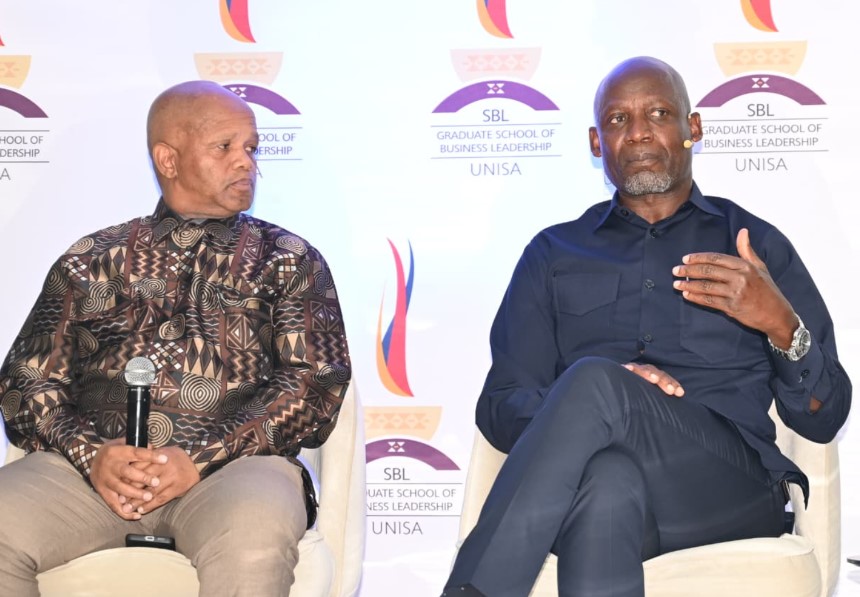
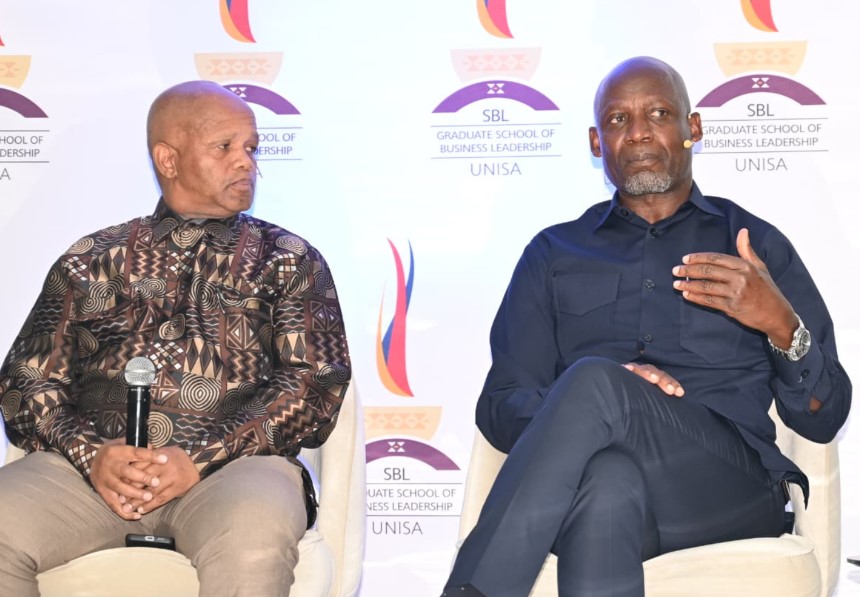
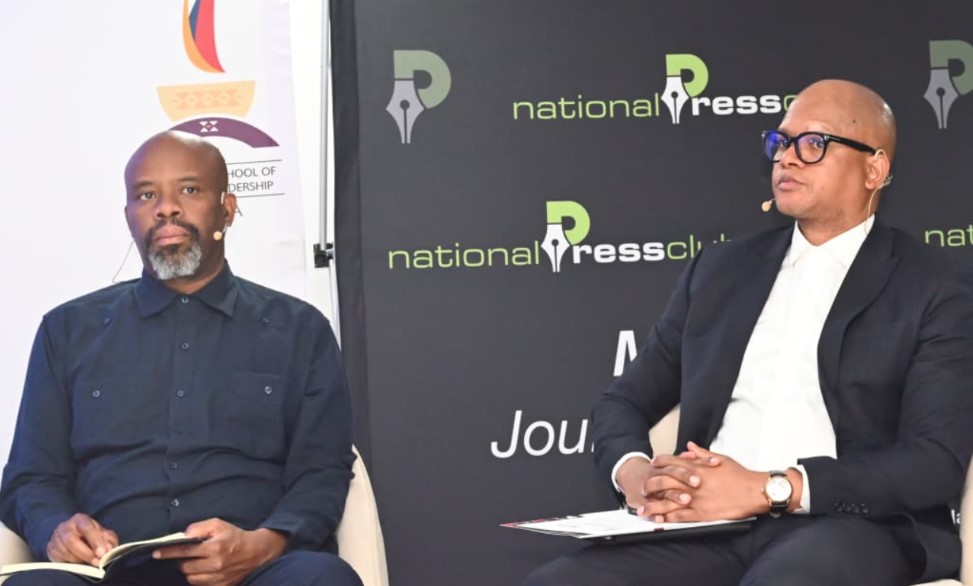
Speaking at a high-level dialogue hosted by the University of South Africa Graduate School of Business Leadership (SBL), alongside the Ministry of Higher Education and Training and the National Press Club on Thursday evening, Manamela reflected on the administration of five PSET institutions and outlined the reforms he believes are necessary to rebuild the sector.
The dialogue came as the administration period for the Services SETA, Construction Education and Training Authority (CETA) and Local Government SETA (LGSETA) approaches its transition point in August 2026, while the College of Cape Town has submitted its six-month administration report.
The National Student Financial Aid Scheme (NSFAS), which was placed under administration in May, reported to Parliament this week on progress during its first three months under administration.
Manamela said the challenges confronting the sector go far beyond individual institutions and require fundamental changes to the way PSET is governed and managed.
“I actually think that we’re underestimating the extent of the challenge that we’re talking about. And it’s not necessarily a crisis. It’s the necessity for a systemic reset,” Manamela said.
He said governance problems had become particularly visible across the sector, which includes 50 TVET colleges, 26 universities, 21 SETAs and several quality and skills development institutions.
Friction between councils and institutional management has repeatedly created governance challenges, while failures in governance ultimately affect students through delayed allowances, accommodation problems, institutional instability and protests.
“We have in total just shy of 3 million people that are dependent directly on this sector, that is students,” he said.
“It’s a system that affects almost every household in the country.”
Manamela said the department had made progress in establishing a more coherent political direction for the sector, particularly around the Presidential mandate for a skills revolution.
He said the government’s approach was to move away from fragmented institutions operating in isolation and towards “a single system” that requires coordination, focus and disciplined political leadership.
LGSETA Administrator Zukile Mvalo and NSFAS Administrator Professor Hlengani Mathebula.
However, he acknowledged that several commitments made when he took office remained incomplete.
Among these is the stabilisation of NSFAS, the creation of an integrated data system across PSET institutions and the development of a clear and costed plan for the transformation of TVET and community colleges.
The minister said the integrated data system was particularly important because government needed to know when students entered the PSET system, what benefits they received, what they were being trained for and what happened to them afterwards.
“It’s a project which is quite ambitious, but which we’re very much committed to working on in integrating the data systems, which will solve a lot of problems,” he said.
Manamela also raised concerns about the sustainability of universities, warning that student funding pressures and debt could threaten institutions if not addressed.
He said the department had to confront the reality that universities could not remain sustainable without a reliable student funding model.
The minister identified the stabilisation of NSFAS as the department’s immediate priority, while calling for a fundamental rethink of student funding in the longer term.
“There’s no doubt about it. I tried to run away from it. I said, no, look, I’m not minister of NSFAS. We have a board, we have a CEO, now we have an administrator,” Manamela said.
He said the department nevertheless had to champion the stabilisation of NSFAS at policy level while the administrator dealt with operational challenges involving ICT, student accommodation and allowances.
Manamela said the financial pressure on NSFAS had grown significantly since the implementation of fee-free higher education, with the department currently working with a shortfall estimated at about R15 billion, compared with R13.5 billion the previous year.
He warned that the additional money required for student funding has implications for other areas of the education and training system because government has had to reprioritise funds.
“It’s taken from the levy that should go into skills development, it’s taken from the National Skills Fund, from the SETAs, it’s re prioritisation. The first intervention we made, R2 billion intervention that we made in 2017-2018 was taken from funding that was reimbursed for postgraduate funding,” Manamela said.
“So it’s not just money that comes from nowhere. The agency of a sustainable student funding model cannot be underestimated.”
Manamela said the country should not only focus on fixing the immediate problems at NSFAS but should consider what a completely redesigned student funding system should look like.
“We need to go to ground zero with regard to NSFAS, whilst we’re fixing what is currently existing,” he said.
He said the ultimate objective should be to ensure that students receive their funding on time, institutions receive payments on time and students have access to safe and adequate accommodation.
Dr Robert Nkuna, Administrator of the College of Cape Town, and Services SETA Administrator Lehlogonolo Masoga.
The minister also said government was willing to ask difficult questions about whether NSFAS, in its current form, remains the best model for funding students.
“The discussion is going to end in such a way that we need to provide funding to students,” he said, stressing that the focus should remain on ensuring that students receive financial support.
Manamela also criticised the department’s performance against its targets, noting that only 49% of planned targets were achieved in the 2024/25 financial year, despite the department spending 99.1% of its final appropriation.
“That has to change,” he said.
The minister said the figures should not be viewed simply as statistics because every missed target has a direct impact on people.
“They mean students. They mean someone who didn’t get their allowance. They mean someone who didn’t get their certificate. They mean someone who did not get to complete an opportunity for them to ultimately go and work,” he said.
He said government needed to ensure that money was directed towards measurable outcomes.
“Money has to go into outcomes,” Manamela said.
The minister said the second major priority was skills delivery, with the skills revolution expected to become the spine of the department’s work.
He said every rand spent on training should ultimately contribute towards employment.
“Make sure that every rand that you spend on training, be it by the SETAs, a university, a TVET college, whatever, make sure that whatever is spent on training leads to employment,” he said.
Manamela called on SETAs, the National Skills Fund and employers to expand work-integrated learning opportunities so that students can gain practical workplace experience.
He also urged businesses to open their workplaces to TVET and university students.
“I’m also personally engaging with businesses and saying to them, open up your doors for work integrated learning for our apprentices,” Manamela said.
“We have to have employers opening up their workplaces. We have to have SETAs working as one.”
He said the PSET system must allow students to move between different types of institutions, including community colleges, TVET colleges and universities.
“One can enter through a community college and exit through a university,” Manamela said.
Manamela also backed the rationalisation of SETAs, arguing that the current system contains duplication and inefficiencies.
He said the government needed to reorganise the sector so that SETAs cooperate on basic services while specialising in the industries they are mandated to serve.
Professor Walter Matli, UNISA School of Business Leadership Executive Dean and CEO.
“The rationalisation of SETAs is something that is inevitable. It has to happen,” he said.
He said the process should begin with greater cooperation between SETAs rather than waiting for the expiry of their current licences.
Manamela said governance reform must also include strengthening the capacity of councils, executives, student leaders and other stakeholders responsible for the functioning of PSET institutions.
He revealed that government was discussing the possible establishment of an institute for governance and leadership for the PSET sector.
Such an institute could help induct people appointed to councils and ensure they understand legislation, policy, institutional mandates and their responsibilities.
“Governance and leadership has to be our focus,” Manamela said.
He also identified leadership as one of the biggest challenges facing the TVET sector.
“We have to make sure that we invest in capacity building for leadership in the sector,” he said.
Services SETA administrator Lehlogonolo Masoga said the institution entered administration in August 2025 with the task of addressing its problems while unlocking its potential.
“When you’re being invited into administration, you’re being invited into a troubleshooting space,” Masoga said.
He said the administration had focused on turning the institution around and claimed significant improvements over the past 12 months.
According to Masoga, Services SETA increased enrolment from 23,000 to 32,000 and completion figures from 5,000 to 16,000.
Official Services SETA figures published earlier this year showed that it had invested more than R500 million in supporting students across the country’s 26 universities and more than R800 million in supporting about 15,000 TVET students.
The SETA also committed R90 million to strengthen the country’s nine community education and training colleges. Manamela said in March that the Services SETA had a R1.3 billion bursary programme supporting 10,000 TVET students and 5,000 university students.
Masoga said the SETA was also investing a further R3 billion in work-integrated learning through its 20,000 internship programme.
He said the organisation had unlocked more than R5 billion in resources that had previously been stuck within the system.
“We’re unleashing that resource for the purpose of it, touching the lives of ordinary people, which are the beneficiaries of these resources at our disposal,” he said.
The Gauteng High Court in Pretoria has suspended the appointment of Professor Hlengani Mathebula as administrator of the National Student Financial Aid Scheme (NSFAS), pending a final decision on a legal challenge brought by seven former board members.
The court on Friday interdicted Mathebula from continuing as NSFAS administrator pending the finalisation of Part B of the former board members’ application, which seeks to have Higher Education and Training Minister Buti Manamela’s decisions reviewed and set aside.
“The appointment of the second respondent as administrator (Mathebula) of the National Student Financial Aid Scheme (NSFAS) in terms of section 17A(1)(b) of Act 56 of 1999 (the ‘Act’) by the first respondent on 4 May 2026 is suspended pending finalisation of Part B,” the order reads.
The court also authorised and directed the applicants to continue with the management, governance and administration of NSFAS and perform its functions pending the final determination of Part B.
The seven board members approached the court in May after Manamela dissolved the NSFAS board, placed the scheme under administration and appointed Mathebula on 4 May. They are seeking to have the minister’s decisions reviewed and set aside.
Manamela had defended the intervention, saying legal advice obtained by his department found that the board’s composition did not comply with the NSFAS Act. He told Parliament that three student-nominated positions were vacant and that a nominee from the finance minister had not been appointed.
The minister also cited governance and operational problems at NSFAS, including board resignations, a disclaimer audit opinion, unresolved student appeals and concerns about the scheme’s systems and internal controls.
Mathebula had been appointed for 24 months or until a new board was appointed.
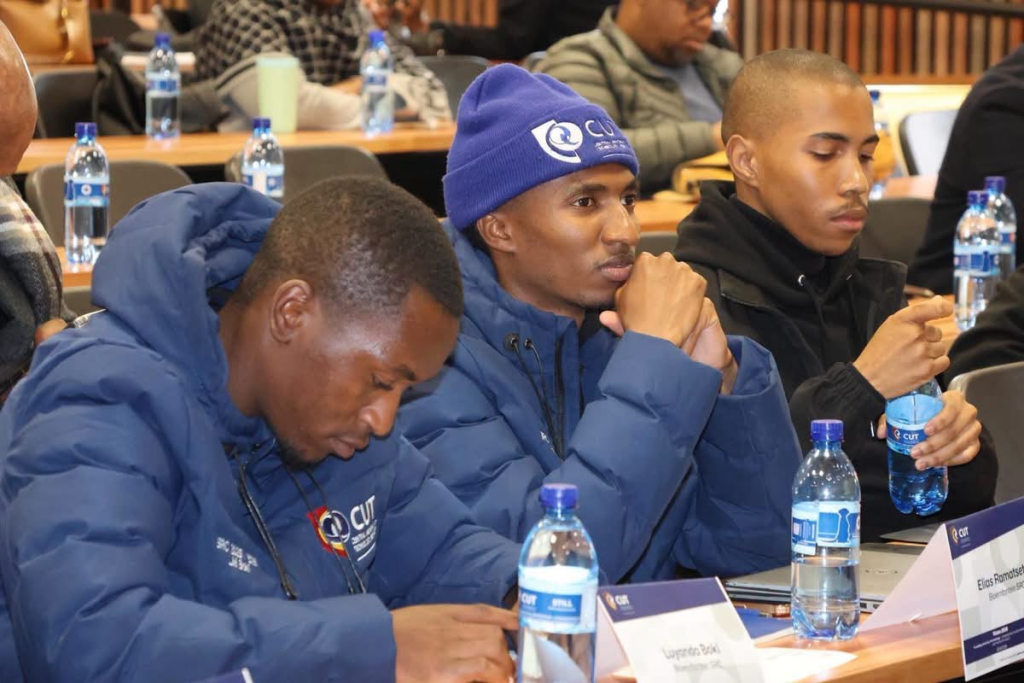
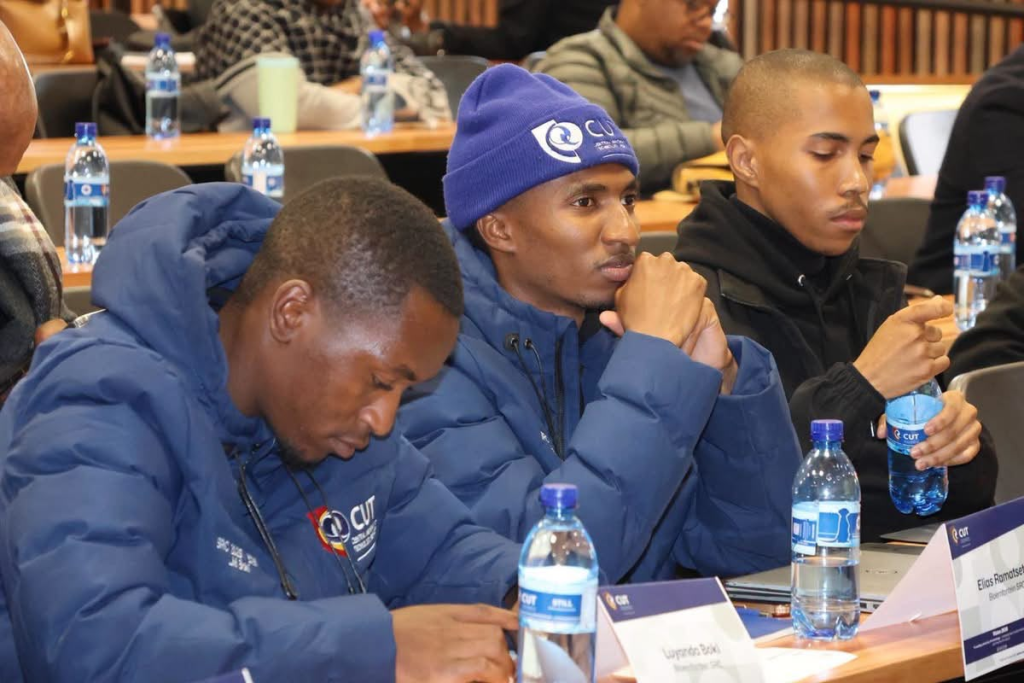
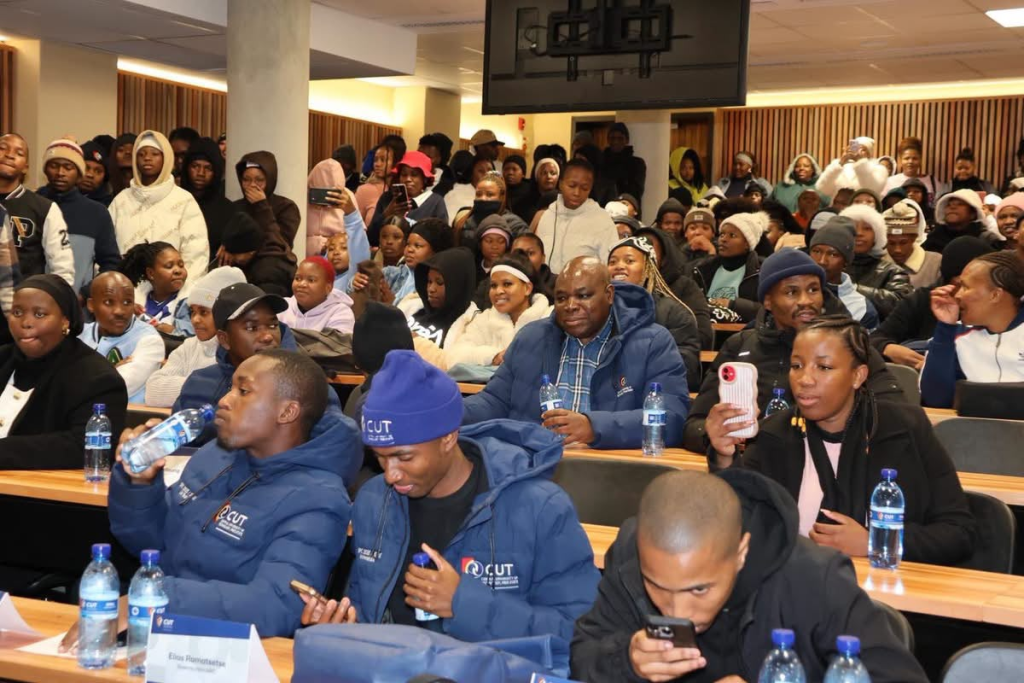
The Central University of Technology (CUT) has committed to urgently pay accommodation allowances directly to 1,392 students at its Welkom Campus after an intervention by Higher Education Deputy Minister Yusuf Cassim.
The affected students, who are staying in unaccredited accommodation, have reportedly gone without accommodation allowances since the beginning of the year, despite assurances from the National Student Financial Aid Scheme (NSFAS) that the matter would be resolved.
Cassim visited the Welkom Campus on Tuesday, where he met affected students and CUT management. He raised concerns about the delays, particularly the risk of students being evicted from their accommodation.
The ministry said the deputy minister had previously raised the CUT matter with NSFAS administrator Professor Hlengani Mathebula during a meeting in Cape Town on 14 July. A subsequent NSFAS delegation visited CUT, after which a payment plan was agreed and communicated.
However, further administrative processes resulted in only 260 allowance payments being confirmed, leaving the majority of affected students without financial support.
Cassim then directed that there should be no further delays and read out an NSFAS letter authorising direct payments to the affected students.
“What the letter says: ‘NSFAS hereby approves the requested deviation for the 2026 academic year only, allowing affected students to remain in accommodation and receive an accommodation allowance of R2 500 per student per month.’ The allowance is payable to the students, as per NSFAS’s deviation approval letter,” Cassim said.
“The letter further directs the institution to continue ensuring that students in both credited and unaccredited accommodation reside in conditions that are conducive to academic success.”
Cassim urged CUT to make the payments directly to students, saying that the university already has the relevant student information and banking details.
The university’s vice-chancellor, Professor Pamela Zibuyile Dube, committed to ensuring that the allowances are paid directly to students as quickly as possible.
The accommodation crisis also extended to CUT’s Bloemfontein Campus, where students raised concerns about the condition and location of some accredited accommodation facilities.
Some students reported that accommodation was in poor condition and located near nightlife and drinking establishments.
Cassim requested that these concerns be included in a report on the suitability and quality of accredited student accommodation, which will be submitted to his office and NSFAS’s student accommodation section for further investigation.
He also called on the student representative councils at both campuses to maintain constructive relations with CUT management to help resolve institutional issues.