UCT student entrepreneurs reach national InnoVarsity final
Uncategorized

UCT student entrepreneurs reach national InnoVarsity final

By Levy Masiteng 

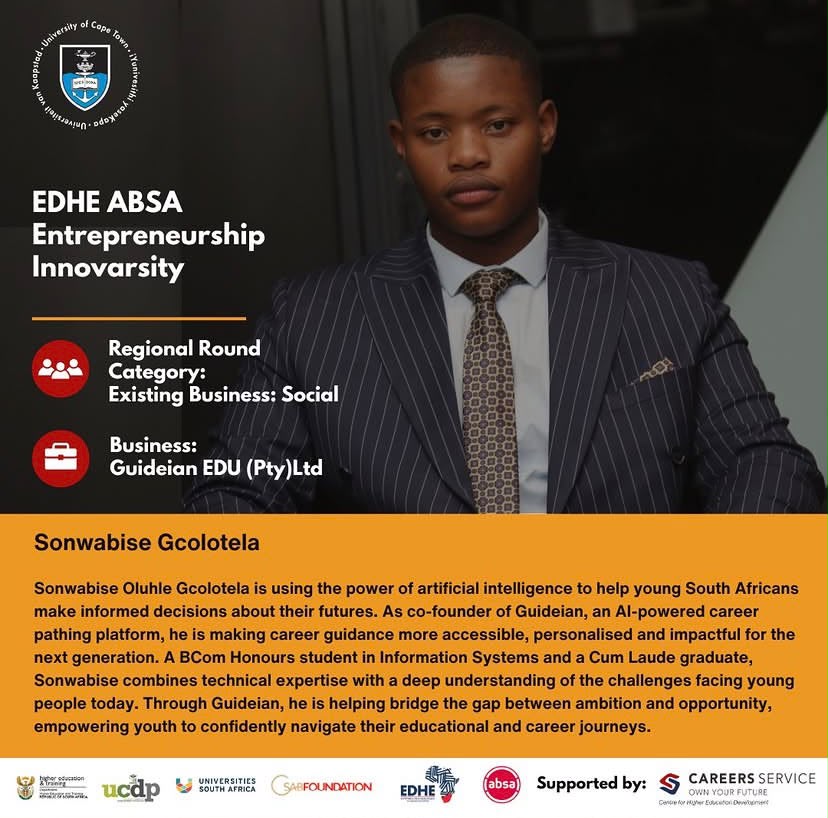
Two University of Cape Town (UCT) student entrepreneurs, Sonwabise Gcolotela and Kamogelo Mokale, are heading to the national final of the Entrepreneurship Development in Higher Education (EDHE) Absa Entrepreneurship InnoVarsity 2026 competition after impressing judges during the Western Cape regional round.

UCT announced the achievement on Tuesday, quoting Entrepreneurship InnoVarsity coordinator Nadia Waggie.

UCT said the regional competition was hosted by the Cape Peninsula University of Technology (CPUT) at the University of the Western Cape’s Innovation Hub from 19 to 20 August.

Gcolotela and Mokale emerged from a field of student entrepreneurs representing CPUT, UCT, the University of the Western Cape and Stellenbosch University, securing their places among the country’s top student entrepreneurs.

“We are so proud of Sonwabise and Kamogelo. They flew the UCT flag high, and we congratulate them on this outstanding achievement. Now, it’s heads down as they prepare for the final. We are behind them every step of the way,” said Waggie.

The pair will now set their sights on the national finals, scheduled for 26 November.

Mokale’s winning business, Vhutomi Trading Enterprise, was established in 2023 and is taking aim at South Africa’s reliance on imported castor oil.

ALSO READ: CCTV and alibis take centre stage in Reiger Park killings bail bid

UCT said the business grows castor plants with the long-term goal of manufacturing value-added products, including castor oil and castor-based derivatives for the cosmetics, pharmaceutical and industrial sectors.

The idea is also rooted in agriculture and rural development, with the business seeking to create sustainable opportunities for local farmers and rural communities while contributing towards greater local production.

Meanwhile, Gcolotela’s Guideian uses artificial intelligence to tackle another challenge facing young South Africans: navigating education and the world of work.

The platform is designed to help young people access career guidance and assess their job readiness. It combines local labour-market information with users’ academic results and personal interests to recommend career pathways that align with their profiles.

“These business ideas speak for themselves. They are innovative and are solving real challenges, and judges were impressed with the pitches. We wish Sonwabise and Kamogelo the very best as they prepare for the national finals,” Waggie said.

The regional round put the student entrepreneurs under intense pressure, with contestants given just three minutes to pitch their business ideas before facing questions from a judging panel.

EDHE uses category-specific criteria to assess entrants, including factors such as innovation, market relevance, business models, scalability, financial viability, impact and the quality of the presentation, depending on the category.

The EDHE Absa Entrepreneurship InnoVarsity is designed to identify and showcase promising student entrepreneurs from South Africa’s 26 public universities, while giving young founders opportunities to develop and grow their businesses.

According to UCT, the 2026 competition features five categories: Existing Business — Tech; Existing Business — Social Impact; Existing Business — General; Commercialisation of Academic Research; and Innovative Industries.

Mokale is competing in the Existing Business — General category, while Gcolotela is competing in Existing Business — Social Impact.

The competition is backed by a substantial prize pool.

EDHE says category winners will each receive R100,000, while first and second runners-up will receive R40,000 and R20,000 respectively.

The overall Studentpreneur of the Year 2026 will receive a further R400,000, taking the total prize money available across the competition to R1.2 million.

ALSO READ: Freight bodies call for Durban port recovery plan after 26% throughput drop

The overall award is selected from winners of the existing-business categories, meaning both Gcolotela and Mokale could be in contention for the R400,000 top prize if they win their respective categories.

Before the national final, finalists are due to take part in a two-day bootcamp on 15 and 16 October, followed by one-on-one business coaching through a mentorship programme running from 19 October to 20 November.

EDHE says the coaching is intended to provide finalists with personalised guidance and feedback as they prepare their businesses and presentations for the national stage.

A further mentoring session is scheduled for each finalist after the competition.

The competition also gives emerging entrepreneurs exposure, recognition and opportunities to build connections that can help their businesses attract potential customers, investors and strategic partners.

INSIDE EDUCATION

The post UCT student entrepreneurs reach national InnoVarsity final appeared first on Inside Education..
Uncategorized

Flyfofa aviation learners sent home temporarily as NSF reviews funding, compliance issues

By Lebone Rodah Mosima

Learners currently enrolled in a National Skills Fund-funded aviation training programme are being required to temporarily return home after Flyfofa Aviation Training suspended training amid unresolved contractual and funding matters.

The NSF said on Sunday that concerns over the verification of training progress, supporting documentation for expenditure and compliance with the conditions of its funding agreement with Flyfofa had materially affected the continued implementation of the project.

“The NSF wishes to assure all affected learners and their families that it remains committed to supporting the successful completion of the learners’ aviation training and qualifications,” the fund said.

“At the same time, the NSF has a legal and fiduciary responsibility to ensure that public funds are managed responsibly, transparently, and in accordance with applicable legislation, financial regulations, and the terms of the funding agreement.”

In 2024, the NSF approved funding for an aviation training programme intended to benefit 390 learners over a 31-month period.

The NSF previously said R148 million had been approved for the Flyfofa programme, which covers Private Pilot Licence training, advanced pilot hour building, drone pilot and cabin crew training.

The 390 figure refers to the number of learners the programme was intended to benefit over its full duration.  

“Since implementation commenced in early 2025, the NSF has undertaken ongoing monitoring and verification of the programme, as required for all projects funded from public resources,” the NSF said.

“During this process, a number of material concerns and discrepancies were identified relating to project implementation, accreditation and aviation approval, reporting, expenditure, and the verification of certain training milestones.”

The NSF said it subsequently engaged Flyfofa on several occasions and requested explanations, supporting documentation and evidence to address the concerns.

It said the matters required careful assessment and due diligence, particularly where they related to the expenditure of public funds and whether payments could be supported by verified deliverables.

The NSF said concerns regarding the verification of training progress, supporting documentation for expenditure and compliance with the conditions of the funding agreement had materially affected the continued implementation of the project.

“The NSF wishes to clarify that the disruption of training did not result from a decision by the NSF to abandon learners or cancel their future training opportunities,” the NSF said.

“Flyfofa halted training during August 2026 amid unresolved contractual and funding matters, including requests that require further consideration through the appropriate governance processes.”

Acting Chief Executive Officer of the NSF Melissa Erra said the fund could not approve additional financial commitments or variations outside established procedures simply to speed up a decision.

“The NSF cannot approve additional financial commitments or variations outside established procedures simply to expedite a decision. Any such request must be properly assessed and subjected to the necessary governance and approval processes and the NSF has undertaken this with urgency to ensure student protection,” Erra said.

The NSF expressed regret over the distress and uncertainty caused to learners and their parents, particularly regarding accommodation and the continuation of their studies.

It said it had intervened after learners faced an immediate risk of eviction from accommodation provided through a third party appointed by Flyfofa.

The fund engaged relevant parties to prevent the immediate eviction of learners during August while internal processes relating to outstanding training matters were being addressed by Flyfofa.

Following Flyfofa’s continued suspension of training, the NSF said currently enrolled learners were required to return home temporarily while remedial and governance processes were undertaken and outstanding matters affecting the programme were resolved.

The fund said aviation industry requirements needed to be in place so that students could train safely and build flight hours.

The NSF has appointed an aviation expert to assess the programme’s progress to date and its suitability for the continuation of pilot training.

It said continuing to spend public funds on activities not linked to active and verifiable training would raise serious financial and governance concerns.

The NSF said it had a responsibility to prevent unauthorised, irregular, fruitless and wasteful expenditure.

“The decision to direct learners to vacate the accommodation by or before end of August 2026 is therefore intended to preserve available funding for the learners’ actual training and eventual completion of the programme.”

The NSF confirmed that learners had received their stipends up to the end of July 2026.

“Returning home temporarily does not mean that the NSF is withdrawing its commitment to their training. On the contrary, our priority remains to find a lawful, sustainable and financially responsible way of ensuring that learners are able to complete the training for which funding was originally approved in a manner that is compliant to the aviation sector standards for their safety and licences,” Erra said.

The NSF said it was continuing processes aimed at resolving the matters affecting the Flyfofa programme within the next 30 days.

These include considering outstanding contractual and compliance issues, verifying information and engaging relevant stakeholders to determine the most appropriate way forward.

The NSF said the outcome of the process and the programme’s readiness to resume training would be communicated to learners and other stakeholders once approved by its Accounting Authority.

“Any future decisions will be guided by the need to protect the interests and future of learners while ensuring full compliance with the NSF’s governance and financial management obligations,” the NSF said.

Flyfofa did not respond to requests for comment from Inside Education.

INSIDE EDUCATION

The post Flyfofa aviation learners sent home temporarily as NSF reviews funding, compliance issues appeared first on Inside Education..

Uncategorized

Navalsig crowned Free State Kay Motsepe U19 champions

By Levy Masiteng 

Navalsig High School are the new Free State Kay Motsepe Schools Football U19 provincial champions after defeating Ntsu Secondary in a thrilling provincial final at the University of the Free State in Bloemfontein.

The provincial showdown over the weekend brought together 18 schools for a day of high-quality school football.

Navalsig produced the performance that mattered most, overcoming Ntsu Secondary to secure the championship and earn the right to represent the Free State at the national Kay Motsepe Schools Football Finals.

The victory was rewarded with a R150,000 cheque, trophy and gold medals.

The triumph adds another significant achievement to Navalsig’s growing football reputation. 

Earlier this year, the Bloemfontein school impressed at the Absa Wildeklawer Soccer Tournament, defeating Northwood 3-1 in the group stages. 

Now, however, their attention will turn to the national stage.

Navalsig will carry the Free State flag at the National Kay Motsepe Finals in Soshanguve from 25 to 30 September 2026, where the country’s top school teams will battle for national honours.

The prize on offer at that stage is enormous, with the U19 national champions set to receive R3 million, according to the Free State Department of Education.

INSIDE EDUCATION

The post Navalsig crowned Free State Kay Motsepe U19 champions appeared first on Inside Education..

Uncategorized

R19m cellphone repair programme puts 25 entrepreneurs in business in Sebokeng

By Charmaine Ndlela

Higher Education and Training Minister Buti Manamela has officially handed over fully equipped cellphone repair containers to 25 entrepreneurs in Sebokeng, as part of a R19 million programme aimed at turning technical skills into sustainable businesses and employment opportunities.

The handover ceremony took place at the Saul Tsotetsi Sports Complex on Monday and forms part of the Cellphone Repair Skills Programme, which seeks to equip 500 disadvantaged South Africans with practical cellphone repair skills and business opportunities.

The broader initiative provides for 50 fully equipped business containers, with the latest handover benefiting an additional 25 entrepreneurs.

The programme is being implemented by the Wholesale and Retail Sector Education and Training Authority (W&RSETA), in partnership with the South African Mobile Devices Distributors and Repairers Association (SAMDDRA), under the W&RSETA Small, Medium and Micro Enterprise (SMME) Development Programme.

Since its introduction in 2024, the programme has trained 326 South Africans against a target of 500 beneficiaries.

The three-month practical training programme equips participants with cellphone repair skills while preparing them to establish and operate businesses in their own communities.

Speaking at the handover, Manamela said government was committed to expanding the initiative and would seek to support at least 25 more entrepreneurs in the new year.

“The commitment that has been made by government and SETA is that they will expand, they will extend this commitment to a minimum of 25 more in the new year,” he said.

Manamela also challenged other Sector Education and Training Authorities (SETAs) to collaborate with W&RSETA to expand the programme and explore funding opportunities beyond government.

“This is a challenge to the rest of the other SETAs to collaborate with Wholesale and Retail SETA. Why should we only look for money within the state?”

He said the private sector, particularly telecommunications companies and mobile device manufacturers, should be brought into efforts to support young entrepreneurs entering the cellphone repair industry.

“The private sector, the telecoms companies, the manufacturers of that are endorsing some of the products and want to be specialists in those,” Manamela said.

According to the Minister, the cellphone repair industry has significant potential to create opportunities for young people, women and persons with disabilities.

“We need to support the rest of the young people who want to do business, men and women, who want to contribute to employment creation, who also want to make an impact in their communities and ensure that they have a sustainable life,” he said.

Manamela said the demand for mobile technology services demonstrated the need to expand the skills pipeline.

He referred to an estimate presented by the Association of Mobile Distributors that suggested demand for about 20,000 mobile technology technicians.

“He estimates that 20,000 mobile technologies are in demand. And so that’s something that we need to ensure that we address,” he said.

The minister said the programme also demonstrated the important role small businesses could play in tackling unemployment.

“The National Development Plan targets 11 million jobs coming out of small businesses,” he said.

The National Development Plan’s employment target is to create 11 million additional jobs by 2030, while envisaging that about 90% of new jobs would come from small and expanding firms.

The minister said beneficiaries should not only be viewed as recipients of training and equipment, but as emerging business owners capable of creating jobs themselves.

“I was trying to hear from each of the businessmen and women… at least each of them have employed some additional persons. Some of them even went on to employ two people in their businesses,” he said.

Manamela said the programme could also create opportunities beyond cellphone repairs, particularly in electronic waste management.

“There are also other things which they’ve mentioned, which I think we should not underestimate, the potential that their businesses have, expanding into e-waste, which is green jobs,” he said.

He acknowledged that some beneficiaries had raised concerns about competition within the industry and said government needed to ensure that trained entrepreneurs were supported to build sustainable businesses.

“What it means is that we need to support them, that there might be equality, something that’s guaranteed, something that’s endorsed, something that’s also a decent place to work and get yourself fixed,” he said.

Manamela said the fact that some beneficiaries were operating from their homes should not be viewed as a limitation.

“There’s no reason why it can’t be their home,” he said.

He also drew parallels between the cellphone repair programme and the township spaza shop economy, saying skills should determine who participates in small business rather than race, gender or age.

“Any person, given the right skills and trade, can run a spaza shop. It’s not something that’s designated to a particular race or a particular gender or a particular age,” he said.

He said the same principle should apply to cellphone repair businesses and other enterprises in the township economy.

“As long as you’re given the necessary skills, spaza shops have been there historically in our communities,” Manamela said.

Manamela said the success of the cellphone repair programme could provide a model for broader small-business development if government and its partners were able to replicate it in other communities.

“If this model works, and it has worked in the past, it means that our investment into small business development will begin to yield results in terms of employment,” he said.

Beneficiaries are based in several parts of the country, including Gauteng, KwaZulu-Natal and Limpopo, with locations including Sebokeng, Soshanguve, Polokwane and Umlazi.

Manamela said the programme should be expanded to communities that had not yet benefited.

“If they succeed, we have a model that we can replicate,” he said.

He also called on communities to support the trained technicians by using their services instead of opting for cheaper repairs from unqualified individuals.

“These are qualified. These have the necessary skills. Some of them have been in the trade for quite some time,” he said.

The minister said the next phase of the programme should focus on helping beneficiaries sustain and diversify their businesses, while creating more employment opportunities.

“We must not just invest into the business, but look at various possible ways of diversifying their businesses,” he said.

INSIDE EDUCATION

The post R19m cellphone repair programme puts 25 entrepreneurs in business in Sebokeng appeared first on Inside Education..

Uncategorized

Inspector sent to probe Reiger Park school sanitation

By Charmaine Ndlela

A works inspector has been dispatched to Reiger Park Secondary School in Boksburg to assess concerns over inadequate ablution facilities and access to drinking water, as pressure mounts over the conditions faced by more than 2,000 learners.

Gauteng MEC for Education, Sport, Arts, Culture and Recreation, Lebogang Maile, confirmed that the department is investigating the state of the school’s water and sanitation infrastructure following concerns raised about conditions at the school.

The department said a works inspector has been sent to assess the ablution facilities and water infrastructure, with the findings expected to determine the intervention required.

ALSO READ: R19m cellphone repair programme puts 25 entrepreneurs in business in Sebokeng

The move comes after reports highlighted severe infrastructure challenges at the school, where learners said only a handful of functioning toilets were available.

The school has also reportedly experienced problems with access to drinking water, with learners allegedly turning to fire hydrants to access water.

eNCA reported that learners complained of limited access to drinking water and that only a few toilets were functioning for boys and girls. In a subsequent report, an unidentified source told the broadcaster that the only running taps were in the staff room and that learners could not access them.

The source also said learners sometimes had to wait for extended periods to use the functioning toilets, with the situation reportedly worse during break times.

However, School Governing Body chairperson Charona Louw disputed suggestions that the problems had gone unattended, telling eNCA that the school had repeatedly repaired damaged facilities.

“We have been fixing the taps almost every month,” Louw said.

“Things are being broken by the same learners vandalising the taps and toilets,” she added.

Louw also disputed learners’ claims that the problems had persisted for three months and said the matter had been escalated to the GDE’s district office.

Maile said the department was taking the concerns seriously and would determine whether the issues could be addressed through routine maintenance at school level or required further intervention from the department.

ALSO READ: Dangerous weapons, drugs confiscated in Westbury

“Every learner has a right to learn in a safe, dignified and conducive environment. Functional sanitation and access to water are fundamental requirements in our schools, and concerns relating to these facilities must receive the necessary attention,” he said.

The MEC’s response comes despite the department having undertaken significant maintenance and repair work at the school in May 2025.

According to the department, Head Office Infrastructure completed major maintenance aimed at restoring infrastructure that had been vandalised.

The work included repairs to ablution facilities, the replacement of sanitary components and sewer pipes, and repairs to drinking-water fountains.

The department also replaced or repaired windows, doors, flooring and ceilings, while classrooms received maintenance to doors, windows, ceilings and floor coverings.

Roof repairs were undertaken, new security gates were installed and the school’s perimeter fence was replaced.

The latest assessment will therefore seek to establish the current condition of the infrastructure, the extent of any subsequent damage and whether further work is required.

The department said schools receive funding under the National Norms and Standards for School Funding from which provision can be made for maintenance of buildings, grounds and equipment. The precise maintenance responsibilities of individual schools can also depend on the functions allocated to their governing bodies under the South African Schools Act.

“In line with the National Norms and Standards for School Funding, schools receive funding from which provision is made for the maintenance of school buildings, grounds and equipment,” the department said in a statement.

The MEC also raised concerns about the impact of vandalism on school infrastructure, warning that damage to facilities places additional pressure on already limited resources.

“We must also protect the infrastructure provided to our schools. Vandalism places additional pressure on resources that should be used to improve teaching and learning. School communities must work with us to safeguard public infrastructure for the benefit of learners,” Maile said.

INSIDE EDUCATION

The post Inspector sent to probe Reiger Park school sanitation appeared first on Inside Education..

Uncategorized

AI, climate change force rethink of how SA trains architects

Staff Reporter

The country’s architecture regulator will bring academics, students, government officials and international regulatory leaders to Cape Town next month to examine whether architectural education and professional training are keeping pace with technological, environmental and social change.

The South African Council for the Architectural Profession (SACAP) will hold its inaugural Education Conference at the University of Cape Town’s Beattie Building on 10 and 11 September  under the theme Architecture in Changing Times.

ALSO READ: Dangerous weapons, drugs confiscated in Westbury

The conference will focus on architectural curricula, workplace training and the transition from university into professional practice, as well as the impact of artificial intelligence, climate change and digital technologies on the profession.

SACAP President Charles Nduku said the changes facing the sector required closer cooperation between universities, regulators and industry.

“Architecture is being reshaped by forces that no institution can address alone. We must ensure that our education, training and regulatory systems prepare professionals who can respond to changing social, environmental and technological realities while serving the public with competence, integrity and care,” said Nduku.

A key focus will be the pathway from architectural studies into professional registration, including workplace experience, mentorship and barriers facing emerging professionals seeking to enter the profession.

“South Africa cannot discuss the future of architecture without considering the people who must build that future,” said Nduku.

“Young professionals need a credible pathway from the lecture room into professional practice. This requires closer cooperation between universities, regulators, government and industry, as well as a serious commitment to mentorship, transformation and professional development.”

The conference comes as higher education institutions and professional bodies grapple with the growing influence of artificial intelligence and other digital technologies on how professionals are trained and how work is carried out.

Human Settlements Minister Thembi Simelane is expected to deliver the keynote address, with discussions also expected to cover the role architects play in responding to housing, infrastructure and spatial-development challenges.

A number of international architecture and regulatory figures are expected to participate.

They include Professor Ashraf M. Salama, Professor of Architecture and Urbanism and Head of the School of Architecture and the Built Environment at Northumbria University in Britain; Dong Wang, Director General of the Eco-city Design Centre at TURENSCAPE and Deputy Director of the Nature-based Solutions Innovation Center at Peking University in China; Hugh Simpson, Chief Executive and Registrar of Britain’s Architects Registration Board; and Michael Armstrong, Chief Executive Officer of the US-based National Council of Architectural Registration Boards.

Western Cape Infrastructure MEC Tertuis Simmers is also scheduled to participate.

SACAP said the international representation would allow South African academics, students and professionals to compare approaches to architectural education, professional registration and regulation with those used elsewhere.

Nduku said discussions about education and professional standards ultimately had consequences beyond universities and architectural practices.

ALSO READ: Clapham High becomes Gauteng’s 40th School of Specialisation 

“The future of architecture must ultimately be discussed in human terms,” Nduku said.

“It is about whether people live in safe homes, whether public buildings serve communities properly and whether the places we design can withstand the pressures ahead. This conference must help us identify what needs to change and translate those discussions into action.”

SACAP said it expected the two-day gathering to produce recommendations on architectural education, professional regulation and industry practice.

The outcomes would also be used to inform the council’s strategic planning and its engagement with universities, government, industry and international professional bodies.

INSIDE EDUCATION

The post AI, climate change force rethink of how SA trains architects appeared first on Inside Education..

Second North West school fire in days leaves MEC seething
Uncategorized

Second North West school fire in days leaves MEC seething

By Lebone Rodah Mosima

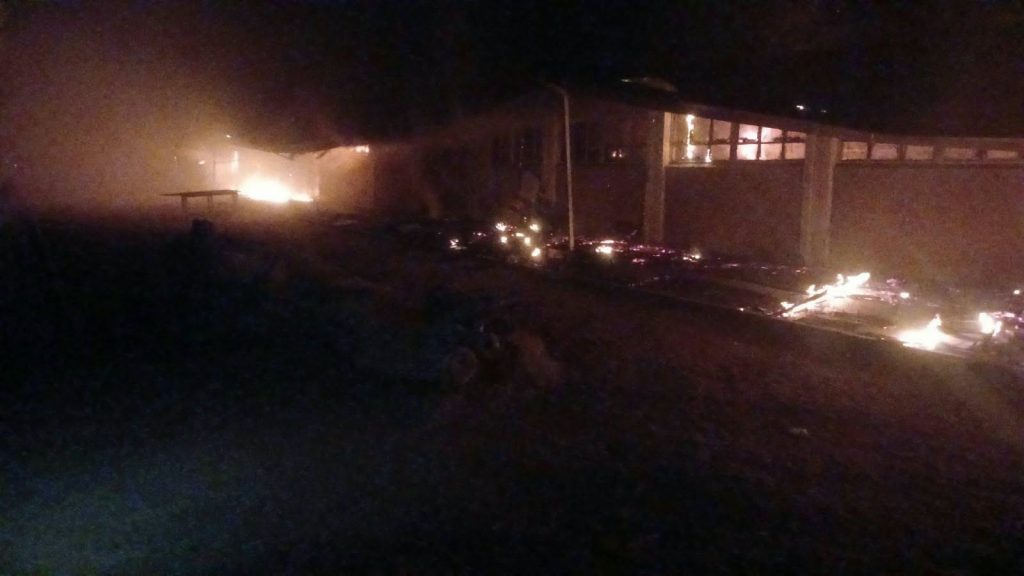
Five workshops and a storeroom have been destroyed in a fire at Sewagodimo Technical School in Pella Village, the second North West school to be hit by a major blaze in three days.

North West Education MEC Dr Desbo Mohono condemned the “barbaric incident”, saying the destruction of school infrastructure placed more pressure on the department’s limited resources.

The North West Department of Education said the school held a camp for matriculants over the weekend, with classes ending on Sunday afternoon.

 “Following the camp, a parents’ meeting was held and ended at 4pm. The educators left the school premises at 5:00pm,” the department said.

“At 5:53pm, the school management was alerted to a fire at the school. Management immediately contacted the South African Police Service and firefighters, who were dispatched to the scene. By the time they arrived, the fire was in its final stages of burning.”

The department said the cause of the fire remained unknown and investigations were under way to determine what led to the incident.

All five workshops, each comprising a storeroom and a classroom, were reportedly completely destroyed by the fire.

A separate storeroom located outside the block was also burnt down.

The incident followed another school fire at Matlhare Mokautu Secondary School in Monakato Township on Friday, where a school hall was burned down.

 “The burning of school properties is robbing our future generations of valuable educational resources, and I have repeatedly highlighted that the government has limited resources,” the MEC said.

The cause of the Sewagodimo fire has not yet been established, while the Matlhare Mokautu fire is being investigated as suspected arson.

Sunday’s fire comes just over two weeks after the North West Legislature’s Portfolio Committee on Education visited Sewagodimo Technical School in early August as part of an oversight programme.

The committee reported ageing infrastructure, dysfunctional toilets, broken doors and windows and inadequate perimeter fencing at the school.

Mohono said the department already had a backlog of schools that needed to be built and renovated across the province.

She said this had forced the department to redirect resources to repair schools that had previously been in good condition.

“I am calling on the community to provide information to the South African Police Service so that those responsible for this barbaric incident can be brought to book,” she said.

The department said it would dispatch a team of inspectors on Monday to assess the extent of the damage.

INSIDE EDUCATION

The post Second North West school fire in days leaves MEC seething appeared first on Inside Education..
North West learner crowned 1st Princess at Little Miss Universe pageant
Uncategorized

North West learner crowned 1st Princess at Little Miss Universe pageant

By Lebone Rodah Mosima

Ten-year-old Warona Setsome from R.B. Dithupe Intermediate School in Welbedacht Township has been named 1st Princess in the Little Miss Universe category after competing at the international pageant in the Philippines.

Her mother and manager, Kedijang Hendrietta Setsome, said Warona’s achievement followed a rapid rise in modelling after she recognised her daughter’s interest and decided to support her ambitions.

ALSO READ: AI, climate change force rethink of how SA trains architects

“What started as a young girl’s interest in modelling has grown into something much bigger,” Setsome said.

“I saw her potential and decided to nurture it, supported her and gave her every opportunity to grow.”

Setsome said she had watched her daughter develop not only as a model but also as a confident young girl who understands the importance of using her voice and platform positively.

The journey to the international competition was not without challenges, with Warona becoming ill during the pageant.

“[D]espite not feeling her best, she showed incredible determination,” Setsome said.

“She continued to participate and represented herself, her family, the North West, and South Africa with grace, discipline, and commitment. She gave every activity her absolute best and carried herself with such strength and professionalism.”

Setsome said watching her daughter push through the difficult period and continue competing made her particularly proud.

The North West Department of Education said Warona’s progress had been remarkable given the short time she had been involved in modelling.

“Warona only started modelling in 2025 and within a very short space of time she has had the opportunity to walk for international fashion shows and designers, participate in events, develop her skills as a motivational speaker to children, and became a host and young public figure,” the department said.

North West Education MEC Desbo Mohono congratulated Warona, saying the achievement was a source of pride for her family, school, community and the province.

“We are extremely proud of her for representing the North West and South Africa with distinction on an international stage,” she said.

Mohono said Warona’s achievement demonstrated the talent and potential of young people in the province, pointing to another recent international success by a North West learner.

“Last month, we had Mbulelo Tolom from Klerksdorp, who represented the North West and the entire country in the Spelling Bee competition held in China, where he obtained sixth position.”

ALSO READ: Public Protector launches student accommodation investigation

She said both achievements showed that young people from the province were capable of competing internationally across different fields.

“On behalf of the North West Department of Education, I extend our warmest congratulations to Warona,” she said.

“May this achievement inspire her to continue pursuing her dreams and encourage other young learners to believe in themselves and strive for excellence.”

Mohono also congratulated Warona’s parents, teachers and others who supported her throughout her journey, saying their encouragement and commitment had played an important role in helping her reach the milestone.

INSIDE EDUCATION

The post North West learner crowned 1st Princess at Little Miss Universe pageant appeared first on Inside Education..
Western Cape matrics gear up for trial exams as NSC countdown begins
Uncategorized

Western Cape matrics gear up for trial exams as NSC countdown begins

By Charmaine Ndlela 

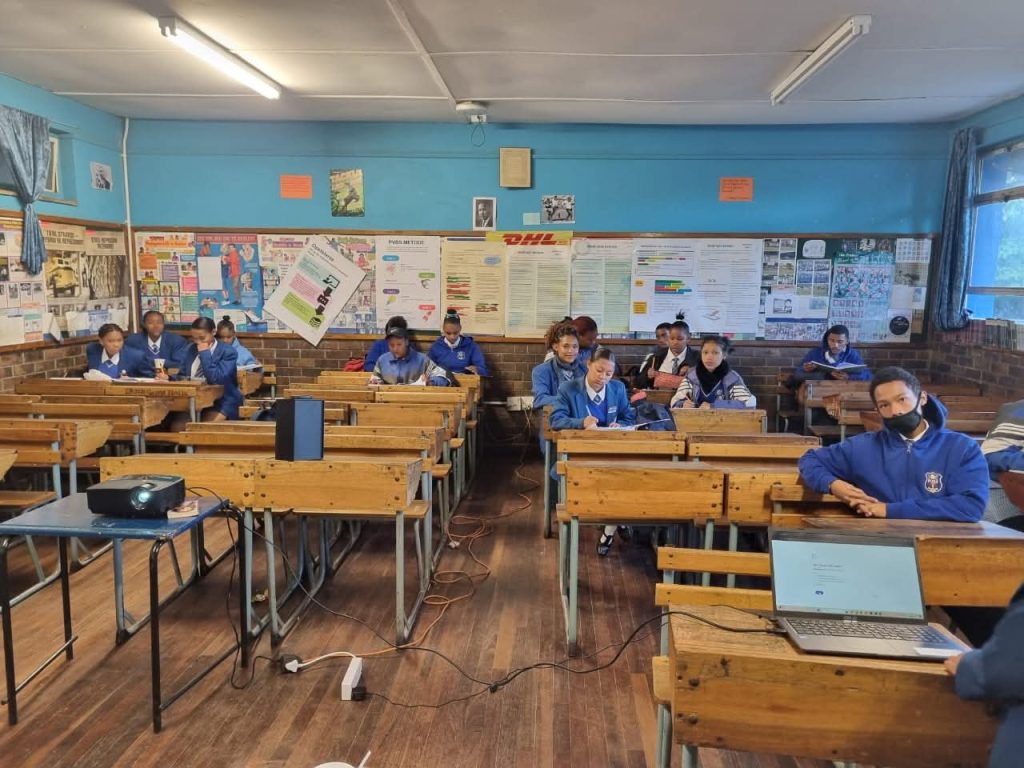
More than 70,000 Western Cape matriculants are preparing to begin their trial examinations on Wednesday, as they enter the final stretch of preparation for the 2026 National Senior Certificate (NSC) examinations.

The Western Cape Education Department’s trial examination period is scheduled to run from 26 August to 23 September, giving Grade 12 learners an opportunity to assess their readiness and identify areas requiring further revision before the final examinations begin in October.

Western Cape Education MEC Jaco Londt wished the Class of 2026 well ahead of the exams.

“These examinations are an important milestone in a matriculant’s academic year as they prepare for the final National Senior Certificate examinations,” Londt said.

He said the trials would allow learners to assess their academic progress, identify their strengths and determine which areas require additional focus before sitting for the final NSC examinations.

The WCED is encouraging learners to make use of academic and wellbeing support available through its matric support platforms as they prepare for both the trial and final examinations.

Learners can access past examination question papers and memoranda, study guides, revision materials, subject-specific academic support and study tips.

The department also provides access to Telematics Schools Project videos for Grade 12 learners, information on funding for further studies, health and wellbeing support, as well as free internet and related services through WCG eCentres.

“I hope every learner approaches these examinations as a valuable learning opportunity. Stay focused, remain disciplined, and have confidence in your ability to succeed,” Londt said.

The province is seeking to build on the performance of the Class of 2025, which recorded its highest-ever NSC pass rate of 88.2%, alongside its highest-ever bachelor’s pass rate of 49.2%.

The department has said that it wants to place greater emphasis on the quality of matric results rather than focusing only on the overall pass rate.

ALSO READ: Second North West school fire in days leaves MEC seething

Then-Western Cape Education MEC David Maynier said in January that the province wanted to raise its bachelor’s pass rate to more than 60% over time, while also increasing the number and proportion of learners achieving 60% and above in Mathematics and Physical Sciences.

The WCED’s formal 2026/27 annual performance target for the bachelor’s pass rate is 49.5%, with further improvements planned in subsequent years.

The longer-term targets are aimed at increasing the number of learners who leave school with results providing access to degree-level studies and broader opportunities after matric.

Maynier, speaking at the province’s 2025 NSC awards in January, said improving the quality of education outcomes would require a sustained focus on performance.

“We must commit to excellence, and we must deliver excellence, in education in the Western Cape,” he said.

The department has urged learners to remain disciplined and confident as they prepare for the final NSC examinations.

ALSO READ: Manamela steps in as arson, violent student protests shut down CPUT campuses

“The Western Cape is behind you every step of the way. Good luck, work hard, and make yourselves proud!” Londt said.

The final 2026 NSC examination programme is scheduled to begin on 13 October and conclude on 26 November.

INSIDE EDUCATION

The post Western Cape matrics gear up for trial exams as NSC countdown begins appeared first on Inside Education..

Uncategorized

Dangerous weapons, drugs confiscated in Westbury

By Marcus Moloko

Gauteng MEC for Education, Sport, Arts, Culture and Recreation, Lebogang Maile, joined South African Police Service-led search and seizure operations at schools in Westbury today, as part of intensified efforts to curb substance abuse and dangerous weapons on school premises.

Maile confirmed that authorities confiscated some concerning items.

At one school, officials recovered 20 vapes, 20 smoking substances, five matchboxes, three Okapi knives, 18 packets of suspected dagga, two tasers, and two additional items recorded as “sings.”

ALSO READ: Clapham High becomes Gauteng’s 40th School of Specialisation 

At another school, police seized 16 vapes, six smoking substances, four matchboxes, three sachets of suspected dagga, one dagga joint, a knuckle duster, and two knives. Additional items included screwdrivers, lighters, unidentified pills, and a two-litre bottle of Sprite allegedly mixed with codeine, known as lean.

Maile said the scale of the confiscations clearly indicated that schools must remain safe spaces for learning.

“he community of Westbury has experienced serious safety challenges, and our schools cannot be allowed to become spaces where dangerous weapons, drugs, and other harmful substances are tolerated. Schools must remain safe and conducive environments for teaching and learning,” Maile said.

He labelled the operations as part of a broader intervention to restore discipline, strengthen accountability, and ensure schools remain secure.

“The safety of our schools cannot be separated from the safety of the communities in which they are located. We therefore need parents, families, community leaders and residents of Westbury to work alongside the South African Police Service, the Department and other law enforcement agencies to protect our children,” he said.

The Department confirmed that school safety interventions will continue, with community involvement seen as critical to preventing prohibited substances and weapons from reaching learners.

INSIDE EDUCATION

The post Dangerous weapons, drugs confiscated in Westbury appeared first on Inside Education..