Uncategorized

UNISA students raise NSFAS payment delays and data allowance concerns with deputy minister

By Lebone Rodah Mosima

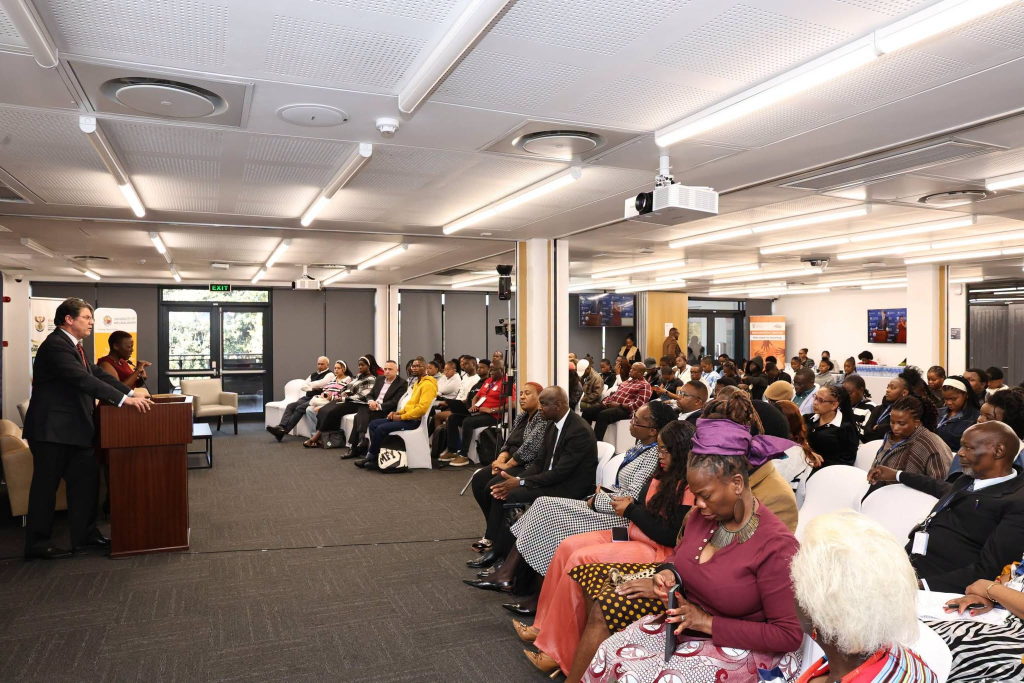
More than 100 University of South Africa (UNISA) students have lodged complaints over delayed National Student Financial Aid Scheme (NSFAS) allowance payments and the scaling back of data support, Deputy Minister of Higher Education and Training Yusuf Cassim said on Thursday.

Cassim made his first official visit to UNISA’s Muckleneuk Campus in Pretoria, where he met students and university management to hear concerns over NSFAS funding and institutional support.

He said more than 100 students had submitted complaints through a helpdesk established during the visit.

“These are the personal testimonies that we are handing over to both the NSFAS senior manager as well as the institution so that, where they are individual issues, those can be attended to and that students receive a response and that they are satisfied that some of those issues are being dealt with,” Cassim said.

He said the main concerns related to delays in the payment of the monthly Personal Care Allowance for NSFAS-funded students and the discontinuation or reduction of data allowances.

“Overall, if you look at the main themes, it was the delay in the payment of the Personal Care Allowance for NSFAS beneficiaries of UNISA, and it is really trying to get to the bottom of the payments from NSFAS to the institution because the institution still needs to process payments to students after receiving the funds,” he said.

Cassim said he had been informed that NSFAS transferred funds to the university on 2 July, despite receiving student registration data at the end of March and an updated file in April. He questioned why the process had taken so long.

“I think these are important questions. As you know, NSFAS has been put under administration, and some of my findings here I will raise with the administrator because it is now his responsibility to deal with the issues that may have led to the late payment,” he said.

“If you’re only going to pay the institution or transfer the funds on 2 July, you can’t expect that the institution can push a button immediately and the money will go to students. There has to be a reasonable time.”

Cassim said discussions with the NSFAS administrator indicated that institutions generally receive payments about a week after the start of each month, a schedule he suggested should be reviewed.

He also raised concerns about the value of allowances paid to distance-learning students, saying the current Personal Care Allowance of R316 per month was insufficient.

“R316 per month for a distance-learning student, which is less than the Social Relief of Distress grant, is simply not enough when you consider the resources students need to succeed academically,” he said.

Cassim further argued that UNISA receives lower state support than contact-learning institutions despite serving one of the country’s largest student populations.

“These are some of the big issues, and it is important that government listens carefully and provides meaningful input.”

He said several pieces of legislation governing the post-school education and training sector would be reviewed over the next year, providing an opportunity to address long-standing funding and policy challenges.

Cassim also said data support for UNISA students had been reduced over time, including during examination periods.

“The purpose is not to point fingers between the different institutions, but to find ways to prevent this from happening again,” he said.

“Students have to wait so long for such a small allowance in the first place. We need to find practical solutions to avoid this in the future, though many of these issues are policy issues.”

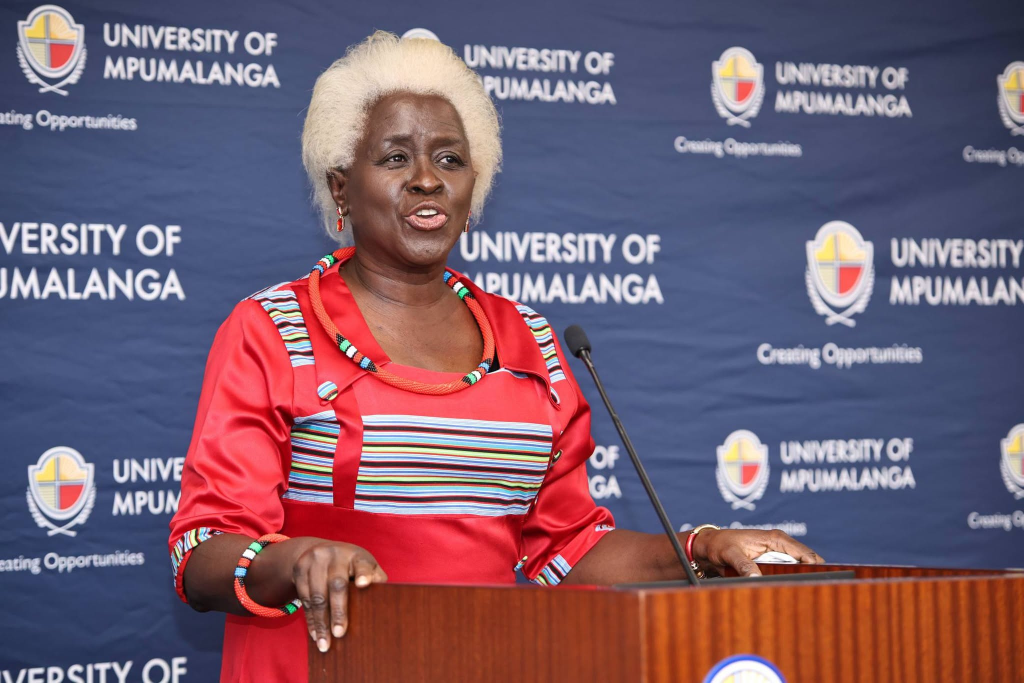
Acting Vice-Chancellor and Vice-Principal for ICT, Mathabo Nekene, said UNISA shared the department’s commitment to placing students at the centre of its teaching, learning, research and community engagement.

“We have around 180,000 students funded by NSFAS, and as the Deputy Minister indicated, there is a disjuncture in the policy because our students receive the least funding from NSFAS,” Nekene said.

“These are matters that require structured engagement, and we appreciate the Deputy Minister’s willingness to build a relationship with UNISA so that we can work collectively towards meaningful outcomes for students.”

Nekene said the university supplements NSFAS funding from its own resources while awaiting additional transfers from the scheme.

She said UNISA also provides data support from its own budget because neither the Department of Higher Education and Training nor NSFAS funds data allowances specifically for distance-learning students.

“Students receive data through zero-rated UNISA sites every month, including during examination periods,” she said.

She added that the university was reviewing how to sustain data support while balancing its teaching, research and community engagement responsibilities.

“This provisioning of data is an opportunity cost for the institution because it places additional pressure on the council budget and our core business of teaching, learning, research, commercialisation and community engagement,” she said.

UNISA Chief Financial Officer Liana Joubert said policy reforms had not been matched by corresponding increases in funding.

“There are policy shifts, but no corresponding funding changes,” Joubert said.

“Our students are the ones who bear the impact.”

In a statement, NSFAS confirmed it transferred funds to UNISA on 2 July after completing payment and reconciliation processes, after which responsibility for disbursing allowances shifted to the university.

The scheme said it was informed of technical problems affecting UNISA’s payment process, but these had been resolved.

“We continue to engage with UNISA to monitor progress and ensure that all affected students receive their allowances as quickly as possible,” NSFAS said.

The scheme said UNISA had reported that payment processing had begun following the transfer of funds.

It said technical system challenges affecting some payments were resolved by 6 July, with the remaining payments currently being processed.

Approximately 93,093 students receiving the monthly Personal Care Allowance were affected by the delays.

“The university has further indicated that some students have already received their allowances, while the remaining payments are expected to be finalised during the course of this week,” NSFAS said.

NSFAS clarified that the delays related only to the Personal Care Allowance.

“UNISA students do not receive meal allowances under the NSFAS funding model. Eligible students receive support through the Book/Study Material Allowance and the Personal Care Allowance,” the scheme said.

NSFAS said it currently funds 168,480 UNISA students for book allowances at a cost of R425.6 million and 93,910 students for Personal Care Allowances amounting to R148.6 million.

The scheme said it understood students’ frustrations and apologised for the inconvenience.

“We remain in close engagement with UNISA and continue to monitor progress to ensure all eligible students receive their allowances as soon as possible,” it said.

INSIDE EDUCATION

The post UNISA students raise NSFAS payment delays and data allowance concerns with deputy minister appeared first on Inside Education..

Uncategorized

Ramaphosa calls for overhaul of global education funding to protect access for all

By Thapelo Molefe

President Cyril Ramaphosa has called for a fundamental overhaul of global education financing, warning that quality education cannot remain out of reach for millions because of poverty, inequality and weak public finances.

Speaking at the Sustainable Development Goal (SDG) 4 High-Level Steering Committee Leaders Group meeting at UNESCO headquarters in Paris on Friday, Ramaphosa said education was central to achieving the broader United Nations 2030 Agenda and urged countries to strengthen investment in resilient education systems.

Co-chairing the meeting with UNESCO Director-General Prof Khaled El-Enany, Ramaphosa said the world was facing interconnected challenges, including conflict, pandemics, poverty, inequality and climate change, making the global education agenda more urgent than ever.

ALSO READ: Cogta committee backs Treasury funding freeze, warns municipalities to fix governance failures

“SDG 4 occupies a unique position in that it is the bedrock and the enabler of the other SDGs. It is a catalyst for expanding human capability, unlocking opportunity, and delivering progress across the full ambition of Agenda 2030,” he said.

Ramaphosa said quality education must remain a public good rather than a privilege reserved for those who can afford it.

“As such, it must be safeguarded against commodification, and from becoming a privilege that excludes millions of people on account of geography, age, income, gender or personal circumstances. This is what leaving no-one behind means,” he said.

The President identified three priorities for the committee’s work: strengthening foundational and lifelong learning, supporting the teaching profession, and advancing inclusive digital transformation.

He said governments must invest more effectively in education and strengthen public financial management to ensure resources reach classrooms.

“We know that in far too many instances globally, scarce financial resources that could be invested in education are being lost or whittled away due to mismanagement, corruption and poor planning,” Ramaphosa said.

He welcomed the Sustainable Financing Pathways endorsed earlier this year by the Global Partnership for Education, UNESCO, UNICEF, the World Bank and G7 partners, saying the framework would help countries move away from fragmented aid towards long-term, country-led financing strategies.

Ramaphosa also highlighted innovations such as debt-for-education swaps already being piloted in Indonesia and Côte d’Ivoire.

ALSO READ: Ekurhuleni Four: Mkhwanazi and Behari granted R50,000 bail as Mashazi and Gxasheka remain in custody

Looking beyond the 2030 deadline for the Sustainable Development Goals, he said young people were already helping shape the future of global education. Consultations involving 20,000 young people from 95 countries had identified priorities including improved access to education, stronger mental health support, more flexible learning pathways and greater participation in decision-making.

He said the work of 747 experts from 111 countries would inform the Global Education Futures Outlook, which is expected to be presented at the 2027 Global Education Meeting.

Ramaphosa also urged countries to maintain momentum on education reforms through international forums, noting that South Africa had promoted foundational learning, teacher development and the mutual recognition of qualifications during its G20 Presidency.

“The responsibility now falls to each of us. Member States must embed risk-informed policies into every sectoral strategy, partners must align with country-led investment plans rather than creating new projects, young people must be treated as co-creators and not only beneficiaries, and gender-responsive planning must become the norm,” he said.

He concluded by urging world leaders to translate the committee’s commitments into tangible improvements for learners.

“Let us leave Paris today with the resolve to turn the decisions of this Committee into the daily reality of every learner. The generation of today and the generations of the future are counting on us to build and deliver education systems worthy of their promise,” Ramaphosa said.

INSIDE EDUCATION

The post Ramaphosa calls for overhaul of global education funding to protect access for all appeared first on Inside Education..

Dube-Ncube: Degrees without jobs are only ‘half a solution’
Uncategorized

Dube-Ncube: Degrees without jobs are only ‘half a solution’

By Lebone Rodah Mosima

The higher education department must do more than widen access to universities and colleges, Deputy Minister of Higher Education and Training Dr Nomusa Dube-Ncube said, warning that a qualification without a clear pathway to work was “only half a solution”.

Dube-Ncube told the Global Student Well-being Summit 2026 at the Madiba Arena, South Campus, that student wellbeing could not be separated from accommodation, mental health, access to learning and the ability of graduates to find employment.

The remarks come against the backdrop of South Africa’s stubborn jobs crisis. The official unemployment rate rose to 32.7% in the first quarter of 2026, while President Cyril Ramaphosa said last month that youth unemployment stood at 46%.

Dube-Ncube said the summit’s theme, “Leaving No Student Behind: Towards Inclusive Pathways to Student Wellbeing,” should be treated as a test for “every policy, every budget line, and every programme this Department runs”.  

ALSO READ: Limpopo robotics teams put SA coding curriculum on global stage

“And if we are honest with one another, applying that test still finds us wanting in places,” she said.

She said the post-school education and training system continued to grapple with access that was “not yet universal”, insufficient accommodation, gaps in psychosocial support, gambling among financially strained students, bullying and the continued loss of young lives.

“Government continues to invest in expanding student accommodation infrastructure, because we understand that a bed in a safe, dignified residence is not a luxury, it is the foundation on which academic performance, mental health and personal safety all rest,” she said.

She said the department, through Higher Health, was sharpening its focus on early assessment and early detection, including screening and referral systems aimed at identifying mental health concerns, compulsive gambling behaviour and trauma linked to bullying before they escalate.

“A department that cares is a department that pays attention before the emergency, not only after it,” she said.

On access, Dube-Ncube said government was considering expanding blended learning models so that geography and cost did not determine whether young South Africans could study. She said work was also continuing on new universities and colleges of specialisation designed to respond to regional and economic skills needs.

ALSO READ: UNISA Ethiopia Regional Learning Centre celebrates 98 postgraduate graduates

The department was also expanding multilateral agreements, international scholarships and twinning programmes, including opportunities for unemployed graduates to access qualifications through institutions in developed countries, she said.

Dube-Ncube said recent international partnerships workshops had moved new agreements closer to signature, while engagements with industry and Industrial Development Zones were aimed at ensuring that qualifications translated into employment.

“We understand that a qualification without a pathway to employment is only half a solution,” she said.

She said the department’s Skills on Wheels initiative was taking student support services and skills exposure directly to students, instead of waiting for students to seek assistance on their own.

She said the department was not presenting these measures as a finished solution, adding that accommodation, access and wrap-around support remained incomplete.

“A Department that cares does not hide behind good news alone — it names its shortcomings honestly, and then works, meticulously, with every partner willing to walk with it, including industry, to close the gap,” she said.

Despite the challenges, Dube-Ncube pointed to students achieving in sport, technical skills, research, aviation and design.

She cited students who completed the Comrades Marathon, young artisans preparing to represent South Africa at WorldSkills International in Shanghai, researchers whose academic work had gained international recognition, young women training as pilots and aviation technicians, and design students showcasing their work at events including the Durban July.

INSIDE EDUCATION

The post Dube-Ncube: Degrees without jobs are only ‘half a solution’ appeared first on Inside Education..

Uncategorized

Health Department fills 625 posts but flags rejection of rural areas

By Charmaine Ndlela

The Department of Health has placed 625 newly qualified healthcare professionals across the country but has raised concerns after dozens of graduates turned down postings, with many unwilling to serve in rural and underserved communities where medical services are urgently needed.

The 2026 Midyear Medical Internship and Community Service Placement Cycle saw the placement of 161 medical interns and 464 community service practitioners through the Internship and Community Service Programme (ICSP).

 The department confirmed that all eligible South African citizens and permanent residents who were available to begin work on 1 July 2026 were successfully allocated funded posts. 

ALSO READ: Dube-Ncube: Degrees without jobs are only ‘half a solution’

The community service practitioners include 239 medical doctors and 30 professional nurses across 16 professional categories. The department said applicants have been notified of their placements, with the employment contracting process already underway. 

Despite the successful placement process, the department said 77 applicants, comprising 24 medical interns and 53 community service practitioners, declined their placements for personal reasons. It expressed particular concern over applicants who rejected placements because they were reluctant to work in rural and underserved areas. 

The department stressed that internship and community service placements are determined by the availability of funded posts and the country’s healthcare needs. It said provincial health departments continue to fund these statutory positions despite ongoing fiscal pressures.

According to the department, rural placements are critical to ensuring equitable access to healthcare and improving service delivery in communities that often struggle to attract healthcare professionals.

ALSO READ: Limpopo robotics teams put SA coding curriculum on global stage

 It warned that graduates who decline or fail to report for duty leave vulnerable communities without essential medical services. 

“The decline or no-show at these facilities does not only affect the ICSP but denies the communities of the much needed healthcare services ought to be provided by these Health Care Practitioners,” the department said.

INSIDE EDUCATION

The post Health Department fills 625 posts but flags rejection of rural areas appeared first on Inside Education..

Uncategorized

Limpopo robotics teams put SA coding curriculum on global stage

By Lebone Rodah Mosima

Two Limpopo learner teams have taken South Africa’s coding and robotics curriculum to the global stage, representing the country at the Robotics for Good Youth Challenge Grand Finale in Geneva, Switzerland.

Robo-Kidz from Mashupye Tladi Primary School, winners of the Junior Category, and Roborise from Bokamoso Secondary School, winners of the Senior Category, are competing at the international event at the Palexpo International Exhibition and Convention Centre from 7 to 10 July.

ALSO READ: Chelo App helps SA schools turn alumni support into traceable funding

The Department of Basic Education said the teams earned their place after progressing through local, provincial and national rounds of the competition, turning their achievement into a showcase for South Africa’s growing investment in future-focused education.

“Their achievement reflects the growing impact of the Department’s investment in Coding and Robotics education as part of its commitment to equipping learners with the knowledge, skills and competencies required for success in the Fourth Industrial Revolution,” the department said.

“The Department has approved and gazetted the Coding and Robotics Curriculum and Assessment Policy Statement (CAPS) and has been implementing the curriculum through phased pilots since 2021,” it said.

“The programme continues to expose learners to computational thinking, problem-solving, innovation, and digital technologies while preparing them for future careers in Science, Technology, Engineering and Mathematics (STEM).”

The department said the Limpopo teams’ progress had also been supported through the province’s implementation of the Mathematics, Science and Technology Conditional Grant, which funds Coding and Robotics, learner enrichment programmes, teacher development, laboratory resources and technical education.

“Through the grant, approximately 90,000 learners benefit annually from camps, Olympiads, science fairs, competitions, and international opportunities that nurture innovation and excellence,” the DBE said.

ALSO READ: Africa Skills buys former Telkom campus to build major artisan training hub

Acting Director for Communications Terence Khala said the teams’ achievement demonstrated the value of sustained investment in future-focused education.

“These learners are highlighting the best of South African education on the global stage. Their success proves what is possible when we invest in innovation, quality teaching and meaningful opportunities that allow young people to apply their knowledge to real-world challenges,” Khala said.

The department also commended the educators, school leadership, parents, the Limpopo Department of Education and partners who supported the learners throughout their journey.

INSIDE EDUCATION

The post Limpopo robotics teams put SA coding curriculum on global stage appeared first on Inside Education..

Free State, Boland open Craven Week with wins in Gqeberha
Uncategorized

Free State, Boland open Craven Week with wins in Gqeberha

By Johnathan Paoli

The 2026 FNB Under-18 Craven Week got under way at Grey High School in Gqeberha on Monday, with Boland fighting back to beat the Leopards 39-20 before Free State claimed a 66-41 win over the Limpopo Blue Bulls.

The annual tournament, widely regarded as South Africa’s premier provincial schools rugby showcase, brings together the country’s leading Under-18 players.

Boland made a slow start against the Leopards, who took control of the early exchanges and opened the scoring in the 15th minute through fullback Aydan Willemse. Ricardo Enos converted the try to give the North West side a 7-0 lead.

Enos added two penalties as the Leopards stretched their advantage to 13-0, but Boland worked their way back into the contest before half-time and trailed 13-3 at the break.

Boland took charge after the restart, scoring early in the second half to shift the momentum before adding further tries as the Leopards struggled to contain their wide attack.

The Leopards responded late through De Wet Grobler, but Boland sealed the result with a penalty before adding another late try to complete the comeback.

Wing Anwill Jacobs led Boland’s attack with a hat-trick of tries, while Dihego Braaf and JP Lotriet also crossed the line.

Jaydan van Niekerk kicked four conversions and a penalty, with Johan van Deventer adding another three points.

For the Leopards, Willemse and Grobler scored tries, while Enos finished with two conversions and two penalties.

Free State also had to recover from a slow start in their 66-41 win over the Limpopo Blue Bulls in a high-scoring match that produced 17 tries.

Limpopo raced into a 14-0 lead through tries from Juan Dreyer and Lehlogonolo Letlabola after an earlier effort had been ruled out.

Free State gradually settled and fought back as the teams traded tries in an open first half. The Bloemfontein side finished the half strongly to lead 28-19 at the interval before pulling away after the break.

Free State’s Zachary Walburgh was one of the standout performers, scoring three tries and converting eight of his side’s 10 tries.

Eddie Mabena and Ruan Roux each scored twice, while Lamla Mgedezi, Andrew Wessels and Unathi Ntuli also crossed the line.

The Limpopo Blue Bulls remained competitive throughout, with Letlabola scoring twice and Dreyer, Juan Randell, Kristen Swanepoel, Andru de Beer and Mahlatse Kekana also adding tries.

Ahead of their opening fixture, the Limpopo Blue Bulls paid tribute to those who had supported their preparations.

“The hard work has been done, the bonds have been strengthened, and now our focus shifts to the 2026 FNB U18 Craven Week. We are ready to proudly represent our union and give it everything we’ve got,” the union posted on social media.

The tournament will conclude on Saturday.

INSIDE EDUCATION

The post Free State, Boland open Craven Week with wins in Gqeberha appeared first on Inside Education..

Chelo App helps SA schools turn alumni support into traceable funding
Uncategorized

Chelo App helps SA schools turn alumni support into traceable funding

By Charmaine Ndlela

A South African education technology platform, Chelo App, is changing the way schools raise funds by connecting them directly with alumni, donors and community members while ensuring that every rand donated is fully traceable through the projects it funds.

In an interview with Inside Education, Chelo App founder and CEO Maketele Khalo said the platform arose from his own frustration after trying to support his former school but finding no simple way to contribute or track how donations were used.

ALSO READ: UKZN pilots smart diabetes device to help elderly manage medication

 “Chelo means to pour. It was really about pouring back into my school and my community,” Khalo said.

The platform, officially registered in July 2023, partners with the SAP Foundation and the Department of Science and Innovation through the Technology Innovation Agency (TIA). Since its launch, Chelo has grown to approximately 200 schools and more than 500 donors across South Africa.

Khalo said the idea originated after travelling from Cape Town to his hometown simply to find out what was happening at his former school.

 “I realised that in a digital age I should be able to know what is happening at my school from anywhere in the world. At the same time, I found that people wanted to donate but had no easy way of doing so or following the impact of their contributions,” he said.

That experience led to the creation of Chelo. Unlike traditional crowdfunding campaigns, schools joining the platform undergo a verification process before being approved. Once registered, they receive a digital wallet that allows alumni and supporters to make once-off or recurring donations, even before a specific fundraising project is launched.

When schools initiate projects, each proposal is vetted before publication and broken into measurable milestones. Payments are made directly to vetted suppliers only after work has been completed and approved by the school, ensuring funds are never withdrawn directly by the institution.

 “The school never really withdraws the money that comes in from the donor. The donations go directly to the supplier once the work is done and the school is happy with the work that’s been completed,” Khalo said.

ALSO READ: Gwarube warns pit toilet risks remain despite clearing 2018 school backlog

To further improve accountability, Chelo App developed NextFinder, a school needs assessment tool that evaluates governance, infrastructure, academic performance, teacher quality and learner support programmes before recommending priority development projects.

According to Khalo, the assessment helps schools identify their most urgent needs while giving donors confidence that projects have been independently assessed.

 “We suggest projects that the school needs to run to improve those areas. We then collect all those projects into a programme and indicate the priority of each project, highlighting those that will have the greatest impact and should be addressed first,” he said.

Beyond fundraising, Khalo said Chelo App aims to strengthen relationships between schools and their former learners by encouraging mentorship, networking and long-term community involvement.

 “We’re targeting alumni of that school, so we’re trying to restore that connection to our communities and make sure there is not only funding but also a shared purpose to positively impact the school,” he said.

Infrastructure projects currently attract the highest levels of support, with many donors choosing to fund renovations, classroom improvements, roofing, ceilings, sanitation facilities and general school maintenance.

 “When people visit a school, the first thing they notice is its condition. A better learning environment inspires learners and creates pride within the community,” he said.

 “We want learners to look forward to going to school and feel inspired by the environment. That, in itself, impacts how a child learns.”

One of the platform’s most significant success stories involves an alumnus who had attempted to support his former school since 2007 but was unable to do so until using the app.

Chelo, CEO Maketele Khalo

The donor is now funding extensive renovations at Hwiti High School in Mankweng Township, Limpopo, including the installation of a new roof, ceilings and paving.

 “On a personal level for him, is the fact that he’s finally able to contribute to his school. For the school and learners, it’s a new environment that’s going to be bright and inspiring,” he said.

 “It shows that individuals are trying to help but are faced with barriers. Now we can make it easier for them to create that impact in our communities.”

ALSO READ: Wife, brother-in-law and hitmen sentenced for brutal murder of Botshabelo teacher

To expand its reach, Chelo App has been working with the South African Principals’ Association (SAPA), education districts and provincial stakeholders while helping schools reconnect with former learners through WhatsApp-based alumni campaigns.

Although the platform currently focuses on South African schools, Khalo said its long-term vision extends beyond the country’s borders.

 “We built Chelo App to solve challenges in education. South Africa is where we started, but we have no limits on where this model can go.”

Looking ahead, Chelo App will introduce new communication tools for alumni, donor management features and school competitions that reward active fundraising and community participation.

 “The campaign we’re going to be running is called the ‘Chelo No Limits’ campaign, which will operate through the app itself. It will focus on different types of projects and allow schools to compete based on their performance on the platform for sponsored prizes. We want to reward schools that actively engage their communities and drive successful fundraising projects,” he said.

Visit cheloapp.com to start your funding.

INSIDE EDUCATION

The post Chelo App helps SA schools turn alumni support into traceable funding appeared first on Inside Education..

Uncategorized

UCT breaks into global top 10 for SDG partnerships ranking

By Charmaine Ndlela

The University of Cape Town (UCT) has broken into the global top 10 of the 2026 Times Higher Education (THE) Sustainability Impact Ratings for Sustainable Development Goal 17, climbing to eighth place from the 101–200 band in 2025.

UCT’s ranking for SDG 17, which measures partnerships for the goals, was based on an assessment of 1,610 universities from 114 countries and territories.

ALSO READ: Chelo App helps SA schools turn alumni support into traceable funding

The broader 2026 THE Sustainability Impact Ratings assessed 1,646 universities from 116 countries and territories across the 17 SDG tables and an overall ranking, measuring higher education institutions’ contributions to the goals through research, teaching, stewardship and community engagement.

According to the UN Development Programme, the SDGs were adopted by the United Nations in 2015 as a universal call to action to end poverty, protect the planet, and ensure that by 2030 all people enjoy peace and prosperity.

UCT also recorded strong performances across several other goals, ranking 50th globally for SDG 1, which focuses on no poverty, tied 64th for SDG 5, which measures gender equality, and placing in the 101–200 band for SDG 3, which focuses on good health and well-being.

At the continental level, UCT ranked first in Africa for SDG 14, Life Below Water, and SDG 16, Peace, Justice and Strong Institutions.

UCT also ranked first in South Africa for SDG 6, Clean Water and Sanitation, SDG 15, Life on Land, and SDG 17, Partnerships for the Goals.

In a statement, the university said its global top 10 performance for partnerships demonstrated the value of working across disciplines, sectors and borders to address shared challenges.

UCT attributed its improved performance to a range of initiatives aimed at expanding access to higher education, supporting students and strengthening partnerships across Africa and beyond.

The 2026 rankings were based on work completed in 2024.

In 2024, the university awarded R371.3 million in gap funding through more than 4,300 scholarships to students who did not qualify for the National Student Financial Aid Scheme. The funding also supported 762 international and refugee students.

ALSO READ: Free State, Boland open Craven Week with wins in Gqeberha

The university also expanded its continental reach through the Bertha Centre for Social Innovation and Entrepreneurship at the UCT Graduate School of Business, which launched its flagship Impact Investing in Africa programme in Nairobi in 2024, marking its first expansion into East Africa.

Vice-Chancellor Professor Mosa Moshabela said the recognition highlighted UCT’s commitment to producing knowledge that creates meaningful impact for society.

“Ultimately, the Impact Rankings recognise something fundamental about the role of a university in the 21st century: excellence is measured not only by the knowledge an institution creates, but by the difference that knowledge makes,” he said.

“For UCT, this means advancing a more sustainable, equitable and prosperous future for South Africa, the African continent and the world.”

He said the achievement reflected the collective efforts of researchers, academics, professional staff, innovators and community partners, whose work continued to position UCT as a globally connected African university delivering locally relevant solutions with international impact.

Moshabela congratulated the UCT community on achieving the milestone.

“Together, we continue to demonstrate that the true measure of a university lies not only in the knowledge it creates, but in the positive difference that knowledge makes – for our communities, our continent and the world,” he said.

UCT is preparing to host the Times Higher Education World Academic Summit 2026 in Cape Town from 29 September to 1 October.

INSIDE EDUCATION

The post UCT breaks into global top 10 for SDG partnerships ranking appeared first on Inside Education..

KZN strikes gold at 2026 SASCE choral eisteddfod
Uncategorized

KZN strikes gold at 2026 SASCE choral eisteddfod

By Lebone Rodah Mosima

KwaZulu-Natal schools won 24 national trophies at the 2026 ABC Motsepe South African Schools Choral Eisteddfod (SASCE) National Championship, reinforcing the province’s reputation as one of the country’s strongest school choral performers.

The championship was held at Moreleta Kerk in Pretoria from 30 June to 3 July and brought together school choirs from across the country.

ALSO READ: Africa Skills buys former Telkom campus to build major artisan training hub

The KZN Department of Education praised learners, educators, choir conductors, adjudicators, school management teams, district officials and parents who represented the province at the national event.

Organised by the departments of Basic Education and Sport, Arts and Culture, in partnership with the Motsepe Foundation, the championship “brought together South Africa’s finest school choirs in a celebration of musical excellence, unity in diversity, social cohesion and holistic learner development”.

“The competition provided learners with an opportunity to showcase their exceptional talent while promoting the values of discipline, teamwork and cultural appreciation,” the department said.

KZN had already emerged as the early frontrunner after day two, leading the national standings with 11 trophies before ending the championship with 24 national trophies.

The department said schools from across the province achieved first, second and third positions in several categories, with N.E. Ndlovu from Zama High School in the Amajuba District named Best Conductor.

KwaZulu-Natal MEC for Education Sipho Hlomuka attended the championship in Pretoria, where he supported the provincial choirs and congratulated learners on their performances.

The department extended special congratulations to Empangeni High School, which was crowned the 2026 SASCE National Champ of Champs for a second consecutive year.

It said the achievement reflected the school’s continued commitment to excellence in choral music.

The department also commended Zama High School for securing third position in the Champ of Champs category and for producing the Best Conductor at the national championship.

ALSO READ: brace for physical Georgia clash after record-breaking start

Hlomuka applauded every learner who represented KwaZulu-Natal, saying the province’s performance reflected the dedication, discipline and passion of learners, educators, conductors and support teams.

“Your performances have made KwaZulu-Natal proud and have once again demonstrated the exceptional musical talent that exists within our province,” Hlomuka said.

“We celebrate every choir that qualified for the national stage and thank everyone who contributed to this remarkable success.”

The department said it appreciated the work of choir conductors, educators, district officials, school management teams, parents and support staff whose commitment and preparation enabled learners to compete at national level.

“The South African Schools Choral Eisteddfod remains one of the Department of Basic Education’s flagship programmes, providing learners with opportunities to develop confidence, leadership, discipline, teamwork and social cohesion through music while nurturing artistic excellence,” the department said.

INSIDE EDUCATION

The post KZN strikes gold at 2026 SASCE choral eisteddfod appeared first on Inside Education..
Gwarube warns pit toilet risks remain despite clearing 2018 school backlog
Uncategorized

Gwarube warns pit toilet risks remain despite clearing 2018 school backlog

By Thapelo Molefe 

Basic Education Minister Siviwe Gwarube says unsafe sanitation remains a challenge at some schools despite the government completing the eradication of all pit toilets identified through the 2018 Sanitation Appropriate for Education (SAFE) Initiative audit.

Speaking during a school sanitation visit to Dimbaza Primary School on Monday, Gwarube announced that all 3,372 schools identified in the 2018 audit have now been provided with safe and appropriate sanitation facilities.

Basic Education Minister Siviwe Gwarube

ALSO READ: KZN strikes gold at 2026 SASCE choral eisteddfod

However, she stressed that the milestone should not be interpreted to mean that pit toilets have been eliminated from every school in the country.

“The announcement confirms the successful completion of the backlog identified through the 2018 SAFE Initiative audit and does not suggest that every pit toilet in the country has disappeared,” Gwarube said.

She said some schools may have developed sanitation challenges after the original audit, others may have been unintentionally omitted, while some communities have retained old pit toilet structures despite receiving new facilities.

ALSO READ: Gina launches National Science Month, says science must drive SA development

The minister said provincial education departments must now identify and urgently address any remaining sanitation challenges.

The Department of Basic Education said the completion of the SAFE Initiative marks the end of one of democratic South Africa’s biggest school infrastructure programmes. 

The project has provided safe sanitation facilities to more than three million learners and created healthier working environments for more than 48,000 teachers.

The department said the programme honours the memory of children whose deaths exposed the dangers of unsafe school sanitation, including Michael Komape, Lumka Mkhethwa and Langalam Viki – all of whom died after falling into pit toilets.

Gwarube said South Africa still faces a broader school infrastructure backlog exceeding R120 billion, with many schools still requiring classrooms, libraries, laboratories, fencing and other essential facilities.

She also warned that natural disasters, vandalism and constrained provincial budgets continue to place pressure on infrastructure delivery.

ALSO READ: UNISA Ethiopia Regional Learning Centre celebrates 98 postgraduate graduates

The minister said the gains made through the SAFE Initiative must now be protected through proper maintenance, community ownership and stronger provincial oversight to ensure the new facilities remain safe, clean and functional.

Calling on communities to safeguard school infrastructure, Gwarube said: “Today we celebrate a remarkable national achievement of eradicating 100% of the pit toilets identified in the SAFE Initiative Backlog. Tomorrow we continue building, maintaining and modernising our schools until every learner, in every province, learns in an environment that reflects the value we place on their future.”

INSIDE EDUCATION

The post Gwarube warns pit toilet risks remain despite clearing 2018 school backlog appeared first on Inside Education..