Uncategorized
By Charmaine Ndlela
Higher Education and Training Minister Buti Manamela has said that South Africa’s post-school education and training system needs fundamental reform to address governance weaknesses, funding pressures and a failure to consistently translate training into employment opportunities.
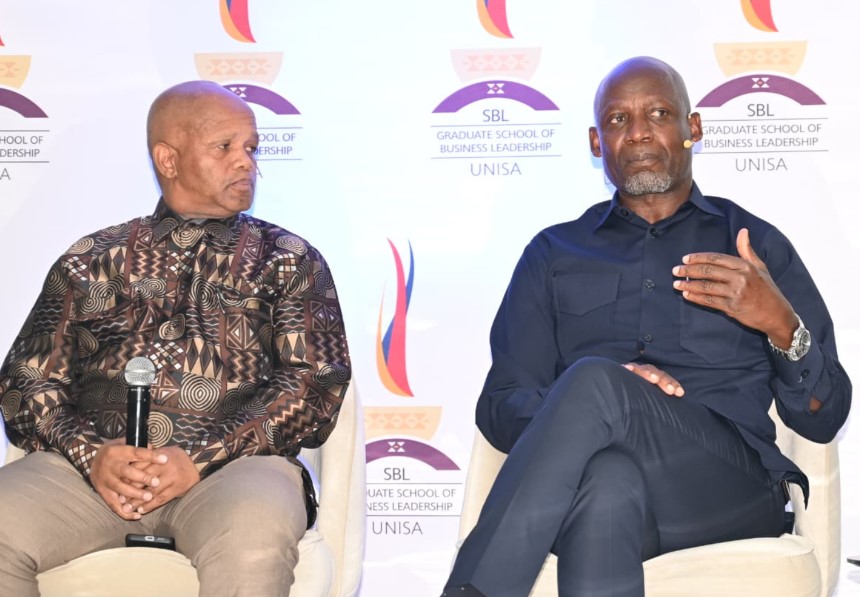
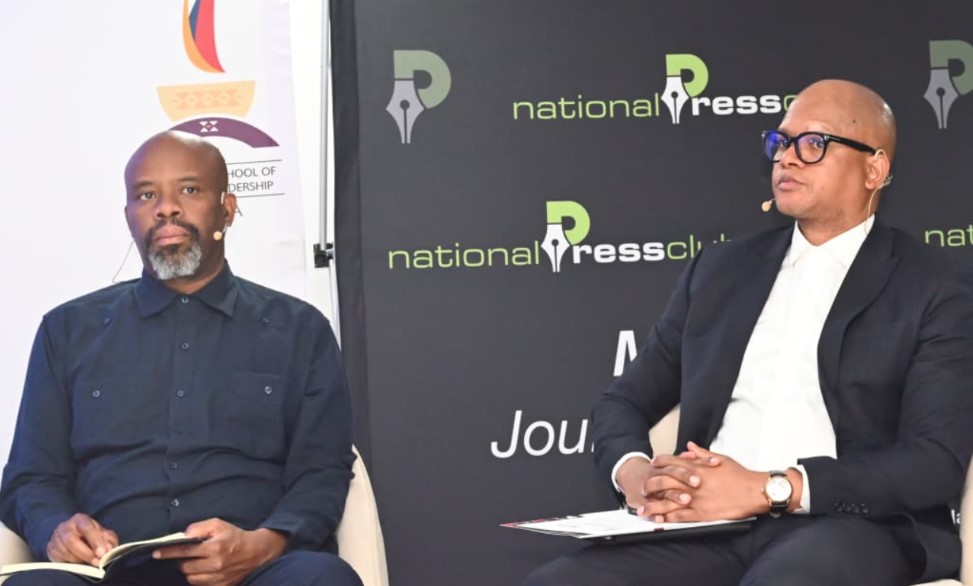
Speaking at a high-level dialogue hosted by the University of South Africa Graduate School of Business Leadership (SBL), alongside the Ministry of Higher Education and Training and the National Press Club on Thursday evening, Manamela reflected on the administration of five PSET institutions and outlined the reforms he believes are necessary to rebuild the sector.
The dialogue came as the administration period for the Services SETA, Construction Education and Training Authority (CETA) and Local Government SETA (LGSETA) approaches its transition point in August 2026, while the College of Cape Town has submitted its six-month administration report.
The National Student Financial Aid Scheme (NSFAS), which was placed under administration in May, reported to Parliament this week on progress during its first three months under administration.
Manamela said the challenges confronting the sector go far beyond individual institutions and require fundamental changes to the way PSET is governed and managed.
“I actually think that we’re underestimating the extent of the challenge that we’re talking about. And it’s not necessarily a crisis. It’s the necessity for a systemic reset,” Manamela said.
He said governance problems had become particularly visible across the sector, which includes 50 TVET colleges, 26 universities, 21 SETAs and several quality and skills development institutions.
Friction between councils and institutional management has repeatedly created governance challenges, while failures in governance ultimately affect students through delayed allowances, accommodation problems, institutional instability and protests.
“We have in total just shy of 3 million people that are dependent directly on this sector, that is students,” he said.
“It’s a system that affects almost every household in the country.”
Manamela said the department had made progress in establishing a more coherent political direction for the sector, particularly around the Presidential mandate for a skills revolution.
He said the government’s approach was to move away from fragmented institutions operating in isolation and towards “a single system” that requires coordination, focus and disciplined political leadership.
However, he acknowledged that several commitments made when he took office remained incomplete.
Among these is the stabilisation of NSFAS, the creation of an integrated data system across PSET institutions and the development of a clear and costed plan for the transformation of TVET and community colleges.
The minister said the integrated data system was particularly important because government needed to know when students entered the PSET system, what benefits they received, what they were being trained for and what happened to them afterwards.
“It’s a project which is quite ambitious, but which we’re very much committed to working on in integrating the data systems, which will solve a lot of problems,” he said.
Manamela also raised concerns about the sustainability of universities, warning that student funding pressures and debt could threaten institutions if not addressed.
He said the department had to confront the reality that universities could not remain sustainable without a reliable student funding model.
The minister identified the stabilisation of NSFAS as the department’s immediate priority, while calling for a fundamental rethink of student funding in the longer term.
“There’s no doubt about it. I tried to run away from it. I said, no, look, I’m not minister of NSFAS. We have a board, we have a CEO, now we have an administrator,” Manamela said.
He said the department nevertheless had to champion the stabilisation of NSFAS at policy level while the administrator dealt with operational challenges involving ICT, student accommodation and allowances.
Manamela said the financial pressure on NSFAS had grown significantly since the implementation of fee-free higher education, with the department currently working with a shortfall estimated at about R15 billion, compared with R13.5 billion the previous year.
He warned that the additional money required for student funding has implications for other areas of the education and training system because government has had to reprioritise funds.
“It’s taken from the levy that should go into skills development, it’s taken from the National Skills Fund, from the SETAs, it’s re prioritisation. The first intervention we made, R2 billion intervention that we made in 2017-2018 was taken from funding that was reimbursed for postgraduate funding,” Manamela said.
“So it’s not just money that comes from nowhere. The agency of a sustainable student funding model cannot be underestimated.”
Manamela said the country should not only focus on fixing the immediate problems at NSFAS but should consider what a completely redesigned student funding system should look like.
“We need to go to ground zero with regard to NSFAS, whilst we’re fixing what is currently existing,” he said.
He said the ultimate objective should be to ensure that students receive their funding on time, institutions receive payments on time and students have access to safe and adequate accommodation.
The minister also said government was willing to ask difficult questions about whether NSFAS, in its current form, remains the best model for funding students.
“The discussion is going to end in such a way that we need to provide funding to students,” he said, stressing that the focus should remain on ensuring that students receive financial support.
Manamela also criticised the department’s performance against its targets, noting that only 49% of planned targets were achieved in the 2024/25 financial year, despite the department spending 99.1% of its final appropriation.
“That has to change,” he said.
The minister said the figures should not be viewed simply as statistics because every missed target has a direct impact on people.
“They mean students. They mean someone who didn’t get their allowance. They mean someone who didn’t get their certificate. They mean someone who did not get to complete an opportunity for them to ultimately go and work,” he said.
He said government needed to ensure that money was directed towards measurable outcomes.
“Money has to go into outcomes,” Manamela said.
The minister said the second major priority was skills delivery, with the skills revolution expected to become the spine of the department’s work.
He said every rand spent on training should ultimately contribute towards employment.
“Make sure that every rand that you spend on training, be it by the SETAs, a university, a TVET college, whatever, make sure that whatever is spent on training leads to employment,” he said.
Manamela called on SETAs, the National Skills Fund and employers to expand work-integrated learning opportunities so that students can gain practical workplace experience.
He also urged businesses to open their workplaces to TVET and university students.
“I’m also personally engaging with businesses and saying to them, open up your doors for work
integrated learning for our apprentices,” Manamela said.
“We have to have employers opening up their workplaces. We have to have SETAs working as one.”
He said the PSET system must allow students to move between different types of institutions, including community colleges, TVET colleges and universities.
“One can enter through a community college and exit through a university,” Manamela said.
Manamela also backed the rationalisation of SETAs, arguing that the current system contains duplication and inefficiencies.
He said the government needed to reorganise the sector so that SETAs cooperate on basic services while specialising in the industries they are mandated to serve.
“The rationalisation of SETAs is something that is inevitable. It has to happen,” he said.
He said the process should begin with greater cooperation between SETAs rather than waiting for the expiry of their current licences.
Manamela said governance reform must also include strengthening the capacity of councils, executives, student leaders and other stakeholders responsible for the functioning of PSET institutions.
He revealed that government was discussing the possible establishment of an institute for governance and leadership for the PSET sector.
Such an institute could help induct people appointed to councils and ensure they understand legislation, policy, institutional mandates and their responsibilities.
“Governance and leadership has to be our focus,” Manamela said.
He also identified leadership as one of the biggest challenges facing the TVET sector.
“We have to make sure that we invest in capacity building for leadership in the sector,” he said.
Services SETA administrator Lehlogonolo Masoga said the institution entered administration in August 2025 with the task of addressing its problems while unlocking its potential.
“When you’re being invited into administration, you’re being invited into a troubleshooting space,” Masoga said.
He said the administration had focused on turning the institution around and claimed significant improvements over the past 12 months.
According to Masoga, Services SETA increased enrolment from 23,000 to 32,000 and completion figures from 5,000 to 16,000.
Official Services SETA figures published earlier this year showed that it had invested more than R500 million in supporting students across the country’s 26 universities and more than R800 million in supporting about 15,000 TVET students.
The SETA also committed R90 million to strengthen the country’s nine community education and training colleges. Manamela said in March that the Services SETA had a R1.3 billion bursary programme supporting 10,000 TVET students and 5,000 university students.
Masoga said the SETA was also investing a further R3 billion in work-integrated learning through its 20,000 internship programme.
He said the organisation had unlocked more than R5 billion in resources that had previously been stuck within the system.
“We’re unleashing that resource for the purpose of it, touching the lives of ordinary people, which are the beneficiaries of these resources at our disposal,” he said.
INSIDE EDUCATION
The post PHOTOS: Manamela calls for ‘systemic reset’ of PSET sector at high-level dialogue appeared first on Inside Education..