Young scientists have secured major university bursaries and other awards at the 2026 Eskom Expo for Young Scientists International Science Fair.
Two learners, Hamzah Loonat and Shalom Lasimu from the Nkangala region, were each awarded Siemens Energy higher education bursaries worth R675,000 to study towards a Bachelor of Science in Engineering at a South African university.
Scott Baker from Bryanston High School in Johannesburg received the University of Pretoria-Derek Gray Memorial Award, which includes a R600,000 university bursary and the Derek Gray Gold Medal.
Eskom also provisionally awarded merit bursaries to six young scientists, subject to their final National Senior Certificate results as well as the utility’s bursary and university admission requirements.
The awards were announced at the 46th Eskom Expo International Science Fair in Boksburg, which ran from September 29 to October 2 and brought together 316 young scientists from 35 regions across South Africa and 24 international participants.
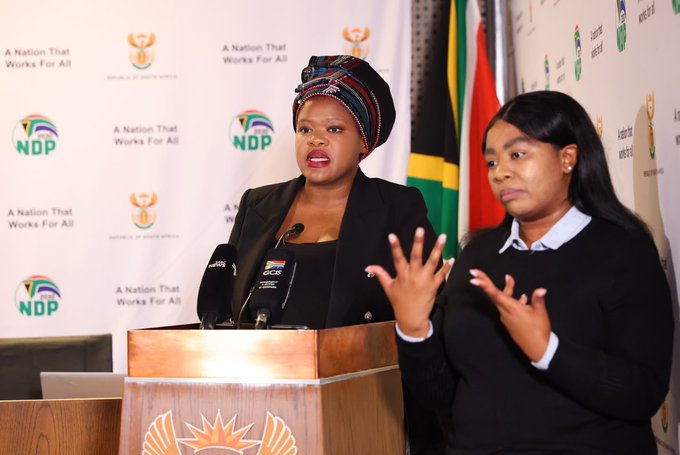
Deputy Minister of Science, Technology and Innovation Dr Nomalungelo Gina, addressing participants on Thursday, said the opportunities offered through the Expo were particularly important as South Africa grappled with shortages of people with STEM skills.
“The reality is that South Africa is not the only country experiencing a skills shortage in science, technology, engineering and mathematics, or a decline in interest in STEM school subjects,” Gina said.
“Many of the countries represented here face the same challenge.”
Eskom and its partners used the competition to identify and financially support learners who could potentially move into science, engineering, technology and research careers.
Gina said Eskom, one of the country’s major users of technical and engineering skills, would itself require such expertise as it expanded and maintained the country’s electricity infrastructure.
“Our country and our continent can only develop to their full potential when each generation produces enough scientists, technicians, technologists, engineers, researchers and innovators for the next one. That is how progress is sustained, and Eskom understands this.
“It is investing in the very people who will one day build, run and improve the systems on which our nation depends,” Gina said.
The Fair featured young researchers from all nine provinces, alongside participants from countries including Brazil, India, Russia, Lesotho, Namibia, China, Türkiye, Tunisia, Mozambique and Ghana.
Learners had progressed to the international fair through workshops, district expos and regional science fairs, refining their projects through judging and feedback before reaching the final competition.
In addition to the major bursaries, universities, professional bodies and private companies awarded cash prizes, laptops, tablets and smaller bursaries across fields including engineering, environmental science, mathematics, physics, computer science and water research.
Wits University’s Faculty of Engineering and the Built Environment awarded R40,000 bursaries to Jonathan van Wyk and Thapelo Shawa, while Mvuyelwa Bam received a R40,000 bursary from the university’s Faculty of Science.
Daniel Ferreira and Paballo Nkwane each received R45,000 bursaries from the University of Pretoria’s Faculty of Natural and Agricultural Sciences.
Gina told participants that the country’s STEM skills shortage should not be regarded only as a future problem for government or industry to solve.
“It is a challenge you are already answering, with every experiment you run and every question you ask.”
Former National Youth Development Agency CEO Waseem Carrim has been approved by Cabinet for permanent appointment as chief executive of the Road Accident Fund.
Prior to the appointment, Carrim was serving as acting CEO of the National Student Financial Aid Scheme (NSFAS) since March 2025.
In a post-cabinet meeting briefing on Tuesday, Minister in The Presidency Khumbudzo Ntshavheni announced that he has been appointed permanently to lead the agency, which is facing severe financial and governance challenges.
The Chartered Accountant takes over at a time when the agency is under intense external and internal scrutiny following a marathon inquiry by the parliament’s Standing Committee on Public Accounts. Its former and current managers were grilled over financial mismanagement and irregular procurement.
Carrim has extensive administrative experience. He was brought in to help stabilise NSFAS amid governance and financial challenges. He helped oversee efforts to clear funding backlogs and improve the scheme’s operations.
Carrim also spent several years as NYDA CEO and during his tenure the agency achieved nine consecutive clean audits and substantially expanded its operational budget.
But Carrim is now taking over an agency facing serious challenges highlighted by Scopa, including concerns that changes to the claims process have made it harder for poorer crash victims to access compensation directly and increased their reliance on attorneys.
The committee has also raised concerns about the RAF’s funding model, warning that its reliance on the current model could place further strain on the fund’s long-term financial sustainability unless an alternative is found.
It is funded through a petrol levy which amounts to R4 billion per month, collected by the SA Revenue Service. The entity also receives minor income from ad hoc government grants and interests from investments.
The National Skills Fund (NSF) has come under intense parliamentary scrutiny over unpaid stipends, accommodation problems and disruptions to the training of hundreds of young people transferred to the Denel Training Academy programme.
The Portfolio Committee on Higher Education heard on Wednesday that some learners had been removed from accommodation, forced to travel long distances to training sites and, in some cases, found sleeping in corridors after the termination of service provider Phila Jordan Capital (PJC).
NSF acting chief executive Melissa Erra told MPs that the fund had been alerted that learners were being “kicked out of their accommodation or being relocated” after the PJC project was terminated.
Some learners were moved so far from their workplaces that they had to wake up at 3am or 4am to travel from Pretoria to Johannesburg, she said.
“When we deployed our security team to go and verify the status, we found that some of the learners were sleeping in the corridors,” Erra said.
The NSF subsequently intervened with food packs and sanitary supplies.
The crisis affects 761 learners who were transferred from PJC to Denel after the NSF terminated PJC’s contract following concerns about its delivery of the programme.
The fund said 701 learners received their July stipends, while August payments were only made in September after administrative problems at Denel. May and June stipends remain unresolved because no teaching and learning took place during the transition between PJC and Denel.
The NSF said a legal opinion from the Department of Higher Education and Training indicated that paying stipends for periods when no training took place could potentially constitute fruitless and wasteful expenditure.
Denel has since been asked to pursue a declaratory order in the Labour Court on the outstanding May and June payments.
But MPs questioned why learners should continue bearing the consequences of administrative failures.
Higher Education Minister Buti Manamela said the situation was unacceptable and warned that responsibility must extend beyond simply fixing the administration of the projects.
“So when that opportunity is interrupted, Chairperson, by unpaid stipends, inadequate accommodation or a provider that fails to deliver, I think the consequences should extend beyond the administration of a project,” Manamela said.
“Those families have made sacrifices. Learners have moved away from home and their plans and expectations are placed in jeopardy.”
He said learners should not suffer because of failures within the administration of the NSF or its service providers.
“I do not think and I remain committed to the fact that learners should not be prejudiced, should not in any way suffer precisely because of the challenges that those who are responsible for administration have committed.”
Manamela said there should be consequences for training providers and any NSF officials found to have been negligent.
The briefing also exposed confusion over the exact status of some payments.
The NSF said most April learners had been paid, except four suspended learners, while its project manager later acknowledged that she might have been wrong about the timeline after MPs challenged the account against information previously provided by Denel.
Committee member Sedukanelo Louw demanded clarity on the payment failures.
“Learners are suffering,” he said. “We can’t be lying forever. We must be truthful and we must take a decision as Parliament.”
The committee also heard that one learner remained outstanding for April and 57 for July at one stage of the payment process, while individual learners were still affected by missing attendance registers and work-integrated-learning documentation.
The August stipend payment was eventually made by Denel on 14 September, a day later than planned.
Committee chairperson Tebogo Letsie said Parliament would engage directly with affected learners and indicated that members were likely to visit or speak to them in the coming weeks.
The crisis follows the NSF’s termination of the PJC project in May after repeated non-compliance.
The fund said its security verification found learners facing serious accommodation and food problems, while teaching and learning had been disrupted.
The NSF said more than R11 million remained unreconciled from the PJC project and that the matter had been referred to the state attorney for recovery. It was also referred to the Hawks.
Erra said the NSF accepted responsibility for the learners because they are beneficiaries of the fund.
“We do take accountability because these are our beneficiaries,” she said.
The NSF is now targeting 30 October to stabilise the Denel programme, including finalising a remedial plan, addressing additional training requirements and resolving outstanding stipend matters.
The fund said Denel’s latest remedial plan requires another two months of workplace teaching and learning, while SAA Technical has indicated that it needs another 10 months.
The discrepancy is still being investigated and could have financial implications for the programme.
The NSF’s intervention comes amid broader concerns about its management of skills projects. Parliament has previously raised concerns about alleged maladministration and financial management at the fund, while the Special Investigating Unit has been authorised to investigate allegations involving the NSF.
For the learners caught in the Denel transition, however, the immediate issue remains whether and when they will receive the money they are owed and whether the training programme will be completed without further disruption.
Basic Education Minister Siviwe Gwarube has been named to TIME magazine’s TIME100 Next list for 2026, joining 100 emerging leaders the publication says are the world’s most influential rising stars.
The annual list, released on Wednesday, recognises emerging leaders from around the world who are shaping the future across politics, science, business, entertainment and other fields.
Reacting to her inclusion, Gwarube wrote on X: “What an incredible honour being selected as @TIME 100 Next for 2026: The World’s Most Influential Rising Stars. I love serving my country. And I am absolutely passionate about affording all our 13.7 million learners the quality education that they deserve. What uMama did could never be undone.”
TIME traced Gwarube’s recognition partly to her personal journey from rural poverty to the cabinet, describing her as having come from “the generation of Black students walled off by apartheid in resource-starved schools, severely constraining their prospects”.
“Now, at 37, Gwarube has the chance to write a new history as Minister of Basic Education,” TIME said.
The publication said Gwarube had “ditched old formalities with straight talk on social media, taken on skeptical teachers’ unions, and dismantled crony procurement contracts”.
TIME also highlighted her position as a Democratic Alliance minister serving in the Government of National Unity.
“Despite representing the opposition Democratic Alliance party in a two-year-old coalition government, she has won over the Mandela-era grandees in power with charm and clarity,” the magazine said.
It said Gwarube’s central message was that South Africa “risks dire economic pain without vastly more investment in new schools and early learning”.
TIME cited comments she made in Parliament in August, when she said: “Education is where productivity begins.”
“We will not stop until we get it right,” Gwarube said.
Her recognition comes as the Department of Basic Education places increased emphasis on early childhood development and improving foundational literacy and numeracy.
In her 2026/27 Budget Vote speech in May, Gwarube said the department’s priorities included early childhood development, improving foundational literacy and numeracy, supporting teachers, strengthening inclusive education and improving school safety and infrastructure.
She said that more than 13,300 early childhood development centres had been registered, exceeding the department’s target of 10,000 centres.
She also said more than 1.2 million children had access to registered ECD programmes.
Gwarube joins an international TIME100 Next list that includes British actor Himesh Patel and American engineer and astronaut Anna Menon.
South Africa must move beyond Artificial Intelligence (AI) policy design, development and debate to implementation to address challenges including youth unemployment.
This is according to the Tshwane University of Technology’s (TUT) Institute for the Future of Work (IFOW), which this week convened the 5th Annual Future of Work Dialogue in Pretoria.
Held under the theme “Turning the Developmental Tide: Advancing Africa’s Resilient Future Through AI-Enabled Innovation Pathways,” the dialogue aims to shift focus from what artificial intelligence might mean for South Africa to what institutions must do now to ensure that technological change supports jobs, skills development and inclusive economic growth.
According to Statistics South Africa, the official unemployment rate stood at 33,6% in the second quarter of 2026, while unemployment among young people remained particularly high, at 62,8% for those aged 15 to 24 and 41,8% for those aged 25 to 34.
“The future of work is not a conversation about the future anymore. It is already here,” said Tseliso Mohlomi, Senior Director in the Office of the Vice-Chancellor and Principal at TUT.
The IFOW argues that the critical issue is no longer whether AI will transform work, but whether South Africa is moving quickly and coherently enough to shape that transformation in its own interests.
“The young South African searching for work today cannot wait another five years for institutions to perfect their strategies. Neither can businesses searching for skills that our education and training system is not yet producing at sufficient scale,” said Mohlomi.
The Institute noted that South Africa has developed strategies and policy initiatives addressing the Fourth Industrial Revolution, digital transformation, innovation and skills development — the challenge is increasingly one of coordinated implementation.
Mohlomi said that at last year’s dialogue, participants proposed the establishment of a National AI Implementation Council capable of coordinating government, universities and industry against a measurable and time-bound delivery roadmap.
This year’s dialogue aims to carry that conversation forward by proposing concrete steps and division of responsibilities across government, business and academia with timelines and measurable outcomes.
Mohlomi said the urgency and the AI gap are particularly evident in the relationship between education and employment, noting: “Employers continue to require rapidly evolving capabilities, while universities and colleges must prepare students for occupations and technologies changing faster than conventional curriculum cycles.”
The IFOW argued that a more integrated response is required — including earlier identification of emerging skills by employers, faster curriculum adaptation, expanded apprenticeships and workplace learning, and greater industry investment in the skills pipelines from which businesses ultimately recruit.
This process also involves Sector Education and Training Authorities (SETAs)
The IFOW has identified immediate skills demand emerging in areas including cybersecurity, cloud computing, AI literacy and data engineering, while South Africa and the continent will increasingly need deeper capability in areas such as microelectronics, advanced manufacturing and embedded AI systems.
Mohlomi said the country and the continent should reject the idea that it must choose between technological advancement and employment, arguing that the two are not mutually exclusive, but can complement and reinforce each other.
South Africa’s education institutions should stop treating artificial intelligence as something students need to be protected from and instead embrace it as the next major shift in how people learn, solve problems and prepare for work.
That was the argument from Anthony Wingfield, a senior lecturer at Emeris and head of digital and brand strategy at Vega School, during the Emeris Education and Skills Dialogue hosted on Wednesday in Sandton, Johannesburg.
“Get super excited about AI,” Wingfield said, aadding that the technology should be treated as a tool that can enhance learning and problem-solving rather than something institutions should try to keep students away from.
He compared the development of AI to previous technological breakthroughs, saying that innovations such as calculators did not eliminate mathematics and the internet did not eliminate the need for human thinking.
“Telling students not to use AI is like telling them not to use the internet,” he said.
The dialogue, themed around education before and beyond, brought together education and industry voices to discuss how South Africa can prepare the next generation for a rapidly changing world of work.
It focused on what it will take to produce graduates who are employable, capable of creating jobs and equipped with the skills needed to navigate an economy increasingly shaped by technology and AI.
Wingfield said AI was already changing what students were capable of producing, with learners now able to move beyond developing basic prototypes to creating fully functioning websites, applications and digital solutions.
He gave the example of a student who recently developed a functioning customer-satisfaction and loyalty scanning system for a restaurant.
“Now they’re developing the websites or the apps and they’re fully working, not just in prototype stage,” he said.
According to Wingfield, the rapid development of AI means the focus of education needs to shift towards problem-solving, critical thinking and the ability to evaluate and improve work produced with the assistance of technology.
“The process of solving the problem is more important than the problem,” he said.
Emeris Head of Communications Sarnelia Mandapalli said the debate around AI was similar to the disruption experienced by the media industry when digital platforms began changing how audiences consumed information.
She said the emergence of websites and digital media had initially created fears that traditional media jobs would disappear, but the industry instead evolved as audiences changed how they consumed news and information.
Mandapalli said AI was now presenting a similar challenge, particularly as tools such as ChatGPT, Grok and Claude can perform tasks that were previously done exclusively by humans.
But she said the human element remained critical.
“As much as we can use technology, there still has to be a human element,” Mandapalli said.
She said Emeris was in the process of developing a qualification focused on AI and its ethical use, reflecting the institution’s recognition that students would increasingly encounter and use the technology in their studies and future workplaces.
She said institutions needed to acknowledge that students were already using AI rather than simply attempting to prevent its use.
“We know our students are going to use it. We just have to ensure that they use it responsibly, ethically, and if they are using it, that they obviously reference it properly,” she said.
She said Emeris had processes in place to monitor the use of AI in academic work, while assignments were also designed to ensure that students could not rely solely on AI-generated material.
Emeris is an educational brand of The IIE, which is registered with the Department of Higher Education and Training as a private higher education institution under the Higher Education Act, 1997.
The IIE is responsible for conferring qualifications available at Emeris and is responsible for the quality of curriculum development, teaching, assessment and compliance with laws and regulations.
South African Qualifications Authority (SAQA) CEO Nadia Starr said regulators were also navigating how AI should be incorporated into education, with no simple approach yet emerging globally.
She said regulators needed to remain part of the conversation with educators, institutions and technology developers as AI continued to evolve.
“Everyone being in the conversation and putting their perspectives and creating this context that is really multifaceted” was important, she said.
Starr also cautioned that the rapid adoption of AI needed to take South Africa’s unequal access to technology into account.
She said the purpose of education extended to helping people live meaningful lives, contribute to their communities and develop a sense of self-worth.
While employability remained an important concern in a country where unemployment continues to affect large numbers of people, she said education should provide value beyond the workplace.
“Education, the purpose of education is that people can live meaningful lives,” she said.
Starr also highlighted the importance of lifelong learning, saying participation in higher education remained limited and that learning and skills development needed to be viewed as a lifelong endeavour.
The discussion further touched on the growing prominence of micro-credentials and shorter forms of learning, with Starr noting that the way education is packaged will continue to evolve as technology and the needs of society change.
Wingfield said the changing technological landscape also reinforced the importance of ensuring that graduates leave higher education with skills that extend beyond their qualifications.
He said employers increasingly need graduates who can think strategically, solve problems, adapt and work with others.
“The degree you get, the certificate gets you an interview. What you bring to the table is what keeps you in the room,” Wingfield said.
The Department of Higher Education and Training (DHET) is grappling with how to assess students in an artificial intelligence era where a completed assignment may no longer prove that a student has actually learnt the material.
Deputy DHET minister Yusuf Cassim said AI was already part of student and lecturer life, but its growing use raised difficult questions about assessment, accuracy, bias and when human judgement remained essential.
“AI can give a confident answer that is wrong. It can reproduce bias. It can make a completed assignment look like evidence of learning when it is not,” Cassim said.
“We need guidance that helps lecturers teach and assess well, and helps institutions protect student information. A policy is useful only when people can apply it in a classroom, office or college centre.”
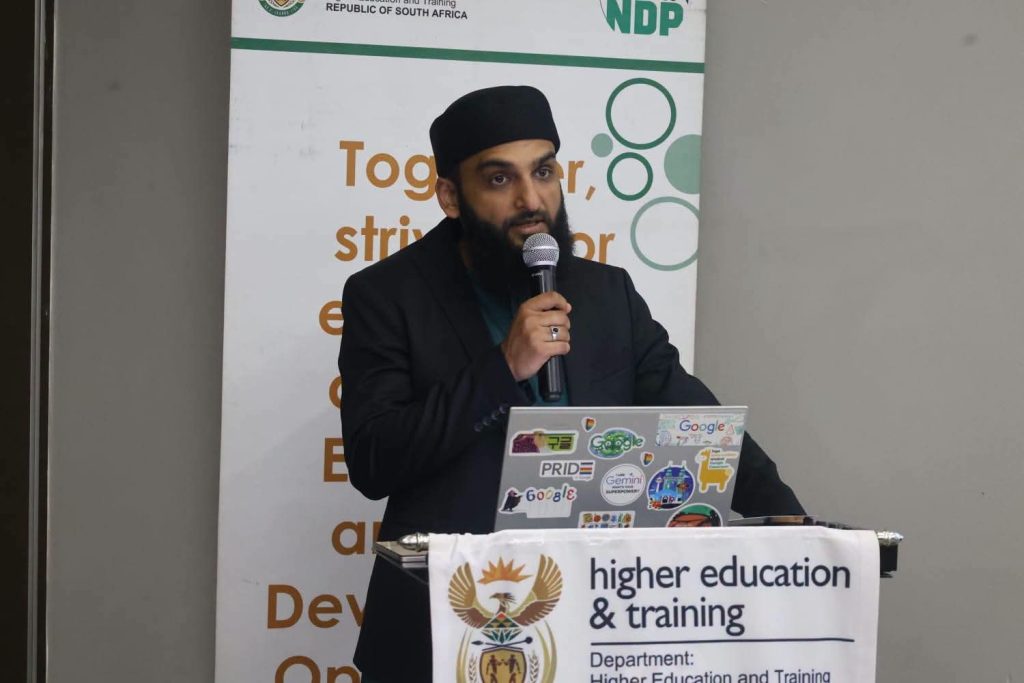
He was speaking at the DHET and Google AI Policy and Guidance Lab in Pretoria, where officials, universities, colleges and Google representatives were developing a position statement and practical roadmap for the use of AI across the post-school education sector.
“Artificial intelligence is already part of student life. A student uses it late at night to understand a concept. A lecturer considers whether it can help prepare a lesson. An official sees an opportunity to respond to a request more quickly,” Cassim said.
“Each example presents a possibility, and each calls for judgment. We need people who can question an answer, recognise when it is wrong and know when a human decision is essential.”
Cassim told participants in the policy lab to move beyond broad discussions about AI and establish clear responsibilities for government, technology companies and institutions.
“Today you are moving towards a position statement and a practical roadmap. I ask you to be specific. What should the department do? What can Google support? What must each institution own? What can we test first, and how will we know whether it helps students and educators?” he said.
The policy work forms part of an agreement signed between the department and Google South Africa in March covering skills training, educator development, curriculum support, devices and AI policy.
The agreement includes an initial 10,000 Google Career Certificate scholarships across public universities, TVET colleges and Community Education and Training colleges, with particular attention to rural and township institutions.
Cassim said, however, that access to AI and digital skills could not be judged only by the number of opportunities created.
“Those numbers matter, but they are only a starting point. I want us to ask who finds out about these opportunities, who can access them, who completes the training, and what they are then able to do with the skills,” he said.
“A certificate cannot benefit someone who has no reliable connection, no place to learn or no support when the work becomes difficult.”
He said this was particularly important for Community Education and Training (CET) colleges, which serve adults and out-of-school youth, including people returning to learning after their education was interrupted.
“We cannot simply take a model designed for a well-resourced university student and assume it will serve them,” Cassim said.
CET colleges needed stronger ICT hubs, practical digital skills and more flexible combinations of online and in-person learning, he said.
He that greater use of technology should not remove human accountability.
“Students’ personal information must be protected, and a student must still be able to reach a person who takes responsibility for the case.”
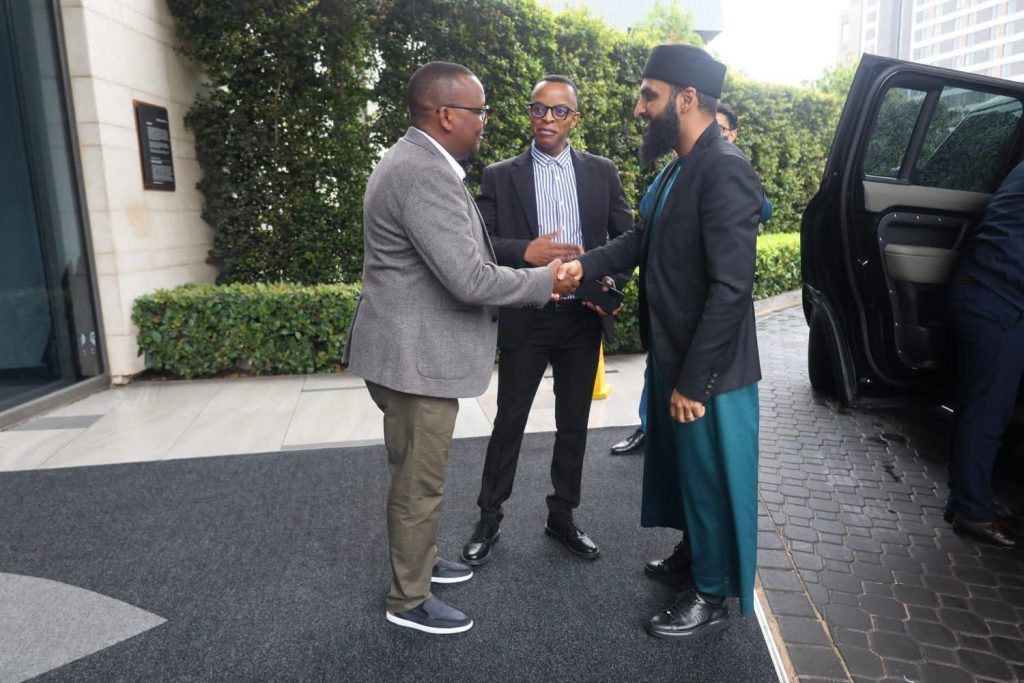
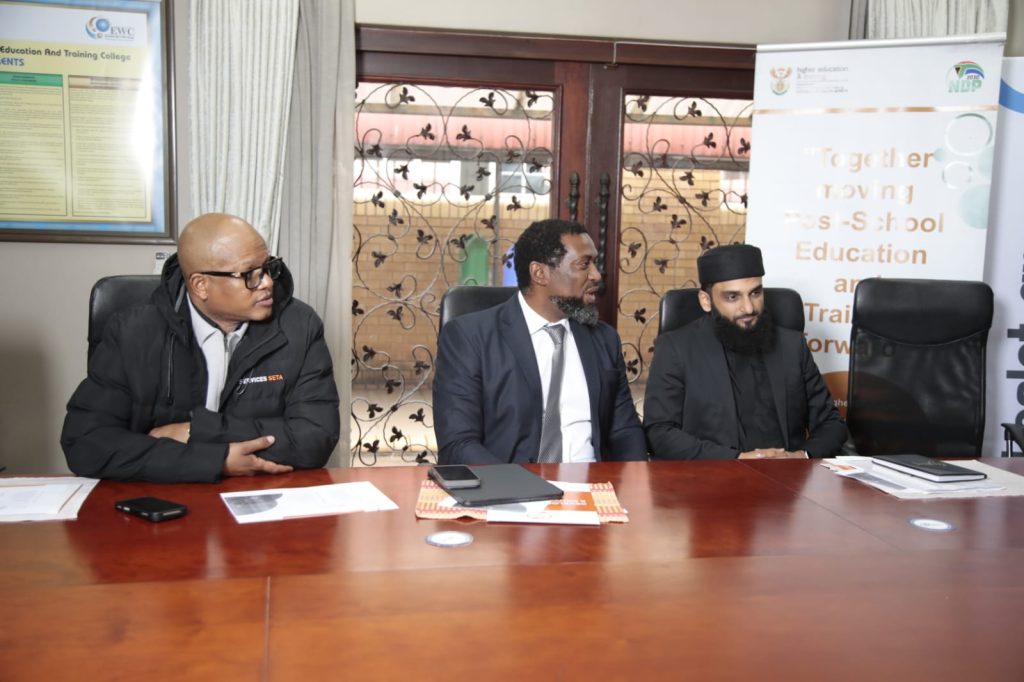
Higher Education and Training Minister Buti Manamela has challenged industry to ensure that skills development translates into employment as Services SETA and the Takealot Group launched a three-year partnership on Tuesday, targeting 20,000 income-generating opportunities.
The partnership is backed by an initial Services SETA investment of about R103 million and aims to create pathways from training to workplace experience, entrepreneurship and income generation, particularly within South Africa’s growing digital economy.
Manamela said the initiative formed part of government’s broader “skills revolution” and responded to President Cyril Ramaphosa’s call for training to lead to employment.
“Every training that takes place in the country must lead to employment,” Manamela said.
He said one of the biggest challenges facing the post-school education and training system was limited participation by employers in providing workplace opportunities to students and graduates.
While government had invested heavily in universities, TVET colleges, community education and training centres and other institutions, Manamela said the system could not succeed without employers opening their doors to young people.
“One of the major catalysts has been the absence of employers actively participating, opening up their doors, and hosting students either as entrepreneurs or as future employees,” he said.
The Takealot partnership is intended to address that gap by linking training to practical opportunities in the platform economy.
The programmes include work-integrated learning placements for TVET college learners, critical-skills bursaries, Personal Shopper training and tools of trade, driver development and training, Marketplace SME localisation and digital training for small businesses.
Manamela said the partnership was designed to go beyond conventional training and expose young people to different ways of participating in the economy.
“We’re not just going to be using this programme to train people to ride bikes,” he said.
While driver training forms part of the initiative, Manamela said the broader objective was to enable young people to participate as entrepreneurs, connect customers with goods and use digital platforms to access economic opportunities.
He said the partnership could potentially be replicated with other companies and across different sectors of the economy.
Manamela said the success of the programme would depend on whether participants moved from classrooms and training programmes into internships, employment, entrepreneurship or other sustainable income-generating opportunities.
“If this programme becomes a success, we will ensure that not only do we expand, but we also replicate,” he said.
About 500 students from Gauteng community colleges are also expected to participate, broadening the programme beyond TVET students and graduates.
Manamela said this would expose community college students to digital opportunities and help connect different parts of the post-school education system to the changing demands of the economy.
“We want to call on industries to partner with us so that we’re able to train for the skills that industry itself requires,” he said.
He acknowledged concerns from employers about the complexity and time involved in government systems, saying these were issues that needed to be addressed.
Deputy Minister of Higher Education and Training Yusuf Cassim said the launch represented a shift from signing agreements to implementing them.
The relationship between the department and Takealot dates back to a strategic memorandum of understanding signed in September 2025. The agreement established a framework for collaboration around workplace learning, bursaries, learning materials and support for township entrepreneurs and small businesses in the digital economy.
“An MOU is a commitment. A partnership is a mechanism. But implementation is where the commitment becomes real,” Cassim said.
He said the R103 million investment would support workplace learning for TVET learners, critical-skills bursaries, Personal Shopper training, driver development, Marketplace SME localisation and digital training for small businesses.
Cassim said the initiative should ultimately be measured by its effect on individual participants.
“Did they acquire a skill? Did they gain meaningful workplace experience? Did they earn an income? Did they gain access to a market?” he said.
He said township-based entrepreneurs should be able to participate in the modern economy without necessarily having to leave their communities.
Through technology, skills development, market access and private-sector partnerships, young people could be connected to larger markets while small businesses gained access to new customers, Cassim said.
Services SETA administrator Lehlogonolo Masoga said the partnership was intended to bring training and economic opportunity closer together.
“We have entered into this partnership with Takealot to translate the skills revolution into employment creation opportunities,” Masoga said.
He said the three-year programme would combine training with employment opportunities and would be monitored to assess its impact on participants.
Services SETA regards the initiative as a pilot that could be expanded if it produces the intended results.
Takealot Group CEO Frederik Zietsman said the partnership would connect young South Africans with an existing digital economy and a range of income-generating activities.
Zietsman said more than 18,000 personal shoppers were already earning income in their communities, with most based in townships, while more than 20,000 independent contractor drivers and more than 18,000 small businesses were operating on the platform.
“This is change in action,” he said.
He said the partnership was not simply about funding but about creating opportunities that were practically accessible to young people.
He highlighted personal shoppers, drivers, township-based marketplace sellers and work-integrated learning opportunities for TVET students as pathways connecting learning to earning.
“The partnership with the Services SETA does not bring to us just money,” Zietsman said. “It brings to us the faces of youth that is looking for opportunities that are practically accessible to them.”
Zietsman also committed Takealot to measuring the programme’s impact, saying that failing to do so would mean failing the people it was intended to benefit.
He said Takealot had grown over 13 years into a business generating about $2 billion in revenue and that its approach to the partnership would be based on implementation rather than promises.
“There is an ocean between saying and doing, and we are on the side of doing,” he said.
Manamela said the programme’s success would not be judged by the amount of money invested or the number of people enrolled, but by what happened to participants after entering the programme.
“The only measure of success is that a significant number of those who participate as students in this programme must lead to some form of employment or internship,” he said.
He said government would monitor the commitments made under the partnership, including the R103 million investment and the target of 20,000 opportunities.
According to Manamela, about R4 billion from the National Skills Fund and SETAs is being directed towards partnerships with industry, with more than 100,000 students expected to be placed in work-integrated learning programmes.
He said the Takealot programme was separate from those 100,000 placements.
Manamela also called on more employers to participate in skills development partnerships with government.
He said companies contribute to the skills development levy, with portions of the funds flowing to SETAs and the National Skills Fund, while employers can claim back a portion of their allocation under existing legislation and regulations.
The partnership comes as Services SETA expands workplace opportunities for unemployed young people. Its separate To The Power of X² programme is targeting 20,000 structured, 24-month internship opportunities for unemployed university and TVET graduates.
The department has also identified workplace-based learning and stronger employer participation as key components of its 2026/27 delivery priorities, with the broader system expected to increase opportunities for students to gain practical experience.
Wits University is investing R341 million in a new cultural precinct in Braamfontein as part of efforts to open its arts and cultural facilities to the wider Johannesburg community.
The precinct will bring together existing and new arts, performance and heritage facilities, including the Wits Art Museum, Jack Ginsberg Centre for Book Arts, Chris Seabrooke Music Hall, Digital Arts building and additional facilities for the Wits School of Arts.
Plans include expanded music and fine arts facilities, new exhibition spaces, a theatre amphitheatre and upgrades to the Wits Theatre Complex.
The five-year development project is also expected to contribute to the regeneration of Johannesburg’s inner city.
Wits Vice-Chancellor Professor Zeblon Vilakazi said the project was intended to strengthen the university’s relationship with the city.
“The Cultural Precinct is about opening Wits to Johannesburg and creating spaces where students, artists, scholars and the public can meet, create and exchange ideas,” Vilakazi said.
A major donation from Wits alumnus Chris Seabrooke, through the Seabrooke Family Trust, will fund most of the estimated R341 million capital cost, with Wits contributing the balance.
Seabrooke, who completed his MBA at Wits in 1985, said the investment was intended to create a cultural space that would benefit Johannesburg beyond the university community.
“The arts have an extraordinary ability to bring people together and to change the character of a place,” he said.
The Wits Foundation will have the right to sell the donated shares through block trades or on the market over the estimated five-year period of the project to provide funding for the development.
The precinct will be embedded within the Faculty of Humanities and Wits School of Arts and will incorporate disciplines including digital arts, film and television, fine arts, music, theatre and performance, Drama for Life, cultural policy and visual cultures.
Wits said the development forms part of its broader efforts to make its cultural, heritage, scientific and sporting assets more accessible to the public.
The project comes as Johannesburg seeks to revitalise its inner city and attract greater cultural, creative and economic activity.
The precinct will form part of a wider Johannesburg cultural network that includes the Joburg Theatre, Market Theatre, Sci-Bono Discovery Centre, Tshimologong Digital Innovation Precinct and Constitutional Court.
Jozi My Jozi CEO Innocent Mabusela welcomed the development, describing it as a potential contribution to the city’s broader renewal efforts.
The Presidential Youth Employment Initiative (PYEI) created 139,693 earning opportunities for young people through the National Pathway Management Network during the first quarter of the 2026/27 financial year.
Deputy Minister in the Presidency Nonceba Mhlauli told reporters on Wednesday that of these opportunities, 106,093 were secured through SA Youth, while a further 33,600 earning and learning opportunities were secured through Employment Services South Africa (ESSA).
She was outlining the PYEI quarterly progress report covering the period between April to June 2026. The network is designed to link unemployed youth with training, support and earning opportunities.
Mhlauli said the SA Youth platform had enabled 2.6 million youth to access opportunities since its establishment in 2020. Close to 70% of the opportunities were accessed by young women.
Since the establishment of ESSA, close to 5.7 million young people have registered with the service and 386,733 of them have secured opportunities.
“At the same time, we recognise that temporary opportunities alone cannot resolve South Africa’s youth unemployment challenge. This is why the PYEI also focuses on systems change, demand-led skills development, enterprise development, sustainable earning pathways and connecting young people to opportunities through a national network,” Mhlauli said.
She said the Youth Employment Service placed 5,244 young people into workplace experience opportunities in the first quarter, adding that 233,393 workplace experience opportunities have been delivered since the establishment of PYEI.
A total of 2866 people were recruited during phase five of the revitalised National Youth Service programme.
“This is the largest phase of the revitalised National Youth Service to date and [it] is recruiting 100,000 young people across South Africa. Since inception, the National Youth Service has provided 140,922 paid service opportunities across its five phases, with young women accounting for 68% of these opportunities,” said Mhlauli.
The PYEI also supports enterprise development and self-employment, providing alternatives for young people who struggle to find traditional employment. During the quarter, the National Youth Development Agency provided 5,214 enterprise support opportunities, including 4,795 non-financial and 419 financial opportunities.
A total of R95 million was committed to the fourth National Pathway Management Network Innovation Fund to support innovative youth employment solutions – particularly in rural communities – for young people with disabilities and through civil society and youth-led organisations.
“The impact of the PYEI cannot be assessed only by the number of young people who access an opportunity. We must also understand what happens afterwards: whether young people move into further opportunities, secure sustainable income, progress into employment or enterprise, and whether the pathways we are creating are helping young people build livelihoods,” said Mhlauli.
Youth unemployment remains one of the country’s most pressing economic and social challenges.

 What uMama did could never be undone.”