Category: Uncategorized

Uncategorized

Motshekga hands over infrastructure project at Zwelemfundo Primary School

Inside Education Reporter

Minister of Basic Education Angie Motshekga, together with the Eastern Cape Department Of Education MEC Fundile Gade and USAID, handed over new classrooms and renovated ablution facilities to Zwelemfundo Primary School in Scenery Park, East London, on Monday.

This project – one of similar projects currently undertaken by the US government, in partnership with the DBE, nationwide – is a result of the collaboration between the Governments of South Africa and the United States of America, through its agencies, in areas of education.

The handover ceremony was a symbolic event on behalf of all the past building projects by the US in the Eastern Cape.

During the event, Minister Motshekga said: “Significant strides have been made in building essential school infrastructure, with the United States Office of Defense Cooperation providing critical support in constructing educational facilities that directly impact our students’ learning environments.

“This support, a testament to the power of diplomatic engagement, demonstrates how bilateral cooperation can navigate the complexities of global geopolitics to produce tangible benefits for our communities.”

While in East London for the infrastructure handover in Scenery Park, Motshekga, also visited Mthombolwazi Daycare Centre to engage with the Early Childhood Centre (ECD) practitioners there.

Since the ECD function shift, Motshekga has demonstrated her unwavering commitment to engaging with ECD practitioners. She believes it is crucial to hear the voices on the ground, stating: “This is critical following the ECD function shift, as we seek to support the practitioners and sector as a whole. I am dedicated to this cause and will continue to engage whenever the opportunity arises.”

In January 2024, Motshekga announced that a Mass Registration Drive would be launched to pull every early learning programme (ELP) into the regulatory net. This will ensure that all ELPs, including those in low-income communities, can be supported to comply with regulatory requirements and receive ongoing oversight.

It will also ultimately ensure that the ECD subsidy can benefit more of the children for whom it is intended.

The DBE is currently in the process of testing the new Mass Registrations system.

INSIDE EDUCATION

Uncategorized

Higher Education Minister gets update on Fort Hare Council’s governance challenges

Inside Education Reporter

THE Minister of Higher Education, Science and Innovation, Professor Blade Nzimande, held a special ministerial meeting with the Council of the Fort Hare University last Friday.

This meeting follows the Minister’s visit to the University in June 2023, to meet with the Council regarding several concerns that were raised by the University stakeholders.

The purpose of the meeting was for the Council to provide the Minister with a progress update on the University’s response to the concerns he raised in 2023.

In addition, the Council is expected to provide the Minister with a comprehensive plan on how the University has been addressing some of the serious governance issues that have led to it becoming the focus of negative media attention.

The Council is also expected to provide the Minister with a report on the implications and impact on the governance of the arrest of so many senior university managers, including those in the Vice Chancellor’s office.

INSIDE EDUCATION

Uncategorized

Minister condemns the action of Stellenbosch Senate on Gaza

Staff Reporter

Minister of Higher Education, Science and Innovation, Professor Blade Nzimande has blasted the Senate of Stellenbosch University for voting against a motion on ‘Genocide and Destruction of Scholarship and Education in Gaza.’

In its text, the draft motion calls for among others, “an immediate ceasefire and the cessation of attacks on civilians in Gaza and Israel, the passage of humanitarian aid, the return of all captives including the safe return of hostages captured by Hamas.”

The draft motion also calls for “the condemnation of the destruction of the education sector in Gaza and the massive scale of killing of teachers and university staff in the current war and further expressed concern and opposition to any attempts to curtail academic freedom by labeling criticism of Israel or Zionist policies as antisemitism.”

The Senate rejected this progressive draft motion by a vote of 101 against 80, with 18 abstentions.

“This decision by the Senate is both insensitive, blatantly racist and fails to appreciate that, at stake here, is a matter of fundamental human rights- the genocide and mass murder of Palestinians,” said Nzimande.

Nzimande added that the barbarism and racism of Israel has virtually been condemned by most of humanity, including the United Nations General Assembly.

Close to 100 Palestinian professors have been killed, over 12 universities have been destroyed in Gaza (virtually destroying the entire university system in Gaza), and hospitals attacked with murdered patients buried in mass graves.

Last week, the Israeli Cabinet closed Al Jazeera and banned its broadcasting to the Israeli population. “Therefore, the decision by the Senate amounts to a monumental betrayal of the sacrifices of academics like David Webster and Rick Turner, without whose sacrifice we would not have defeated the evil system of apartheid. This decision is, therefore, profoundly shameful and takes us back to the darkest days of apartheid,” the Minister said.

“Whilst I respect university autonomy and academic freedom, the Senate must be made to understand that there is no autonomy from racism, genocide, apartheid, and violation of fundamental human rights,” charged Nzimande. 

Labeling the decision repugnant, Nzimande said the Senate of Stellenbosch University has essentially legitimised the mass murder and dispossession of the oppressed people of Palestine, including that of fellow academics.

“I call on all progressive members of Council, alumni, the workers, and the student leadership at Stellenbosch University to condemn this morally bankrupt and profoundly racist decision by the Senate.”

The Minister urged all South Africa’s universities to make their voices heard in the global campaign of solidarity with the people of Palestine and condemnation of the crimes of the Zionist regime in Israel.

INSIDE EDUCATION

Uncategorized

Hydrogen skills to get high priority, says DDG

Staff Reporter

THE Department of Higher Education and Training, under Minister of Higher Education, Science and Innovation Dr Blade Nzimande, said it is aware of green hydrogen’s vast opportunities.

The deputy director general in charge of skills for the DHET, Zukile Mvalo, participated in a roundtable on Monday in Sandton titled “Green Hydrogen: Opportunities and Challenges En Route to a Sustainable Future.”

Hosted by Nedbank Corporate and Investment Banking (NCIB) and the Chemical Industries Education & Training Authority (CHIETA) on Monday, Mvalo said the government was making great strides to harness the sector in terms of skills and training for the opportunities in South Africa’s dynamic green hydrogen landscape.

He said because green hydrogen has profound economic and social implications, including job creation, skills development, and the fostering of new industries, Minister Nzimande launched several Labour Market Intelligence reports last month on the Skills Needs for the Economy and the Identification of Skills Needed for the Hydrogen Economy. One focused on the hydrogen sector, underscoring its critical importance to the economy and job creation.

South Africa is exploring the potential for green hydrogen as an energy source to meet the country’s net-zero ambitions and stimulate economic growth.

The research has predicted that South Africa will deploy at least 15 gigawatts of electrolysis to produce 500 kilotonnes of green hydrogen annually for use in the transportation, built environment, industrial, and power sectors, creating approximately 30,000 jobs by 2040.

“It indicates that we have our work cut out for ourselves, particularly CHIETA, as the report maps out the skills supply and demand in the hydrogen economy,” Mvalo said.

This means that the current hydrogen skills market needs to be expanded, especially in the chemical industry, where engineers and industry skills are urgently needed.

“Skills development is integral to the hydrogen economy. When employed in a job that does not match their skills profile, they are mismatched to their job. This cannot be overcome by increasing the number of graduates.

“On-the-job training and retraining are also needed. There must be a review of curriculum changes to include specific requirements for the green hydrogen economy,” he said.

Current qualifications, programmes and curricula offered in SA do not boast any hydrogen-related qualifications or programmes offered at the undergraduate level.

A few local higher education institutes have introduced hydrogen-related topics in their institutions, with research focusing on fuel cell innovation, green hydrogen production, and storage and distribution qualifications. However, overall, hydrogen qualifications are missing in SA institutions.

The increase in the production of green hydrogen will lead to an increased demand for artisans and technicians. As part of the training, the DHET has considered National Certificate (Vocational) (NC[V]), NATED and Occupational Qualifications.

Here, we have identified (mainly engineering) which can help foundational knowledge and skills necessary to support the hydrogen economy in SA.

“Globally and locally, there is a shortage of human resources with the requisite knowledge, skills, and industry experience to impart to students at schools, CETs, TVETs, and universities,” he said.

INSIDE EDUCATION

Uncategorized

UCT signs historic MoU with CAF focused on training African Football Executives

Staff Reporter

THE University of Cape Town (UCT) and the Confédération Africaine de Football (CAF) have signed a landmark Memorandum of Understanding (MoU) in Cairo, Egypt.

The agreement between the two organisations will see UCT provide bespoke courses and programmes as an Africa Centre of Education Excellence, which will be aimed at driving knowledge, creating capacity and strengthening administrative skills among Africa’s football stakeholders.

The MoU, signed by UCT Vice-Chancellor interim Professor Daya Reddy and CAF’s Secretary General Véron Mosengo-Omba, will herald a new era in African football, prioritising education and skills development among the administrators entrusted with running member associations.

UCT Council Chair, Advocate Norman Arendse SC, said: “UCT is absolutely delighted to partner with CAF on this critically important project: to train and develop the leaders and future leaders of African football. UCT shares the vision of CAF, which is to develop and sustain a truly world class organisation based entirely on excellence.”

Commenting on the significance of the agreement, Professor Reddy said: “The partnership with CAF is further testimony to UCT’s commitment to engaging in collaboration aimed at strengthening capacity and unleashing leadership potential on our continent. We are proud to join hands with CAF in this exciting venture”.

CAF Secretary General Mr Mosengo-Omba said: “The University of Cape Town is one of the leading centres of learning globally and CAF is very proud to be associated with such a reputable institution. The agreement between the two organisations also speaks to the work that has been done in turning CAF around and positioning it as among the best learning organisations in Africa.

INSIDE EDUCATION

Uncategorized

MEC Chiloane shocked that Four Pupils from an Ivory Park school committed suicide

Johnathan Paoli

MEC for Education in Gauteng Matome Chiloane has expressed his shock over the recent peak in learner suicides at Eqinisweni secondary school in Ivory Park.

Speaking on Monday evening, the Education MEC said the loss of lives, especially among the youth, remained a growing concern for the department and that a psycho-social support unit has been dispatched to the school to assist with counselling.

“It is indeed heart-wrenching to witness the loss of young lives. We extend our deepest condolences to the families affected by their passing,” Chiloane said.

Department spokesperson Steve Mabona confirmed that four pupils – three girls and one boy – allegedly consumed poison and died shortly after being transported to hospital between 26 April and 5 May. The pupils were in Grades 10 and Matric.

Chiloane praised the work done by the department in conjunction with the South African Depression and Anxiety Group (SADAG) in light of the rise in suicides.

“It should be noted that our partnership with SADAG has yielded positive results in Tsakane, where we previously had a similar slew of unfortunate learner suicides. As such, the department commits to continuing with this partnership and conduct learner mental health roadshows to affected schools,” Chiloane said.

In an unrelated incident, a woman teacher from Thuto-Lore Secondary School in Sharpeville was allegedly found dead on Saturday, at Dlomo Dam, near her residence.

“This raises serious concerns around the safety of female educators in the community. We plead with law enforcement agencies to act swiftly in apprehending the suspects, and we also convey our sincerest condolences to the school and bereaved family,” Chiloane said.

INSIDE EDUCATION

Uncategorized

Sadtu’s Dr Mugwena Maluleke Sadtu General praised for getting his PhD

Inside Education Reporter

The Minister of Higher Education, Science and Innovation, Dr Blade Nzimande has congratulated the General Secretary of SADTU, Dr Mugwena Maluleke on attaining his PhD from Nelson Mandela University.

“As an educationalist, Dr Maluleke’s commitment to education sets a positive example for both the young people and workers of our country. His commitment to self-development underscores the importance of improving your knowledge levels as a leader in society. By attaining his PhD, Dr Maluleke is contributing to the drive to make educational achievement a norm in our communities,” the Minister said.

Most importantly, Nzimande said South Africa must increase the number of PhDs in society so that “we truly become the kind of knowledge society that will transform our society for the primary benefit of the workers and the poor, with innovation at the centre of our developmental trajectory”.

“It is my hope that Dr Maluleke’s personal milestone will inspire more of our young people and workers to follow in his footsteps,” he said.

INSIDE EDUCATION

Uncategorized

Schools from Hazyview, Mpumalanga get ICT donations from Cell-C

Inside Education Reporter

THE Deputy Minister of Basic Education, Dr Reginah Mhaule handed over a donation of ICT Equipment from Cell C with Member of Parliament, Hon. DL Moela and Cell C Executive, Joshua Moela.

The handover took place on 2 May 2024 at Shabalala Secondary School in Hazyview, Mpumalanga.

The schooling community from 12 schools under the WhiteHazy 1 and 2 circuits gathered at Shabalala Secondary School to receive the donation. 

Addressing the gathering, Deputy Minister Dr Mhaule, lauded Cell C for the donation, saying: “It’s imperative for government to work with partners to make sure schools are resourced with ICTs to assist teachers and learners be part of the digital transformation era.”

MP Desmond Lawrence Moela was on hand to assist Lehlomo Joshua Moela and Deputy Minister to hand over the laptops to representatives of the various schools receiving the donation. Learners were also gifted with sports kits, storybooks, dignity packs and school bags. 

DM Mhaule also took the opportunity to recognise long-serving teachers, awarding them with certificates for their outstanding contribution to the nation.

INSIDE EDUCATION

Uncategorized

Policy perspectives discussed at dynamic science collaboration forum

Staff Reporter

Acknowledging the important contribution of science, technology and innovation (STI) in addressing societal concerns, the South African government continues to make significant investments in STI.

The Acting Director-General of Science and Innovation, Mr Daan du Toit, emphasised the government’s stance at a roundtable on STI policy perspectives during a recent workshop.

The workshop was held at the South African Embassy in Brussels alongside the 4th AERAP Africa-Europe Science Collaboration Forum. AERAP, the Africa-Europe Radio Astronomy Platform, has a strong relationship with the South African Department of Science and Innovation.

The Africa-Europe Science Collaboration Forum, highlighted the critical role of science and digital innovation in defining European Union (EU) policies towards Africa, and of placing African scientific leadership at the centre of these policies.

The forum encouraged deeper interaction with policymakers and the strengthening of linkages between African stakeholders and their European counterparts through strategic science and innovation partnerships.

At the roundtable, Du Toit reiterated some of the key aspects of the STI Decadal Plan, which serves as an implementation plan for the 2019 STI White Paper, stating that the plan represents a significant step towards unlocking South Africa’s innovation potential.

“Over the years, we have found common ground in our policy dialogue with the European Commission,” said Du Toit.

For instance, both Europe and South Africa are confronted with what South Africa calls the innovation chasm and Europe calls the innovation paradox – the gap between success in the basic sciences and the translation of that success into products and services with socio-economic benefits.

“So, we are introducing a wide variety of policy interventions to unlock and address the regulatory and other restrictions that limit South Africa’s potential to innovate … we have a lot of interest in how Europe is using public procurement as a tool for advancing innovation,” Du Toit added.

Du Toit considers that, for South Africa to fully harness the immense potential of STI, an inclusive, whole-of-society approach is needed, rather than the scientific community, the government and business pursuing separate goals.

Looking at the larger pan-African picture, Du Toit stated that intra-African mobility was required before success could be achieved. There is very little intra-African mobility, and it is concerning that so few South African students pursue postgraduate studies in other African countries.

“We know that the success of the European research area has been built on, among other things, European mobility, which is facilitated by the Erasmus+ Mobility Programme and other such programmes,” stated Du Toit. “Africa needs similar programmes.”

Greater intra-African trade and economic partnerships are also needed if the continent is to develop its African trade and investment agenda.

The continent’s investment in research and innovation is low, so African governments need to increase their investment in national, regional (particularly in regional economic communities) and continental programmes.

South Africa believes that the fundamental socio-economic issues it faces, such as climate change, food insecurity, disease, and inequality, demand a global response.

Du Toit believes that Africa and the EU, with their long record of successful collaboration, can overcome these challenges together.

INSIDE EDUCATION

Minister Motshekga hands over new school in the North-West Province
Uncategorized

Minister Motshekga hands over new school in the North-West Province

Edwin Naidu

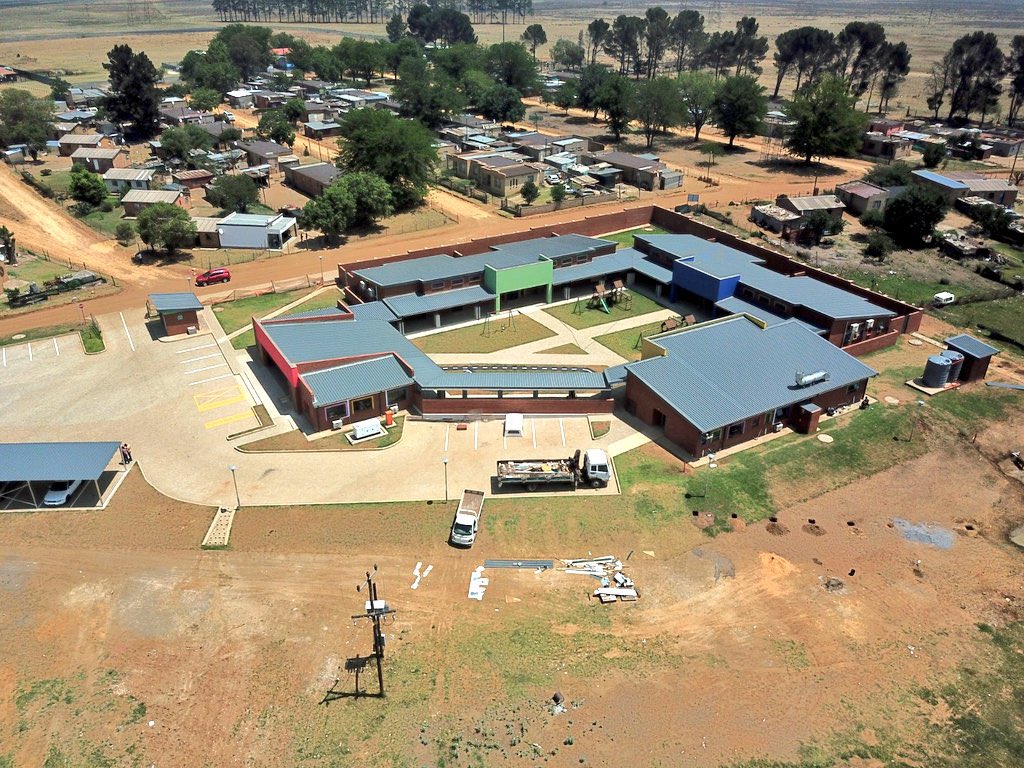
Minister of Basic Education Angie Motshekga handed Goakanya Primary School in the North West to the Phasha community last Friday.

Motshekga said the new beginning at Goakanya Primary School reaffirmed the Government’s commitment to promises and commitments made in the Freedom Charter and the Constitution.

“This institution stands as a testament to our ongoing mission to transform our educational landscape, embodying our collective aspiration for a better, more inclusive South Africa. Over the past 30 years, our nation has embarked on a transformative journey to improve educational access and infrastructure, ensuring our children receive the quality basic education they deserve, and that is in line with section 29 of the Constitution, which guarantees the right to basic education,” Motshekga said.

She added: “In line with the Freedom Charter’s call to open the doors of learning, we have surpassed targets and set new records.”

Since the advent of democracy, Motshekga said the basic education sector in South Africa has undergone transformative growth and improvement from an under-resourced and racially segregated system, to achieve near-universal access for the compulsory schooling age group of 7 to 15 years by 2021, with attendance rates between 97% and 99%.

“This monumental achievement was supported by pro-poor policies that drastically reduced the costs associated with school attendance, thereby enhancing access. These pro-poor policies include the highly acclaimed National School Nutrition Programme (NSNP), which now provides nutritious meals to over 9.6 million learners across 21,274 ordinary public schools. It’s more than just a meal; it’s a lesson on the importance of food and the skills to grow it,” she said.

“The success of the NSNP isn’t solely a governmental triumph; it epitomises the collaborative potential of the public and private sectors. The story of the National School Nutrition Programme is multifaceted, weaving in elements of community, collaboration and empowerment.

“Through this initiative, thousands have found economic opportunities, with 61,314 volunteers from local communities cooking meals and receiving a stipend for their invaluable service,” the Minister added.

Motshekga said the broader, intangible impact is evident in our schools with improved punctuality, attendance, and an enhanced eagerness to learn, underscoring the belief that well-nourished children are better positioned to seize educational opportunities optimally.

“We are ardently working to introduce breakfasts across all National School Nutrition Programme schools. The second pro-poor policy that has markedly improved the trajectory of basic education over the past 30 years is the implementation of no-fee schools in our country. This critical measure has significantly influenced both school attendance and educational equity,” she said.

The Minister thanked every member of the Phasha community who contributed to protecting and supporting the project.

“Your vigilance and dedication ensure this school will serve as a citadel of learning for future generations. Your demonstrable sense of ownership and stewardship will safeguard the legacy of Goakanya Primary School,” she said.

INSIDE EDUCATION