Category: Uncategorized

Uncategorized

Gauteng schools buckle under rising municipal bills

By Thapelo Molefe

Schools across Gauteng are struggling to keep the lights on, maintain water supply and sustain basic services as education funding fails to keep pace with rising municipal tariffs, according to the DA.

The issue was highlighted during a media briefing by Gauteng MEC for Education Lebogang Maile on Sunday, where he acknowledged that some schools were facing severe financial pressure due to “misalignment” between increases in municipal tariffs and annual allocations provided to schools.

Maile said schools were dealing with rising electricity, water, and sanitation costs, while some were also affected by incorrect billing, estimated meter readings and inherited municipal debt.

ALSO READ: DA lays criminal complaint over CETA administrator’s R3m salary package

“The Constitutionally-enshrined right to basic education must remain non-negotiable, and the conditions that enable the success of this education must be maintained and protected,” Maile said.

In a statement issued on Tuesday, DA Shadow MEC for Education Sergio Isa Dos Santos said the department’s admission confirmed the party’s longstanding warnings that inadequate funding allocations were negatively affecting schools.

According to Dos Santos, many schools are struggling to maintain computer labs, keep electricity connected, ensure access to water and sanitation, and address health and safety risks affecting learners and staff.

“It is unacceptable that it took the department so long to realise that expecting schools to absorb escalating electricity, water, sanitation and operational costs without adequate support was absurd at best and reckless at worst,” he said.

Maile revealed that Gauteng public schools owed municipalities nearly R584 million in debt older than 60 days as of March, with the City of Johannesburg accounting for the largest share at R390.7 million. Schools also owed Eskom R6.32 million.

The MEC said municipalities across Gauteng had increasingly been accused of overcharging schools through incorrect tariffs, estimated readings, unexplained levies and the transfer of historical debt onto school accounts.

ALSO READ: CETA slammed over administrator’s R3 million salary, governance failures

He also warned that service disruptions were directly affecting teaching and learning.

“Schools without electricity cannot operate computer labs, lighting, or administrative systems, while water cuts create sanitation and health risks for learners and staff,” Maile said.

The Gauteng Department of Education said it was now reviewing the decentralisation model, which shifted responsibility for municipal payments from the department to Section 21 schools and their School Governing Bodies.

Maile said the model was originally intended to improve financial autonomy, accountability and faster decision-making at school level, but acknowledged that it had also exposed weaknesses in financial management and governance.

The DA accused the provincial government of shifting responsibility onto schools without adequate funding, support or consultation.

Dos Santos said vulnerable schools, including those serving poorer communities, had been hardest hit, forcing School Governing Bodies to focus on avoiding municipal disconnections instead of prioritising teaching and learning.

The party also criticised the administration of Gauteng Premier Panyaza Lesufi, saying government failures and poor planning were placing additional pressure on schools.

Meanwhile, the DA formally submitted a petition signed by more than 16,000 Gauteng residents to the Gauteng Provincial Legislature, calling for the immediate reversal of what it described as devastating 64% budget cuts to Quintile 5 public schools.

DA Gauteng spokesperson for education Michael Waters said the petition was launched in January after the party visited schools across the province and found that reduced allocations were already affecting infrastructure maintenance, municipal payments, learner support programmes and extracurricular activities.

“School principals and governing bodies have also told us that the situation is becoming financially unsustainable, with schools overwhelmed by rising municipal costs as the Gauteng Department of Education continues to underfund schools and shift more responsibility onto parents and local communities,” Waters said.

The Gauteng Department of Education has disputed the DA’s characterisation of the Quintile 5 funding changes, saying earlier this year that the revised allocations were part of an interim funding realignment to national norms and standards, not a 64% budget cut.

ALSO READ: Gwarube: AI can’t replace basic learning

The department said at the time that it was managing a R444 million shortfall in the current financial year and a projected R160 million shortfall over the 2026 medium-term expenditure framework.

Waters described the petition as one of the largest ever handed over in Gauteng and said it reflected growing public frustration over education funding cuts.

“These cuts are not abstract numbers on a spreadsheet; they directly affect classrooms, learner safety, educational quality, and the future of children,” he said.

The DA has called for stronger cooperation between the Gauteng Department of Education, municipalities and other stakeholders to prevent schools from reaching crisis point.

INSIDE EDUCATION

The post Gauteng schools buckle under rising municipal bills appeared first on Inside Education..


Uncategorized

DA lays criminal complaint over CETA administrator’s R3m salary package

By Johnathan Paoli

The DA has opened a criminal case against Construction Education and Training Authority (CETA) administrator Dithabe Oupa Nkoane over the alleged unlawful approval of his own R3 million annual salary package.

DA Deputy Spokesperson on Higher Education and Training and MP Karabo Khakhau said the party had laid charges against Nkoane on Tuesday, following allegations that he violated provisions of the Public Finance Management Act by allegedly approving a salary far above what the DA says had been prescribed by Higher Education and Training Minister Buti Manamela.

“Nkoane was appointed by the Minister of Higher Education solely to fix what’s wrong with CETA. Instead, he brought more problems. The DA warned against his appointment and maintains that he was the wrong choice for appointment.

ALSO READ: DSAC calls for publishing hub panel members

“This scandal adds to a laundry list of reasons why SETAs must be scrapped. SETAs were designed as lucrative looting funds for ANC cadres instead of creating tangible skills development and job creation for the country’s youth,” Khakhau said.

The DA alleges that Nkoane unlawfully approved a R3 million annual package despite Manamela having prescribed a R500 000 salary package for the position at the time.

The controversy emerged during recent hearings before Parliament’s Portfolio Committee on Higher Education and Training, where members were told that Nkoane, appointed to stabilise the troubled SETA, had unilaterally determined and approved his own remuneration without authorisation from the department or the minister.

Parliament said CETA had approved the administrator’s proposal granting himself a provisional annual salary of R3 million, effective from 1 October 2025. Manamela later approved a reduced R2.5 million package in January 2026.

The committee further found that between October 2025 and March 2026, Nkoane was overpaid by R208 333. It said the payment constituted irregular expenditure because the Department of Higher Education and Training had not approved it at the time.

A repayment plan has since been implemented to recover the overpayment.

ALSO READ: CETA slammed over administrator’s R3 million salary, governance failures

The salary matter followed a briefing to the committee on protected disclosure allegations at CETA, including allegations of irregularities at the entity and concerns about governance and contract management.

During the committee proceedings, the department said Nkoane’s salary had been benchmarked against his most recent salary from a previous employer and the salary levels of SETA chief executives. It also said further guidance had been sought from National Treasury.

However, committee chairperson Tebogo Letsie criticised the process and questioned why remuneration had not been finalised before Nkoane assumed office.

Letsie raised concerns about dysfunction within SETAs, saying large sums were being spent on forensic investigations while the institutions continued failing in their mandate to provide skills development and support economic growth.

“Your core business is to skill and upskill the workforce of South Africa. In the context of the latest unemployment statistics, SETAs were created to help drive economic growth; this is not happening,” Letsie said.

CETA has rejected suggestions that the salary matter was handled irregularly, saying the allegations were “rather unfortunate and misinformed”.

“The Administrator’s salary issue was not handled in an irregular manner at all, but the best entity to address the issue is the Department of Higher Education,” CETA said.

It said some of the allegations were subject to investigations and legal processes, adding that Parliament had requested further clarity and that the authority would respond directly to Parliament.

The intervention at CETA followed four consecutive qualified audit outcomes and longstanding concerns about governance failures, procurement irregularities, weak oversight and instability within the authority.

Manamela appointed Nkoane as CETA administrator in August last year after consultation with the National Skills Authority. The department said at the time that the intervention followed serious and entrenched governance failures at several SETAs.

The DA criticised Nkoane’s appointment in August, when Khakhau accused Manamela of appointing politically connected individuals allegedly linked to corruption and maladministration.

At the time, the DA cited a forensic report implicating Nkoane, as former municipal manager at Emfuleni Local Municipality, in alleged mismanagement involving R872 million.

INSIDE EDUCATION

The post DA lays criminal complaint over CETA administrator’s R3m salary package appeared first on Inside Education..

Uncategorized

DSAC calls for publishing hub panel members

By Lebone Rodah Mosima

The Department of Sport, Arts and Culture (DSAC) has invited applications from suitably qualified candidates to serve on the selection panel for the DSAC Publishing Hub.

The hub, run in partnership with the Academic and Non-Fiction Authors’ Association of South Africa (ANFASA), is an industry stimulus project aimed at supporting authors and strengthening the country’s books and publishing sector.

According to the department, the initiative is intended to support new writing, preserve South Africa’s heritage and promote literature in previously marginalised official languages.

“We encourage the creation of new literature in telling our stories and preserving our heritage, and sustain the creation of significant literature including that written in the previously marginalised official languages,” the department said.

The Publishing Hub was launched in July 2023. ANFASA said the project had produced 57 works to date, consisting of 43 physical books, eight audiobooks and six books converted to braille.

“Notably, four Khoi and San books written in Khwedam, !Xuhnthali, and Nama were published to further emphasising the importance of linguistic and cultural preservation,” the association said.

“Through literature, we can further commemorate this milestone and continue to shape narratives that reflect the spirit of our nation.”

The department said selection panel members must have strong knowledge, experience and expertise in the book value chain. Candidates should also be language experts, have a solid understanding of the book industry and be published authors.

Panel members will be responsible for reviewing manuscripts, making recommendations, working with successful authors on developmental editing, and advising on industry issues including intellectual property, contracts and royalties.

Interested candidates should visit www.anfasa.org.za/dsac-selection-panel-application/ and fill in their details as well as attach the required documentation.

“Late submissions will not be considered. Selection panel members shall not be eligible to submit their manuscripts for review,” the department said.

Applications close at midnight on 12 June 2026.

INSIDE EDUCATION

The post DSAC calls for publishing hub panel members appeared first on Inside Education..

Uncategorized

CETA slammed over administrator’s R3 million salary, governance failures

By Charmaine Ndlela

The Portfolio Committee on Higher Education and Training has criticised the Construction Education and Training Authority (CETA) over governance failures, irregular expenditure, and the approval of a R3 million salary package for its administrator without authorisation from the Department of Higher Education and Training (DHET) or the minister.

The committee received a briefing from CETA on protected disclosure allegations relating to irregularities at the entity, including the extension of a Vodacom internet and intranet services contract beyond its expiry date.

ALSO READ: Gwarube: AI can’t replace basic learning

The allegations were initially raised by suspended Chief Financial Officer Saneler Radebe in a disclosure to the National Treasury. According to Radebe, CETA’s 2021 contract with Vodacom for internet and intranet services was flagged by the Auditor-General and later subjected to investigation. 

He alleged that the contract was extended beyond its April 2024 expiry date based on unverified claims that Vodacom owed CETA service credits, despite repeated requests from finance officials for supporting documentation.

Committee chairperson Tebogo Letsie criticised CETA administrator Oupa Nkoane for unilaterally approving his own salary package of R3 million without obtaining approval from either the department or the minister.

Members of the committee questioned the lack of clear regulations governing salaries paid to administrators and advisors appointed to stabilise struggling entities. They also requested that DHET explain the rationale behind the more annual remuneration package awarded to Nkoane.

The committee noted that while CETA was under administration, the entity approved a proposal granting the administrator a provisional annual salary of R3 million with effect from 1 October 2025. In January 2026, the minister later approved a reduced remuneration package of R2.5 million.

ALSO READ: Amajimbos lose to Algeria, despite win over reigning champs Senegal

Parliament heard that between October 2025 and March 2026, the administrator was overpaid by R208 333. A repayment plan has since been implemented to recover the funds over the remainder of his term.

Committee members said the payments made before ministerial approval constituted irregular expenditure. However, they also blamed the DHET for contributing to the situation through delays in responding to correspondence regarding the salary adjustment.

According to the department, the administrator’s remuneration was benchmarked against both the salary earned by the incumbent in his previous employment and the remuneration levels of SETA chief executive officers. DHET further indicated that guidance on the matter had been sought from the National Treasury.

The committee further questioned CETA’s management of ICT contracts, particularly the continuation of the Vodacom agreement after its expiry date. 

Members also expressed concern over delays in implementing recommendations contained in the R18.9 million Duja forensic report, saying the failure to act had allowed implicated officials to remain in, or be reappointed to, positions within DHET entities.

The committee also learned that one of the administrator’s advisors, Lethabo Mamabolo, travelled to Cape Town on 21 November 2025 to participate in a cycling event using CETA resources.

Letsie said the department continued to spend significant amounts on forensic investigations without ensuring that findings led to accountability.

“Your core business is to skill and upskill the workforce of South Africa. In the context of the latest unemployment statistics, SETAs were created to help drive economic growth; this is not happening,” he said.

INSIDE EDUCATION

The post CETA slammed over administrator’s R3 million salary, governance failures appeared first on Inside Education..

Amajimbos lose to Algeria, despite win over reigning champs Senegal
Uncategorized

Amajimbos lose to Algeria, despite win over reigning champs Senegal

By Johnathan Paoli

South Africa’s under-17 national team, the Amajimbos, suffered a setback in their bid for automatic qualification to the FIFA U-17 World Cup after going down 2-0 to Algeria in their second Group D match at the TotalEnergies CAF U-17 Africa Cup of Nations.

Playing at the Mohammed VI Football Academy in Sale on Sunday, the Amajimbos were undone by a clinical display from Algerian forward Yacine Abed, who scored to hand the North Africans a crucial victory in what is widely regarded as the tournament’s toughest group.

The 16-year-old, who plays for Paradou Athletic Club’s academy side, opened the scoring in the 41st minute before sealing the result five minutes from full-time.

Abed was later named Man of the Match after another influential performance for the hosts.

The result saw South Africa surrender top spot in Group D after beginning the tournament with a morale-boosting 2-1 comeback victory over Senegal last week.

Algeria moved ahead of Amajimbos in the standings, while Senegal revived their campaign with a narrow 1-0 victory over Ghana.

After two rounds of matches, Ghana remain without a win and face a difficult task heading into the final group fixtures.

The top two teams in each group qualify automatically for the quarterfinals and secure places at the FIFA U-17 World Cup, scheduled to take place in Qatar in November.

Third-placed teams will still have an opportunity to qualify through additional playoffs.

South Africa, however, will be determined to avoid that route and instead clinch automatic qualification when they face Ghana in their final group match on Wednesday.

A victory against the West Africans would likely be enough to book Amajimbos a place at the World Cup, replicating the achievement of South Africa’s under-17 side last year.

The defeat follows the Amajimbos’ opening win against defending champions Senegal.

In that match, South Africa showed resilience after falling behind shortly before halftime.

Senegal had taken the lead through Cheikh Thior in the 44th minute, but Amajimbos responded strongly after the break.

Inganathi Simama equalised three minutes into the second half following an assist from Aphelele Majola before a long-range strike from Reotshepile Malete deflected into the net off Thior to complete the comeback victory.

Speaking before the match, coach Vela Khumalo expressed concern over the team’s performance but maintained confidence regarding the its development.

He said that the team’s performances were still developing as the tournament progressed.

“We will grow with the tournament. Our target is qualifying for the World Cup, and we are very close to doing that,” Khumalo said.

The North Africans had also shown fighting spirit in their opening fixture after recovering from a two-goal deficit to draw 2-2 against Ghana.

Abed had played a central role in that comeback as well, providing an assist for Melwane Zaidi’s equaliser after Algeria trailed 2-0 at halftime.

INSIDE EDUCATION

The post Amajimbos lose to Algeria, despite win over reigning champs Senegal appeared first on Inside Education..
Uncategorized

Gwarube: AI can’t replace basic learning

By Charmaine Ndlela

Basic Education Minister Siviwe Gwarube has called for stronger education systems across Africa, saying technology and artificial intelligence cannot replace basic literacy and numeracy skills.

Speaking at the Education World Forum 2026 in London, Gwarube highlighted South Africa’s efforts to strengthen foundational learning and expand Early Childhood Development (ECD) programmes.

“South Africa is investing R10 billion over three years to expand Early Childhood Development, and a further R496 million to create 115 000 ECD spaces in three of our most rural provinces of Limpopo, KwaZulu-Natal and the Eastern Cape. These investments signify our commitment to children whose futures should not be determined by the circumstances of their birth,” she said.

“As a country we can be proud of the strategic shift we have made towards strengthening the foundations of learning.”

The R496 million allocation is linked to an outcomes-based early childhood development fund aimed at expanding access to early learning in Limpopo, KwaZulu-Natal and the Eastern Cape.

The Education World Forum is being held in London from 17 to 20 May under the theme “Educating for a Shared Future: Peace, Planet, Purpose and Pathways”. The forum brings together education ministers, policymakers and education sector leaders to discuss the future of global education systems.

Gwarube said South Africa had made a strategic shift towards prioritising foundational learning for the country’s 13.7 million learners.

“Strong futures require strong foundations,” she said.

She said the issue was particularly important for Africa, which has the youngest population in the world, making education critical to turning demographic growth into economic opportunity.

“If Africa is to rise, Africa’s children must rise first,” she said.

Referring to South Africa’s literacy crisis, Gwarube said about eight in 10 children could not read for meaning by the age of 10.

She described this as more than a literacy challenge, calling it a “future-readiness crisis” that affected learners’ ability to succeed in gateway subjects such as Mathematics, Science and Technology.

“When a child cannot read for meaning, every subject becomes difficult and opportunities become limited,” she said.

While many countries were discussing artificial intelligence, automation and the future digital economy, Gwarube said governments had to recognise that meaningful innovation could not happen without strong educational foundations.

“No country can build a high-tech economy on weak educational foundations,” she said.

“No country can leapfrog literacy, and no country can automate its way around numeracy.”

Gwarube said the future economy would require children who could think critically, solve problems, adapt and create, rather than learners who only knew how to operate technology.

She posed what she described as an urgent question for learners facing the future: “Will I be able to read well enough to participate in that future at all?”

INSIDE EDUCATION

The post Gwarube: AI can’t replace basic learning appeared first on Inside Education..
Imbali woman graduates as nurse at 54
Uncategorized

Imbali woman graduates as nurse at 54

By Lebone Rodah Mosima

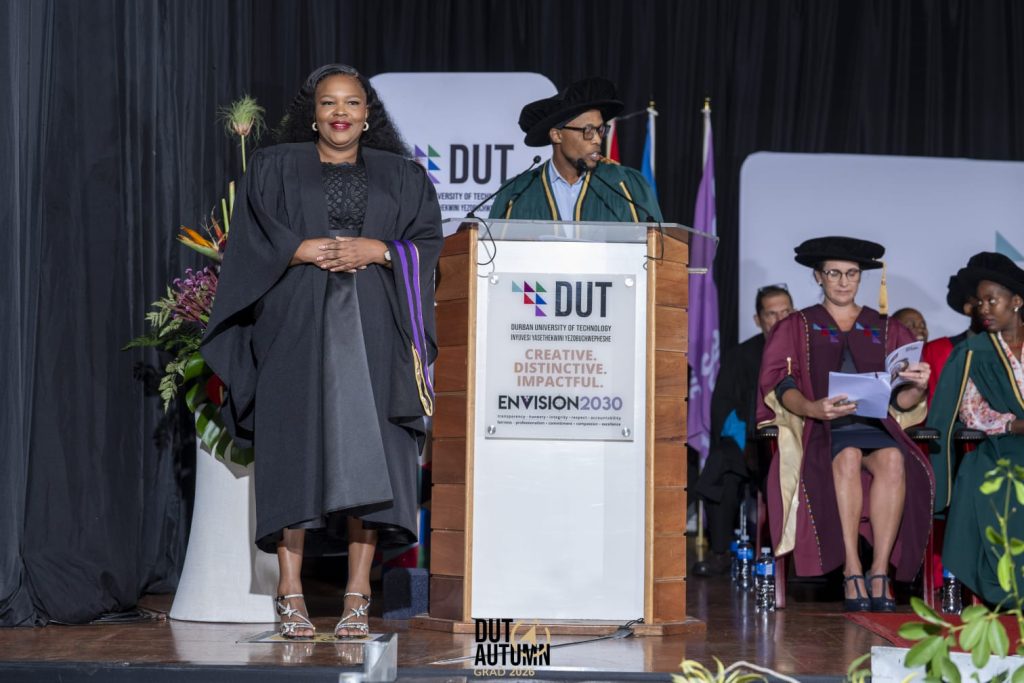
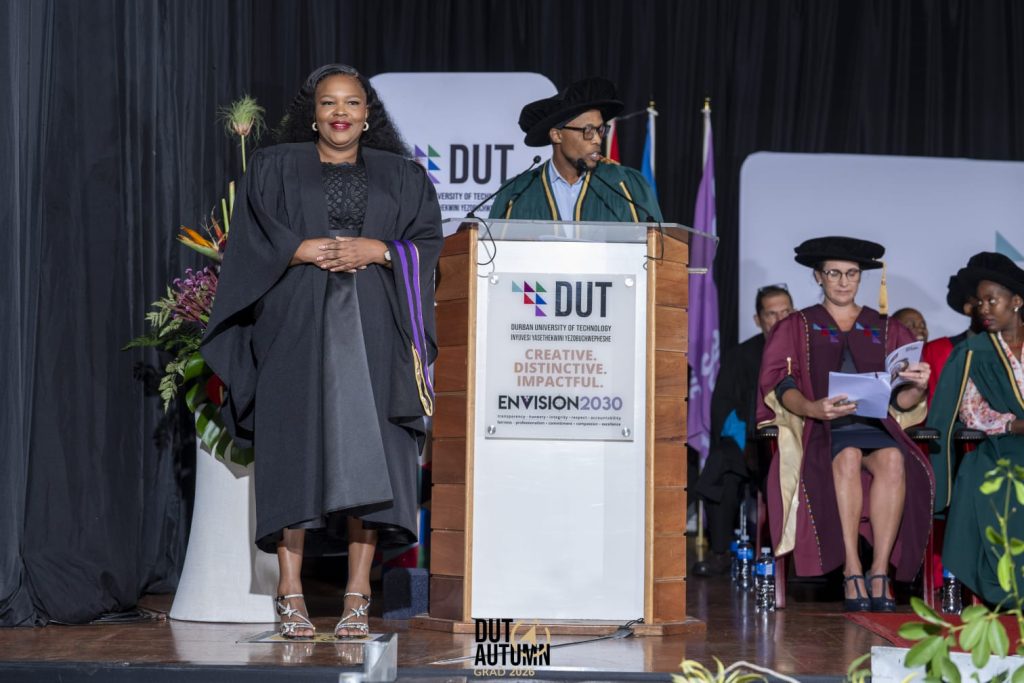
Imbali resident Thobeka Dumakude has graduated from the Durban University of Technology (DUT) with a Bachelor of Health Sciences in Nursing at the age of 54.

“I wanted to prove to myself and to others that dreams do not expire. Education has no age limit. It took me six years instead of four years to complete my qualification,” she said.

“It was hard adapting to the academic environment. I found myself studying alongside students younger than my own children, but I never gave up. I was determined to finish what I had started,” she said.

The university praised Dumakude’s determination, resilience and perseverance, saying these qualities had enabled her to realise her lifelong ambition of serving communities through healthcare.

Dumakude’s childhood dream of becoming a nurse was put on hold after she became pregnant at the age of 19. She later had to find employment and care for her child.

“Prior to studying at DUT, Thobeka worked as an administrator for a non-governmental organisation that assisted patients living with HIV and AIDS,” the university said.

“This was where her love for nursing resurfaced after her five-year work contract ended and her internet café business was not making enough profit.”

Dumakude enrolled at DUT in 2020, more than 30 years after completing matric. The university said she had to balance family responsibilities, academic pressure and the challenge of adapting to student life alongside much younger classmates.

Her four-year qualification eventually took six years to complete as she worked through difficulties in her studies.

Dumakude is currently completing her community service in a psychiatric ward at Jubilee District Hospital in Hammanskraal.

Her duties include caring for mental healthcare patients, participating in multidisciplinary teamwork, administering treatment, monitoring patients, and supporting patients and families through mental health challenges.

“She plans to study further, specialising in Mental Health Nursing after realising there is a great need for mental health support in society,” the university said.

Dumakude said her future goal is to work alongside other healthcare professionals to address mental health issues in communities and contribute positively to people’s wellbeing.

“Graduating was one of the proudest moments of my life,” she said.

“Walking across the graduation stage made me feel confident, empowered, and fulfilled, knowing that I had achieved something no one can ever take away from me.”

Dumakude encouraged people who believe it is too late to pursue their academic dreams not to give up on education.

She said her graduation showed that perseverance, prayer, courage and lifelong learning could open doors at any stage of life.

INSIDE EDCUATION

The post Imbali woman graduates as nurse at 54 appeared first on Inside Education..

Uncategorized

Checkers campaign raises R1m for stationery packs for nearly 9 000 learners

By Levy Masiteng 

Nearly 9 000 learners across South Africa will receive essential stationery packs after R1 million was raised through the Checkers Act For Change Back-to-School project in partnership with non-profit organisation Meals on Wheels.

The organisation announced on Monday that the fundraising initiative will help provide learners with school supplies, especially in low-income schools.

This includes pens, exercise books, calculators and other classroom essentials.

Meals on Wheels said it is working closely with schools and communities nationwide to ensure the stationery reaches learners and schools most in need.

“We see first-hand the challenges families face every day. Through our network, we’re able to help ensure these supplies reach learners in communities that are often overlooked,” said Gershon Naidoo, the national programmes and marketing director of Meals on Wheels.

The campaign was launched at the start of this year’s academic calendar.

According to the organisation, funds were raised through the sale of a limited-edition Act For Change exam pad, sold in Checkers stores and on the Checkers Sixty60 app, with R2 from every purchase going directly towards the stationery fund. 

Customers also contributed by donating R5 at till points in stores nationwide.

Several leading stationery brands supported the initiative by contributing a portion of proceeds from selected products. 

These included Pritt, Bostik, Henkel, Staedtler, Penflex, Bic, Butterfly, Casio, KV Art, Freedom Stationery, Bidvest, Palm Stationery, CTP Stationery, Sappi and Plastafrica.

Naidoo said access to basic school supplies can significantly improve a learner’s ability to participate confidently in class and focus on their education.

He said the overwhelming support for the campaign demonstrated how small contributions can collectively create meaningful change.

“Ensuring learners have the basic tools they need allows them to focus on learning and engage more fully in the classroom,” chief sustainability officer at the Shoprite Group, Sanjeev Raghubir said. 

INSIDE EDUCATION

The post Checkers campaign raises R1m for stationery packs for nearly 9 000 learners appeared first on Inside Education..

Uncategorized

Gauteng records 26 088 new hypertension cases among adults under 45

By Levy Masiteng 

Gauteng recorded 69 125 new hypertension cases in the 2025/26 financial year, including 26 088 among adults aged 18 to 44, as health authorities warned that high blood pressure was increasingly affecting younger residents.

The figures were released by the Gauteng Department of Health in a statement issued on Sunday to mark World Hypertension Day, observed annually on 17 May.

“The Gauteng Department of Health has noted with concern the increasing number of adults under the age of 45 diagnosed with hypertension across the province,” the department said.

“During the 2025/26 financial year, from April 2025 to March 2026, Gauteng recorded 69 125 new hypertension cases across the province. Of these, 26 088 cases were recorded among adults aged between 18 and 44. Contributing factors include unhealthy eating habits, obesity, lack of physical exercise, smoking and excessive alcohol consumption.”

Hypertension, or high blood pressure, is often described as a “silent killer” because many people do not experience symptoms until serious complications develop.

“Hypertension, commonly known as the ‘silent killer’, often develops without noticeable symptoms and remains one of the leading contributors to stroke, heart disease, kidney failure and premature death,” the department said.

The department said routine screening remained critical, especially because many residents may not know their blood pressure status.

“As hypertension frequently presents without symptoms, routine screening remains essential. In a bid to strengthen early detection and prevention efforts, the Department screened approximately 8.7 million adults for hypertension across Gauteng during the 2025/26 financial year.”

Public healthcare facilities in the province provide free blood pressure checks and chronic disease management services for people diagnosed with hypertension, diabetes and related conditions.

“In addition, public healthcare facilities provide free blood pressure screening and integrated chronic disease management services for individuals diagnosed with hypertension, diabetes and related conditions,” the department said.

The department said its ward-based outreach teams and community health workers would continue providing health education, promoting healthier lifestyles and encouraging residents to undergo free blood pressure screening at public healthcare facilities and during community outreach activities.

“To reduce the risk of hypertension, residents are encouraged to exercise regularly, reduce salt intake, stop smoking and limit alcohol consumption. Individuals diagnosed with hypertension are advised to take their medication as prescribed by healthcare professionals and adhere to treatment plans to effectively manage the condition.”

Residents on chronic medication were also encouraged to register for the Central Chronic Medicine Dispensing and Distribution Programme, which allows patients to collect medication closer to their homes and reduce waiting times at healthcare facilities.

“Residents can also make use of the Central Chronic Medicine Dispensing and Distribution Programme to collect chronic medication closer to their homes and reduce waiting times at healthcare facilities. Visit your nearest clinic to register on the CCMDD system.”

The World Health Organisation said the 2026 World Hypertension Day theme was “Controlling Hypertension Together: check your blood pressure regularly, defeat the silent killer”. It said the day was aimed at raising global awareness about high blood pressure and promoting prevention, detection and control.

The WHO’s Regional Office for Africa said hypertension was rising rapidly across the region, driven by urbanisation, unhealthy diets, physical inactivity and the harmful use of alcohol and tobacco. It said the trend posed a growing threat to health, well-being and sustainable development.

Globally, WHO estimates that 1.4 billion adults aged 30 to 79 had hypertension in 2024, while about 600 million adults with hypertension were unaware they had the condition. It also estimated that only about 320 million adults with hypertension had it under control.

INSIDE EDUCATION

The post Gauteng records 26 088 new hypertension cases among adults under 45 appeared first on Inside Education..

UKZN PhD explores medicinal potential of invasive bugweed
Uncategorized

UKZN PhD explores medicinal potential of invasive bugweed

By Lebone Rodah Mosima

Dr Myuri Parusnath has earned a PhD in Biology from the University of KwaZulu-Natal for research into plant-based bioactive compounds in Solanum mauritianum, commonly known as bugweed.

Her study, titled “Secretory, Phytochemical and Biological Activities of Solanum mauritianum Scop. (Solanaceae),” examined the chemical and biological properties of the plant, which is classified as an invasive species in South Africa.

Parusnath said plants that thrive across diverse environments often develop complex chemical defence systems, some of which may have medicinal value.

“In this study, I investigated the microscopic structures of the plant, analysed its chemical composition and evaluated several biological activities, including antioxidant, antibacterial and cytotoxic properties,” Parusnath said.

“The aim was to explore whether this plant could serve as a potential source of natural bioactive compounds.”

She said the research was particularly relevant given the growing problem of antibiotic resistance and the need to explore alternative therapeutic options.

“In many parts of the world, medicinal plants remain an important component of healthcare, and scientific studies such as this help validate and expand our understanding of their potential applications,” she said.

Parusnath’s interest in the field was rooted in a longstanding curiosity about science and the natural world.

“Always fascinated by how biological systems function and how research can uncover new insights, the possibility of exploring plants as sources of biologically active compounds and contributing to discoveries that might one day support therapeutic development strongly motivated her work,” UKZN said.

The research adds to the growing body of knowledge about plant-derived compounds and their potential value.

“By examining the chemical composition and biological activity of Solanum mauritianum, my research helps build a scientific foundation that future studies can expand upon, particularly in the search for plant-based therapeutic agents,” Parusnath said.

Parusnath remains actively involved in academic life and student development.

She serves as a First-Year Experience Coordinator in the College of Agriculture, Engineering and Science and works as a part-time lecturer in Biology in the School of Agriculture and Science.

“Long-term she aspires to build a career in academia and research while mentoring and supporting future generations of students,” UKZN said.

“Parusnath credited several people who helped her reach this milestone including her supervisor, Professor Yougasphree Naidoo, and co-supervisor, Professor Moganavelli Singh, who mentored and guided both her master’s and doctoral studies.”

Parusnath also expressed gratitude to her parents, brother and friends for their support during her studies.

She emphasised the importance of maintaining balance. In her spare time, she enjoys going to the gym, exploring creative interests such as makeup, and spending time with friends and family.

Reflecting on the broader significance of her achievement, Parusnath said she hoped her journey would inspire others, particularly young women considering careers in science.

“Doctoral graduates represent a small proportion of the global population, and women remain underrepresented in many scientific fields,” she said.

“Through my work and example, I hope to encourage more women to pursue paths in science, research and higher education.”

INSIDE EDUCATION

The post UKZN PhD explores medicinal potential of invasive bugweed appeared first on Inside Education..