Category: Uncategorized

Uncategorized

Weekend Roundup | Chiloane launches special school, Matric results battle heads back to court and more

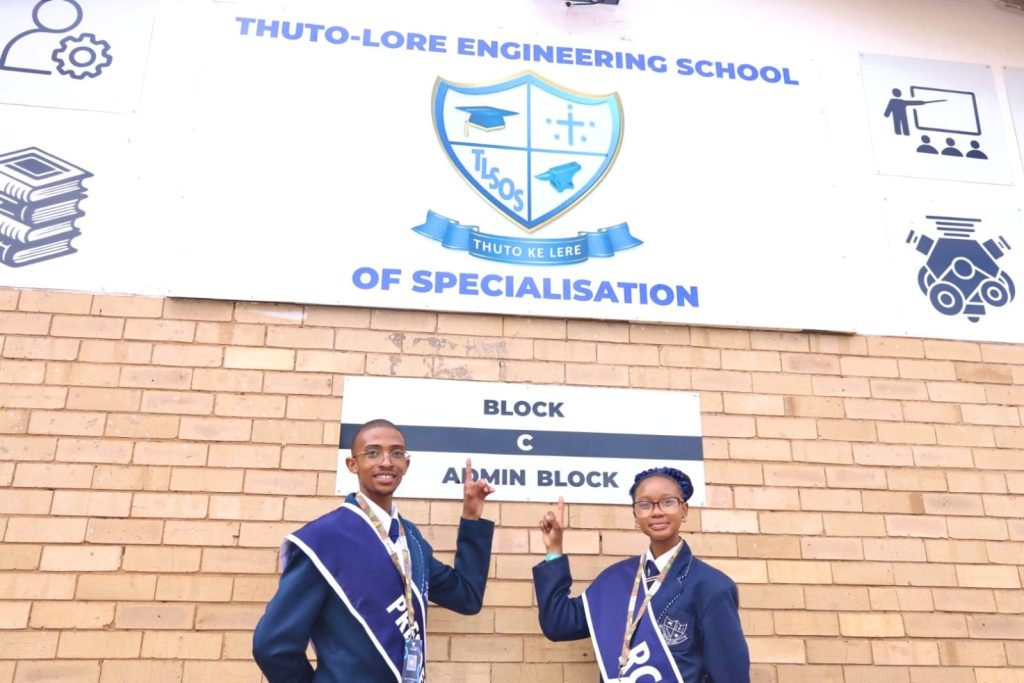
Gauteng MEC for Education Matome Chiloane has officially launched the Thuto-Lore Engineering School of Specialisation (SOS) in Sharpeville, marking another step in the province’s effort to modernise education and equip learners with future-ready skills.

The specialised school will focus on manufacturing, renewable energy and the Fourth Industrial Revolution (4IR), aligning with the province’s broader goal of preparing learners for emerging industries.

Click below for the full article.

ALSO READ: Matric results battle heads back to court: Privacy vs public access

The Gauteng High Court has reserved judgment on whether the Information Regulator (IR) can appeal a December 2025 ruling that allowed the publication of matric results using exam numbers.

The dispute between the IR and the Department of Basic Education (DBE) now hinges on whether exam numbers constitute personal information under POPIA, with a decision expected next week.

ALSO READ: Wentworth school linked to container-cleaning operation

eThekwini Municipality said on Friday that preliminary investigations had traced the fumes that sickened learners and teachers at Umbilo Secondary School in Wentworth to a nearby container-cleaning operation that uses ethyl acrylate.

Ethyl acrylate is an industrial chemical used in products such as plastics, coatings and resins. Its fumes can irritate the eyes, skin and respiratory tract, potentially causing coughing and breathing difficulties.

Read the full story below.

INSIDE EDUCATION

Chiloane launches Thuto-Lore Engineering SOS in Sharpeville
Uncategorized

Chiloane launches Thuto-Lore Engineering SOS in Sharpeville

By Charmaine Ndlela

Gauteng MEC for Education Matome Chiloane has officially launched the Thuto-Lore Engineering School of Specialisation (SOS) in Sharpeville, marking another step in the province’s effort to modernise education and equip learners with future-ready skills.

The specialised school will focus on manufacturing, renewable energy and the Fourth Industrial Revolution (4IR), aligning with the province’s broader goal of preparing learners for emerging industries.

ALSO READ: Matric results battle heads back to court: Privacy vs public access

The launch forms part of Gauteng’s Schools of Specialisation programme, introduced a decade ago as an ambitious initiative to transform and modernise the curriculum while addressing critical skills shortages in key sectors of the economy.

With the addition of Thuto-Lore Engineering SOS, Gauteng now has 37 Schools of Specialisation aimed at unlocking the talents of high-potential learners while contributing to innovation and economic growth in the province.

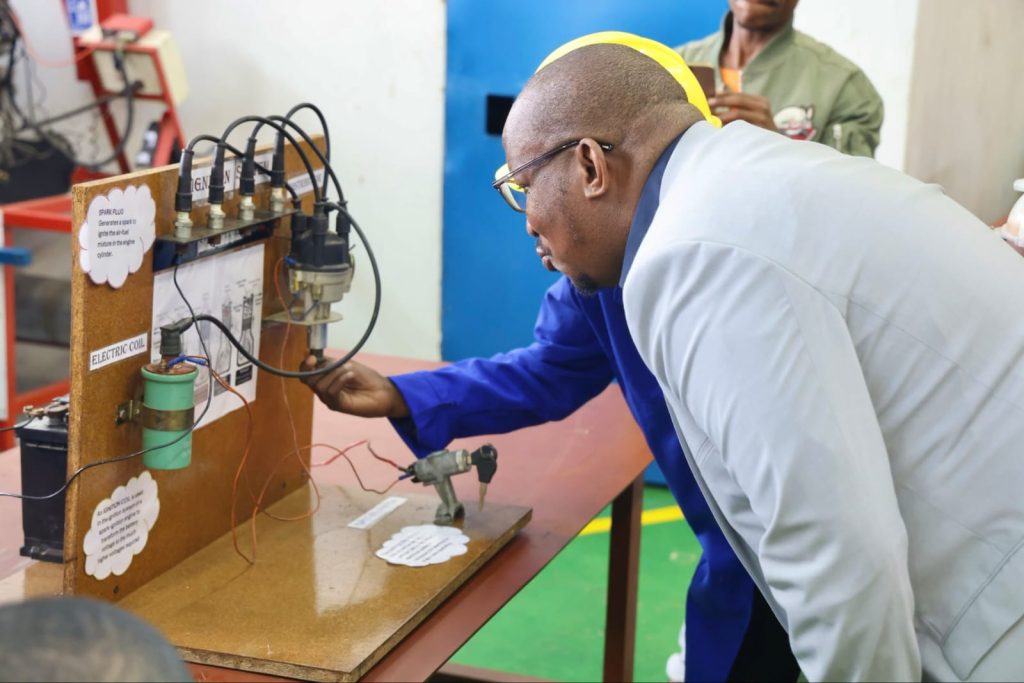
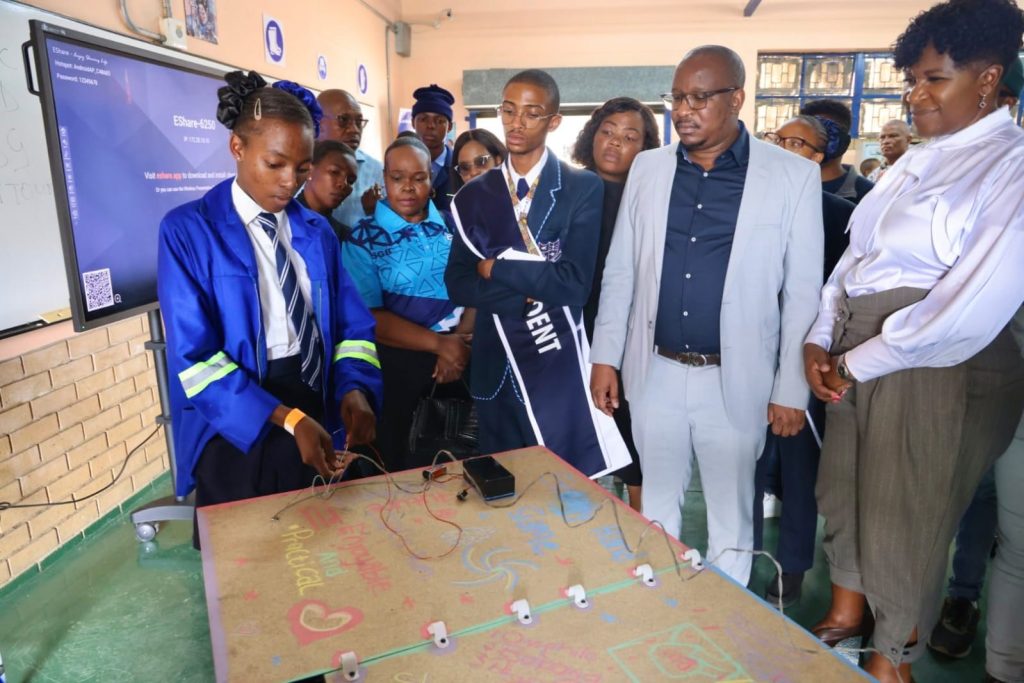
During the launch, learners showcased several innovative projects. Among them were a Smart Walking Stick and Smart Glasses designed for visually impaired people. The devices use smart sensors that detect nearby obstacles and emit sound alerts to help users navigate safely.

Grade 12 learners Njabulo Napane and Phiello Mahanke also demonstrated an Artificial Robot Waiter designed to support contactless and wireless delivery services.

ALSO READ: Fumes at Wentworth school linked to container-cleaning operation

The projects highlighted the practical skills learners are developing through the specialised curriculum and underscored the role township schools can play in producing future-ready innovators.

Thuto-Lore Comprehensive School, established in 1983 as a public ordinary school, was founded with the foresight of integrating technical subjects supported by the construction of dedicated workshops.

 While the school initially focused on the general academic stream, its vision was redefined in 2019 to align with the National Development Plan (NDP), ensuring that skills-based education became a central pillar of its offering.

In 2022, welding was formally introduced as a subject alongside paving, fitting and machinery, with the Vocational Orientation Curriculum (VOC) incorporated at Grade 8 and 9 level.

Learners have since actively participated in engineering programmes and skills competitions, sharpening their technical expertise while opening pathways to future employment and entrepreneurship. The school currently has 1,445 learners.

Thuto-Lore had long been part of the Secondary School Improvement Programme (SSIP), but in 2024 the school transitioned beyond its SSIP status after achieving consistent and sustainable academic progress.

ALSO READ: Social development targets Eastern Cape in push to lift orphan grant uptake

The school achieved  98.2% matric national senior certificate pass rate in 2024 and 92.4% in 2025 with learners dominating technical competitions.

Chiloane said the launch marks an important milestone for the province’s education system.

“Today’s launch of Thuto-Lore marks the second School of Specialisation in Sharpeville after the launch of Mohloli Maths, Science and ICT SOS with a focus on Maritime Science. As the 37th School of Specialisation in Gauteng, it stands as a beacon of excellence, skills development, innovation and opportunity dedicated to manufacturing, renewable energy and the Fourth Industrial Revolution,” he said.

He added that the school will continue to nurture leaders, innovators and problem-solvers who will contribute to South Africa’s growth and transformation.

Meanwhile, the Ministry of Higher Education and Training says government is strengthening coordination across the post-school education and training sector to improve skills development and workforce readiness. 

The department has committed to publishing consolidated data on training provided through Sector Education and Training Authorities (SETAs) and establishing a Skills Observatory to better track workforce development outcomes. 

The transformation was made possible through support from corporate and community partners, including Deltarette, Eskom, Air products, Afrimat, Dr Malan high school and Seriti mines. 

INSIDE EDUCATION

Uncategorized

Matric results battle heads back to court: Privacy vs public access

By Marcus Moloko

The Gauteng High Court has reserved judgment on whether the Information Regulator (IR) can appeal a December 2025 ruling that allowed the publication of matric results using exam numbers.

The dispute between the IR and the Department of Basic Education (DBE) now hinges on whether exam numbers constitute personal information under POPIA, with a decision expected next week.

ALSO READ: Fumes at Wentworth school linked to container-cleaning operation

For decades, matric results have been published in newspapers and online using exam numbers rather than names.

The Information Regulator argues that exam numbers are personally identifiable information under the Protection of Personal Information Act (POPIA).

In a December 2025 ruling, the Gauteng High Court ruled in favour of the DBE, allowing publication to continue. The court found that exam numbers alone did not breach privacy laws.

The IR has applied for leave to appeal to the Supreme Court of Appeal (SCA), insisting the High Court erred in its interpretation of POPIA.

ALSO READ: IEC sets June voter registration

The Gauteng High Court has reserved judgment on whether to grant leave to appeal. A ruling is expected next week.

The DBE maintains that publishing results by exam number is lawful, efficient, and in the public interest, especially for learners and families awaiting confirmation.

If Leave to Appeal is Granted the matter will proceed to the Supreme Court of Appeal, where broader constitutional and privacy implications will be tested.

The December 2025 ruling stands, and matric results will continue to be published in newspapers and online using exam numbers.

INSIDE EDUCATION

Uncategorized

Fumes at Wentworth school linked to container-cleaning operation

Staff Reporter

eThekwini Municipality said on Friday that preliminary investigations had traced the fumes that sickened learners and teachers at Umbilo Secondary School in Wentworth to a nearby container-cleaning operation that uses ethyl acrylate.

Ethyl acrylate is an industrial chemical used in products such as plastics, coatings and resins. Its fumes can irritate the eyes, skin and respiratory tract, potentially causing coughing and breathing difficulties.

ALSO READ: Social development targets Eastern Cape in push to lift orphan grant uptake

The city said fire and environmental health officials had tracked the source by monitoring wind direction and carrying out perimeter checks around the school after Thursday’s incident, which forced an evacuation.

“Officials identified a company located in the vicinity where a container-cleaning operation involving ethyl acrylate was underway,” the municipality said in a statement.

“Fumes from the operation are alleged to have drifted towards the school under windy conditions.”

The municipality said its fire services and health teams, together with private ambulance services, “responded within minutes and stabilised the scene”.

“The school was evacuated, and affected learners and teachers were transported to Wentworth Hospital for treatment,” the city said.

ALSO READ: Education wins big with salary relief, Grade R, and infrastructure boost

“No fatalities have been reported.”

ALS Paramedics spokesperson Garrith Jamieson said emergency crews were confronted with a mass-casualty scene on arrival.

“Paramedics are dealing with multiple casualties that have sustained breathing difficulties, whilst Advanced Life Support Paramedics work to stabilise them on the scene. More ambulances are mobile to assist with the transportation,” he said at the time of the incident.

The municipality said it was now verifying the company’s compliance documentation and operating procedures and had initiated processes that could lead to legal action if any non-compliance was confirmed.

Municipal Fire Regional Commander Sibusiso Mkhulisi said officials moved quickly once the suspected source had been identified.

ALSO READ: R5 million in prizes up for grabs in Gauteng innovation challenge

“We are conducting a full probe into the company’s practices, and if non-compliance is confirmed, we will act decisively with stricter legal measures,” he said.

Mkhulisi said response teams had remained on site until conditions stabilised and had continued working with the school to monitor the situation.

“Classes have resumed today following safety checks that confirmed the odour had dissipated,” he said.

Wentworth lies in south Durban’s long-industrialised basin, where communities have for years raised concerns about air pollution and chemical emissions from nearby operations.

Environmental justice group the South Durban Community Environmental Alliance, which is based in the basin, said the latest incident reflected longstanding community concerns.

“The companies who produce these gasses need to be investigated, held accountable and be prosecuted for their actions,” the group said.

Its founder, Desmond D’Sa, told local media that the smell had reached SDCEA’s offices before the organisation was contacted by the school. He said industries in the area had “repeatedly gassed the children out in Wentworth and other areas of South Durban”.

INSIDE EDUCATION

Uncategorized

Social development targets Eastern Cape in push to lift orphan grant uptake

Staff Reporter

The Department of Social Development has taken training on the Child Support Grant Top Up to St Francis Bay in the Eastern Cape, as it tries to improve low take-up of the grant among eligible orphaned children.

The Child Support Grant Top Up became operational on 1 June 2022 and is available to orphans in the care of relatives and to children in child-headed households, the department said on Thursday.

It said the intervention increases the value of the Child Support Grant by 50% above the base grant for qualifying beneficiaries.

The department said the programme formed an important part of South Africa’s social protection system because it allowed relatives caring for orphans to access a social grant more quickly by applying directly through the South African Social Security Agency (SASSA), without first requiring a social worker’s investigation, report and court order.

But the department said take-up of the grant remained low across the country.

It said the latest training programme targeted officials from the Department of Social Development and SASSA in the Eastern Cape because of “challenges emanating from lack of an understanding of roles and responsibilities between SASSA & DSD in implementing the CSG Top up”.

The department said it had been conducting training for social workers and SASSA officials across the country to address those implementation problems.

It said the training was especially important in the Eastern Cape, where child malnourishment is high.

“The DSD will ensure that no one is left behind and we will drive the message throughout the country until every deserving child is covered.”

The department said training would take place in all nine provinces through capacity-building sessions.  In the new financial year, it will expand the target group to include civil society organisations and community members, it said.

INSIDE METROS

Uncategorized

Teacher suspended after video humiliates Grade 1 pupil

By Levy Masiteng 

A Grade 1 teacher at Thembalethu Primary School in George has been temporarily suspended by the Western Cape Education Department (WCED) pending a formal investigation after a video circulated showing a pupil being singled out during a school fundraising event.

The incident took place during a “pie day” fundraiser, where pupils who had paid R40 received a pie and juice.

ALSO READ: OPINION | Skills key to fixing South Africa’s water crisis, says EWSETA

A video of the incident was recorded on Tuesday and later shared on a parents’ WhatsApp group before spreading on social media.

In the footage, the teacher is heard addressing the class while other learners eat at their desks. The Grade 1 pupil, who had not paid the R40 contribution, sat quietly at his desk, covering his face with his hand while classmates ate around him.

The teacher is also heard taunting the child and telling other pupils not to share their pies with him.

The WCED confirmed it had launched a formal investigation. Department spokesperson Bronagh Hammond said the teacher’s conduct was unacceptable.

“It has since been established that the teacher had in fact purchased the fundraising item for the pupil, who received it after the filming of the video,” Hammond said. “The manner in which this was done, however, was totally inappropriate.”

Hammond said the department had decided to temporarily suspend the teacher while the matter is investigated by its Labour Relations Directorate. She said the teacher had no previous disciplinary record.

ALSO READ: NSFAS welcomes report on student accommodation improvements

She said that counselling and psychological support would be provided to the learner and his family.

“The WCED remains committed to ensuring that all learners are treated with dignity and care, and that appropriate professional conduct is upheld at all times,” Hammond said.

The incident triggered outrage in the community, with scores of parents, activists and political party members gathered outside the school on Wednesday to demand accountability and the teacher’s dismissal.

Social media users rallied around the learner. Influencer Mandisi Tshingana launched a fundraising campaign to support the child and his family, with between R30 and R40 000 allegedly being collected.  

INSIDE EDUCATION

Uncategorized

OPINION | Skills key to fixing South Africa’s water crisis, says EWSETA

By Dr Mmaphefo Thwala

While EWSETA supports President Cyril Ramaphosa’s call to restore and upgrade critical water infrastructure, we believe water reform is as much a skills issue as a funding one.

This Water Month comes on the back of the President’s recent State of the Nation Address, where he went as far as saying that “water is now the single most important issue for many people in South Africa.”

The President acknowledged years of underinvestment, maintenance backlogs and system failures. However, infrastructure alone will not secure South Africa’s water future. The system only works when there are skilled people to operate and maintain it.

There is a clear opportunity for EWSETA to extend our contribution to water sector recovery. Through working with national and local government (i.e. municipalities), water boards and industry, EWSETA has already been involved in supporting skills development in the water sector.

However, considering the scale of the challenge outlined in the 2026 SONA, there is room for EWSETA to take on additional skills development initiatives.

Creating practical link between skills planning and service delivery

EWSETA is actively revolutionising the landscape of water management, and better aligning infrastructure investment with workforce planning will mean driving skills development that is guided by what’s happening in treatment plants, pump stations, and across reticulation networks.

When training priorities are informed by municipal maintenance backlogs or system failures, they can respond directly to the pressures faced on the ground.

This allows workforce development to support infrastructure upgrades and sector reform.

By strengthening training for water artisans such as plumbing and millwright technicians, and by expanding our programmes that upskill and reskill the existing municipal workforce, we can strengthen the technical backbone of the system.

Building technical competencies in operations and maintenance, through artisanal and learnership recognition of prior learning, ensures that skills development responds directly to where the system is under strain.

This also speaks to the President’s emphasis on a dual training model that links formal education with structured workplace experience.

EWSETA plays an important role in connecting training institutions such as TVET colleges with employers and public utilities, ensuring that learning is tied to the realities of plant operations and distribution networks through workplace-based learning.

It’s critical that we continue to reduce the disconnect between qualification and competence.

Identifying gaps and building capacity in those areas

Increased collaboration also makes it possible to see more clearly where skills gaps are and where existing training no longer matches the intricacies and realities of the water system.

Through engagement with water boards, municipalities and private industries, EWSETA supports the closure of these gaps and responds through designing qualifications that address operational demands.

EWSETA has developed suitable water-focused occupational skills programmes for qualifications across various skill levels, from Water

Conservation Practitioner NQF 4, Industrial Water Plant Operator (NQF level 4), Borehole Pump Operator (NQF 4), and Industrial Water Process Controller (NQF 5) to Water Works Management Practitioner (NQF 6), Water Control Officer (NQF 6), Water Use Specialist (NQF 7) and Water Resource Manager (NQF 8).

However, aligning qualifications to current needs is only part of the issue.

The pressures facing the water system are constantly evolving due to climate change, ageing infrastructure, rising demand, pollution impacts and rapidly advancing technologies.

Skills development must therefore look beyond keeping today’s infrastructure operational and begin actively preparing the workforce for what lies ahead.

Training that builds capability in smart systems, digital water management systems, nature-based solutions and sustainable water management will enable long-term resilience across the sector.

Strengthening capability under national accountability

The introduction of licensing for water service providers and the possibility of criminal consequences for ongoing failure, highlight that performance in the water sector is now directly linked to accountability.

The establishment of a National Water Crisis Committee, chaired by the President, also shows that water has been elevated to a matter of national priority.

This shift reframes the crisis not merely as an infrastructure challenge, but as a test of professional competence and institutional responsibility.

A sector facing stricter oversight and public scrutiny cannot function without a workforce able to operate and maintain increasingly complex systems.

Investing and strengthening the skills base of South Africa’s water workforce will improve the sector’s ability to respond to immediate failures and future pressures, making skills development inseparable from water security itself.

By Dr Mmaphefo Thwala, Water Sector Manager at EWSETA

INSIDE METROS

Uncategorized

NSFAS welcomes report on student accommodation improvements

By Akani Nkuna

The National Student Financial Aid Scheme (NSFAS) says it has welcomed a report by the Organisation Undoing Tax Abuse (OUTA) on student accommodation and will review its findings to improve how the system is managed.

“NSFAS is resolute in ensuring that any student, accommodation provider, service provider, or staff member found to have defrauded NSFAS, and by extension the state, is held accountable, with appropriate consequence management measures implemented,” NSFAS said in a statement.

ALSO READ: Durban jobs drive puts 231 young people into work

OUTA released the report last week after a two-year investigation into corruption risks, governance failures and student accommodation quality within the NSFAS system.

It said the probe examined how structural changes to the student-centred accommodation model altered how billions of rand in public funds move through the student housing pipeline.

According to OUTA, its investigation found weaknesses in accreditation inspections, procurement processes and funding arrangements involving portal service providers and accreditation agents.

It said structural changes introduced multiple intermediaries into the funding pipeline, while some accreditation agents approved properties that did not comply with the Department of Higher Education and Training’s minimum norms and standards.

OUTA also said one property listed as accommodating about 200 beds appeared to be an ordinary three or four-bedroom house.

The report also raised concerns about the appointment of online portal providers.

ALSO READ: IEC sets June voter registration

OUTA said the NSFAS board appointed four student accommodation portal providers even though the evaluation committee had recommended two, and that one company had previously been disqualified before being reinstated for further consideration.

OUTA said that from 2023 to 2025, NSFAS paid accommodation for about 60% of its beneficiaries and, on average, paid for about 100,000 more beds than the number of accredited beds available. It further said a conclusion could be drawn that NSFAS paid for 367,582 students to stay in accommodation not accredited by NSFAS accreditation agents.

It also said NSFAS paid R4.523 billion over eight months in 2025 to accommodation providers in the student accommodation pilot project, at an average of R39,777 per beneficiary per month for university students and R26,614 for TVET students.

“Several properties that were inspected and accredited by accreditation agents were falsely certified. It appears that the number of beds were inflated and some properties did not adhere to municipal bylaws or the minimum norms and standards as set out by DHET,” the report said.

OUTA recommended an independent investigation into three main areas: the student accommodation portal, accommodation accreditation and off-take agreements.

ALSO READ: Mpumalanga opens new state-of-the art school in KaMaqhekeza

It also called for the termination of contracts between NSFAS, solution providers and accreditation agents, as well as criminal complaints against NSFAS officials and service providers found guilty of misconduct and corruption, and criminal investigations into landlords implicated in wrongdoing.

It further said the auditor general, SARS and Parliament should use the report to intensify oversight.

NSFAS said the report followed sustained engagement between the scheme and OUTA, including information provided through a Promotion of Access to Information Act request.

It said the current board had already identified major problems in the student accommodation function, cleared payment backlogs, introduced stricter controls and sought to prevent mass student evictions by the end of 2025.

NSFAS said it had since commissioned a legal and forensic review of the accommodation function and, at the start of 2026, began implementing a transition to direct payment of accommodation providers, moving away from reliance on solution partners.

ALSO READ: Education wins big with salary relief, Grade R, and infrastructure boost

It also said the Special Investigating Unit was already probing student accommodation and that a national audit of student accommodation accreditation would take place throughout 2026.

“For the 2026 academic year, NSFAS has introduced additional controls and measures to ensure robust processes for the registration, onboarding, and placement of students in accredited accommodation, as well as accurate and timely disbursements to accommodation providers. Placement for 2026 has, by and large, been smooth and stable,” NSFAS said.

INSIDE EDUCATION

Durban jobs drive puts 231 young people into work
Uncategorized

Durban jobs drive puts 231 young people into work

By Levy Masiteng 

A total of 231 young people from low-income communities have moved into formal employment after graduating from the Presidential Employment Stimulus Programme (PESP), eThekwini Municipality said on Wednesday.

The municipality said the programme, run in partnership with Business Process Enabling South Africa (BPESA), is aimed at tackling youth unemployment while supporting the growth of Durban’s Global Business Services (GBS) sector.

ALSO READ: Mpumalanga opens new state-of-the art school in KaMaqhekeza

The PESP was launched in October 2020 as part of the country’s Economic Reconstruction and Recovery Plan to cushion the labour market from the economic shock of the COVID-19 pandemic.

It uses taxpayer money to create jobs and support livelihoods.

President Cyril Ramaphosa said in his February State of the Nation Address that more than 2.5 million opportunities had been created through the stimulus, mainly for young people and women.

The graduation ceremony for the eThekwini cohort took place in Umhlanga.

eThekwini said in a statement that the training programme served as “a high-impact solution to youth unemployment” and used an impact-sourcing model to drive inclusive economic growth.

It said the GBS sector remained a key economic driver for the region, with eThekwini and KwaZulu-Natal accounting for about 13% of South Africa’s total GBS sector.

It said the region’s growth had accelerated, with nearly 15,000 jobs created between 2018 and 2020, while 6,909 new sustainable jobs were added in 2024 alone.

Durban also hosts 25% of the national GBS export segment, the statement said.

The graduation ceremony was supported by Economic Development and Planning Committee Chairperson Councillor Thembo Ntuli.

ALSO READ: IEC sets June voter registration

While presenting certificates to graduates, Takalani Rathiyaya, deputy director for the city’s Industry Development Division, praised BPESA’s role in the initiative.

“A heartfelt appreciation goes to BPESA for its strong commitment to creating meaningful job opportunities and providing relevant skills. We are currently working on renewing our memorandum of agreement with BPESA KZN to continue scaling a skilled workforce,” Rathiyaya said.

He added that the graduation was evidence of the value of cooperation between the public and private sectors in promoting inclusive development.

Industry leaders who also addressed the programme included Robin Hoekstra, chairperson of BPESA KZN and chief executive of Outworx, and Reshni Singh, chief executive of BPESA National.

The municipality said the continued success of the PESP initiative would help keep Durban “at the forefront of the global digital economy”, while creating sustainable employment opportunities for young people and strengthening the region’s economic resilience.

INSIDE EDUCATION

Uncategorized

IEC sets June voter registration

By Lebone Rodah Mosima

The Electoral Commission will hold a nationwide voter registration weekend on 20 to 21 June ahead of the local government elections.

It has also warned the public about fake voter registration websites and fraudulent recruitment notices circulating online.

ALSO READ: Fadiel Adams tells ad hoc committee to subpoena Crime Intelligence finances

 “The intended outcome of the registration weekend is to facilitate access to franchise and broaden electoral participation,” the IEC said at a press briefing in Centurion, Pretoria, on Tuesday.

“The Commission’s position is that an early announcement of an election date is critical to allow South Africans to decide where they will be on voting day, as this directly determines where they register,” it said.

It added that once the election date is proclaimed, eligible voters would have until midnight on the same day to register.

The proclamation will also trigger important timetable steps, including certification and publication of the voters’ roll, inspection of the roll, objections, and candidate nominations.

ALSO READ: Senthumule pressed by MPs on why she sought sponsorship from ‘Cat’ Matlala

The commission said election preparations were advancing steadily, with the Municipal Demarcation Board having finalised and handed over 4,305 wards in December 2025, representing 95% of all wards nationally.

The remaining wards are in four KwaZulu-Natal municipalities: eThekwini, Mkhambathini, Inkosi Langalibalele and Alfred Duma.

The latest ward adjustments had resulted in the subdivision of 1,865 voting districts, or 8% of the national total, with KwaZulu-Natal and Gauteng accounting for about 45% of affected districts.

The commission also said its online voter registration campaign was gaining traction. Between November 2025 and March 2026, it recorded 260,205 new registrations, with 128,113 through Voter Management Devices and 132,092 via the online self-service portal.

 “The nationwide Online Voter Registration Campaign is starting to bear fruit,” it said. “The current registration activity is a crucial reversal of the net loss on the voters’ roll due to mortality.”

The commission said it was aware of fake websites impersonating its domain and trying to harvest personal information.

“The sites are intended to lure unsuspecting members of the public to share their personal information,” it said.

ALSO READ: Senthumule blames senior police leadership for PKTT disbandment

“Members of the public are advised not to click on links and urged not to share their personal information (ID number, phone number, address, etc.) on these websites.”

The only official online voter registration portals were RegisterToVote.org.za and www.elections.org.za.

The commission also warned of a false recruitment notice on social media and messaging platforms, saying it was fraudulent and did not originate from the IEC.

 “The Commission does not request payment at any stage of its recruitment processes,” it said.

INSIDE EDUCATION