Category: Uncategorized

Mpumalanga opens new state-of-the art school in KaMaqhekeza
Uncategorized

Mpumalanga opens new state-of-the art school in KaMaqhekeza

By Charmaine Ndlela

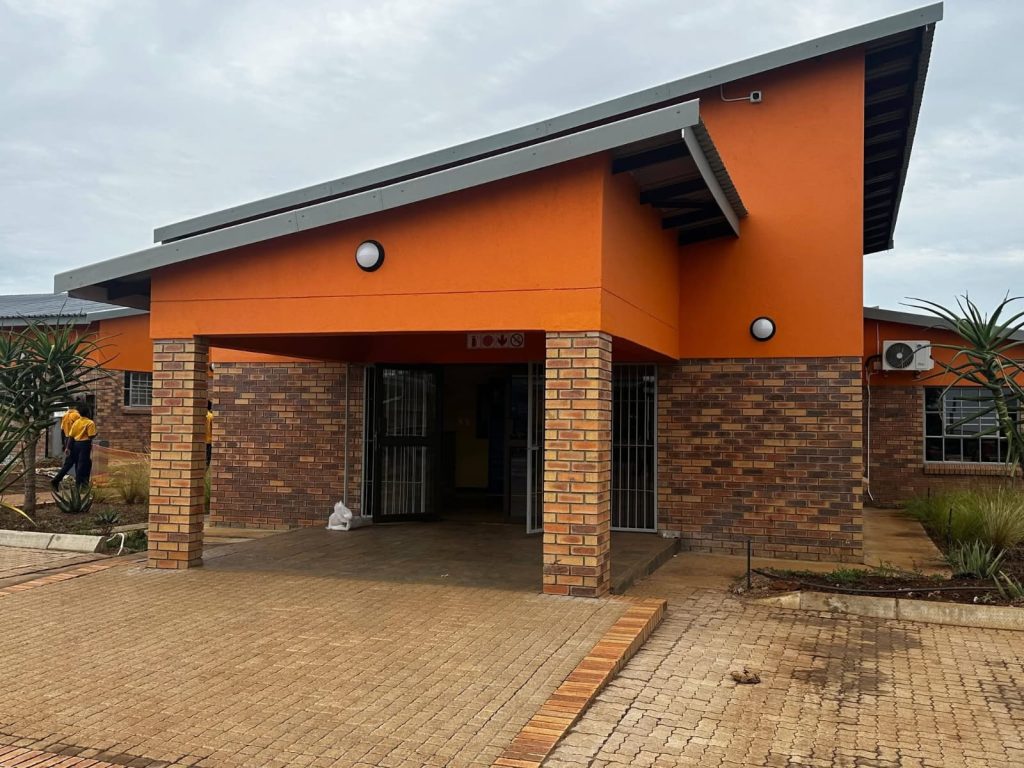
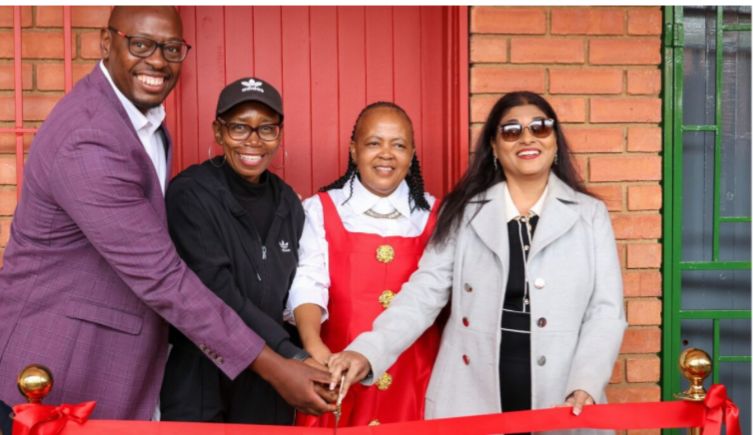
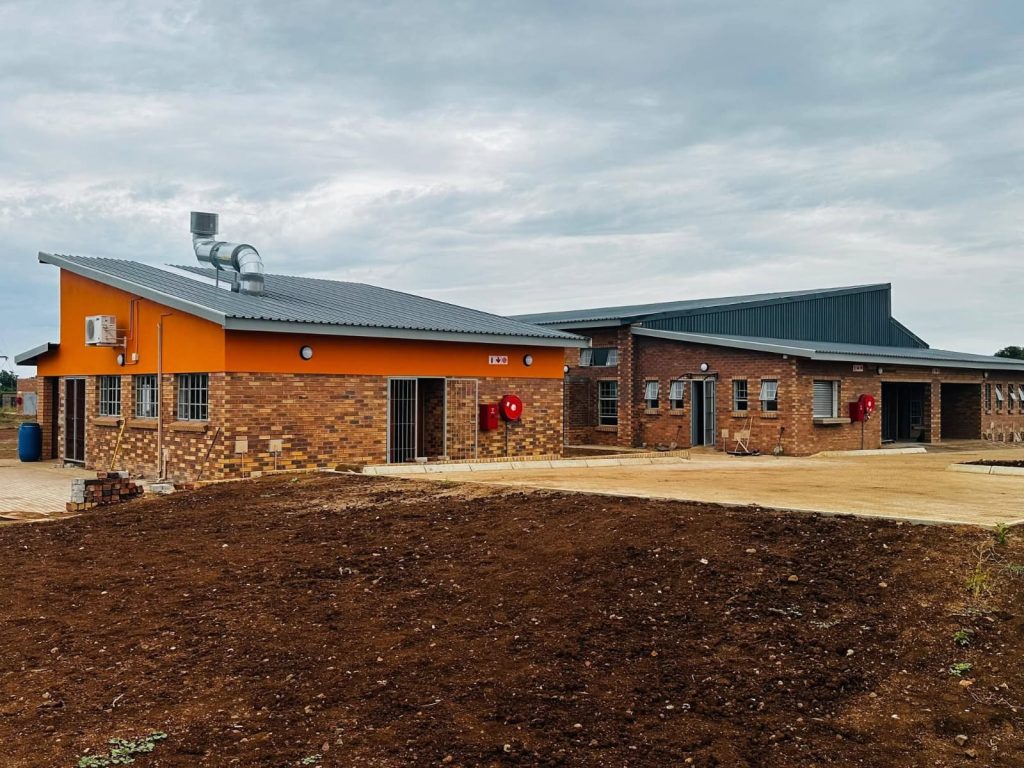
The Mpumalanga Department of Education has unveiled Silulu Secondary School in KaMaqhekeza, delivering a modern new campus aimed at improving access to quality education in the growing community.

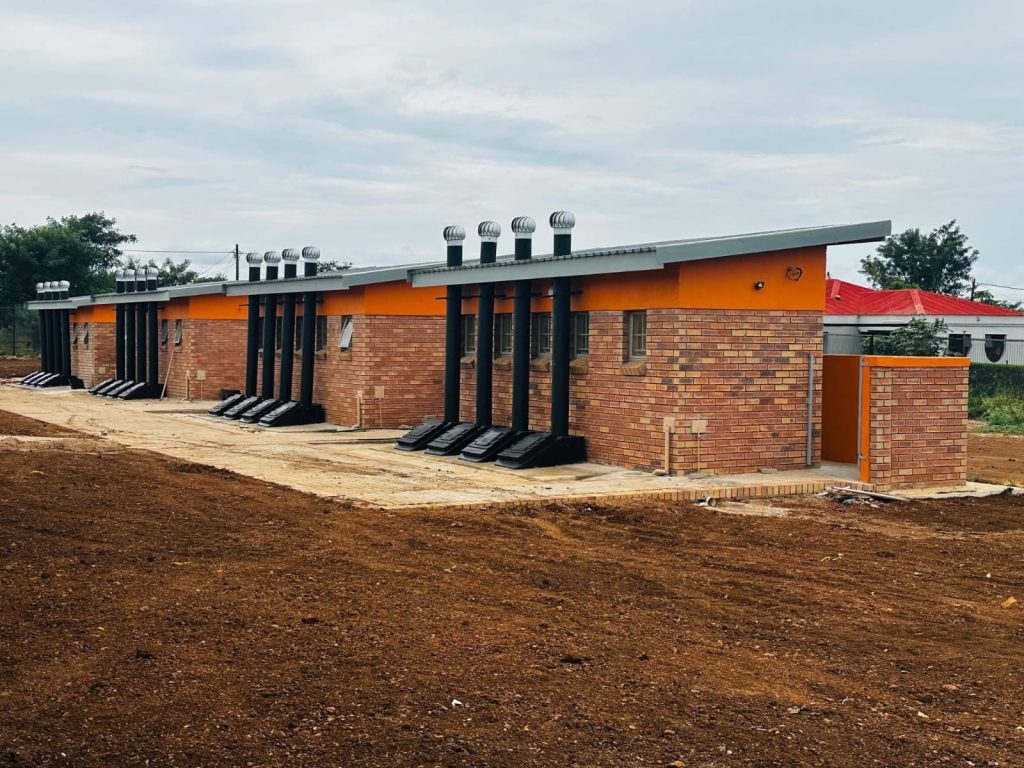
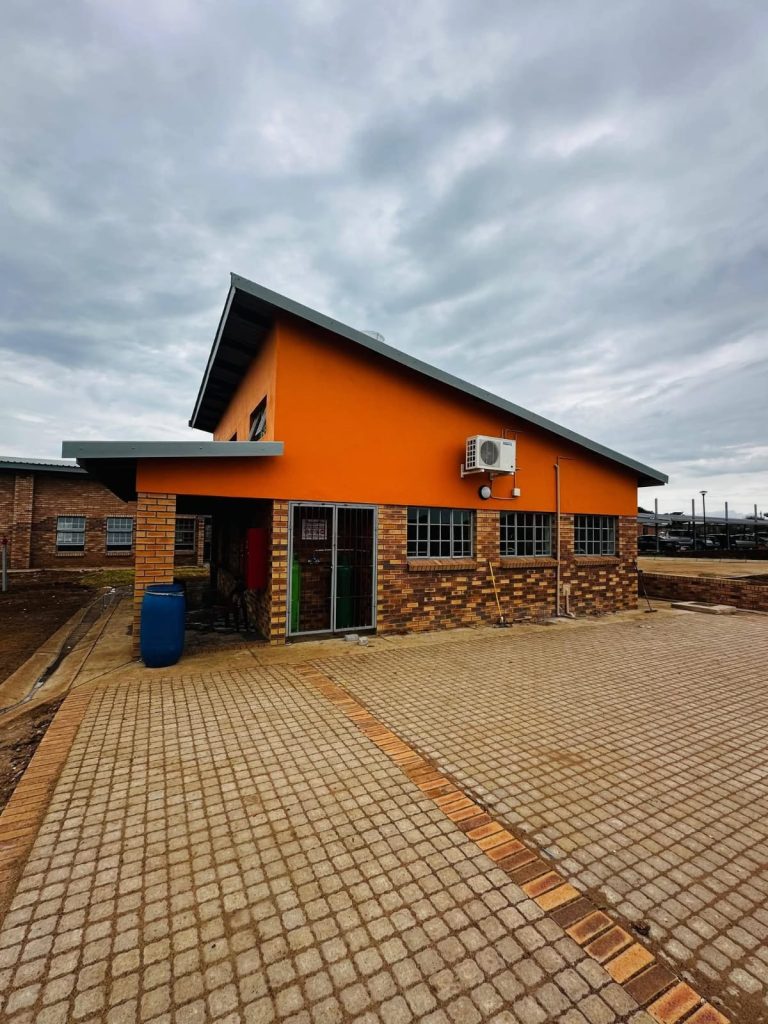
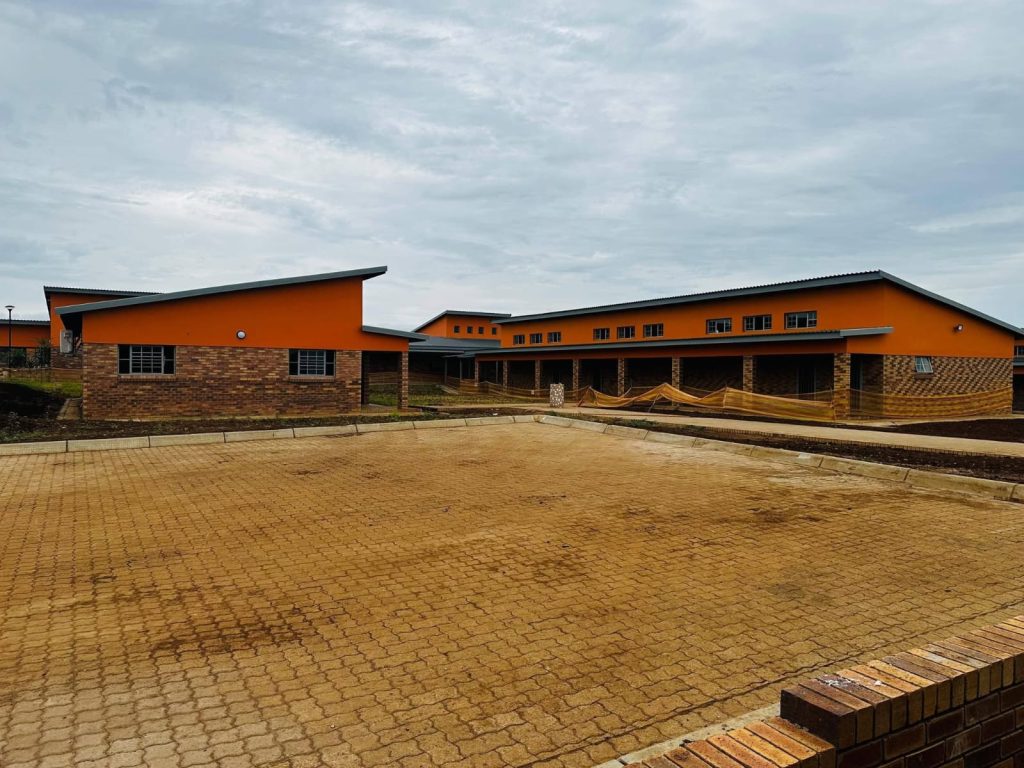
The school includes 28 classrooms, an administration block, computer centre, science laboratory, library, multi-purpose hall, and sports facilities.
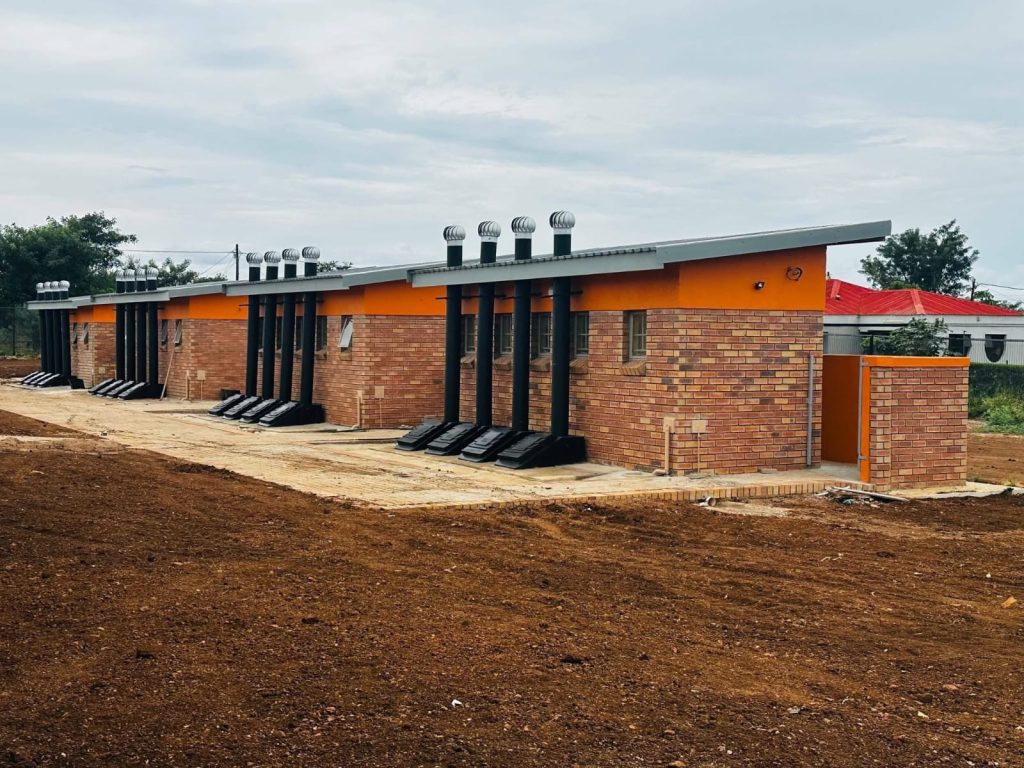
Silulu Secondary School in KaMaqhekeza

It also has a fully equipped kitchen, 22 enviro-loo sanitation units, reliable water and electricity supply, a guard house, security fencing, ramps and rails for accessibility, sheltered parking, and a paved assembly space for learners.

Mpumalanga MEC for Education Linda Masina said the establishment of the school was driven by the rapid growth of surrounding communities and rising demand for accessible education.

“Silulu Secondary School was established in response to the rapid growth of surrounding communities and the rising demand for accessible, quality education,” Masina said.
“What began as a vision has today become a confirmation of government’s commitment to the needs of the people.”

Masina said learners and educators had previously been temporarily accommodated at nearby Mjokwane Secondary School while the permanent facilities were under construction.

“During this time, the school community demonstrated resilience, patience and an unwavering commitment to learning,” she said.

“Despite the challenges they faced, learners and educators continued to believe that one day they would have a school they could call their own.”

She said the province had taken the decision to build a permanent facility so that learners could study in a safe and dignified environment.

“Today we are proud to say that teaching and learning can now take place in a fully equipped, state-of-the-art institution that has been officially declared ready for occupation,” Masina said.

Masina said the infrastructure was designed to create a safe and conducive learning environment.
“Education infrastructure is not just about buildings, it is about creating spaces where learners can grow, dream and reach their full potential,” she said.

The school also has three sports facilities — a tennis court, netball court and a soccer field, which is nearing completion.

It has been equipped with learner desks and chairs, educator tables and chairs, office furniture, cabinets and other essential equipment.

While the computer centre and library are already operational, additional learning resources will be provided during the next phase of development.

“Our goal is to ensure that learners in rural and developing communities have access to the same quality facilities as those in urban areas,” Masina said.

“This school symbolises restored dignity, stability and hope for the young people of KaMaqhekeza.”

She said the school would play a vital role in shaping the future of the community.

“Within these classrooms, the dreams of a new generation will be nurtured, and the future leaders of this country will be shaped.”
INSIDE EDUCATION

Uncategorized

Education wins big with salary relief, Grade R, and infrastructure boost

Akani Nkuna

The KwaZulu-Natal education department will receive additional funding over the next three years to cover salary costs, support teacher assistants, and strengthen school infrastructure, MEC Francois Rodgers said on Tuesday while tabling the 2026/27 budget.

The amount allocated to education is R71.193 billion, accounting for 42.4% of the total R168.2 billion provincial budget.

ALSO READ: R5 million in prizes up for grabs in Gauteng innovation challenge

Rodgers said the department would receive R647.3 million in 2026/27, R676.5 million in 2027/28 and R697.6 million in 2028/29 “towards addressing the existing budget pressures in compensation of employees in the department, which were largely caused by significant historic budget cuts”.

Rodgers also announced additional funding for Grade R teachers as the province continues to bring their pay in line with the rest of the basic education system. The department will receive R29.8 million in 2026/27, R59.5 million in 2027/28 and R101.6 million in 2028/29 for “the progressive equalisation of the remuneration of Grade R teachers”.

“Grade R is now part of the compulsory phase of basic education and the teachers should be remunerated accordingly. These funds are therefore added to our budget to progressively increase these teachers’ salaries,” he said.

ALSO READ: Champions Sundowns storm into Gauteng Development League season

The budget also retains support for school-based employment through the Presidential Employment Stimulus.

Rodgers said the department would receive R70.1 million in 2026/27 for the Teacher Assistants Programme.

“These funds are aimed at providing work and livelihood opportunities, particularly for youth and women,” he said.

ALSO READ: KZN can’t approve retirement, exit applications

Rodgers said the Education Infrastructure grant would receive an incentive increase of R41.5 million in 2026/27 after the department met required milestones.

The phased merger of the Education Infrastructure grant and the School Infrastructure Backlogs grant would result in an aggregate increase of R505.3 million in 2026/27, he said.  

INSIDE EDUCATION

Uncategorized

R5 million in prizes up for grabs in Gauteng innovation challenge

Staff Reporter

A R5 million national prize pool is being offered to help scale South African clean-tech ventures globally as the Technology Innovation Agency (TIA) and its partners launch the Gauteng instalment of the National CleanTech Innovation Challenge (NCIC) 2026, focused on smart mobility.

The challenge also includes a R1 million provincial prize that will be awarded to one winner in each of the nine provinces to support diffusion and piloting for regional economic development.

The national prize will go to the top challengers, with first prize set at R3 million and second prize at R2 million. In addition, 30 semi-finalists will receive advanced acceleration through a specialised UNIDO Global Cleantech Innovation Programme (GCIP)-aligned intervention across TIA’s regional Cleantech Hub network.

Organisers said a minimum of R5 million in direct blended funding would also be made available for real-world technology demonstrations and pilot programmes with corporate partners, supplemented by GCIP investment.

The TIA, in partnership with the NGIN, Start-Up Culture and Wits University’s Tshimologong Digital Innovation Precinct, said the Gauteng challenge invites South Africa-based innovators, entrepreneurs, SMMEs and university research teams to submit scalable clean-tech solutions aimed at transforming how Gauteng’s 15 million residents and the country’s freight move through the province.

Applications close on 21 April 2026.

Gauteng, South Africa’s economic heartland and busiest transport corridor, loses billions of rand each year to traffic congestion through lost productivity, increased fuel consumption and environmental degradation.

The NCIC 2026 Smart Mobility challenge supports the Gauteng provincial government’s Smart Mobility 2030 vision by seeking innovations that can move from pilot stage to real-world deployment.

The challenge covers electric and alternative-fuel vehicles, intelligent transport systems, last-mile delivery solutions, ride-sharing and multi-modal platforms, non-motorised transport, fleet management and logistics optimisation, transport data analytics, and commuter safety technologies.

“Gauteng’s transport challenges are immense, but so is the innovation potential in this province. NCIC 2026 is designed to find and accelerate the smart mobility solutions that can get Gauteng moving cleaner, faster, and more inclusively,” said Vusi Skosana, interim head of GCIP SA PMU.

NCIC is part of the Global Cleantech Innovation Programme, which is backed by the United Nations Industrial Development Organization (UNIDO) and the Global Environment Facility (GEF). Organisers said the GCIP pipeline has supported a number of South African ventures through structured acceleration and post-acceleration support since 2014.

Other support for successful applicants includes project funding to advance their smart mobility solution, incubation services with dedicated technical and business mentors, access to investors and industry partners in the mobility and transport sector, intellectual property specialist guidance, and a pathway to pilot and deploy solutions on Gauteng’s roads.

The Gauteng Smart Mobility challenge is one of nine provincial NCIC 2026 challenges, each focused on a specific regional clean-tech priority. Other provinces are tackling issues including waste-to-value, regenerative agriculture, clean energy, mining land rehabilitation and clean port logistics.

“Gauteng is a high-density testing ground for the future of sustainable urban mobility. Through NCIC 2026, we are surfacing world-class cleantech solutions. From EV infrastructure to intelligent data analytics that address the universal challenge of decarbonising rapid urbanisation,” said Mark Harris, CEO of Wits University’s Tshimologong Digital Innovation Precinct.

“This challenge gives mobility innovators a structured pathway to go from idea to impact and from pilot to pavement, while also positioning South African ingenuity as a vital contributor to the global green economy,” he said.

Applicants must be South Africa-based and have scalable smart mobility solutions aligned to Gauteng’s transport priorities. Applications must be submitted online at https://ncic-sa.org/gauteng/ by 21 April.

INSIDE EDUCATION

Uncategorized

Ohio State University’s president resigns after reporting ‘inappropriate relationship’

Ohio State President Walter “Ted” Carter Jr. resigned on Monday after disclosing “an inappropriate relationship” with a woman seeking public resources for her private business.

Carter, 66, said in a statement that he had resigned voluntarily after informing the university’s board of trustees of his error. He did not elaborate on the nature of the relationship and said he was leaving with his wife, Lynda.

“For personal reasons, I have made the difficult decision to resign from my role as president of The Ohio State University,” he said. “I disclosed to the board of trustees that I made a mistake in allowing inappropriate access to Ohio State leadership.”

Ohio State is the nation’s sixth-largest university, with more than 60,000 students, over 600,000 living alumni and a highly ranked football team and medical center. Carter oversaw a fiscal year 2026 budget totaling $11.5 billion in revenues and $10.9 billion in expenditures.

The university brought Carter on board in 2023 from the University of Nebraska system. He is also a former superintendent of the U.S. Naval Academy and holds the national record for carrier-arrested landings with over 2,000 mishap-free touchdowns.

He filled a vacancy at Ohio State left by the mid-contract resignation of President Kristina Johnson, which went largely unexplained.

The engineer and former undersecretary of the U.S. Department of Energy had been chancellor of New York’s public university system before she joined the Buckeyes as president in 2020.

AP

Uncategorized

Champions Sundowns storm into Gauteng Development League season

By Johnathan Paoli

The 2026 Gauteng Development League season got underway with a flurry of goals across the Under-19 division this weekend, with defending champions Mamelodi Sundowns opening their title defence in emphatic fashion.

Sundowns thrashed Rockevfs 5-0 in the standout result of the opening round, with Tebogo Moreri scoring a first-half hat-trick after Liano Snyders had opened the scoring inside the first 10 minutes. Kgaogelo Monanyane was also on target as the champions made an early statement.

Moreri grabbed his first in the 23rd minute before adding two more before the break, while Sundowns’ strong start underlined why they will again be among the teams to beat this season.

Kathorus Hyper Academy also began the new campaign with a win, edging Africa School of Excellence 4-3 in one of the weekend’s highest-scoring encounters.

Gift Muyambo opened the scoring, Sizwe Sidu added another, and Esethu Witvoet converted from the penalty spot as Kathorus held off a spirited fightback.

Remember Elite Sport Academy, runners-up in last weekend’s Top 8 final, also opened with a victory, beating Panorama 3-2 in a closely contested match. Bandile Sithole scored twice, Nceba Jozela added the other goal, and Brian Molefe supplied all three assists in a decisive contribution.

Elsewhere, Siwelele FC beat Jomo Cosmos 2-0, Randburg AFC overcame newly promoted Prestige Football Development Academy 2-1, and Joburg City FC secured a 3-1 win over the University of Pretoria. Wits Junior also claimed an impressive 1-0 victory over Highlands Park.

One of the most anticipated fixtures of the opening weekend, between Kaizer Chiefs and Seven’s Academy, was called off because of waterlogged fields at Chiefs Village in Naturena.

The new league season followed Kaizer Chiefs’ 1-0 win over RESA in the Under-19 Top 8 final the previous weekend, and the opening round suggested another fiercely competitive campaign lies ahead.

INSIDE EDUCATION

WorldSkills conference opens as government warns of skills gap threat
Uncategorized

WorldSkills conference opens as government warns of skills gap threat

By Thapelo Molefe

South Africa’s persistent skills shortage and high number of young people not in employment, education, or training remain a major obstacle to economic growth, Deputy Minister of Higher Education and Training Nomusa Dube-Ncube said on Monday.

Delivering the keynote address at the WorldSkills South Africa Conference on the sidelines of the national skills competition at the Durban International Convention Centre, Dube-Ncube said expanding artisan development and apprenticeships is critical to addressing the country’s widening skills gap.

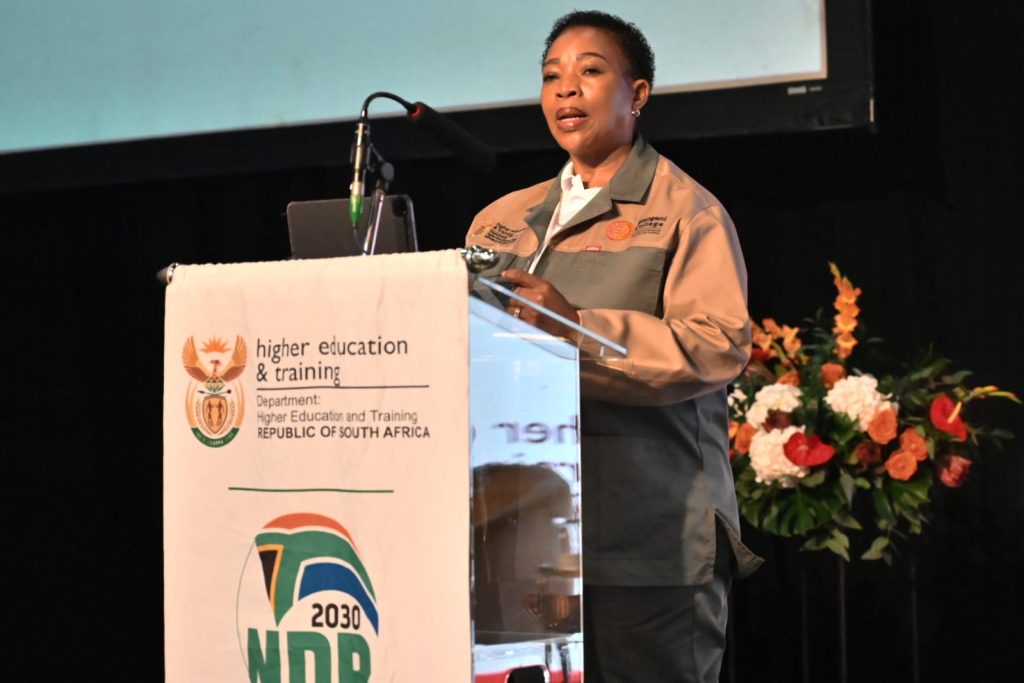
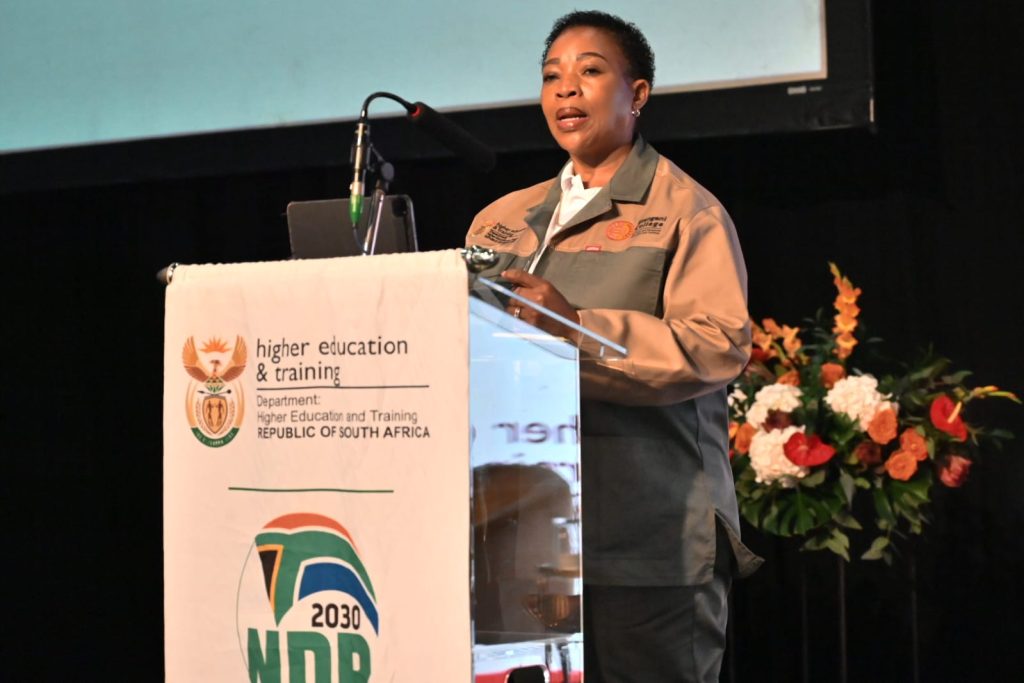
Keynote address by Deputy Minister of the Higher Education and Training Nomusa Dube Ncube at the WorldSkills South Africa National Competition, Conference, and Career Festival 2026, held on March 09, 2026, Inkosi Albert Luthuli ICC, Durban. Photo:Eddie Mtsweni

“It is disheartening that the number of young people not in education, employment or training is still high in our country,” she said.

The conference, held under the theme WorldSkills and Skills revolution: Raising the bar for South Africa, brings together policymakers, industry leaders, training institutions and international partners to discuss strengthening vocational education and artisan development.

Dube-Ncube said the country must urgently align skills development with economic priorities such as industrialisation, the green economy and the fourth industrial revolution (4IR).

ALSO READ: Vodacom invests R2m in Daveyton special needs school

“As the Department of Higher Education and Training, we continue to emphasise that artisan development is part of a wider ecosystem linked to industrial strategy, the green economy and the 4IR revolution,” she said.

She stressed that the skills gap is not limited to unemployed youth but also affects workers seeking to upgrade their qualifications or shift careers.

“Many adults are looking for new skills to advance in their current job or transition to a new career pathway,” she said.

Government has introduced several interventions through Sector Education and Training Authorities (SETAs), Technical and Vocational Education and Training (TVET) colleges and Community Education and Training (CET) colleges to expand access to training opportunities.

However, Dube-Ncube said stronger collaboration between government, training providers, labour organisations and employers is needed to ensure the system responds effectively to labour market demands.

“I believe it is vital that skills development providers, policy makers, labour organisations, community based groups and employers engage in open and honest discussions about what works and what needs to be improved in the apprenticeship and artisan development system,” she said.

She also highlighted the role of WorldSkills South Africa competitions in improving vocational training standards and promoting excellence among young artisans.

“I must recognise the contributions of WorldSkills South Africa, using competitions as a progressive platform for elevating standards, inspiring excellence and modernising the TVET sector in ways that are on par with international practices,” she said.

Dube-Ncube pointed to the establishment of the WorldSkills South Africa Academy as an example of how vocational training can be strengthened through innovation and partnerships.

“The academy stands as a model for what vocational skills development can look like when ambition meets execution,” she said.

She also called for greater employer participation in apprenticeship programmes, noting that industry involvement is essential for strengthening the country’s technical training system.

“South Africa needs more employers to participate in the apprenticeship development system,” she said.

ALSO READ: Government targets stronger artisan pipeline

Delegates at the conference include representatives from government departments, organised labour, business and international partners from countries.

Dube-Ncube said the discussions at the conference would help shape future policy and strengthen the country’s skills development ecosystem.

“The future of our workforce and indeed our country’s competitiveness depends on the strength of the partnerships we build and the ideas we generate here today,” she said.

INSIDE EDUCATION

Uncategorized

KZN Education unable to approve retirement, exit applications

By Lebone Rodah Mosima

The KwaZulu-Natal Department of Education said on Sunday it could not currently approve applications under the Incentivised Early Retirement Programme and Voluntary Exit Programme because it lacked the financial capacity to absorb related costs from its existing baseline budget.

The department said it acknowledged cabinet’s decision to introduce the Incentivised Early Retirement Programme without penalisation of pension benefits, as well as the Voluntary Exit Programme, for public service employees. The decision was approved at a special cabinet meeting on 10 April 2024.

ALSO READ: WorldSkills conference opens as government warns of skills gap threat

The Department of Public Service and Administration issued a formal determination in October 2025 setting out the framework and procedures for implementing the programmes across government departments. The determination provided for financial incentives to qualifying employees, with certain costs, including the waiving of pension penalties and incentive payments, funded by National Treasury.

However, other associated costs, including pro-rata service bonus payments, capped leave, unused annual leave and resettlement expenses where applicable, had to be funded from the baseline budgets of individual departments.

“Given the current fiscal constraints faced by the department, the KwaZulu-Natal Department of Education regrettably does not have the financial capacity at this stage to absorb the additional costs that must be funded from its existing baseline budget,” the department said.

It said approval of applications under the programmes was not automatic and that departments were required to assess applications against specific criteria, “including ensuring that service delivery is not negatively affected, that critical skills are not lost, and that the financial implications remain sustainable within departmental budgets”.

ALSO READ: Vodacom invests R2m in Daveyton special needs school

It said that while employees retained the right to apply, it was “presently unable to approve applications under the current phase, particularly in circumstances where the departure of employees may create service delivery gaps that cannot immediately be addressed”.

The department said its position did not oppose or undermine cabinet’s decision or the DPSA determination, but reflected “a responsible and transparent approach” to communicating its financial and operational realities while remaining aligned with national policy directives.

INSIDE EDUCATION

Vodacom invests R2m in Daveyton special needs school
Uncategorized

Vodacom invests R2m in Daveyton special needs school

By Levy Masiteng 

The Vodacom Foundation, supported by the Gauteng Department of Education, has invested R2 million in the School of Excellence model at Usizolwethu Special Needs School in Daveyton, Ekurhuleni, to strengthen digital learning for pupils with intellectual disabilities.

Vodacom said the investment would equip the school with advanced information and communications technology infrastructure, including a fully installed local area network and special needs equipment.

ALSO READ: Government targets stronger artisan pipeline

The upgrades will also include renovated learning laboratories, a secure storage facility, reliable connectivity and a solar power solution to support uninterrupted learning.

Sitho Mdlalose, Vodacom SA CEO; Taki Netshitenzhe, Director of External Affairs for Vodacom SA; Nombulelo Skosana, Usizolwethu Principal; and Praveena Sukhraj-Ely from the Department of Women, Youth and Persons with Disabilities.

The school will also benefit from the development of a vegetable garden intended to promote nutrition and sustainability within the school community.

“We are very pleased to be launching another School of Excellence. This partnership demonstrates the power of collaboration in creating a better, more inclusive, and sustainable future,” said Director of External Affairs for Vodacom South Africa, Taki Netshitenzhe,.

“Public-private partnerships like this are effective in addressing societal challenges at scale and building pathways for young people to participate meaningfully in the digital economy.”

According to Vodacom, it has invested more than R40 million in 39 Schools of Excellence across South Africa to date, supporting major infrastructure upgrades such as connected learning centres, improved safety measures, sanitation upgrades, the removal of pit latrines and repairs to damaged school infrastructure.

The programme currently supports about 40,000 learners across the 39 schools nationwide. Vodacom said each School of Excellence is strategically located alongside an Early Childhood Development Centre, a Teacher Centre and a Vodacom ICT Academy to create a support ecosystem for learners, educators and surrounding communities.

ALSO READ: UFS study: Sanitary pads are safe and won’t be withdrawn from shelves, says Motsoaledi

Usizolwethu Special Needs School principal Nombulelo Skosana welcomed the partnership, saying it would significantly enhance learning opportunities for the school’s learners.

“We are profoundly grateful to Vodacom for the partnership and the immense opportunities this educational ecosystem will unlock for our learners, educators, and the wider Daveyton community,” Skosana said.

“The infrastructure, connectivity, and support systems implemented by Vodacom with the support of the Gauteng Education Department will greatly enrich our teaching and learning environment, preparing our students to thrive in an increasingly digital world.”

The investment comes as South Africa’s special needs education sector continues to face systemic pressures.

Last month, Inside Education spoke to Jackie Selley, an occupational therapist and principal at the Centre for Autism, Research and Education (CARE), a private and independent special needs school in Orange Grove, Johannesburg.

The centre supports children with autism from 18 months to 21-years-old.

Selley said many learners arrive at CARE after struggling in mainstream or remedial schools, or after spending years at home without adequate support following their diagnosis.

“Let’s say parents realise their child’s different at three, and by the time we get them into a school that can support them at seven, we’ve lost four years of supporting their development,” she said.

“The process isn’t streamlined enough to help these children and these families. We’re losing three years of a child’s life.”

According to Selley, the main solution lies in stronger investment in human resources, including more therapists, educational psychologists and specialised schools.

“If the government were able to allocate more money to human resources, there could be enough therapists, more special needs schools, and well-trained educational psychologists at schools,” she said.

“The solution lies not in sympathy, but in investment.”

ALSO READ: Teaching mathematical statistics: one lecturer’s way of testing what students understand

She added that accessing diagnosis and school placement can be a long and expensive process for many families.

It was reported that diagnosis through Gauteng provincial hospitals can take between six months and a year, while educational psychologist assessments, often required for school placement, can cost between R3,000 and R12,000.

Even after those steps, placements in special needs schools can take an additional one to two years because of long waiting lists.

Selley said that autism-specific schools remain limited outside Gauteng, with provinces such as Limpopo and KwaZulu-Natal facing particularly long waiting lists.

Vodacom said its Daveyton initiative forms part of its long-term commitment to inclusive, quality education and support for the government’s Education Vision 2030.

INSIDE EDUCATION

Uncategorized

Weekend roundup | School principal summoned over alleged R2.9 million RAF fraud, Sanitary pads are safe and won’t be withdrawn from shelves

A 62-year-old Eastern Cape school principal has been summoned to court by the Hawks on allegations of fraud and perjury linked to a Road Accident Fund (RAF) claim worth about R2.9 million.

The Directorate for Priority Crime Investigation (DPCI) confirmed that the summons was served on Thursday by the Mthatha-based Serious Commercial Crime Investigation unit. The suspect is expected to appear before the Mthatha Specialised Commercial Crimes Court on 25 March.

In a statement released on Friday, the Hawks said the principal faces charges linked to allegedly contradictory claims submitted after a motor vehicle accident in 2017.

ALSO READ: UFS study: Sanitary pads are safe and won’t be withdrawn from shelves, says Motsoaledi

The government, scientists and researchers have allayed fears over endocrine-disrupting chemicals in sanitary pads, saying there was no evidence from research conducted over more than a century to suggest they caused any harm to humans.

At a high-level joint press conference on Sunday, spearheaded by Health Minister Dr Aaron Motsoaledi, who was joined by other agencies such as the World Health Organisation, the message from representatives was that production of the pads would continue and they would not be withdrawn from shelves.

The issue came into the spotlight after a University of the Free State (UFS) study found the presence of EDCs in several brands of pads and pantyliners that were sold in the country. That prompted an investigation by the National Consumer Commission.

ALSO READ: Letsike urges tourism sector to turn women’s inclusion into economic power

Deputy Minister in the Presidency for Women, Youth and Persons with Disabilities Mmapaseka Steve Letsike used a tourism dialogue marking International Women’s Day to call for stronger policies, investment and structural support to expand women’s economic opportunities in South Africa’s tourism sector.

Speaking at the Women in Tourism Dialogue on Saturday, ahead of International Women’s Day on Sunday, Letsike said the conversation should not focus only on celebrating progress, but also on widening women’s participation and ownership in the economy.

The event was held under the banner of women in tourism.

Letsike said women make up more than half of the global tourism workforce, citing research by UN Tourism and UN Women. UN Tourism says women account for 54% of tourism employment worldwide, a higher share than in the broader economy, but are still concentrated in lower-skilled, lower-paid and often informal work.

INSIDE EDUCATION

Uncategorized

Government targets stronger artisan pipeline

y Thapelo Molefe

Deputy Minister of Higher Education and Training Nomusa Dube-Ncube says South Africa must urgently strengthen its artisan and vocational skills pipeline to support infrastructure development and economic growth, as the country pushes to produce 30,000 artisans annually by 2030.

Speaking at the opening ceremony of the WorldSkills South Africa Competition, Conference and Career Festival at the Durban International Convention Centre on Sunday, Dube-Ncube said the country’s economic ambitions depend on building a stronger technical and vocational workforce.

“Every year we hear about our country investing trillions and billions of rands in infrastructure development,” she said. 

“The question that we have been asking ourselves is, who is going to roll out this infrastructure development if we do not have the skills that will roll out that infrastructure development?”

The national competition brings together more than 230 finalists who will compete across 27 technical and vocational skills categories. They were selected from over 1,500 applicants who entered the competition process, which s that began in 2024.

About 33 competitors will be chosen from the event to represent South Africa at the WorldSkills International Competition 2026 scheduled to take place in Shanghai, China later this year.

Dube-Ncube said the competitors would carry the hopes of the country onto the global stage.

“Many of them will be carrying not just tools and technical expertise, but the aspirations of our nation and the belief in the transformation of our skills system,” she said.

To improve South Africa’s performance at the international competition, the department plans to prepare the national team through international partnerships and additional training platforms.

“We are planning to use our bilateral relations with Austria, Germany and China as training and competition grounds for these young people before the September competitions,” Dube-Ncube said.

She also announced additional psychosocial support for competitors during the national event through Higher Health.

“I have spoken to the CEO of Higher Health to make sure that we have a team present here during the competition so that we provide psychosocial support to the competitors,” she said.

The deputy minister said skills competitions play an important role in improving training standards and strengthening collaboration between industry and the post school education and training system.

“This journey reflects our outcomes as the Department of Higher Education and Training in building a high quality, responsive and effective skills development system that strengthens pathways into employment and economic growth,” she said.

She also urged stronger cooperation between government, training institutions and industry, stressing that skills training must be aligned with labour market needs.

“We cannot teach in a vacuum. Whatever we teach in the classroom has to be driven by industry,” she said. 

“We must ask ourselves who we are teaching, what we are teaching for, and why we are teaching.”

Dube-Ncube said government would continue expanding artisan training opportunities and workplace learning programmes through partnerships with employers, training institutions and Sector Education and Training Authorities (SETAs).

The deputy minister also welcomed the participation of learners from technical high schools, noting that two competitors from a technical school in Umlazi were taking part in the competition for the first time.

Addressing the competitors, she urged them to represent the country with pride.

“You carry not just your own aspirations. You carry the aspirations of this country and of other young people who did not have the opportunity that you have today,” she said.

Dube-Ncube officially declared the 2026 national competition open, saying the event represents a broader national effort to modernise skills development and build a workforce capable of supporting South Africa’s future growth.

“Through WorldSkills South Africa we are advancing a national movement to modernise skills development and build the citizens who will construct South Africa’s future,” she said.

INSIDE EDUCATION