Uncategorized

Teaching Awards: Gwarube vows to cut admin load, give teachers more classroom time

By Akani Nkuna 

Basic Education Minister Siviwe Gwarube has pledged to introduce measures aimed at reducing teachers’ administrative workloads, allowing them to focus more on their core mandate of teaching and ensuring their energy is not diverted to non-instructional duties.

Speaking at the 25th National Teaching Awards (NTA) on Thursday at the Birchwood Hotel in Boksburg, Gwarube told delegates — including some of the country’s top educators, government officials, and learners — that consultations were underway with the relevant council to reassign certain administrative tasks to teaching assistants and school administrative staff.

“Yet too often their time is consumed by non-instructional administrative tasks that divert energy away from teaching. Reducing non-instructional admin is not about lowering accountability – it is about respecting teachers as professionals and giving them back the time to teach our learners,” said Gwarube.

The minister emphasised the point of streamlining reporting and removing “low value” tasks.

She further advocated for thorough use of technological innovations to enable faster and smarter compliance that is not prone to disruptions. 

Gwarube also underscored the importance of strengthening foundational education to foster the culture of literacy and numeracy, saying that the government has undertaken to expand the Early Childhood Development (ECD) programmes to accommodate children within a larger scale.

This comes after the Thrive by Five Index showed that children who were excluded from the programme “fell behind with their cognitive and physical development,” she said, and that the department has set itself an ambitious target to register 10 000 ECD centres by 31 December 2025.

“We are moving decisively on compulsory Grade R. Provinces are doing what they can with the resources available, while we work with the National Treasury to secure additional funding, to ensure that we roll out Grade R to all learners who require it,” Gwarube added.

During the awards ceremony, the Western Cape emerged as the top-performing province, claiming four Excellence Awards — in Special Needs Teaching, Life Skills (Grades 1–6), the My Teacher Ministerial Special Award, and Excellence in Teaching Physical Sciences.

Limpopo ranked second, taking home three awards, including Excellence in Teaching Mathematics, Excellence in Secondary School Teaching, and Excellence in Grade R Teaching.

The Eastern Cape was the only province without a top-spot winner, while KwaZulu-Natal, Gauteng, Northern Cape, and Mpumalanga each secured one first-place position.

However, Mpumalanga’s Thulani Sibiya stood out as the overall winner, being crowned the 2025 National Best Teacher Award recipient.

He also received the Kader Asmal Lifetime Achievement Award in recognition of more than three decades of dedicated service to education.

Following his crowning, Sibiya told Inside Education that he was ecstatic to see his lifelong efforts finally recognised at a national level.

“I am so excited. And this is [belongs] to the whole province of Mpumalanga whom I am really proud to be their pride. This means so much to the province that they produced the best of the best educators in the whole country,” he said.

Sibiya expressed gratitude to his support structures, including Sophungane Secondary School, where he currently teaches, and Shinyukane Secondary School, where his teaching journey began.

INSIDE EDUCATION

Uncategorized

WATCH: University of Fort Hare orders temporary shutdown amid violent protests

Inside Education Reporter

The University of Fort Hare has announced the “immediate temporary shutdown of all operations” at its Alice and East London campuses following what it described as an escalation of “criminal activities associated with the recent protest,” despite a court order prohibiting such conduct.

In a statement released late on Thursday, the university said the decision was taken “with deep regret” after continued acts of intimidation, violence, and destruction of property.

“The University has no alternative but to take this drastic measure in the face of persistent disruption of university business; intimidation and threats directed at staff and students; physical harm to students residing in campus residences; the burning and destruction of University infrastructure (at least six significant university buildings); and ongoing defiance of the court order and the rule of law,” it said.

Tensions initially boiled over on Tuesday after the university announced plans to appoint an interim Student Representative Council (SRC) while amending the institution’s student governance constitution.

Students rejected the move, demanding that the amendments be overseen by a democratically elected SRC. The unrest escalated as demonstrators clashed with security and police.

“There is chaos that has erupted on campus. Students were fighting with Falcon Security, allegedly assisted by police officers. They shot students using real bullets here in Alice Campus. One student was shot on the left knee, and another just above the heart near the shoulder,” student leader Uzusiphe Vuzane told journalists.

At least six buildings were torched. (Video supplied)

The Bhisho High Court issued an interim order on Tuesday that prohibited unlawful activities on the campuses, including unauthorised meetings, blocking access, damaging property, and threatening staff or students. But the institution said these acts “have continued unabated”.

“The University therefore has no option but to suspend all physical academic activities until further notice,” management said, adding that “online academic interactions may continue as directed by the DVC: Teaching and Learning and DVC: Research, Partnerships and Innovation”.

The university said the shutdown was necessary “to safeguard the lives and safety of students, staff, and visitors, and to protect University property from further damage”.

Students have alleged they were shot with live ammunition during protests. (Video supplied)

Expressing “deep disappointment and regret,” the university said the actions of a few individuals had “endangered the safety of the entire University community and disrupted the academic programme”.

It added that the destruction of property pointed to “much bigger issues, with a significant component of sponsored violence and criminality.”

All students have been instructed to vacate university premises by 5pm on 9 October 2025. International students are to contact the international office for assistance with evacuation arrangements.

“Further communication will follow regarding the phased reopening of campuses once it is deemed safe to do so.”

The university called for “calm, restraint, and cooperation from all members of the University community during this period”.

INSIDE EDUCATION

Uncategorized

Manamela To Address Fort Hare Crisis, DHET Annual Report

By Thapelo Molefe

The Minister of Higher Education and Training, Buti Manamela, is set to brief the media on Saturday about the state of affairs at the University of Fort Hare (UFH) and the Department of Higher Education and Training’s (DHET) 2024/25 Annual Report.

The briefing comes amid growing concerns over violent student protests at the university, which have left parts of the campus in ruins and the academic programme suspended.

The unrest, which escalated this week, saw students burning the university’s administration building to the ground after days of protests over student representation and alleged governance failures.

Announcing the upcoming briefing, the DHET said Manamela would not only present the department’s annual performance outcomes but also unpack the audit findings and outline the department’s action plan for the next reporting cycle.

The annual report, tabled in Parliament on 30 September, forms part of government’s commitment to transparency and accountability within the Post-School Education and Training (PSET) sector.

However, much of the public attention is expected to focus on the situation at Fort Hare, a historically significant institution that has been rocked by instability in recent years.

The minister is expected to provide an update on the implementation of stabilisation measures at the university, including efforts to restore governance, strengthen management systems, and improve security.

The violent turn of events at Fort Hare has drawn strong condemnation from Parliament. The Chairperson of the Select Committee on Education, Science and the Creative Industries, Makhi Feni, described the destruction of university property as “an anti-thesis of what university education is about”.

“The actions of burning public benefit institutions for no apparent reason set back poor students and infrastructure development by years,” Feni said.

“It is unacceptable that, at a time when we are battling accommodation shortages, students choose to destroy facilities that serve them.”

Feni criticised the timing of the protests, saying they appear to have been orchestrated to disrupt the examination period.

“It is unfortunate that we find ourselves regressing when Fort Hare University has improved on so many aspects, including governance, research output, and programme offerings,” he added.

Similarly, the Portfolio Committee on Higher Education and Training, chaired by Tebogo Letsie, called for “open dialogue” and urged all parties to engage constructively to resolve the crisis.

Letsie said while the right to protest is protected, “the level of violence and destruction is unacceptable and detrimental to the university’s reputation and the students’ education”.

The committee expressed concern that management has allegedly suspended elected student leaders and replaced them with appointed representatives, further fuelling tensions.

Students are reportedly demanding that the university hold Student Representative Council (SRC) elections by the end of October and are calling for the resignation of Vice-Chancellor Professor Sakhela Buhlungu.

“The University of Fort Hare, as a historically disadvantaged institution, cannot afford continued instability,” Letsie warned.

“We urge management to engage meaningfully with student leaders to address the root causes of the unrest and ensure that the academic year is not further compromised.”

INSIDE EDUCATION

Uncategorized

South Africa, Nigeria reaffirm science, tech, and innovation cooperation

By Lebone Rodah Mosima

South Africa and Nigeria have reaffirmed their commitment to deepen cooperation in science, technology and innovation as Africa’s largest economies mark Nigeria’s 65th Independence anniversary this week.

South Africa’s Deputy Minister of Science, Technology and Innovation, Nomalungelo Gina, met Nigeria’s Acting High Commissioner, Alexander Temitope Ajayi in Pretoria to discuss ways to implement a bilateral agreement on scientific and technological cooperation signed in 2001.

“Reviving our STI partnership could unlock immense potential for collaborative research, technology transfer, capacity building, and joint innovation projects”, Gina said.

She said that the renewed collaboration could open new opportunities in renewable energy, health innovation, digital transformation, and space science, areas that align with both countries’ development priorities and the African Union’s Science, Technology, and Innovation Strategy for Africa (STISA-2034).

Ajayi said that South Africa and Nigeria have the required resources to operationalise the existing STI agreement, within which several areas of collaboration could be exploited, and expressed commitment in this regard.

He said the plethora of innovators and entrepreneurs in and areas of cooperation would be discussed during the upcoming binational commission in Abuja between the countries’ foreign affairs ministers.

“The time has come for technology to play a very revolutionary role in the development of Africa, and South Africa and Nigeria can collaborate in digital technologies to position the continent to the outside world as a leader in this sector”, Ajayi said.

Ajayi also spoke of the proposed establishment of a Special Technology Envoy on Digital and Emerging Technologies, another area of collaboration to exploit with South Africa.

“This establishment will be a high-level diplomatic mechanism that will serve as the permanent representative body within the African Union systems, leading on all technology-related matters, both within Africa and globally,” he said.

“This initiative aims to position the African continent as an active voice and contributor in the formulation of international technology investments, geopolitics, policy, governance norms, and innovation-driven development”.

According to DSTI, other areas of cooperation were discussed, including technical visits, people-to-people exchanges, as well as collaboration on research and development among universities in both countries.

“As Africa’s two largest economies, South Africa and Nigeria share a responsibility to drive the continent’s development agenda and ensure that innovation becomes a cornerstone of Africa’s growth”, Gina said.

INSIDE EDUCATION

Uncategorized

Fledgling legal eagles compete at national moot court competition in Pretoria

By Charmaine Ndlela

The country’s 14th National Schools Moot Court competition opened this week at the University of Pretoria with preliminary oral rounds underway ahead of the grand finale on October 12 at the Constitutional Court in Johannesburg.

The final round will be presided over by judges from the Constitutional Court, the Supreme Court of Appeal, the High Court, as well as senior magistrates and legal practitioners.

The programme is a joint initiative of the Department of Basic Education and the Department of Justice and Constitutional Development, guided by the South African Human Rights Commission and supported by the University of Pretoria.

Launched by the university a decade ago, the competition aims to promote constitutional literacy and encourage young South Africans to engage with issues of justice and human rights.

Professor Tshepo Madlingozi shared a message of support for the contestants at the oral rounds, telling them: “We are here to empower you to be legal warriors. You will come out of this process with advocacy and research skills.”

The programme is primarily for Grade 10 and 11 students from all provinces.

Participants gain essential skills in public speaking, research, writing, legal reasoning and case analysis.

The learners are allowed to argue their case in any of the 11 official languages in the oral rounds before judges in an actual court scenario.

The 2025 moot aims to focus on the constitutionality of school language admission policies, particularly those prescribing a single language of instruction.

INSIDE EDUCATION

Media City Academy set to launch full operational studio in 2026
Uncategorized

Media City Academy set to launch full operational studio in 2026

By Charmaine Ndlela

South Africa’s first creative academy, the Media City Academy (MCA), based in Randburg, will officially open its doors in February 2026, launching a fully accredited tertiary institution for the creative industries under SAQA and MICT SETA.

Applications for the 2026 intake are now open.

MCA will debut three flagship programmes:

A film and television qualification for Grade 12 graduates,

A film and television foundational programme for Grade 11 learners, and

An online course tailored for working professionals.

Each programme includes an entrepreneurship module, which the academy says shows its commitment to developing job creators and job seekers in South Africa’s growing creative economy.

MCA will be the first creative academy located within a live production studio complex.

Head of School Zenobia Simelane said the campus’s location within an operational complex ensures practical, work-integrated learning.

“With a curriculum weighted at 70% practical training and 30% theory, students work alongside industry professionals, gaining real credits on leading South African productions. This equips them with the confidence, competence and adaptability required for a fast-changing creative economy,” Simelane said.

She added that through MCA’s partnerships with major media production houses including Black Brain Pictures, Seriti Films, and Amafu Productions, students will graduate with more than a certificate. They will leave with a professional portfolio, strong references, and the ability to anticipate and solve real production challenges.

Research consistently shows that workplace readiness remains one of the biggest obstacles facing South African graduates. A Human Sciences Research Council (HSRC) survey found that 31% of companies cite insufficient practical experience as the main reason for not hiring graduates.

Meanwhile, Statistics South Africa recently reported that graduate unemployment rose from 8.7% to 11.7% in just three months. South Africa’s overall unemployment rate stands at 33%, one of the highest globally.

These figures highlight the role institutions like Media City Academy can play in bridging the skills gap.

HSRC researcher Shirin Motala echoed this need for closer industry-academia collaboration. “Colleges and universities must work with industry partners to identify emerging skills needs and integrate them into their curricula to address the country’s skills crisis,” she said.

INSIDE EDUCATION

Uncategorized

Fort Hare protest: Students injured, admin buildings set alight

By Johnathan Paoli

The University of Fort Hare’s Alice campus in the Eastern Cape descended into chaos on Wednesday night as violent protests erupted this week, leaving two students injured and several campus buildings in flames.

Tensions initially boiled over on Tuesday after the university announced plans to appoint an interim Student Representative Council (SRC) while amending the institution’s student governance constitution.

Students rejected the move, demanding that the amendments be overseen by a democratically elected SRC. The unrest escalated as demonstrators clashed with security and police.

“There is chaos that has erupted on campus. Students were fighting with Falcon Security, allegedly assisted by police officers. They shot students using real bullets here in Alice Campus. One student was shot on the left knee, and another just above the heart near the shoulder,” student leader Uzusiphe Vuzane told journalists.

Both injured students were taken to hospital.

Fellow students insist they were shot with live ammunition, a claim that has heightened tensions between protesters, security personnel, and law enforcement. Police have not yet confirmed whether live rounds were fired.

The clashes were followed by acts of arson.

Protesters allegedly set fire to the university’s administration and Student Affairs buildings in retaliation, sending plumes of smoke across the historic campus.

By late afternoon, firefighters had been deployed to contain the blaze, but the full extent of the damage is not yet known.

At the heart of the protest is dissatisfaction with university leadership and governance.

Students are not only resisting the interim SRC plan but are also calling for the removal of Vice-Chancellor Professor Sakhela Buhlungu.

They accuse him of undermining student democracy by pushing ahead with governance amendments without an elected student body in place.

“An interim SRC is not student-centered. Those people are not democratically elected, they are installed by management. They will definitely be controlled by the management, and they will not be bothered about serving students,” said student leader Asonele Magwaxaza.

The university has defended its decision, saying the move was necessary to ensure continuity while amendments to the SRC constitution are finalised.

Spokesperson Jean Pierre Roodt stressed that free elections would be held once the process was complete.

“In relation to the SRC, it was the university council that established an interim SRC while the SRC constitution is being finalised, and free elections will follow,” Roodt said.

He dismissed allegations that the institution’s security was inadequate, adding that statistically, crime is trending down, with each night and day shift having 64 guards patrolling.

Meanwhile, academic activities at the Alice Campus have been severely disrupted.

On-campus classes have been suspended, although some online classes continue. With key administrative buildings damaged and tensions still simmering, the disruptions are expected to persist.

Police presence at the university remained heavy on Wednesday evening, as officers sought to restore calm amid sporadic clashes with protesting students.

INSIDE EDUCATION

Umlazi and surrounding areas triumph at eThekwini Games Grand Finale 2025
Uncategorized

Umlazi and surrounding areas triumph at eThekwini Games Grand Finale 2025

Thapelo Mpatlanyane

District 6, representing Umlazi and surrounding areas, have been crowned overall champions at the EThekwini Games Grand Finale 2025.

Hosted by EThekwini Municipality’s Sports Development and Recreation Division, the event drew large crowds and celebrated weeks of fierce competition across all city wards. The top-performing teams from each district competed in 16 sporting codes, including football, rugby, volleyball, cricket, netball, table tennis, boxing, karate, athletics, basketball, swimming, dance, chess, and indigenous games.

Chairperson of the Community Services Committee, Councillor Zama Sokhabase, commended the athletes for their outstanding performances. “The eThekwini Games reflect the incredible talent and commitment of our young athletes. Through this initiative, we aim to unearth and nurture sporting potential, while fostering social cohesion, discipline, and healthy lifestyles. EThekwini is truly a sports hub, and we are building a brighter future for our youth,” she said.

Sokhabase also applauded coaches, parents, sports federations, and councillors for their continued support of grassroots sports development.

The 2025 edition, supported by MTN and Aquelle, created an electric atmosphere as families and supporters celebrated local talent and community pride.

Final Standings:

1st – District 6
2nd – District 1
3rd – District 3
4th – District 9
5th – District 2
6th – District 10
7th – District 8
8th – District 7
9th – District 5
10th – District 4

Mura Space and UKZN team up for suborbital rocket test launches
Uncategorized

Mura Space and UKZN team up for suborbital rocket test launches

By Lebone Rodah Mosima

South African aerospace firm Mura Space and the Aerospace Systems Research Institute (ASRI) at the University of KwaZulu-Natal (UKZN) have signed an “exclusive agreement” to commercialise the country’s Sounding Rocket Launch Facility at the Overberg Test Range in the Western Cape.

According to UKZN, the partnership will allow for suborbital test launches from the site using existing and mobile launch infrastructure, with operations conducted under strict safety and regulatory oversight.

The agreement marks a significant step in efforts to position South Africa as a hub for aerospace research and investment, according to both parties.

The organisations said the collaboration would help advance local research, support skills development, and promote science and engineering among young South Africans, while also facilitating international technology transfer.

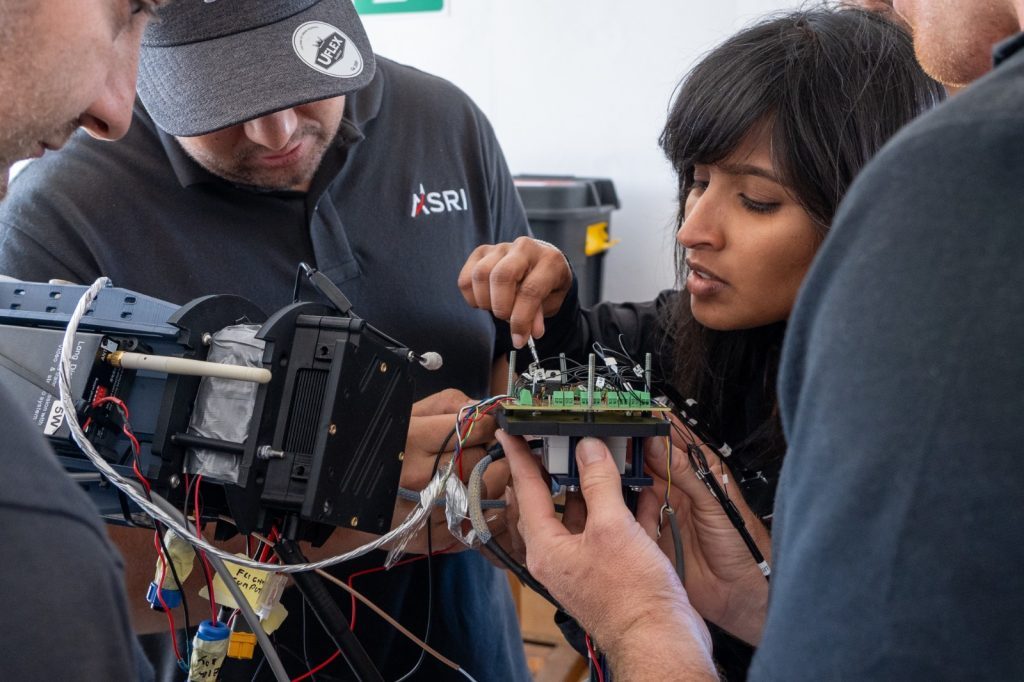
ASRI engineers prepare a Phoenix rocket flight computer before launch.

Mura Space said it has scheduled a series of suborbital rocket launches beginning in 2026, including missions targeting the internationally recognised Kármán line — the 100-kilometre boundary marking the edge of space. The launches are expected to be historic firsts for the African continent.

ASRI Director, Professor Michael Brooks, said the collaboration with Mura Space represented a significant milestone in delivering indigenously developed, sovereign access to space for South Africa and the continent.

“By combining our advanced engineering expertise, in-house manufacturing capabilities, and 16 years of innovation with Mura’s commercial vision for launch, we are opening new frontiers for local research, skills development, and global technology exchange. We are excited about a launch ecosystem that will empower the next generation and position Africa as a key player in the global aerospace sector,” said Brooks.

Mura Space Chief Executive Frederik de Ridder said the partnership with ASRI creates new opportunities for local research and education. “We hope some of these launches will offer new opportunities for select South African micro-gravity research payloads as well as contribute positively to local educational and human capital development programmes in ways previously not possible.”

De Ridder added that the growth of suborbital activity forms the foundation for eventual orbital launch capabilities. “South Africa is walking, and we are excited about working with key space stakeholders to help grow the momentum towards a historic first commercial orbital attempt from African soil,” he said.

The activities will be carried out under the newly established AfriRoC (African Rocketry Challenge) initiative, subject to regulatory and safety approvals. Both Mura Space and ASRI said they are independently committed to developing a credible, safe, and entrepreneurial launch ecosystem that aligns with South Africa’s ambitions to achieve sovereign orbital launch capability.

Mura Space, a privately funded South African company, focuses on commercial investments and partnerships in the aerospace and launch sectors. It is conducting a technical feasibility study and market assessment for the Mura Spaceport, a proposed privately funded, multi-user facility designed to attract international small and medium orbital launchers by leveraging southern Africa’s favourable geography.

The launch of a Phoenix-1E hybrid rocket from the South African Sounding Rocket Launch Facility.

The Aerospace Systems Research Institute, based at UKZN, leads South Africa’s efforts to build indigenous space-launch capacity. Supported by the Department of Science, Technology and Innovation and the university, ASRI has spent more than two decades designing and testing advanced aerospace systems, including liquid and hybrid rocket engines, turbomachinery, green propellants and in-space thrusters.

The institute operates an advanced manufacturing facility equipped with state-of-the-art machinery and provides consulting and product development services globally. Its research and engineering teams have been instrumental in positioning South Africa as one of the few African nations developing home-grown launch capabilities.

INSIDE EDUCATION

Uncategorized

Manamela appoints governance support team to stabilise College of Cape Town

Higher Education and Training Minister Buti Manamela has appointed a Stabilisation and Governance Support Team (SGST) to address ongoing leadership and governance challenges at the College of Cape Town for TVET.

The SGST will be chaired by Advocate J.B. Skosana (SC) and supported by Professor Busani Ngcaweni, a governance and policy specialist, and Joyce Nkopane, a labour relations expert.

The team will also be assisted by a DHET-appointed secretariat and technical advisor.

Manamela said the team will begin its work within a week, submit an interim report within 21 days, and deliver a final report within 45 days.

“Pending its report, all new disciplinary processes involving the Principal, Council Chair and Deputy Principals will remain suspended to prevent further escalation,” said Manamela.

The college has been plagued by persistent tensions among senior managers, resulting in weak governance, low staff morale, and disruptions to academic programmes.

According to the college Principal, divisions within management intensified following his appointment, after two Deputy Principals who had unsuccessfully applied for the position allegedly fuelled a prolonged power struggle that continues to destabilise the institution.

Despite the turbulence, the college has maintained unqualified audit opinions, improved graduation and certification rates, and built strong partnerships in ICT, business process outsourcing (BPO), and digital skills development.

However, persistent factionalism has reportedly undermined the independence of key stakeholders, including unions and the SRC.

Members of Parliament have also raised questions about charges involving staff recruitment, the selection of interns, and the Principal’s allegations of “overreach” by the DHET Director-General.

In 2023, a complaint was lodged with the Public Service Commission concerning the appointment of service providers at the college.

Manamela reiterated his concern over ongoing governance conflicts despite the institution’s commendable academic performance.

“This intervention is not about taking sides, but about restoring order and protecting the right of students to learn in a stable and functional environment. We must focus our collective energies on education, not on internal conflicts,” Manamela emphasised.

Manamela is expected to table the SGST’s final outcomes before the Parliamentary Portfolio Committee on Higher Education, as required under Section 46 of the CET Act.

INSIDE EDUCATION