UJ students pocket over R300k in prizes at G20 Tourism Hackathon
Uncategorized

UJ students pocket over R300k in prizes at G20 Tourism Hackathon

By Levy Masiteng

The University of Johannesburg (UJ) has made a significant mark in the world of innovation, with its students clinching top spots at the G20 Tourism Hackathon.

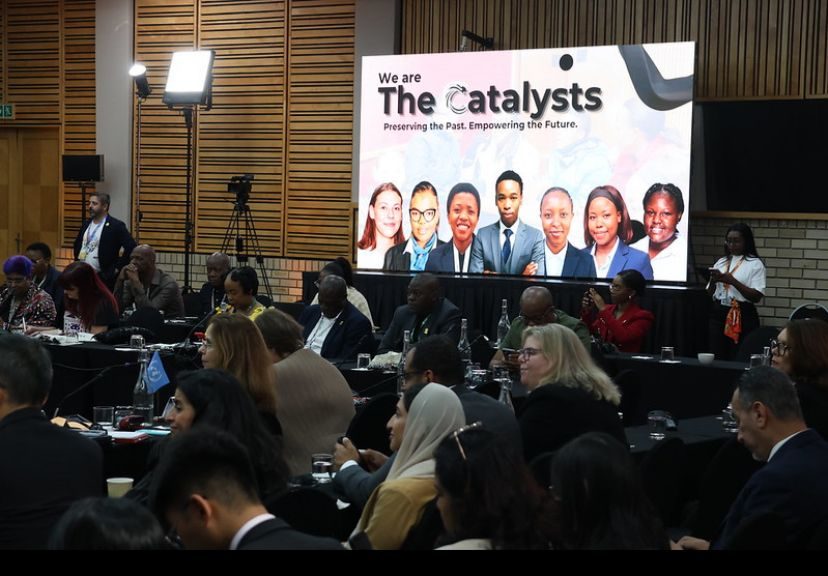
The Catalysts, Map My Biz, and Ubuntu Unlimited at the G20 Tourism Hackathon Challenge. Photo: Supplied.

The competition was held late last month and brought together 46 youth from 21 institutions of higher learning.

UJ said the participants were challenged to develop AI solutions that drive job creation and sustainable growth in the tourism sector.

Two UJ teams took the top prizes, with the Catalysts team securing first place and a prize of R175,000.

In a statement, UJ said the team presented an innovative solution called Hologram Hub, which offers a digital platform that empowers rural communities to profile and preserve their unique cultural heritage, attracting tourists directly to their locations.

“The platform enables these communities to tell their own stories, promoting cultural preservation and economic growth,” the institution said.

Map My Biz took the second spot and pocketed R140,000.

Their innovation addressed the challenge of visibility for local entrepreneurs by combining offline accredited learning with AI-driven support and a global smart map.

Map My Biz’s Inganathi Zimela said the project ensured that rural entrepreneurs become visible, trusted, and adequately supported by international and domestic tourists. “Being part of the first ever G20 Tourism Hackathon South Africa was an inspiring and eye-opening experience for me. It challenged me to think with an innovative mindset about global tourism issues that need to be solved urgently,” added Zimela.

Catalysts team member Teagon Spykerman said being part of the hackathon was an “incredible experience”.

“This opportunity has taught me how to work better in teams, but more importantly, it has opened my eyes and made me believe in myself more,” Spykerman said.

Tracy Daniels, UJ academic head for hospitality, said she was proud of the outcome. “What an incredible job. The University of Johannesburg is the only university with students in the top two teams. An amazing, amazing achievement.”

The G20 Tourism Hackathon forms part of the South African Department of Tourism’s aim to promote sustainability and enhance the tourism experience through AI-driven solutions.

UJ said both teams will present their solutions at the G20 Ministerial Summit, showcasing their innovations directly to Tourism Ministers, which is expected to take place in November as part of the G20 Summit.

INSIDE EDUCATION

Uncategorized

Basic Education, Labour delay assistant teachers’ stipends

By Johnathan Paoli

The Basic Education and Employment and Labour departments have confirmed a further delay in the payment of September stipends for some education assistants (EAs) and general school assistants (GSAs) employed under Phase V of the Basic Education Employment Initiative (BEEI).

Both departments urged affected assistants to remain in contact with district offices for assistance, reiterating that stipends for Treasury-funded schools are on track, and stressing that the September delay is isolated to those funded through the Unemployment Insurance Fund (UIF)’s Labour Activation Programme.

“The Departments reaffirm their commitment to ensuring that all young people in the programme are paid without further delay. We extend our sincere appreciation to the Assistants for their patience and understanding during this period,” the departments said in a joint statement.

The setback affects only those assistants working at schools funded outside of the National Treasury’s allocations.

Those employed in schools directly funded by the Treasury will receive their stipends on time.

The delay stems from challenges in the submission and verification of required documentation from schools to the programme’s second funder, the Unemployment Insurance Fund (UIF) Labour Activation Programme.

According to the departments, the issue is primarily administrative but has disrupted payments that thousands of young assistants rely on for basic living expenses.

Both departments stressed that urgent steps are being taken to fast-track the processing of outstanding documents and to ensure compliance with the UIF’s processes.

“Affected Assistants can therefore expect their stipends to be disbursed in due course,” the statement read.

The BEEI, currently in its fifth phase, was first launched in 2020 as part of the Presidential Employment Stimulus aimed at reducing youth unemployment while supporting the education sector.

Through the initiative, thousands of young people have been placed in schools as EAs and GSAs, assisting teachers in classrooms, providing administrative support, and helping to improve the overall learning environment.

The programme has been widely welcomed but has also faced recurring concerns over delayed stipend payments since its inception.

The departments extended appreciation to assistants for their patience and understanding, stating that district and provincial teams have been tasked with handling queries from affected assistants and to offer real-time updates on the status of payments.

The departments emphasised that no assistant will be left unpaid, underscoring their commitment to resolving the delays with minimal disruption.

The UIF Labour Activation Programme, which co-funds part of the BEEI, requires stringent verification of documents submitted by schools before funds are released.

This process, according to officials, ensures compliance and accountability but has been identified as a recurring source of delay.

Efforts are now under way to improve coordination between schools, provincial education departments and funders to avoid similar challenges in the future.

The departments’ joint statement also sought to reassure stakeholders that the initiative remains a vital component of South Africa’s education and employment landscape.

The BEEI has created work opportunities for more than 700,000 young people since its launch and remains one of the largest youth employment programmes in the country; with many in the sector acknowledging its broader impact on both youth livelihoods and the functioning of schools.

INSIDE EDUCATION

Uncategorized

Manamela to announce SETA boards this week

By Thebe Mabanga

Minister of Higher Education and Training Buti Manamela is set to appoint the boards of the Sector Education and Training Authorities (SETAs) this week, with board chairpersons set to be installed during October.

Manamela confirmed this with Inside Education on the sidelines of the Mandela Sobukwe Leadership Camp, held at the University of Johannesburg Island at the Vaal last week.

“We are finalising the appointment of the Accounting Authorities, those are going through vetting, upon conclusion of the vetting they will be informed and those for whom vetting has been concluded can begin their work,” Manamela said, adding that the process will begin as early as this week.

The process of appointing SETA board chairs was derailed and ultimately accounted for Manamela’s predecessor, Nobuhle Nkabane, being removed from her post due to a public outcry over the process followed and the identity of some of the board chairs.

Manamela said that the process is now back on track.

“We can confirm that the Minister is appointing Accounting Authorities that have been vetted this week. The [Board] chairpersons will take longer, and the Ministry will communicate in due time,” said Matshepo Seedat, Manamela’s spokesperson.  

Manamela acknowledged that there is a need to change the way SETAs are run. “I think there is national consensus that SETAS, the way in which they are structured, the way in which they are governed, and the way in which they provide services, requires some level of reform.”

He said that the conversation about that will have to be held within various parts of government as well as with stakeholders such as labour, industry and training institutions.

The five-year term of the previous boards expired in March this year. In May, the National Treasury gave Nkabane permission to allow CEOs to act as Accounting Authorities for a period of three months or until new boards are appointed. That three-month period expired at the end of August.

The incoming boards have a litany of challenges to address across the various SETAs. Three of the SETAS are under administration. Asked if more are likely to be taken this route, Manamela said “I don’t know”.

The first order of business for the boards is to appoint new CEOs or renew the contracts of incumbent CEOs as their five-year terms ended in September. Thereafter, the boards must instil a culture of excellence to improve performance.

SETAS such as the Chemical Industries Education and Training Authority (CHIETA) and The Mining Qualifications Authority (MQA) have obtained clean audits and achieved 100% of their goals.

INSIDE EDUCATION

R28 million digital hub launched in Soweto to empower 4IR careers
Uncategorized

R28 million digital hub launched in Soweto to empower 4IR careers

By Akani Nkuna

The Finance and Accounting Services Sector Education and Training Authority (FASSET) has, in collaboration with the Department of Higher Education and Training (DHET), launched a digital hub at the South West Gauteng College in Dobsonville, Soweto (SWGC), in order to introduce digital careers that are adaptive to the fast-growing technological industry.

According to FASSET CEO Ayanda Mafuleka, the hub is poised to bridge the digital divide between township areas and affluent suburban areas by ushering in digital transformation in the SWGC campus, where students will learn digital courses enabling them to contribute to the 4th Industrial Revolution economy.

“The world is not waiting for us to catch up. The 4th Industrial Revolution, the Just Energy Transition, they are all here already reshaping industries, demanding new skills and rewriting the future of work,” she said on Tuesday during the launch at the SWGC campus.

“As FASSET, this is a bold step for us because we believe that through this initiative, we will empower students and lecturers with the tools not just to service in the future, but to lead.”

The digital transformation initiative has been described as empowering not only the students, but the entire community of Soweto at large with digital literacy while also responding to the pressing needs affecting the community, especially unemployment.

Eight hundred learners are going to enrol for digital courses over the next two years in cybersecurity, coding, data analytics, cloud practioners, software development, software testing, digital marketing and artificial intelligence, amongst other skills that are critical to the digital economy.

With a financial investment totalling R28,000, 500 to aid in the steadfast implementation of the digital hub initiative, the college has also identified 60 lecturers to be upskilled with digital skills, enabling them to impart that knowledge to learners who will be learning in person and those participating in distance learning. The courses span a minimum of three months.

Mafuleka reaffirmed the entity’s endeavours to roll out the initiative across the country, especially in rural colleges. She said that Soweto was chosen as the first destination owing to its vibrant economy and strategic location as a major contributor to the township economy.

“Soweto is an ecosystem on its own, embodying the intense cultural, political and economic hub key points. Soweto has a rich history which can be preserved by ensuring that the community thrives. This hub is going to be an impactful initiative that will see Soweto having access to a digital world,” Mafuleka told Inside Education following the launch at the campus.

DHET Deputy Director General (DDG) for TVET Colleges, Zamokuhle Zungu, speaking to Inside Education, reiterated government’s efforts to incentivise community colleges as an attractive and prioritised destination for students. He said that the launch was aiding government plans to increase TVET college enrolments to 2.5 million students by 2030.

Zungu appealed to students not to be concerned about the physical location of TVET colleges, often in township areas — a contrast of environment when compared to universities — saying location does nothing to alter the quality of education.

“If you go to any operation, plant or manufacturer, the people that are supervisors across the globe, it is people coming from universities in those positions. But our education system is the opposite, [TVET colleges] are pumping more supervisors,” he added.

He highlighted the action to diversify teaching and learning beyond the traditional classroom to have a far reaching and greater impact through the implementation of virtual classrooms enabled by digital platforms.

Zungu said that for government to reach its threshold of 2.5 enrolments by 2030, the infusion of technology would play a critical role.

SWGC Principal Malose Monyamane told Inside Education that they have implemented measures to enable the upskilling of lecturers at the campus without destabilising or delaying the start of the digital hub.

“We have e-libraries, meaning that students will be able to access e-books – any material that they want read. Lecturers do post their lessons on our portal, making it easy for students to access those from wherever,” Monyamane added.

INSIDE EDUCATION

Uncategorized

Thoko Didiza calls for more youth inclusion in global decision-making

Inside Education Reporter

National Assembly Speaker Thoko Didiza has urged stronger youth participation in legislatures and international decision-making platforms, saying young leaders are central to building inclusive and sustainable societies.

Didiza was addressing the P20 Young Parliamentarians Forum in Cape Town under the theme “Young Parliamentarians as Drivers of Global Solidarity, Equality and Sustainability.” The meeting precedes the 11th Parliamentary Speakers’ Summit (P20), which will take place from 1 to 3 October.

Welcoming delegates from around the world, Didiza said young people were a vital force in shaping the future. “Young people are a powerhouse in exploring solutions to the problems of the modern world. Their perspectives, energy and inventive ideas are critical in helping us find original solutions needed for today’s challenges,” she said.

Despite progress in some areas, youth remain under-represented in global legislatures. Didiza cited Inter-Parliamentary Union figures showing only 2.8% of the world’s parliamentarians are under 30, while nearly three-quarters of upper houses have no members in that age group.

South Africa, she said, has encouraged youth participation through political party processes and activism, ensuring their voices are heard.

Didiza urged parliaments to use their oversight powers to advance policies supporting youth empowerment, entrepreneurship, decent work and technology access. She also called for responsible regulation of artificial intelligence.

“As we promote societies founded on democracy and respect for human rights, we must be conscious that young people are often the most affected by the decisions we make today. It is no longer acceptable to take decisions without their voices,” she said.

Solidarity and international cooperation, she added, were vital to tackling shared global challenges such as inequality, climate change and geopolitical tensions.

“The actions and decisions we take today must ensure that young people, particularly in the Global South, gain meaningful access to economic opportunities and play a central role in shaping a just and sustainable future,” Didiza said.

INSIDE EDUCATION

R420m Emeris mega-campus unveiled in Sandton
Uncategorized

R420m Emeris mega-campus unveiled in Sandton

By Levy Masiteng

Private education provider ADvTECH Group has unveiled its R420m Emeris mega-campus in Sandton, Johannesburg.

According to the group, the new private higher education brand will bring together Varsity College, Vega School, and MSA brands, under one name.

The campus is scheduled to open its doors in January 2026 and it is expected to accommodate approximately 9 000 students.

ADvTECH Group CEO Geoff Whyte said the strategic alignment amplifies the group’s “commitment to delivering diverse, high-quality educational pathways, tailored to meet market demands”.

The campus includes a double-storey library and information centre, student experience hub with career and counselling services, and a custom-designed indoor sports centre capable of hosting international events.

IT labs, podcast studios, and interactive mock classrooms are also available.

Whyte said the Emeris campus represents a fundamental shift in education, focusing on future-proof, skill-based, and tech-integrated learning.

“We’re preparing students for jobs that don’t exist yet,” he said.

Louise Wiseman, managing director of the Independent Institute of Education (IIE), said the IIE was committed to social investment and student accessibility, and that the Emeris academic model prioritised real-world skills, critical thinking and collaboration.

ADvTECH said its undergraduate opportunities had also grown, with the launch of three engineering qualifications, making Emeris the only private institution in South Africa with accreditation from the Engineering Council of South Africa (ECSA).

According to Andrea Abrahams, IIE’s executive dean of academic affairs, the campus will offer flexible programmes catering to diverse needs, including law, business, technology, and the arts.

The campus has also established partnerships with industry leaders to ensure students gain practical experience.

“We’re not just about delivering qualifications; we’re about delivering skills that make our graduates ready for the workforce,” Wiseman said.

INSIDE EDUCATION

Uncategorized

Strengthening global research through open data and collaboration

By Sarah Schafer and Sarah Marriott

The University of Cape Town (UCT) recently joined the World Data System (WDS), reinforcing its commitment to advancing open science, data accessibility and research excellence on a global scale.

The WDS is an affiliated body of the International Science Council (ISC) that aims to enhance the capabilities, impact and sustainability of its member data repositories and services.

For UCT eResearch, membership in the WDS aligns closely with its vision of fostering open science and supporting global research collaboration.

Reinforced leadership in data stewardship

Membership in WDS means joining a trusted international community dedicated to strengthening the scientific enterprise across the entire data lifecycle. It ensures that UCT’s data repositories uphold rigorous international standards of trust, sustainability and interoperability – enhancing the visibility and impact of its researchers’ work worldwide.

The significance of this milestone was highlighted by Professor Mattia Vaccari, Director of eResearch at UCT: “Becoming a member of the World Data System underlines UCT’s dedication to creating high quality and accessible data infrastructure that supports our researchers in producing impactful, reproducible science.

“Membership strengthens our ability to collaborate internationally, reinforcing our leadership in responsible data stewardship.”

Professor Vaccari said this includes creating first-class, quality-assured data that feeds first-class research outputs. “It is about advocating for accessible, transparent, impactful and reproducible science.”

Professor Jeff Murugan, UCT’s acting deputy vice-chancellor for Research and Internationalisation, emphasised the strategic importance of WDS membership for the university. “This is a key step in our broader commitment to open science and global research excellence. It not only advances our digital identity but also ensures our research outputs are connected and recognised within the worldwide scientific ecosystem.”

Earlier this year, UCT officially joined DataCite, a global non-profit organisation dedicated to providing persistent digital object identifiers (DOIs) for research data.

This move empowers UCT researchers to establish a stronger digital identity, ensuring their contributions receive the recognition they deserve in academic and public domains. With the new WDS affiliation, UCT now joins a worldwide community devoted to the provision of quality assured data and data services.

Membership entails the university’s participation in a trusted network that supports data repositories in enhancing data discoverability, reliability and accessibility, fostering an environment conducive to collaboration.

Advancement of Open Science and reproducibility

UCT’s engagement with the WDS builds on its existing achievements such as the CoreTrustSeal certification awarded earlier this year to the institutional repository ZivaHub: Open Data UCT.

Hosted by UCT Libraries, the ZivaHub platform publishes UCT research data and scholarly outputs.

“UCT Libraries’ continued support to the university is now bolstered by membership of WDS,” said Nikki Crowster, director of Information Systems and Resources.

“It reinforces our commitment to the ongoing advocacy for FAIR (findability, accessibility, interoperability and reusability) data principles and Open Scholarship.”

A core principle of WDS is to improve and facilitate access to research data, supporting the open data movement and making data available to researchers and the public.

As a trustworthy repository, ZivaHub sets high standards in research data management and accessibility. ZivaHub has been recognised for its outstanding contribution to science, engineering and technology (SET) and innovation in South Africa, and was a recent finalist in the ‘Data for Research’ category at the NSTF-South32 2024/2025 Awards.

Overall, being part of the World Data System means that UCT will continue to champion accessible data, sustainable data management practices, and global collaboration, ensuring that its research data infrastructure supports the university’s position as a leader in research excellence and innovation.

UCTNEWS

Uncategorized

Summer sports weekend delivers thrilling water polo and cricket contests across SA

By Johnathan Paoli

The country’s summer sports calendar burst into life this past weekend, with school teams and touring visitors producing a series of contests that combined drama, grit, and fine individual performances.

From nail-biting water polo finals in Hilton and Durban to a commanding cricket display in Cape Town, the weekend’s events underlined the strength of youth sport in the country.

At the St Anne’s Diocesan College Water Polo Tournament in Hilton, former head coach Megan Sileno made a victorious return, this time at the helm of Johannesburg powerhouse St Stithians.

Reflecting on the success of the event, St Anne’s head coach Cameron Wiid praised the high standard of play.

“With all top medal matches and even the 5th/6th playoff going to penalties, it’s clear that the level of women’s water polo in South Africa is on the rise,” he said.

In a dramatic final on Sunday, Saints edged out Roedean 7–6 in a penalty shootout after the teams were locked at 4–4 in regulation time.

The run for the title included an 8–6 quarterfinal victory over Durban Girls’ College, winners of both the KZN Top 10 and Mackenzie Cup tournaments, and a semi-final triumph over Herschel Girls, also decided on penalties.

On the other side of the draw, Roedean ended hosts St Anne’s unbeaten run with an 8–6 semi-final win. In the bronze medal playoff, Herschel defeated St Anne’s 7–6 on penalties after a 5–5 stalemate.

Tournament honours were shared, with St Stithians’ Isabella Imbriolo earning Defender of the Tournament, while Danielle Sassenberg was named Most Valuable Player.

Wiid said that hosting 16 of the country’s top U19 teams created a unique competitive atmosphere, further elevated by the calibre of match officials, several of whom had officiated at World Championships and Olympic Games.

While the girls battled it out in Hilton, the Clifton Aquatic Centre in Durban hosted the prestigious boys’ tournament, where Hilton College lifted the title after a 10–8 victory over St John’s College.

Guided by coach Paul Martin, who spent a decade leading Clifton’s programme, Hilton impressed with their sharp attacking responses and defensive strategy.

The standout was striker Tristan Uys, who netted five goals, before being red-carded midway through the game.

Mitchel Garreau stepped up late, scoring twice from penalties to keep Hilton in front, while goalkeepers Trent Chubb and Garrick Phillips made critical stops in a tense finish.

Clifton College claimed third place with a 9–7 win over Kearsney College, while South African College Schools took fifth after a comfortable 9–3 win over Selborne.

Further down, Michaelhouse ended seventh, Durban High School ninth, and Afrikaanse Hoër Seunskool 11th, while King Edward VI avoided a winless campaign with a 17–3 rout of Grey College in the 15th place playoff.

If water polo offered tension and fine margins, Wynberg Boys’ High School delivered dominance on the cricket field at its Jacques Kallis Oval.

Hosting New Zealand visitors Palmerston North, the Cape Town side powered to a 95-run victory in a 45-over clash.

Openers Matthew Saunders and Fawaaz Hendricks gave Wynberg a strong start with a 68-run stand, before Saunders went on to anchor the innings with a composed 81 off 115 balls, including seven fours and a six.

Supported by Michail Tarentaal’s quick-fire 36 and helped along by 38 extras conceded by the tourists, Wynberg posted 238/9.

Palmerston North’s Lucas Kempthorne impressed with the ball, taking 4/46, but his teammates struggled for accuracy, sending down 21 wides.

Chasing 239 runs, the visitors faltered, with only Sean Rowe (29) and Max Culleton (34 off 34 balls) offering resistance.

Wynberg’s Damien Harris tore through the lower order with figures of 4/15, while Jiyaad Abrahams and Luke Kleinsmith shared four wickets between them, bowling out Palmerston North for 143.

The victory was Wynberg’s second in as many days, following a 36-run win over Paarl Gimnasium on Saturday, underlining their fine early-season form.

INSIDE EDUCATION

Uncategorized

Department of higher education engages students on GBV

By Lebone Rodah Mosima

The Deputy Minister of Higher Education and Training, Mimmy Gondwe, joined student leaders from across the country on Friday at the University of Johannesburg’s Island Vaal Dam campus to address pressing challenges faced by young people.

At the roundtable discussion, student representatives from TVET colleges and universities raised concerns over accommodation shortages, NSFAS funding delays, mental health struggles, and the scourge of gender-based violence (GBV).

Zandile Sithole, President of the Soweto Diepkloof Community Learning Centre and Gauteng’s Deputy Provincial CLC President, spoke candidly about sexual misconduct by lecturers.

“We have serious cases of lecturers sending inappropriate messages or engaging in sexual relationships with students. When reported, they either receive a warning or get transferred elsewhere,” she said, calling for decisive action, including dismissals.

Sithole added that the abuse of power by lecturers suppresses students: “Yes, we are both adults, but you are using your position to oppress me. Lecturers must understand they are there to teach, not exploit.”

Reflecting on her SRC experience, Sithole said her understanding of GBV had expanded: “At first, we thought of GBV as only physical or sexual violence, but we’ve seen its mental and emotional dimensions too.”

In response, Gondwe stressed that the department takes GBV seriously, citing ongoing work with the Commission for Gender Equality.

“They have found patterns of sexual exploitation not only between lecturers and students, but also among students themselves, where SRC members abuse their positions,” Gondwe said.

She urged student leaders to call out perpetrators, hold them accountable, and lead by example.

INSIDE EDUCATION

Uncategorized

‘Rise above challenges,’ Limpopo premier tells 2025 matriculants

By Akani Nkuna

Limpopo Premier Phophi Ramathuba has urged the matric Class of 2025 learners in the Sekhukhune district to rise above challenges as they prepare for their final examinations, saying that making it to this stage of their academic journey is a testament to strength and perseverance.  

“Some of you may have faced challenges, financial struggles, and long distances to school, overcrowded classrooms, or personal difficulties at home. Yet here you are, standing tall, preparing for the final lap of your schooling journey,” she said.

Accompanied by Limpopo government officials, including the Education MEC, teachers, principals and community leaders, Ramathuba joined a Solidarity Walk with 1,000 learners in Ga-Nkwana to launch the official matric exam countdown campaign and boost student morale.

She said the walk served as both a symbol of unity and a declaration of collective effort by parents, government, teachers, and learners to ensure that disciplined action leads to a successful examination period.

She encouraged learners to view their upcoming exams as a defining moment that would shape the trajectory of their lives beyond high school, opening the door to exciting opportunities and rewarding careers.

Emphasising the importance of personal responsibility, the Premier reminded learners that while government has invested in providing the necessary resources for teaching and learning, it is ultimately up to them to seize the opportunity, apply themselves, and conquer the final stretch of their school journey.

She also appealed for academic honesty, saying: “Success earned through dishonesty is not true success.”

“Take care of yourselves. Study hard, but do not neglect your health. Rest well, eat well, and manage your time wisely. A healthy body and a calm mind will carry you to the finish line,” Ramathuba added.

The Premier urged the Class of 2025 to build on the achievements of the Class of 2024, which attained an 85.1% pass rate, encouraging them to surpass that milestone and position Limpopo among the top five provinces nationally for school performance.

INSIDE EDUCATION