
Gauteng targets skills shortage with launch of 41st School of Specialisation
Uncategorized

Gauteng targets skills shortage with launch of 41st School of Specialisation

Staff Reporter

Gauteng has launched its 41st School of Specialisation, expanding vocational and occupational training for learners as the province says it seeks to better align education with labour-market demand and scarce skills.

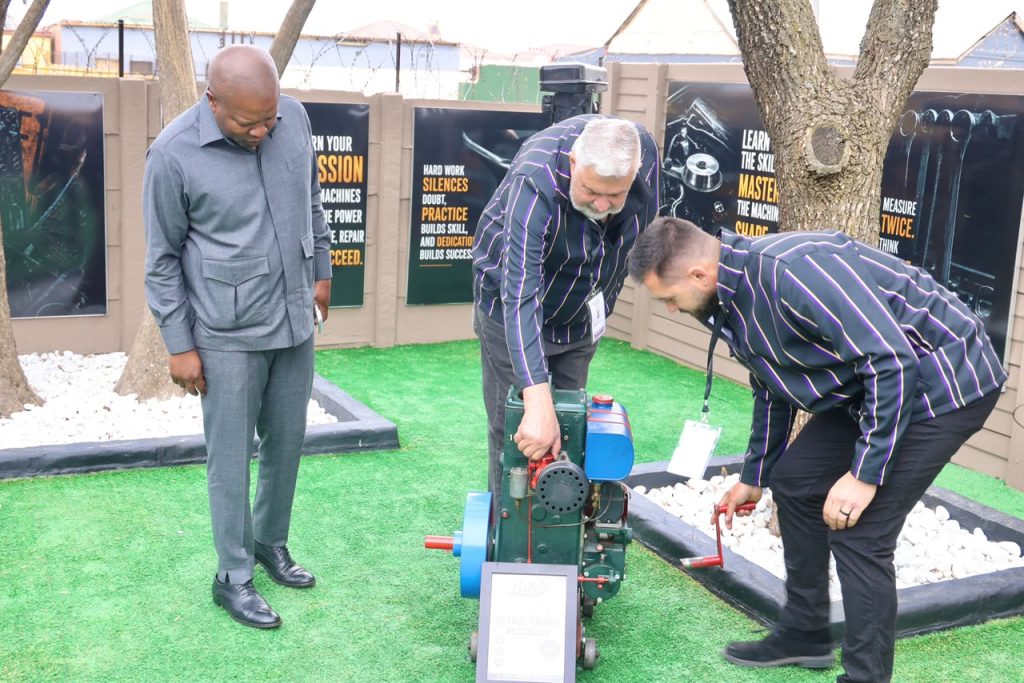
Education, Sport, Arts, Culture and Recreation MEC Lebogang Maile officially launched the Olympia Park Vocational and Occupational School of Specialisation in Springs, saying the school would provide learners with practical skills, recognised qualifications and workplace experience.

Olympia Park, which has 764 learners and 61 teachers, offers vocational training ranging from motor mechanics, plumbing and welding to agriculture, food production, sewing, hairdressing and beauty.

The school also has 22 workshops and allows learners to leave with between four and six additional Sector Education and Training Authority-accredited courses.

ALSO READ: Steenhuisen welcomes new global business service centre as vote of confidence in SA potential

“Olympia Park represents what we want to achieve through an education system that recognises the different abilities, talents and aspirations of our learners. We are not simply launching a school; we are opening doors to opportunity, dignity, skills development and economic participation.

“Vocational and occupational education must provide a credible pathway through which young people can acquire skills, gain recognised qualifications, enter the workplace, continue their studies or become entrepreneurs,” Maile said.

The Schools of Specialisation Programme was conceptualised in 2014 and has developed into one of the Gauteng Department of Education’s flagship initiatives.

The schools are intended to respond to the skills needs of Gauteng and South Africa by developing specialised talent and addressing scarce and critical skills requirements.

The programme also forms part of Gauteng’s Transformation, Modernisation and Reindustrialisation strategy, with the location and curriculum focus of the schools linked to the economic strengths and development priorities of the province’s economic corridors.

Olympia Park falls within Gauteng’s Eastern Economic Corridor in the City of Ekurhuleni, which is focused on manufacturing, transport, logistics and aeronautics.

School dates back to 1958

Olympia Park was established in January 1958 as a flagship Learners with Special Education Needs school serving learners with mild intellectual sisabilities and has a long history of supporting learners from underserved communities.

Its premises are situated on Transnet grounds that were historically used for the training of Transnet learnerships.

Since 2019, the school has revised its vision and mission, changed its anthem and uniform, upgraded sporting facilities and shifted to a stronger focus on vocational and occupational skills development, the department said.

ALSO READ: Mpumalanga MEC Thomo confirms departments’ increased contracts to women owned enterprises

Olympia Park has also been incorporated into the National School Nutrition Programme, which feeds up to 80% of its learners each day.

GDE scholar transport provides transport for 672 learners, including children travelling from as far as Spaarwater and Vosloorus.

The school has implemented the Endorsed National Senior Certificate and Technical Occupational Curriculum and has developed new workbooks and textbooks for Technical Occupational Curriculum subjects.

It also offers SETA-accredited short courses aimed at strengthening learners’ employment prospects.

“Inclusion cannot end with giving a learner a place in a classroom. It must mean giving that learner the education, practical skills, support and qualifications necessary to participate meaningfully in society and the economy.

“Our objective is to develop learners who leave school with practical abilities, theoretical knowledge, confidence, discipline and a positive attitude towards work,” Maile added.

Matric pass rate reaches 100%

Olympia Park currently has 764 learners, supported by 61 teachers and 15 general assistants, administrative and specialised staff.

The school’s matric pass rate increased from 83% in 2022 to 91.6% in 2023 before reaching 100% in both 2024 and 2025.

The department said the results showed that practical skills development and academic achievement could be pursued together.

The school’s 22 workshops comprise four Motor Mechanics workshops, three Plumbing workshops, three Welding and Sheet Metal workshops, five Agriculture Studies workshops, two Food Production workshops and two Sewing workshops.

It also has dedicated facilities for consumer studies, hairdressing, and nail and beauty training.

Other infrastructure includes an agricultural tunnel, hydroponics facilities, a medical centre, school hall, nutrition centre and feeding programme.

Its sporting facilities include three netball courts, a soccer and rugby field, two cricket nets, an athletics track and two long-jump pits.

Learners are also exposed to aquaculture, butchery, tractor and forklift operation, motorised bicycles and scaffolding alongside the school’s core occupational programmes.


Skills mismatch

The launch comes as South Africa continues to struggle with a mismatch between education and the skills required in the labour market.

According to the department, about 30.3% of workers are employed in occupations that do not match the field of their highest educational qualification.

The 2024 National List of Occupations in High Demand identifies 350 occupations in which employers are likely to recruit over the medium term.

Occupations aligned with skills developed at Olympia Park include automotive motor mechanics, plumbers, welders, hairdressers and nail technicians.

“We cannot separate the future of education from the future of our economy. Our schools must equip learners with skills that have practical value beyond the school gates.

“A learner who develops expertise in motor mechanics, welding, plumbing, agriculture, food production, sewing, hairdressing or beauty must be able to see a pathway from that skill towards further training, employment or entrepreneurship,” Maile said.

SETA-accredited qualifications

Learners at Olympia Park can leave the school having completed between four and six additional SETA-accredited courses.

These include Fire Fighting, Working at Heights, Fall Arrest, Scaffold Erection, General Health and Safety, Power Tool Safety, Office Administration, Piggery and Mixed Farming.

The school enrolled its first fully SETA-accredited learner cohort in 2026.

The department said the approach was intended to ensure learners left school with recognised competencies that could improve their chances of gaining access to further training or employment.

The school has also developed partnerships with companies and training institutions to bring workplace experience and skills into its programmes.

Cable Feeder Systems provides financial support, donates training equipment, assists financially with social worker support and provides learners with training opportunities in various fields.

HyGro Training College supports AgriSETA mixed-farming training for Year 4 learners, while Data Matrix provides SETA-accredited courses.

Springs Used Motor Parts donates vehicle components to the Motor Mechanics Department and Stark Ayers Seeds provides seeds for Agriculture Studies.

The Courier Guy supports sporting attire and equipment, Nirvana Business Solutions provides SETA courses, Bakeology Studio provides baking courses for Consumer Studies and Food Production learners, and Young Nails provides courses for Nail and Beauty learners.

Other partners provide apprenticeships and learnerships, workshop equipment, learning material, tractor and forklift licences, agricultural training and support for the school’s mechanical workshop.

Aviation training opportunity

Olympia Park is also expanding into aviation-related technical exposure in line with Ekurhuleni’s position within Gauteng’s Eastern Economic Corridor and its focus on transport and aeronautics.

An aircraft tail has been delivered separately to the school and is due to be assembled.

The school will begin assembling the tail this weekend. Doors that were removed to make transportation easier will be reinstalled during the assembly process, while four blades will be mounted at the end.

An Aviation Maintenance Engineer from Denel has also made contact with the school to provide support and expose learners to aviation-related technical knowledge.

“This is precisely the type of exposure we want our learners to receive. When learners can interact with artisans, engineers, technicians and industry professionals, they begin to understand how the skills acquired at school translate into real occupations and economic opportunities,” Maile said.

INSIDE EDUCATION

The post Gauteng targets skills shortage with launch of 41st School of Specialisation appeared first on Inside Education..
Uncategorized

Dale College beat Ooskus 33-12 to lift Lilyfontein Sevens title

Staff Reporter

Dale College capped an unbeaten run through the Lilyfontein Sevens with a convincing 33-12 victory over Ooskus Gimnasium to claim the U17 title in the Eastern Cape on Saturday.

Dale won all five of their matches at the tournament, which formed part of the Clover High School Sevens Series and was hosted by Lilyfontein School outside East London on 29 August.

The Qonce school began its campaign with two emphatic victories in Group C, beating the Kwelera Invitational side 31-5 before running in 57 points in a 57-10 win over Hangklip.

The knockout stages proved considerably tougher.

ALSO READ: Steenhuisen welcomes new global business service centre as vote of confidence in SA potential

Dale defeated Port Rex Technical High School 27-19 in the quarter-finals before being pushed all the way by Stirling High School in the semi-finals.

Only three points separated the sides in that encounter, with Dale holding on for a 27-24 victory and a place in the final.

Ooskus took a less straightforward route to the decider.

After opening their tournament with a 24-19 victory over hosts Lilyfontein, Ooskus lost 26-17 to Hudson Park High School in their second pool match.

They recovered to eliminate Queen’s College 28-24 in the quarter-finals and then turned the tables on Hudson Park, winning their semi-final 26–19 to secure a meeting with Dale.

But Dale proved too strong in the title match, winning 33-12 to complete an unbeaten tournament.

Across their five matches, Dale scored 175 points and conceded 70, with their 57-10 pool victory over Hangklip their biggest win of the day.

Their closest contest was the three-point semi-final victory over Stirling.

The U17 title was up for grabs after Cambridge High School, the previous champions according to SuperSport Schools, did not contest this year’s tournament. Dale had also not competed in the previous edition.

Ahead of the tournament, SuperSport Schools Plus identified Dale among the leading contenders following a strong season in the traditional 15-player format.

Lilyfontein said ahead of the event that Dale and Ooskus were among 16 schools and invitational teams expected for its senior rugby and netball sevens festival.

Other schools in the U17 draw included Queen’s College, Hudson Park, Stirling, Port Rex, Victoria Park and George Randell High School. Graeme College also competed at the festival, but only in the U15 age group — the team does not enter the U17 competition.

The tournament has a long history in Border schools rugby.

ALSO READ: Mpumalanga MEC Thomo confirms departments’ increased contracts to women owned enterprises

According to Lilyfontein School, its seven-a-side rugby competition was first played in 1994 and has since become an annual August event bringing together schools from across the Buffalo City region.

Dale came close to making it a double celebration in the U15 competition.

Its younger side won Group B and then overwhelmed Stirling 40-7 in the quarter-finals, but lost a high-scoring semi-final 33-31 to Graeme College.

Graeme went on to defeat Queen’s College 31-19 in the U15 final, with SuperSport Schools reporting that the Makhanda side had successfully defended its title.

INSIDE EDUCATION

The post Dale College beat Ooskus 33-12 to lift Lilyfontein Sevens title appeared first on Inside Education..
Uncategorized

NSFAS releases R222.7m for 2,927 Funza Lushaka students, more claims outstanding 

By Levy Masiteng 

The National Student Financial Aid Scheme (NSFAS) has paid R222.7 million to six universities to help clear outstanding Funza Lushaka Bursary Programme payments for 2 927 student teachers, following intervention by Higher Education and Training Deputy Minister Yusuf Cassim.

The payment was confirmed to Cassim during a meeting with senior NSFAS officials and the Funza Lushaka Bursary Programme team at the NSFAS offices in Cape Town on Thursday. 

The latest batch of payments was made to the Central University of Technology, North West University, University of Fort Hare, University of Limpopo, University of Pretoria and the University of South Africa.

ALSO READ: Cassim delivers the keynote address at the SAUS National Student and Well-being Summit 2026

The institutions are now expected to process the funds and pay the respective allowances directly to beneficiaries.

“These payments must now reach students without delay so they can focus on their studies and not have to worry about outstanding allowances that have been pending for months,” Cassim said.

He welcomed the work being done by NSFAS and the Funza Lushaka team to accelerate the payment process, but also instructed NSFAS to obtain confirmation from the universities on when beneficiaries would receive their money.

During the meeting, NSFAS told Cassim that a significant number of institutional claims for Funza Lushaka funding were still outstanding.

For August, claims amounting to R295.99 million for 3 095 students had been uploaded for processing for the September payment cycle.

According to the department, the scheme’s payment process takes approximately four weeks, as claims must undergo verification checks before funds can be released.

“Institutions are  urged to submit their claims promptly to prevent further delays for students.” 

According to NSFAS, these payments will be processed in September through the normal payment process.

More than R500 million in Funza Lushaka funds remains unclaimed, with institutions required to submit outstanding claims by 13 September if they want the money to be paid in October.

Cassim directed NSFAS to write to institutions with outstanding claims to establish whether they would submit their claims by the 13 September deadline and to confirm that all Funza Lushaka beneficiaries would receive their allowances without interruption.

He also called for institutions that have failed to submit claims to be specifically identified and followed up by the University Education Branch and NSFAS.

For the current academic year, 23 universities have been allocated R1.3 billion under the Funza Lushaka Bursary Programme.

The multi-year programme, funded by the Department of Basic Education, supports students pursuing teaching qualifications at participating universities, with NSFAS acting as the disbursement agency responsible for transferring the funds to institutions.

ALSO READ: SIU uncovers millions in questionable skills funding across TVET colleges

The allocation is intended to cover tuition, accommodation, meals, learning materials and living allowances for eligible beneficiaries.

With outstanding claims continuing to contribute to delays, NSFAS has proposed a joint workshop with relevant stakeholders in November 2026, ahead of the next academic year.

“The workshop will aim to eliminate manual processes by introducing automation, establishing effective communication channels with students, and improving alignment and payment timelines,” the department said. 

INSIDE EDUCATION

The post NSFAS releases R222.7m for 2,927 Funza Lushaka students, more claims outstanding  appeared first on Inside Education..

Uncategorized

Mpumalanga MEC Thomo confirms departments’ increased contracts to women owned enterprises

By Lebone Rodah Mosima

Mpumalanga MEC for Public Works, Roads and Transport, Thulasizwe Simon Thomo, said the department increased the proportion of contracts awarded to women-owned enterprises to 57% during the first quarter of the 2026/27 financial year, from 45% in the 2025/26 financial year. 

Thomo delivered the keynote address at the Women in Construction Dialogue in the Nkangala District Municipality on Friday and highlighted that these figures demonstrate measurable progress, although women remain underrepresented in the construction industry.

“Construction is one of the largest contributors to economic development,” Thomo said.

“It creates employment, stimulates local economies, develops productive assets and unlocks opportunities across the entire value chain.”

However, he said that despite progressive constitutional provisions, transformative legislation and procurement reforms, the participation of women in the sector remains disproportionately low.

He emphasised that women continue to experience structural barriers that limit access to finance, procurement opportunities, technical skills, professional networks and leadership positions within the built environment.

“Mpumalanga Provincial Government therefore recognised that these challenges cannot be addressed through policy instruments alone,” he said.

“They require sustained institutional collaboration, measurable interventions and continuous engagement between government, industry, development finance institutions and women-owned enterprises.”

He commended the Office of the Premier for having resolved to institutionalise the Women in Construction Dialogue as an annual provincial platform for policy engagement, accountability and implementation.

He said this dialogue challenges the province to ensure that infrastructure development is not only measured by the kilometres of roads we construct or the number of public facilities we deliver, but also by the extent to which those investments transform ownership patterns, create sustainable enterprises and expand economic opportunities for women.

“We committed ourselves to strengthening procurement opportunities for women-owned enterprises, improving access to development finance, expanding mentorship and enterprise development programmes, enhancing technical capacity through compliance and supply chain management training and establishing stronger partnerships that would enable women to participate meaningfully across the construction value chain,” he said. 

“Importantly, we agreed that the Dialogue should not become an annual conversation without measurable outcomes.”

He added that the Dialogue should serve as an accountability mechanism through which Government reports on progress, assesses implementation of previous resolutions and identifies further interventions required to accelerate transformation within the sector.

He said the Mpumalanga Provincial Government has deliberately translated these commitments into practical interventions.

He said during the 2025/26 financial year, provincial Departments of Co-operative Governance, Human Settlements and Traditional Affairs (COGHSTA) women-owned enterprises and further reached 42% in the first quarter of 2026/27.

“These figures demonstrate measurable progress. However, they equally remind us that transformation is a continuous process rather than a destination,” he said.

“The objective is not merely to increase statistical representation, but to develop sustainable, competitive and resilient women-owned construction enterprises capable of contributing meaningfully to provincial economic growth.”

He added that across the Provincial Administration, women now constitute 67% of the total workforce, represent 46% of the Senior Management Service and account for 50% of all Heads of Department.

However, he said, the challenge now is to ensure that similar progress is realised throughout the construction industry, where women remain underrepresented despite growing opportunities created by the province’s infrastructure investment programme.

“Let this Dialogue critically assess the progress made since 2025, identify remaining constraints, explore innovative financing and procurement mechanisms, strengthen collaboration between the public and private sectors, and chart a practical programme of action that will further expand opportunities for women across the entire construction value chain,” he said.

INSIDE EDUCATION

The post Mpumalanga MEC Thomo confirms departments’ increased contracts to women owned enterprises appeared first on Inside Education..

Steenhuisen welcomes new global business service centre as vote of confidence in SA potential
Uncategorized

Steenhuisen welcomes new global business service centre as vote of confidence in SA potential

By Johnathan Paoli

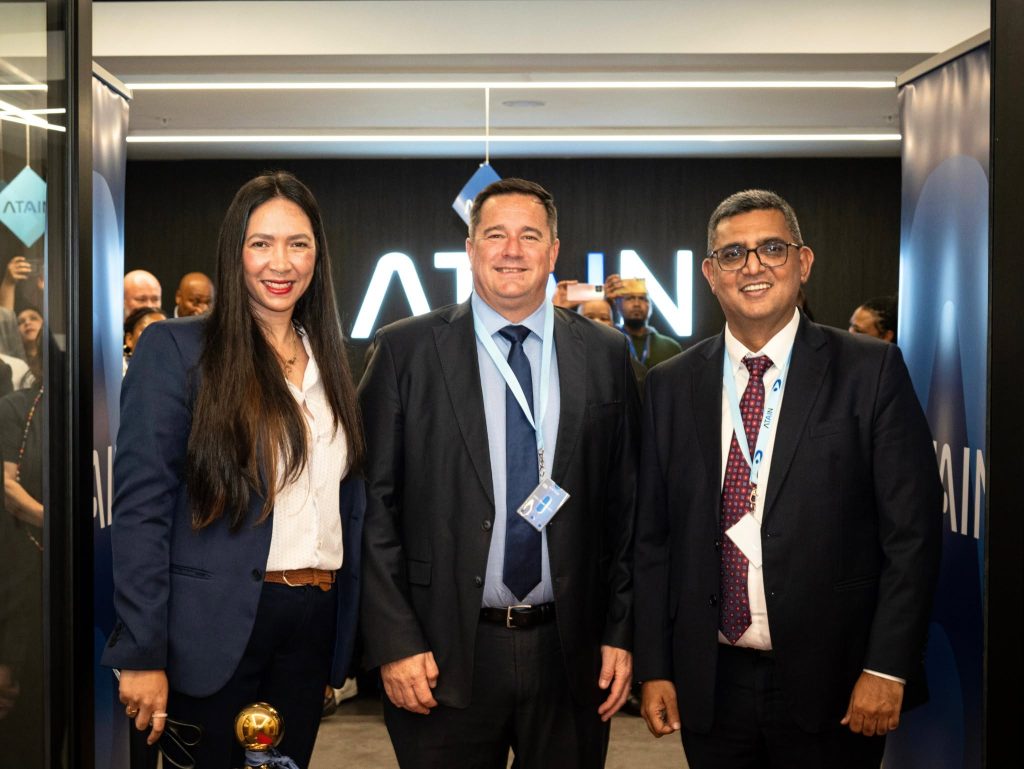
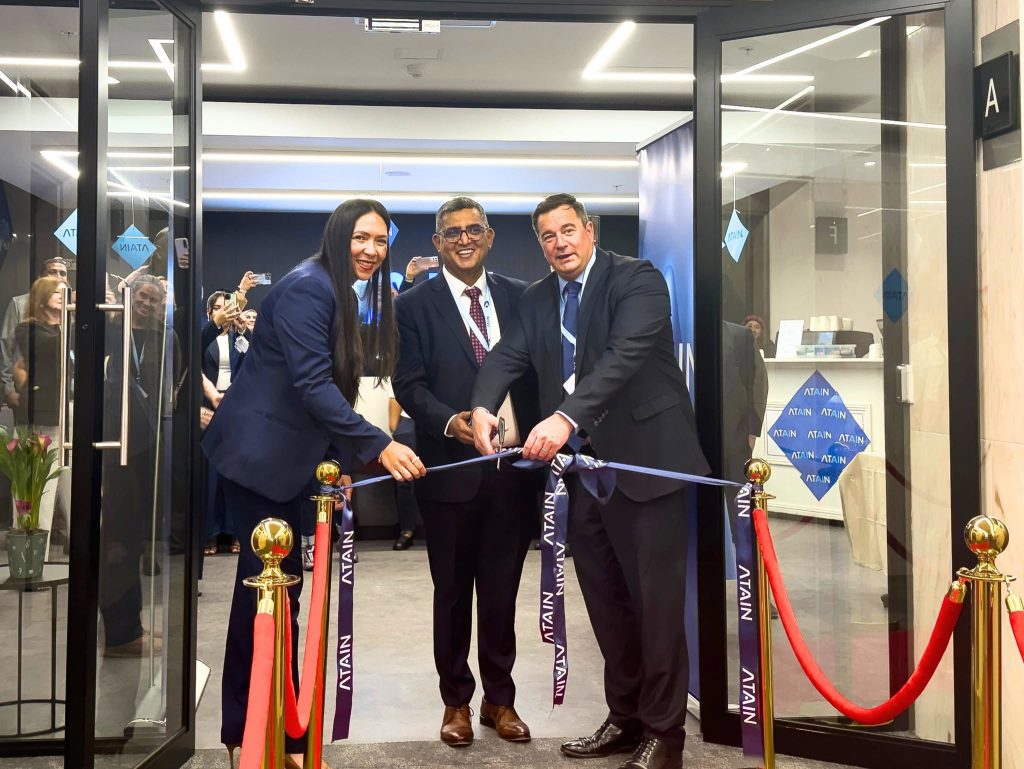
Deputy Minister of Trade, Industry and Competition John Steenhuisen has welcomed the opening of business process management company Atain’s new flagship global business service (GBS) centre in Cape Town as a major vote of confidence in South Africa and its potential to become an increasingly important player in the global business services sector.

Speaking during the ribbon cutting on Friday, Steenhuisen welcomed the expansion of Atain’s workforce to about 2,150 employees, backed by a R70 million investment in the latest phase of growth, bringing the company’s total investment in the country to R702 million.

“Atain’s investment is what sustained investor confidence looks like. It is a clear endorsement of South Africa as a destination of choice for global business services, and we welcome it wholeheartedly,” he said.

ALSO READ: Mpumalanga MEC Thomo confirms departments’ increased contracts to women owned enterprises

Atain specialises in artificial intelligence-driven services and digital technology platforms, and has rapidly expanded its presence in South Africa since launching with just 50 employees in 2022.

Steenhuisen said the company’s growth represented more than the expansion of a single business, arguing that it demonstrated the potential of the GBS industry to create employment, develop skills and provide opportunities for young South Africans.

“This is a proud moment not only for Atain, but for South Africa’s Global Business Services sector, for the City of Cape Town, and for the thousands of South Africans whose careers and livelihoods are being built,” Steenhuisen said.

According to Atain Chief Human Resources Officer Amir Bharwani, the opening of the new facility marked another milestone in the company’s global expansion strategy, with South Africa occupying an increasingly important position in its operations.

“South Africa is a strategic hub for Atain and an important part of our global growth story. We have built a strong presence in Cape Town on the strength of exceptional local talent, and we are committed to scaling our investment further. Our focus is to create meaningful careers, build future-ready skills, and deliver exceptional outcomes for our clients globally,” Bharwani said.

Steenhuisen said Atain’s investment was particularly significant because it combined business growth with skills development and employment opportunities for young people.

The company’s Atain Academy focuses on impact sourcing and recruits young people from disadvantaged communities, with more than 350 learners already having received training through the programme.

The company also provides employees with quality benefits including incentive schemes, medical cover, funeral benefits and door-to-door transport.

Steenhuisen said such initiatives demonstrated the importance of placing people at the centre of economic growth.

The deputy minister said South Africa was well positioned to take advantage of growing global demand for outsourced and digitally enabled business services, including through call centres and back end business support, despite rapid technological changes driven by artificial intelligence and automation.

ALSO READ: NSFAS releases R222.7m for 2,927 Funza Lushaka students, more claims outstanding 

South Africa’s time zone, multilingual population, skilled workforce and established GBS ecosystem provided significant advantages, he said.

“Cape Town remains the heart of the GBS sector, but there are huge opportunities for greater expansion across the rest of the country, particularly into provinces where there are deep pools of untapped talent that can be leveraged to grow businesses within the sector,” Steenhuisen said.

He said the government would continue working with investors to identify and remove obstacles preventing the sector from expanding.

“We are here to listen and to use our position within government to co-ordinate other relevant departments, to understand the obstacles and barriers, and to work together to move them out of the way so that we can open up a superhighway of growth, development and opportunity,” Steenhuisen said.

He also credited InvestSA and the South African High Commission in India for helping secure Atain’s investment through sustained engagement with the company.

“InvestSA, working in close partnership with the South African High Commission, India, actively pursued and secured this investment through sustained investment promotion engagements with Atain,” Steenhuisen said.

Steenhuisen said the government remained committed to supporting the sector as companies increasingly adopted business models combining artificial intelligence with human expertise.

INSIDE EDUCATION

The post Steenhuisen welcomes new global business service centre as vote of confidence in SA potential appeared first on Inside Education..

Uncategorized

Cassim calls for student safety compact as universities confront risks beyond campus gates

By Lebone Rodah Mosima 

Deputy Minister of Higher Education and Training Yusuf Cassim has called for a practical student safety compact that sets clear responsibilities and measurable commitments across institutions, municipalities, law enforcement and accommodation providers.

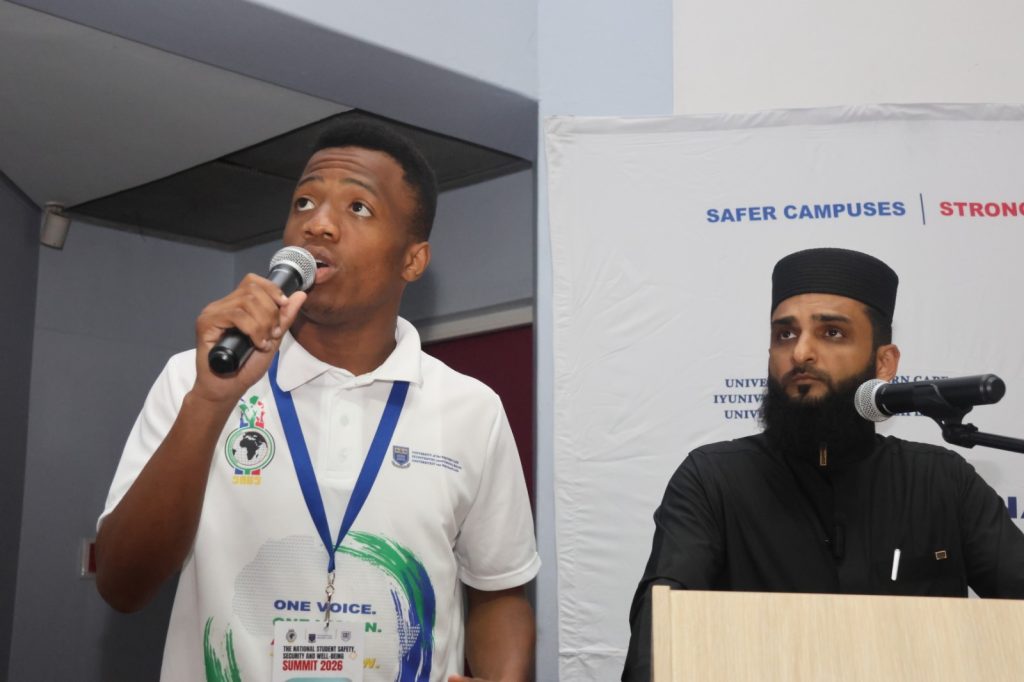
Addressing the National Student Safety, Security and Well-Being Summit 2026 at the University of the Western Cape on Friday, Cassim said student safety was not simply a policy issue but a human obligation.

“When a parent sends a child to university, they are entrusting us with their son or daughter. That trust comes with a responsibility. Not simply to have policies,” Cassim said.

“Not simply to hold meetings. Not simply to receive reports. Our responsibility is to make sure they are safe. And when a system is not working, our responsibility is not to defend it. It is to change it.”

He said that no parent should be afraid to send their daughter or son to university because they fear that they may not return home safely.

He said just days ago, Cape Town once again walked in remembrance of Uyinene Mrwetyana.

He added that nearly seven years after the 19-year-old UCT student was raped and murdered in Claremont, the Uyinene Mrwetyana Foundation and UCT retraced the route she once travelled between Roscommon House, where she lived as a student, and the university where she was pursuing her education.

“Think about that for a moment. A young woman left her residence as a student pursuing an education and a future. The route between where she lived and the world she was trying to enter became a route of tragedy,” he said.

He said remembrance could not be the destination and questioned whether anything had changed since Uyinene’s death.

He said if Uyinene’s name has taught South Africans anything, it is that we cannot measure student safety only by what happens inside the university gate.

“The campus gate cannot become the boundary of our responsibility,” he said.

“A student does not stop being a student when they leave the campus gate.”

He added that students remain students when they walk to their residences, wait for taxis, walk to shops, cross municipal roads, enter private residences and return home at night.

Cassim said responsibility for student safety could not simply rest with universities and had to extend more broadly.

“The responsibility is much broader,” he said.

“Student safety is a shared responsibility, requiring universities, municipalities, law enforcement, accommodation providers, transport operators and students themselves to work together.”

According to the latest SAPS crime statistics for January to March 2026, he said 5,181 people were murdered nationally, an average of 58 lives lost every day.

He said the Western Cape recorded a murder ratio of 12.8 per 100,000 people, the second-highest provincial risk in the country.

“These may not be student-specific figures and we should not pretend that they are. But they tell us something important about the environment in which our students live, travel and study,” he said.

“These numbers tell us something uncomfortable: the environment in which our students live is not safe enough.”

He said that Cape Town is an example of what is possible when people, technology, intelligence and partnerships are brought together.

He said the City’s approach includes drones and other “eye-in-the-sky” capabilities, CCTV, automated licence-plate recognition, body-worn cameras, gunshot-detection technology, canine units and digitally enabled policing.

“But let me be clear: this summit is not about celebrating one city’s model. It is about asking what works,” he said.

“But where systems are failing students, we must be equally prepared to say so.”

“We cannot become more committed to protecting systems than protecting students.”

He said that the measure of success cannot be how many cameras are installed, how many policies are written, or how many meetings are held, but whether the student is safer.

“Technology alone, however, will never be enough. We need eyes in the sky, but also eyes on the ground,” he said.

“We need technology that identifies risk, people who can respond to that risk, and systems that ensure the response actually reaches the student.”

He said accommodation must be viewed not simply as a funding or housing issue, but as an essential component of the student’s educational experience and wellbeing.

“Where private landlords and accommodation agents participate in student housing, they must recognise that they are not simply providing a commercial service,” he said.

“They are providing the environment in which young people live and study, and they must uphold the applicable safety and accommodation standards.”

He said that student accommodation must be structurally sound, have appropriate access control, secure doors and windows, adequate lighting, meet fire-safety requirements and have safe electrical and gas installations.

He also said emergency procedures must exist, common areas must be maintained, students must know who to contact in an emergency, and safety concerns raised by students must be taken seriously and acted upon.

“These are not luxury standards or unreasonable expectations. They are part of what it means to provide a safe environment in which a student can live and learn,” he said.

In memory of Uyinene, he said it would be easy to commemorate her once a year, lay flowers, hold a walk, make speeches and then return to business as usual.

However, he said, the purpose of remembrance must ultimately be action.

“So today I want to propose that we begin moving towards a different national conception of student safety,” he said.

“Not a system in which every institution protects only its own piece. But a system in which the pieces connect.”

INSIDE EDUCATION

The post Cassim calls for student safety compact as universities confront risks beyond campus gates appeared first on Inside Education..

CATHSSETA targets graduate unemployment through proposed McDonald’s programme
Uncategorized

CATHSSETA targets graduate unemployment through proposed McDonald’s programme

By Charmaine Ndlela 

The Culture, Arts, Tourism, Hospitality and Sport Sector Education and Training Authority (CATHSSETA) wants to explore a graduate programme with McDonald’s South Africa that could provide employment pathways for young people with degrees and diplomas.

CATHSSETA CEO Marks Thibela told Inside Education that the proposed programme could potentially take in graduates with qualifications in hospitality and place them in areas including accounting, finance, human resources and law.

He said the programme could include graduates who already hold degrees and diplomas, including qualifications in hospitality, with participants being placed after completing the programme.

“Those who have degrees and diplomas in hospitality, we put them into a programme, then once they complete it, they get placed,” he said.

“Then they will be placed at the head office of McDonald’s, not necessarily at the outlets. That is the beauty of this programme, and we are so excited about it.”

Thibela said CATHSSETA wanted to replicate the employment-linked model with other employers and had engaged with major players in the fast-food sector, including KFC, Nando’s and Burger King.

He said the intention was to encourage employers to participate in skills programmes while committing to absorbing at least some of the young people who complete their training.

“We want an employer who’s honest, who’s coming in and says if we train these young people, I can absorb them, then we will work with you,” Thibela said.

He said employers could also co-fund initiatives with SETAs to increase the number of young people benefiting from employment-linked training.

Higher Education and Training Minister Buti Manamela at the learnership programme launch. (Photo: Eddie Mtsweni)

The proposal comes as CATHSSETA seeks to shift the focus of skills development programmes from simply counting how many young people have been trained to measuring how many ultimately enter employment.

Thibela said the authority was considering using surplus funds to support graduate internship programmes, but stressed that employers would need to demonstrate a commitment to absorbing young people after training.

“Beyond the numbers, can we really proudly say those people have been employed? If an employer works with us, they must commit to absorbing one or two of them,” he said.

In his address at the 2nd Cohort McDonald’s/CATHSSETA Learnership Programme Launch at McDonald’s South Africa head office in Sandton, Thibela said SETAs had become accustomed over the years to measuring their success through the number of beneficiaries placed in programmes.

He added that training thousands of young people without creating pathways into employment would do little to address South Africa’s unemployment crisis.

“It can’t be just hundreds and thousands of young people that graduate and at the end, zero absorption, because that doesn’t really help the problem of unemployment in this country,” Thibela said.

The proposed graduate programme would build on the existing partnership between CATHSSETA and McDonald’s. Thibela said the second cohort had been expanded to 2,370 learners.

He said CATHSSETA had committed R89 million to the latest programme, compared with R44 million committed in 2024.

Thibela said the increased investment followed lessons learnt from the first cohort, with the authority reviewing factors that contributed to learner attrition.

He identified stipends and the recruitment process among the issues that had been examined.

Thibela said CATHSSETA had also partnered with Harambee to strengthen recruitment and reach young people in rural areas.

“It would be great if out of the 2,300, we talk about 50% plus coming from rural areas and people with disabilities,” he said.

The learnership leads to a National Certificate in Fast Food Services and combines classroom-based education with practical workplace experience.

Thibela also pointed to the wider socioeconomic impact of youth employment, particularly in rural communities.

He said when one young person secures employment, the benefits can extend to family members who depend on that income.

Thibela said CATHSSETA had initially been uncertain whether the programme would progress to a second phase, but the outcomes of the first cohort had demonstrated its potential.

“We never thought we would reach phase two, and here we are,” he said.

“We are going to look for a partner who will help us absorb whatever number of learners that can make a difference. And to us, it is sending a message out there that SETAs are able to work with employers and create sustainable employment. We are not only number crunching,” Thibela said.

McDonald’s chief people officer, Dr Mamello Masia. (Photo:Eddie Mtsweni)

McDonald’s chief people officer, Dr Mamello Masia, said the programme provides learners with an opportunity to gain both an accredited qualification and practical experience.

Learners spend about 30% of their time in classrooms and 70% gaining hands-on experience in McDonald’s restaurants, according to Masia.

“The qualification is really going to be halfway through this programme, or rather the journey. It is the workplace experience that completes it, and turns it into a career,” Masia said.

She said the private sector had an important role to play in creating pathways between education and employment, particularly as South Africa continues to face high youth unemployment.

According to the latest Statistics South Africa figures, the country’s official unemployment rate stood at 33.6% in the second quarter of 2026, while unemployment among the broader youth population aged 15 to 34 reached 47.4%.

Masia also cited an unemployment rate of 60.9% among young people aged 15 to 24, a figure recorded by Stats SA in the first quarter of 2026.

The latest second-quarter figures showed that 36.4% of the approximately 10.4 million young people aged 15 to 24 were not in employment, education or training, equivalent to about 3.8 million people.

“It is not enough to create opportunities. We must equip young people with skills, experience and support they need to access sustainable employment,” Masia said.

The first cohort of the McDonald’s-CATHSSETA programme has already produced employment outcomes. McDonald’s said in October 2025 that, of the 1,400 learners trained, 476 had been permanently absorbed into the company.

The company also reported that more than 75% of those no longer in the programme were employed full-time in the industry, while 1.5% had moved into self-employment.

For the 2,370 learners entering the current programme, Masia urged them to make full use of the opportunity, emphasising that workplace experience would be critical to turning their qualifications into careers.

“It is important to make the best of it. I always say there is a big eye watching. Just learn right now, money will follow you,” Masia said.

INSIDE EDUCATION

The post CATHSSETA targets graduate unemployment through proposed McDonald’s programme appeared first on Inside Education..
Uncategorized

Manamela urges employers to open doors as 2,370 youth begin hospitality learnership

By Charmaine Ndlela 

Higher Education and Training Minister Buti Manamela has called on employers in the hospitality and related industries to open their workplaces and to invest in learnerships, saying partnerships with businesses are critical to closing South Africa’s skills and unemployment gap.

Manamela made the call during the 2nd Cohort Learnership Programme Launch of the joint McDonald’s South Africa and Culture, Arts, Tourism, Hospitality and Sport Sector Education and Training Authority (CATHSSETA) Hospitality Learnership Programme on Friday, which has enrolled 2,370 young people in a 12-month programme leading to a National Certificate: Fast Food Services at NQF Level 3.

The programme, which was launched with 1,300 learners in 2024, aims to equip young people with practical skills and workplace experience in the hospitality sector.

Manamela said the success of programmes such as the McDonald’s learnership depended on employers being willing to provide young people with opportunities to gain practical experience.

He said young people should be trained according to the industries in which they are placed, whether hospitality, tourism, engineering or other sectors.

The minister said the model being implemented through the programme was important because it combines classroom learning with workplace exposure.

Under the programme, 30% of the training will take place in the classroom, while 70% will be spent in the workplace, allowing learners to gain hands-on experience and become familiar with real working environments.

Manamela said this approach was essential to addressing the mismatch between the skills young people acquire through education and the skills required by employers.

“The reason why we’re doing this, why we’re driving this, is because of the mismatch that exists between the skills that we have been trained for and the new level of opportunities, but also job preparedness,” he said.

He said that the value of a learnership should not be measured only by whether a learner receives a certificate, but also by whether they leave the programme with practical competence that can be used in the workplace.

“The skills programme is not good enough only based on the certificate. It’s not what CATHSSETA is investing. To pull it through, we will need the learners and the learnership to ensure that they go up to completion,” Manamela said.

He urged companies in the hospitality, tourism and retail sectors to come together with government and training authorities to expand such initiatives.

“The money which we gave to the CEO of CATHSSETA, and the CEO of McDonald’s, to the Chief People Officer, means: how do we get the rest of the people who are in retail, hospitality and so on and so forth around the table to look at how we can expand this at scale?”

The call comes as government seeks to strengthen the role of workplaces in technical and vocational education and training and the broader skills development system.

Manamela said government could not achieve the country’s skills revolution on its own and needed the private sector, trade unions, NGOs and communities to work together.

“We cannot do that alone as government. We cannot do that alone as NGOs, as NPOs,” he said.

“We can only do that if the trade unions are on board and support opening of workplaces and the placement of learners and do not see this level as a threat. We can only do that if workplaces are on board and will continue to open.”

He also highlighted the potential of Technical and Vocational Education and Training (TVET) colleges, saying government has invested significant resources into developing institutions equipped with workshops and simulated work environments.

According to Manamela, there are now 52 centres of specialisation, with government aiming to expand these facilities and align them with specific skills requirements.

He said this investment needed to be matched by greater involvement from industry.

“The TVET sector is at the heart of our skills revolution. That investment has to be complemented by collective investment which will be done by everyone,” Manamela said.

The McDonald’s-CATHSSETA programme is also intended to provide learners with financial support while they undergo training.

The monthly stipend has increased from R2,500 to R3,500, with McDonald’s providing an additional R500 top-up, while transport support is also being provided to learners.

Manamela urged all 2,370 learners who began the 12-month programme to remain committed until completion.

He acknowledged that learnership programmes can experience dropouts, but said learners should take advantage of the opportunity presented to them.

“I know we have experienced some of these good programmes, where we start with a specific number of students, and then some of them drop out,” he said.

Manamela said completing the programme could place learners in a stronger position when seeking employment, particularly as McDonald’s itself could potentially draw future employees from the programme.

He pointed to other initiatives, including a programme through the Cellphone Repair Skills Programme, where about 326 young people were trained in cellphone and electronic repairs.

Of those, 25 young people were provided with containers to establish businesses in townships, offering repairs for cellphones, laptops and other electronic devices.

Manamela said the programme demonstrated the potential of skills training to move beyond certificates and into entrepreneurship and job creation.

He also highlighted the 20,000-internship initiative launched by Services SETA, describing it as another example of partnerships between government and business to expand opportunities for young people.

He said the scale of these programmes showed that SETA investment was increasingly being directed towards stipends, learnerships, internships and other interventions aligned with government’s skills revolution.

Manamela said the next step was to ensure that the initiatives were expanded across industries.

“This is not just an isolated programme. This is a programme which wants to expand,” he said.

“This is a programme which is resonating with the President’s skills revolution. And this is a programme which requires partnership, which requires employers to open their doors.”

He said the ultimate goal was to build a system where young people could trust that qualifications and training programmes would provide meaningful value and lead to opportunities.

“Little by little, with all of the small partnerships that we have, I believe that we’ll be able to grow this into a system where students believe that the certificates that we get from our TVET college, our university, or from our SETAs, or from any training programme, are worth the effort that is put in. And that’s what we are determined to do,” Manamela said.

Out of 1,400 learners trained on the first cohort, over 400 were permanently absorbed into McDonald’s South Africa, with another 75% now employed full-time elsewhere in the hospitality sector.

INSIDE EDUCATION

The post Manamela urges employers to open doors as 2,370 youth begin hospitality learnership appeared first on Inside Education..

Deputy Minister Cassim delivers the keynote address at the SAUS National Student and Well-being Summit 2026
Uncategorized

Deputy Minister Cassim delivers the keynote address at the SAUS National Student and Well-being Summit 2026

By Lebone Rodah Mosima 

Deputy Minister of Higher Education and Training Yusuf Cassim has called for the development of a practical national student safety compact, with clear responsibilities for institutions, municipalities, law enforcement, accommodation providers and student leadership, measurable commitments and a mechanism for reporting progress.

Addressing the National Student Safety, Security and Well-Being Summit 2026 at the University of the Western Cape on Friday, Cassim said student safety is not simply a policy issue but a human obligation.

“When a parent sends a child to university, they are entrusting us with their son or daughter. That trust comes with a responsibility. Not simply to have policies,” Cassim said.

“Not simply to hold meetings. Not simply to receive reports. Our responsibility is to make sure they are safe. And when a system is not working, our responsibility is not to defend it. It is to change it.” 

He also urged that no parent should be afraid to send their daughter or son to university because they fear that they may not return home safely.

He said just days ago, this city once again walked in remembrance of Uyinene Mrwetyana. 

He added that nearly seven years after the 19-year-old UCT student was raped and murdered in Claremont, the Uyinene Mrwetyana Foundation and UCT retraced the route she once travelled between Roscommon House, where she lived as a student, and the university where she was pursuing her education.

“Think about that for a moment. A young woman left her residence as a student pursuing an education and a future. The route between where she lived and the world she was trying to enter became a route of tragedy,” he said. 

He said remembrance could not be the destination and questioned whether anything had changed since Uyinene’s death.

He said if Uyinene’s name has taught them anything, it is that they cannot measure student safety only by what happens inside the university gate.

“The campus gate cannot become the boundary of our responsibility,” he said.

“A student does not stop being a student when they leave the campus gate.”

He added that students remain their students when they walk to the residence, wait for a taxi, walk to a shop, cross a municipal road, enter a private residence and return home at night.

However he questioned who is responsible for student safety?’, and the answer cannot simply be, ‘the university’. 

“The responsibility is much broader,” he said.

“Student safety is a shared responsibility, requiring universities, municipalities, law enforcement, accommodation providers, transport operators and students themselves to work together.” 

According to the latest SAPS crime statistics for January to March 2026, he said 5,181 people were murdered nationally, an average of 58 lives lost every day.

He said the Western Cape recorded a murder ratio of 12.8 per 100,000 people, the second-highest provincial risk in the country.

“These may not be student-specific figures and we should not pretend that they are. But they tell us something important about the environment in which our students live, travel and study,” he said. 

“These numbers tell us something uncomfortable: the environment in which our students live is not safe enough.”

He outlined that Cape Town gives one example of what is possible when people, technology, intelligence and partnerships are brought together. 

He said the City’s approach includes drones and other ‘eye-in-the-sky’ capabilities, CCTV, automated licence-plate recognition, body-worn cameras, gunshot-detection technology, canine units and digitally enabled policing.

“But let me be clear: this Summit is not about celebrating one city’s model. It is about asking what works,” he said. 

“But where systems are failing students, we must be equally prepared to say so.”

He said: “We cannot become more committed to protecting systems than protecting students.”

He noted that the measure of success cannot be how many cameras are installed, how many policies are written or how many meetings are held, but whether the student is safer.

“Technology alone, however, will never be enough. We need eyes in the sky, but also eyes on the ground,” he said.

“We need technology that identifies risk, people who can respond to that risk, and systems that ensure the response actually reaches the student.”

He said student accommodation, student wellbeing and student safety are responsibilities that he commits to execute with excellence and precision.

He said accommodation must be viewed not simply as a funding or housing issue, but as an essential component of the student’s educational experience and wellbeing.

“Where private landlords and accommodation agents participate in student housing, they must recognise that they are not simply providing a commercial service,” he said.

“They are providing the environment in which young people live and study, and they must uphold the applicable safety and accommodation standards.”

He stressed that student accommodation must be structurally sound, have appropriate access control, secure doors and windows, adequate lighting, meet fire-safety requirements and have safe electrical and gas installations.

He also said emergency procedures must exist, common areas must be maintained, students must know who to contact in an emergency, and safety concerns raised by students must be taken seriously and acted upon.

“These are not luxury standards or unreasonable expectations. They are part of what it means to provide a safe environment in which a student can live and learn,” he said.

“That is what we did at Western TVET College, where more than 60 students were displaced, and at the Central University of Technology’s Welkom Campus, where 1,392 students were affected by accommodation allowance challenges and faced the prospect of eviction.”

He added that at CUT, there were even administrative questions about the convenience of the proposed date.

“My response was simple: Make it happen,” he said.

“Because when students need government, government must be there — not when it is convenient, but when it matters.”

However, he said these interventions taught an important lesson: resolving an accommodation payment problem is not the same as fulfilling our responsibility for the student’s wellbeing and safety.

“We must therefore ask not only, ‘Was the student funded?’ We must also ask: ‘Where is the student living, and is it safe?’ That must become part of our national standard,” he said. 

“This is where I believe this Summit can take the conversation even further: from safe campuses to safe student precincts.” 

He added that a student should be able to move safely from the lecture hall, through the campus gate, along the street, to public transport and into their residence, with universities, municipalities, law enforcement and accommodation providers working together.

He stressed that there should be no safety vacuum simply because a student has crossed an institutional boundary.

“That is what a genuine continuum of student safety must mean,” he said.

He added that students know where the unsafe pathways are, and know which residences have broken gates, which transport routes make them uncomfortable, where harassment occurs and which reporting mechanisms work – and which exist only on paper.

He added that some of the most important safety intelligence in this country is therefore walking around our campuses every day.

“Students are not people we consult after decisions have been made. They are the people who live with the consequences of those decisions,” he said. 

“And I believe student participation must become a formal part of institutional and municipal safety planning – not something we turn to only after an incident has occurred. Students should help identify risks, shape interventions and assess whether those interventions are actually working.” 

In memory of Uyinene, he said it would be easy to commemorate her once a year, lay flowers, hold a walk, make speeches and then return to business as usual.

However, he said, the purpose of remembrance must ultimately be action.

“So today I want to propose that we begin moving towards a different national conception of student safety,” he said. 

“Not a system in which every institution protects only its own piece. But a system in which the pieces connect.”

He expressed that the university knows its students, that the municipality knows the streets, SAPS knows the crime patterns and accommodation providers know the residences.

He added that private security knows the immediate environment, technology can provide intelligence and student leaders know the lived reality, adding: “We must bring these capabilities together.”

“That is what a genuine student safety compact should mean,” he said.

“If we meet again next year, we should not only be able to say that we spoke about student safety. We should be able to show what changed.”

Because ultimately, he said this is not about how impressive policies sound, or how many meetings we hold, or about how many cameras we install, or whether we can produce a beautiful presentation on student safety.

He added that the test is much simpler, and that when a parent in Limpopo, KwaZulu-Natal, the Eastern Cape, Gauteng, the Free State, the North West or the Western Cape puts their child on a bus and sends them to university, can that parent say: ‘My child will be safe.’ 

“That is the test. And when a young woman leaves her residence to attend a lecture, we must want her to return to that residence safely. When a young man walks home after studying late, we must want him to arrive safely,” he said.

“When a student reports a threat, we must want someone to respond. When a student enters accommodation, we must want that accommodation to be safe.”

He called for more than resolutions, and said: “Let us leave with commitments we can measure, partnerships we can activate and interventions we can see.”

“Let us be willing to confront what is not working. Let us be willing to change direction when we need to. And let us never become so comfortable with a broken system that we stop demanding better,” he said. 

“Because every student deserves to know that when they leave home in pursuit of knowledge, opportunity and a better life, there is a system around them that will do everything reasonably possible to bring them home safely.”

INSIDE METRO

The post Deputy Minister Cassim delivers the keynote address at the SAUS National Student and Well-being Summit 2026 appeared first on Inside Education..

Uncategorized

Manamela tells reinstated NSFAS board that funding crisis remains despite court ruling

Staff Reporter

Higher Education and Training Minister Buti Manamela has told the reinstated National Student Financial Aid Scheme (NSFAS) board that the court ruling that ended the scheme’s administration has not resolved the financial, governance and operational problems that prompted his intervention.

Manamela met board members in Gauteng on Thursday, less than two weeks after the Gauteng High Court in Pretoria suspended the appointment of NSFAS administrator Professor Hlengani Mathebula and ordered the remaining seven board members to resume control of the scheme.

The meeting comes as NSFAS grapples with billions of rand owed to universities, unresolved student funding matters, serious audit deficiencies and preparations for the 2027 academic year.

“There are significant questions concerning the financial position of NSFAS and amounts owing to institutions. There are also matters concerning student funding decisions, operational systems, audit remediation and the preparations that must already be underway for the 2027 academic year,” Manamela told the board.

Parliament’s Portfolio Committee on Higher Education and Training was told last week that NSFAS had paid 61.5% of university allocations and 59.2% of TVET college allocations, with about R10.49 billion in 2026 tuition still owed to universities.

The financial pressure forms part of a wider crisis at the student funding body, which Manamela placed under administration on 4 May after dissolving its board and appointing Mathebula as administrator.

The department said at the time that the intervention followed governance instability, operational failures, financial weaknesses, unresolved appeals, ICT deficiencies, accommodation problems and accountability concerns.

But seven remaining board members challenged the decision in court.

On 14 August, Judge Etienne Labuschagne suspended Mathebula’s appointment pending the final determination of the board’s review application and directed the board members to resume managing and governing NSFAS.

The court raised concerns about the process followed in making the appointment and Mathebula’s suitability, including criticism of his conduct while previously employed at the South African Revenue Service. The main review application — Part B — is expected to be dealt with on an expedited basis.

Manamela made clear on Thursday that he did not intend to use the meeting to re-litigate that dispute.

“Let me state clearly that the intention is not to revisit the litigation today. The pending proceedings will follow their appropriate legal course. Today’s discussion is about the functioning of NSFAS in the period immediately ahead.”

He said the court’s intervention had altered who governed NSFAS in the interim, but had not resolved the problems facing the institution.

“The concerns identified through these processes cannot simply be wished away. The interim court order has changed the interim governance arrangements, but it does not make the underlying institutional challenges disappear. Our task therefore is not to pretend that nothing happened but rather to ensure that the systems, controls and governance arrangements of NSFAS are strengthened.”

In March, the Auditor-General issued NSFAS with a disclaimer of opinion for its 2024/25 financial statements — the most serious audit outcome — after finding deficiencies in its accounting records and supporting evidence. Nine material irregularities had been identified, including four that were newly reported.

Scrutiny continued this month when Public Protector Kholeka Gcaleka reported systemic deficiencies in NSFAS’s governance, administration, funding coordination and oversight.

The Public Protector’s investigation described persistent governance instability, administrative weaknesses and inadequate systems. It also referred to findings from a Special Investigating Unit investigation showing that more than 40,000 students at 76 higher education institutions had been improperly funded to an estimated value of R5.1 billion.

The investigation also highlighted delays in NSFAS’s Close-Out Project, which was established to reconcile payments and financial records between the scheme and higher education institutions. Those unresolved reconciliations have affected students whose qualifications have in some cases been withheld because accounts remain outstanding.

The reinstated NSFAS board has said the Public Protector’s investigation was initiated in 2021 and largely dealt with a period predating its appointment. It has nevertheless undertaken to implement the recommendations and said it accepted responsibility for addressing the systemic weaknesses identified.

Before the court ruling, Mathebula had submitted a stabilisation plan to Manamela setting out proposed interventions intended to strengthen NSFAS’s governance, financial management and operations.

Manamela told board members that the circumstances which led him to intervene had developed over a prolonged period.

“The challenges that led to my intervention to place NSFAS under administration did not arise overnight. They resulted from serious institutional, governance, financial and operational challenges that developed over time.”

He said NSFAS now needed to maintain institutional continuity while dealing with payments to institutions, student funding administration, audit remediation, operational systems and planning for next year.

“We do not need to resolve every issue in this room today. What we do need to achieve is a clear understanding of the current position and a credible way forward.”

INSIDE EDUCATION

The post Manamela tells reinstated NSFAS board that funding crisis remains despite court ruling appeared first on Inside Education..