The U20 national team, Amajita, moved closer to securing a place in the COSAFA U20 semi-finals after beating Angola 2-0 in their second Group B match in Mozambique on Monday.
The defending champions continued the strong start to their title defence following a 3-0 victory over Lesotho in their opening match. The latest win takes Amajita to six points from two matches.
Captain Lazola Maku opened the scoring in the 13th minute after getting on the end of a low cross from Steven Mendes before firing into the top-right corner to give South Africa a 1-0 lead.
Captain Lazola Maku was again awarded man of the match. (Photo supplied)
Mendes then turned goalscorer before half-time, converting from an Emile Witbooi delivery to double South Africa’s advantage.
The goal was Mendes’ third of the tournament after he scored twice in the opening victory over Lesotho.
South Africa took their two-goal advantage into the break and managed the second half effectively.
Angola struggled to create clear opportunities as Amajita maintained their clean sheet and saw out the match for another important victory.
The result leaves South Africa in a strong position in Group B as they continue their bid to defend their regional title.
Amajita will play their final Group B match against Eswatini on Wednesday at 12pm. The fixture will help determine the final group standings, with the three group winners and the best runner-up advancing to the semi-finals.
The COSAFA U20 tournament is also serving as a qualifier for the 2027 CAF U20 Africa Cup of Nations in Ghana, with the two finalists earning qualification for the continental tournament.
A donation of 500 pairs of school shoes to learners in Mpumalanga is aimed at removing basic barriers to school attendance and participation, the provincial education department said on Monday.
The Mpumalanga Department of Education, in partnership with ABSA Bank, handed over the shoes to learners at Kwena Combined School in Emakhazeni Local Municipality.
The department said the donation formed part of ABSA’s Community Development and Corporate Social Investment initiative, which focuses on supporting learners from disadvantaged backgrounds.
“When a learner comes to school without proper shoes, especially during winter, their ability to concentrate and participate fully is compromised,” the department said.
“This intervention will ensure that 500 learners can walk to school with dignity and be fully present in the classroom. It directly supports our efforts to improve attendance and retention.”
The department said many learners at Kwena Combined School travel long distances to school each day and that the new shoes would make a significant difference.
The school’s principal, on behalf of the School Governing Body and parents, thanked the department and ABSA, saying partnerships of this nature gave hope to schools and showed learners that their education mattered to the broader community.
ABSA representatives also reiterated the bank’s commitment to education as part of its community development work.
The bank said education remained a key tool in breaking the cycle of poverty and that it would continue working with government to support vulnerable learners across the province.
The department said the initiative was aligned with its Rhandza Xikolo Xa Wena, or Love Your School, campaign, a flagship programme led by the Premier which calls on business, traditional leaders, faith-based organisations, alumni and community members to support schools.
The campaign is based on the principle of Babize Bonke, which encourages collective responsibility and volunteerism in addressing challenges faced by schools.
The department said it would continue seeking partnerships with the private sector and other stakeholders to address learner needs, including infrastructure, learning materials, support and wellbeing.
“As government, we cannot do it alone. The partnership with ABSA today demonstrates the value of collective action in addressing barriers that may affect learners’ participation in education,” the department said.
“Every contribution towards a learner is an investment in the future of Mpumalanga and South Africa.”
The department thanked ABSA for the donation and called on other private-sector partners to support schools through the Rhandza Xikolo Xa Wena campaign.
Women’s representation in traditional leadership structures does not always translate into meaningful decision-making power, according to new research by Committee Coordinator for the Health Portfolio Committee at the KwaZulu-Natal Legislature, Nomakhwezi Ntshele.
Ntshele said women’s representation in leadership remains a contested issue in KwaZulu-Natal, with questions around whether their presence translates into meaningful participation and authority.
Ntshele examined these challenges in her Master of Commerce in Leadership Studies dissertation at the University of KwaZulu-Natal (UKZN).
“My interest in this study arose from a concern about the gap between South Africa’s constitutional commitment to gender equality and the lived experiences of women within traditional leadership,” Ntshele told Inside Education.
“Traditional leadership remains an important part of community governance in KwaZulu-Natal, particularly in matters relating to customary governance, succession, community development and engagement with government. I wanted to understand why, despite formal recognition of equality, women continue to experience barriers to meaningful participation and authority.”
Her research focused on whether women’s representation in traditional structures translated into substantive participation, including their ability to influence agendas, contribute to consequential decisions and exercise authority in areas such as land, succession and community governance.
“The distinction between presence and influence was one of the most significant findings of my research,” she said.
“A woman may be formally included within a traditional council or leadership structure, but this does not necessarily mean that she has an equal opportunity to shape decisions or influence outcomes.”
She said women were often more closely associated with welfare and community support responsibilities, while areas such as land administration, succession, resource allocation and strategic governance remained more strongly male-dominated.
“Women may therefore contribute substantially to their communities while having limited influence over the decisions that determine the direction of those communities,” she said.
She said the gap between representation and influence could also be seen in women’s access to information, opportunities to participate in deliberations, informal networks of influence and whether their recommendations were ultimately taken forward.
“This is why my research distinguishes between numerical representation and substantive participation. Meaningful inclusion requires women not only to be present but to have a voice that can shape decisions,” Ntshele said.
The study identified several interconnected barriers to women’s participation, including patrilineal succession, institutional practices, informal gatekeeping and domestic responsibilities.
Ntshele said patrilineal succession required particular attention because it could determine who was considered legitimately entitled to traditional authority.
“Where succession and authority are strongly associated with male lineage, women can encounter structural barriers before their leadership capabilities are even considered,” she said.
She added that informal gatekeeping could reinforce established patterns of male authority through networks, procedures and expectations.
Domestic responsibilities also placed additional demands on women seeking to participate in leadership.
“For me, the more fundamental issue is therefore the relationship between legitimacy and access to authority,” Ntshele said.
“Addressing this requires both institutional reform and changes in social attitudes.”
But Ntshele stressed that her research does not suggest that Zulu culture should be abandoned in the pursuit of gender equality.
“Rather, it shows that culture is dynamic and that cultural identity and gender equality can develop alongside one another,” she said.
She said traditional leadership could retain its cultural significance while examining practices that may unnecessarily restrict women’s participation.
“This can begin with constructive dialogue within traditional institutions and communities about how leadership is understood and exercised.”
She believes traditional leaders have an important role to play because of their cultural legitimacy and ability to influence how communities interpret and respond to change.
Ntshele also called for institutional procedures to be reviewed to ensure that women have meaningful opportunities to participate in agenda-setting, committees, deliberations and consequential decisions.
Importantly, she said her research did not characterise Zulu culture as inherently or permanently oppressive towards women.
“Historical and contemporary experiences demonstrate that women have exercised different forms of social, political and community authority,” she said.
“The focus should therefore be on identifying practices that can evolve without diminishing cultural identity.”
The research also found that younger and more educated community members were more accepting of women in leadership roles, while progressive traditional leaders and visible examples of effective women leaders were helping to challenge perceptions that authority is inherently male.
Ntshele said cultural continuity did not have to mean preserving every historical practice.
“It can mean preserving what is valuable while allowing institutions to become more inclusive, responsive and representative of the communities they serve,” she said.
She said meaningful change would require more than policies on paper, with institutions and communities needing to create conditions in which women could exercise legitimate and independent authority.
Ntshele also highlighted mentorship, capacity building, community dialogue and the involvement of progressive traditional leaders and male allies as important elements in advancing women’s participation.
“Sustainable change requires more than policy on paper; it requires institutions and communities to create conditions in which women can exercise legitimate and independent authority,” she said.
The research has also shaped her understanding of leadership and the role she hopes to play beyond her academic achievement.
She said she wanted to use the knowledge gained through the research to contribute to conversations about inclusive leadership within traditional governance and the broader public sector.
Completing the Master’s degree while working was one of the most demanding parts of Ntshele’s academic journey.
She said there were periods of professional pressure, academic difficulty, disappointment and painful personal loss.
“The journey was not linear, and there were moments when I had to step back, regroup and find the strength to continue. Reaching graduation last week therefore carries a significance that extends beyond the academic qualification,” she said.
Ntshele credited her supervisor, Professor Bibi Chummun, for her patience, academic rigour, mentorship and belief in her abilities throughout the process.
Chummun congratulated Ntshele on the achievement and praised the relevance of her research.
“I congratulate Nomakhwezi on this significant achievement and commend her for producing research that is academically relevant while remaining closely connected to the realities of communities and leadership in KwaZulu-Natal,” Chummun said.
“I have no doubt that this milestone marks the beginning of an even greater contribution to scholarship and leadership practice.”
Ntshele dedicated the achievement to her mother.
“My mother’s love, sacrifices, prayers and unwavering belief sustained me through some of the most difficult moments of my journey,” she said.
She also paid tribute to the late community leader and politician Dr Ntuthuko Mahlaba, saying his belief in her potential and the opportunities he created had significantly influenced her professional and academic achievements.
Reflecting on the journey, Ntshele said the qualification had deepened her understanding of leadership as a responsibility grounded in inclusion, accountability and service.
“On a personal level, completing this degree has strengthened my understanding of leadership as responsibility, service and the creation of space for others to participate,” she said.
“I fell, I struggled, I grieved, I started again, and I finished. I am proud of the qualification, but even more grateful for the person I became through the process.”
Basic Education Director-General Mathanzima Mweli has dismissed claims of tension between him and Basic Education Minister Siviwe Gwarube, insisting that differences over the contested Foundation Phase textbook catalogue have been wrongly portrayed as a personal battle between the department’s two most senior officials.
Mweli has also rejected reports that he refused to undergo a lifestyle audit, saying he had in fact proposed that he, Gwarube and Deputy Minister Reginah Mhaule voluntarily undergo the audits as a demonstration of their commitment to ethical and accountable leadership.
Mweli’s comments came amid the controversy surrounding the Foundation Phase National Catalogue for Grades 1 to 3, which has since been endorsed for implementation by the Council of Education Ministers (CEM), paving the way for provinces to procure learning and teaching materials from it for the 2027 academic year.
The decision followed consideration of the catalogue and reviews into its development by the Council of Education Ministers (CEM), which endorsed implementation on Friday.
‘Not a personal decision‘
Mweli told Inside Education, before the catalogue was approved, that the decision to support implementation of the catalogue was not his personal position, but that of the Heads of Education Departments Committee (HEDCOM), which brings together senior national and provincial education officials.
He said portraying the dispute as one between himself and Gwarube overlooked the role of provinces, which hold the budgets and are responsible for purchasing textbooks.
“DBE doesn’t buy books. Books are bought by provinces,” he said.
“Who has the money to buy books? Where is the money?” Mweli asked.
Mweli, who chairs HEDCOM, said his role should not be confused with the collective position taken by the committee.
“I’m a member of HEDCOM but I’m not HEDCOM,” he said.
Asked whether the disagreement over the catalogue was therefore between HEDCOM and Gwarube rather than between himself and the minister, Mweli responded: “Correct. Correct. Yes.”
He also rejected suggestions of a personal falling-out with Gwarube.
“There is no shred of evidence of any fight between the two of us,” Mweli said, adding that he and the minister continued to communicate on other education matters.
Mweli said his own opinion on whether the catalogue should proceed was irrelevant because the position had been taken collectively.
“I have no view. My view is irrelevant. Because I don’t buy books,” he said.
“The view that is there is the view of HEDCOM.”
Lifestyle audit clarity
On Monday night, Mweli issued a statement rejecting “widespread media and public comment concerning my position on a lifestyle audit”. saying he had not refused to undergo such.
“That characterisation does not reflect my position. I support lifestyle audits in the public service, and I am willing to undergo one,” he said.
“In fact, I was the person who initially proposed to the Minister and Deputy Minister of Basic Education that the three of us voluntarily undergo lifestyle audits as a demonstration of our commitment to ethical and accountable leadership. We agreed to do so,” Mweli said.
He said he thereafter encouraged other senior managers, including deputy directors-general, to participate.
Mweli said he had also engaged the head of the Special Investigating Unit (SIU) to begin putting arrangements in place for the SIU to conduct the audits before they were publicly presented as an instruction from Gwarube to senior DBE managers.
He said his subsequent concerns were not about whether he should undergo an audit, but about how his audit would be conducted, including the handling of confidential and personal information.
“They concern the manner in which the particular process relating to me is to be conducted, including the treatment of confidential and personal information and the safeguards applicable to the process,” Mweli said.
He said lifestyle audits involved sensitive personal and financial information and should comply with the applicable public-service framework governing confidentiality, fairness, independence, due care and professionalism.
“My raising concerns about that process should not be portrayed as a refusal to account or to submit to legitimate scrutiny,” Mweli said.
He also rejected suggestions that his position on the audit raised questions about his integrity or responsibility for public funds.
“I reject that implication. My raising concerns about the manner in which the process is to be conducted does not alter my willingness to undergo the audit,” he said.
‘No public debate’
He said he would not publicly debate the details of the audit process because of its confidential nature.
“My focus remains on the responsibilities of my office, the work of the Department of Basic Education, and the interests of South Africa’s learners,” Mweli said.
On 19 September, the DBE announced that the 2026 Foundation Phase National Catalogue had been approved and endorsed and that provinces were empowered to use it immediately.
The department said procurement had already commenced.
According to the DBE, the decision followed a review process involving an Auditor-General of South Africa audit, an independent investigation and legal opinions from the department’s internal legal services and external Senior Counsel.
In a statement, the department said the reviews had confirmed the integrity of the process and found “NO FRAUD, NO FAVOURITISM, and therefore NO BASIS TO CANCEL (sic)”.
Recommendations arising from the reviews would, however, be incorporated into efforts to strengthen governance and administration around learning and teaching support materials while implementation continued.
The decision marks a significant shift from the position announced by Gwarube on 2 September, when she said the suspension would remain in place while the legal implications of findings from an independent investigation were considered.
At the time, the minister said the investigation had identified material areas of non-compliance, governance weaknesses and potential procurement and financial management risks.
She said the existing catalogue would remain available to provinces for the 2027 school year while the new catalogue underwent further legal scrutiny and remediation.
Competitive bidding concerns
Gwarube had previously raised concerns over the way the catalogue process departed from ordinary competitive bidding procedures.
In her May 2026 Budget Vote, she said a National Treasury assessment had been inconclusive but had raised questions over whether the deviation from normal competitive bidding had been properly justified and supported by the required records and approvals.
She subsequently ordered an independent external investigation.
The catalogue also became the subject of parliamentary scrutiny, with the Portfolio Committee on Basic Education resolving to refer the process to the Public Protector following concerns over procurement, the blind screening strategy and conflicting accounts from senior officials.
The catalogue is now listed on the department’s official learning and teaching support materials page as the 2026 Foundation Phase National Catalogue for Grades 1 to 3.
It covers materials for Home Language, First Additional Language, Mathematics, Life Skills and Coding and Robotics.
The DBE says the catalogue is intended to provide updated, curriculum-aligned materials while strengthening foundational literacy and access to newer curriculum areas.
One of the most significant changes concerns reading material.
The catalogue provides for 40 readers per class and a Core Reader for every learner, while reducing the number of listed titles from eight to three.
The department says the reduction is intended to allow more focused teacher development and subject-advisory support around a smaller number of approved resources.
It has also said the approach could create efficiencies through economies of scale and broaden participation in the publishing sector. The catalogue process has previously faced gaps in some African languages.
In March, the DBE said it had identified 107 gaps across languages and invited publishers to submit material to address them, with significant shortages in IsiNdebele, Siswati, Tshivenda and Xitsonga.
The DBE said it had already engaged provinces on procurement arrangements. “The priority now is delivery,” the department said.
It said the education sector would need to work together to ensure books were purchased and delivered as effectively as possible ahead of the new school year.
The catalogue forms part of a wider push to improve foundational learning.
Gwarube has previously announced that 10,000 Foundation Phase teachers would receive targeted literacy and numeracy training during 2026/27 as part of efforts to improve early-grade reading and mathematics.
KwaZulu-Natal Education MEC Sipho Hlomuka has called for the urgent arrest of a gang that shot dead a security guard during an armed robbery at Inanda Technical Comprehensive High School in Pinetown.
About five armed men entered the school grounds between 1am and 2am on Saturday, overpowered four security guards and tied them up before stealing computers, cellphones, equipment and petty cash, according to the provincial education department.
One of the guards was shot during the attack and later died from his injuries. The guards remained tied up with their wounded colleague until they were discovered at about 7am.
Hlomuka visited the school on Monday to assess the situation and security measures following the attack.
“We are deeply disturbed and saddened by this senseless loss of life. Schools must remain safe spaces for teaching and learning, and it is unacceptable that criminals should target our schools and put the lives of learners, educators and support staff at risk,” Hlomuka said.
He called on police to investigate the killing and urged community members with information about the suspects to come forward.
The department said no arrests had been made by Monday, although police were following “promising leads”.
KwaZulu-Natal Education Department media liaison Mlu Mtshali said officials received reports about the incident from the school and the local police station commander.
“Four security guards were overpowered by a group of about five criminals. They were tied up and once they were tied up, these criminals went on to the strong rooms, where they proceeded to steal equipment, cell phones, computers and some petty cash,” Mtshali told Inside Education.
“Unfortunately, during the altercation, one of the security guards was shot, and they left him there until he succumbed to his injuries.”
No learners or teachers were on the premises at the time.
“The traumatic thing for them as the guards is that they were tied up with somebody who was dying in front of them from that 2am until 7am when they were discovered,” Mtshali said.
The robbers also took cellphones belonging to some of the guards and phones that had been stored in the school safe.
Mtshali said the attack had traumatised the school community, including the principal, and the department would make psychosocial support available to learners and staff who needed it.
“The principal was visibly traumatised by the incident, and this transfers on to the learners, obviously,” Mtshali said.
Teaching and learning continued on Monday, with learners writing examinations. The department also arranged for pupils who needed to prepare for exams to use neighbouring schools.
The attack has renewed concerns about school security, although Mtshali said simply increasing the number of guards was unlikely to prevent determined criminals from targeting schools.
“It is disheartening because we never want to get to a situation where we have more security guards or police in our schools than we have teachers,” he said.
Four guards were on duty at the school when the attack took place.
“We had four security guards, and apparently these people knew that we have four, and that’s why they brought five of their own. So if we bring in 10, they will bring in 12 criminals,” Mtshali said.
He said stronger cooperation between schools, surrounding communities, law enforcement and other safety stakeholders was needed.
“We really need a way of working closer with our communities,” he said.
Mtshali said the school had benefited from community protection for years, making the attack particularly shocking.
The department said it would work with the school and relevant safety and security stakeholders to assess existing measures and identify ways to strengthen security.
Hlomuka also expressed condolences to the family, friends and colleagues of the slain guard.
“Our thoughts are with the family of the security officer during this extremely difficult time. We also recognise the trauma that this incident may have caused among the school community,” he said.
The new Foundation Phase National Catalogue for Grades 1 to 3 has been cleared for implementation, with provinces now authorised to begin procuring learning and teaching materials from the catalogue for the 2027 academic year.
The decision follows the Council of Education Ministers (CEM) meeting on Friday, after the catalogue and the reviews into its development were considered by the basic education sector.
The development brings an end, at least for now, months of uncertainty over the catalogue after Basic Education Minister Siviwe Gwarube suspended its implementation and ordered further legal scrutiny of the procurement process.
The Department of Basic Education (DBE) now says the catalogue can proceed following reviews by the Auditor-General of South Africa (AGSA), an independent investigation, the department’s internal legal services and external Senior Counsel.
According to the latest position communicated by the department, the reviews found no fraud or favouritism and provided no basis for cancelling the catalogue.
The department said recommendations arising from the reviews would instead be incorporated into the strengthening of governance and administration around learning and teaching support materials (LTSM), while procurement proceeds.
The catalogue is already listed on the DBE’s official LTSM catalogue page as the 2026 Foundation Phase National Catalogue for Grades 1 to 3.
The new catalogue is intended to replace Foundation Phase materials that have been in use for many years.
It covers learning and teaching materials for the Foundation Phase, including Home Language, First Additional Language, Mathematics, Life Skills and Coding and Robotics.
The department says it is designed to provide more up-to-date, curriculum-aligned resources while strengthening early-grade literacy and numeracy.
One of the major changes concerns reading materials.
The new catalogue provides for 40 readers per class and a Core Reader for every learner. It also reduces the number of listed titles from eight to three.
The DBE says the reduction is intended to allow teachers and subject advisers to work more closely around a smaller number of approved resources rather than spreading teacher development and support across a larger number of titles.
The catalogue also introduces provision for newer curriculum areas, including Coding and Robotics.
The department says the new procurement model could also create efficiencies through economies of scale and broaden participation in the publishing sector.
The department had previously identified gaps in the catalogue, particularly in some African languages.
In March, the DBE said it had identified 107 gaps across languages and called on publishers to submit proposals to address them. It said significant gaps existed in languages including IsiNdebele, Siswati, Tshivenda and Xitsonga.
The implementation decision follows a period of intense disagreement over the catalogue.
Gwarube announced on 2 September that she would maintain the suspension of the new catalogue while legal implications arising from an independent investigation were considered.
The minister said the investigation had identified material areas of non-compliance, governance weaknesses and potential procurement and financial management risks.
She said the existing catalogue would remain available to provinces for the 2027 school year while the new catalogue underwent legal scrutiny and remediation.
The minister had previously raised concerns about the way the catalogue process departed from normal competitive bidding procedures.
The catalogue subsequently became the centre of a wider dispute involving Gwarube, the DBE administration and other stakeholders, with questions raised about the process used to evaluate publishers and allocate titles.
Parliament’s Portfolio Committee on Basic Education also resolved to refer the catalogue process to the Public Protector following concerns raised about the procurement process, blind screening strategy and conflicting accounts from senior officials.
The latest position is that the different layers of scrutiny did not establish fraud or favouritism that would justify cancelling the catalogue.
The department says these reviews confirmed the integrity of the process and that there was therefore no basis to cancel the catalogue.
This position differs from the concerns previously raised by the minister.
DBE Director-General Mathanzima Mweli has rejected the framing of the dispute as a personal conflict between himself and Gwarube.
In an interview with Inside Education, Mweli repeatedly stressed that the decision was not his personal decision but that of the Heads of Education Departments Committee (HEDCOM), which consists of the heads of the national and nine provincial education departments.
“It’s not my response. It’s HEDCOM that has taken a decision,” Mweli said.
He said focusing on his position as Director-General created the wrong impression because the DBE does not purchase the books.
“DBE doesn’t buy books. Books are bought by provinces,” Mweli said.
He said the money for textbook procurement was located in the provinces and that provincial education departments were responsible for purchasing the materials.
“Who has the money to buy books? Where is the money?” Mweli asked, arguing that reporting the issue as a dispute between two national officials overlooked the role of the provincial education departments.
Mweli said he was a member and chair of HEDCOM but that he should not be portrayed as HEDCOM itself.
“I’m a member of HEDCOM but I’m not HEDCOM,” he said.
According to Mweli, the disagreement should instead be understood as one between HEDCOM and the minister over the catalogue.
He also denied that there was a personal conflict between himself and Gwarube.
“There is no shred of evidence of any fight between the two of us,” Mweli said, adding that he and the minister were communicating about other education matters.
He said his personal view on whether the catalogue should proceed was irrelevant because the decision had been taken at a broader institutional level.
“I have no view. My view is irrelevant. Because I don’t buy books,” Mweli said.
The DBE said it had already engaged provinces on the procurement process and that procurement had commenced.
The department said it was confident that the education sector would work together to ensure the books were ordered and delivered before the beginning of the new academic year.
The catalogue dispute had already delayed the procurement process for materials intended for 2027.
The DBE had previously said provinces were being consulted on centralised procurement as one way of using economies of scale. It said previous experience suggested that centralised procurement could result in significant cost reductions.
Provincial departments, rather than the national DBE, remain responsible for procurement.
This means the immediate challenge is now to translate the decision into orders, production and delivery of learning materials to schools.
The catalogue comes at a time when the government is placing greater emphasis on foundational learning.
Gwarube has previously announced that 10,000 Foundation Phase teachers would receive targeted literacy and numeracy training during 2026/27 as part of efforts to strengthen early-grade learning.
The department has also linked its Foundation Phase reforms to efforts to improve reading, mathematics and teacher development.
The department said the immediate priority was now delivery.
A 16-year-old boy was stabbed to death in a classroom at an Eastern Cape school after his family had transferred him in the hope of protecting him from violence.
Siphosethu Jack was killed at Kuyasa Senior Secondary School in Dimbaza, prompting renewed concern about learner safety in the province.
Social Development Minister Dina Pule and Eastern Cape Social Development MEC Bukiwe Fanta on Friday sent their condolences to Jack’s family and condemned the killing, which the department said was allegedly carried out by another learner.
“Siphosethu’s family had made the heart-breaking decision to transfer him to another school in the hope of protecting him from violence, only to suffer the unimaginable loss of their beloved son and grandson,” the department said.
The department said the killing was a “horrifying” act of violence that had shocked the Dimbaza community and raised concerns about the safety and well-being of children at schools.
Pule said the killing highlighted the need for measures to ensure schools were safe and free from violence.
“We stand united in condemning this senseless act of violence,” Pule said.
“Our thoughts and prayers are with Siphosethu’s family during this incredibly difficult time. We extend our deepest condolences to them and to all those affected by this tragedy.”
“Together, we must ensure that no child has to live in fear and that all children can focus on their education and future without the looming threat of violence.”
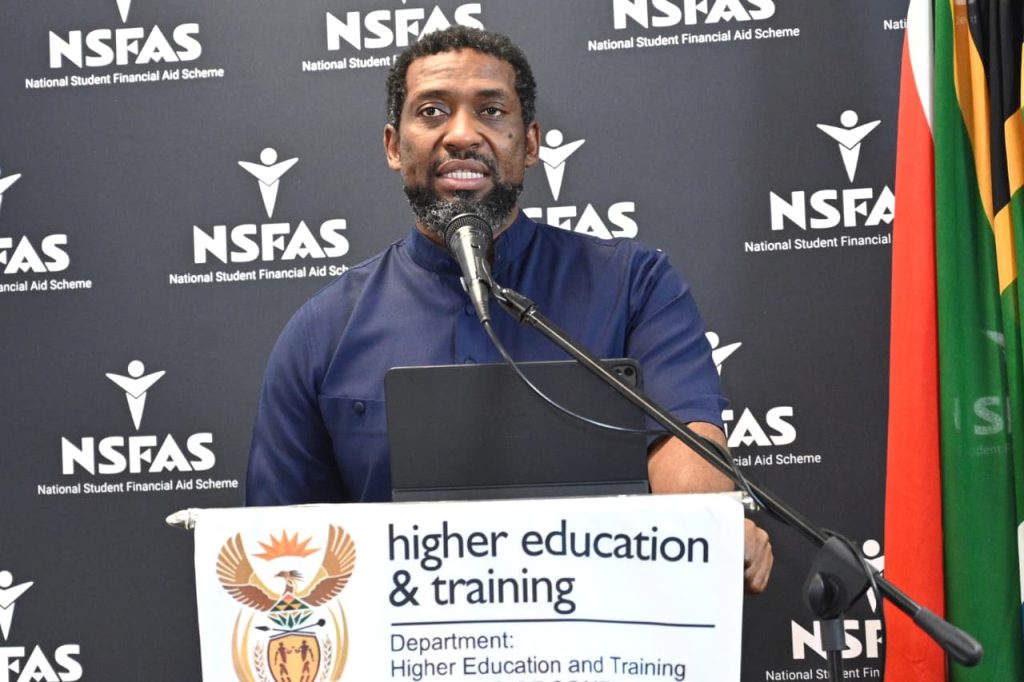
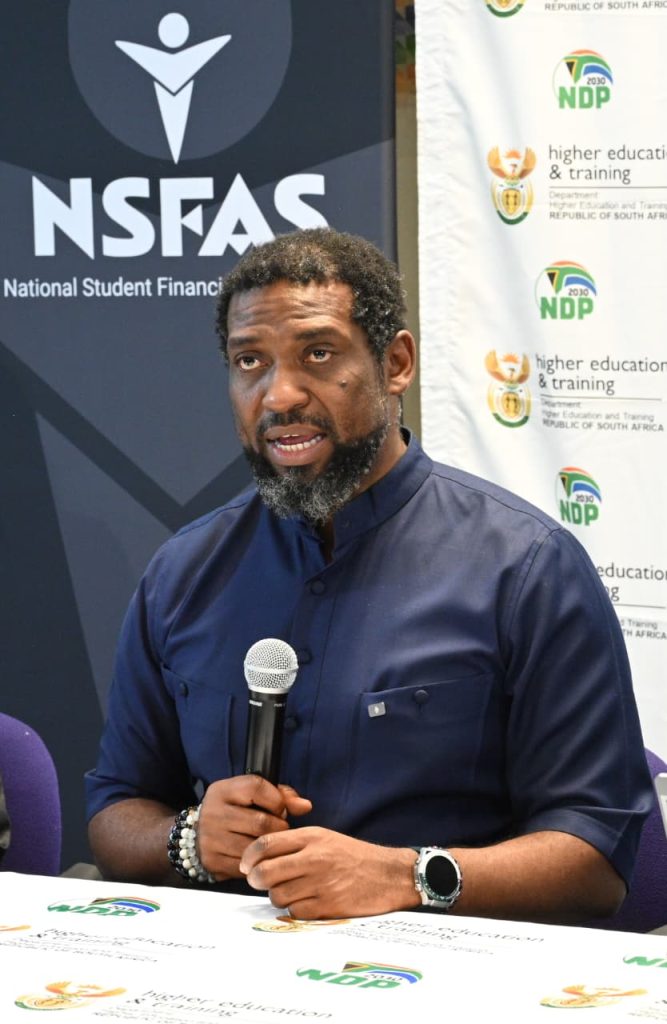
The National Student Financial Aid Scheme (NSFAS) has opened applications for the 2027 academic year, with the scheme now back under board-led governance following the suspension of administrator Professor Hlengani Mathebula’s appointment by the Gauteng High Court.
Higher Education and Training Minister Buti Manamela officially opened the application cycle on Friday, saying applications would remain open until 31 October.
Interim NSFAS Board chairperson Advocate Richardt Ramashia said the scheme was ready to receive, process and adjudicate applications after conducting a final system check before the launch.
Minister of Higher Education and Training, Mr Buti Manamela launch the NSFAS 2027 Application Season and provide an opportunity for the media to engage with the leadership of NSFAS and students leaders. Photo:Eddie Mtsweni
He said the system had already received almost 6,000 applications during the overnight test, with more than 2,000 successfully processed.
“Today, we are able to say, yes, NSFAS is ready, not only to receive these applications. We are ready to process them. We are ready to adjudicate,” Ramashia said.
The 2027 application process has been redesigned to make greater use of the NSFAS mobile application, allowing prospective students to create profiles, submit applications, upload documents and receive confirmation through their mobile devices.
Ramashia urged applicants to ensure that their supporting documents are complete and readable and that consent forms are correctly completed.
He also warned students not to stop before submitting their applications.
“After doing everything that you have done, uploading, recording, editing and everything, please press that submit button,” he said.
Once submitted, applicants will receive a confirmation message and a unique reference number which can be used to track their applications.
The launch comes after a major change in the governance of NSFAS.
The scheme was placed under administration on 4 May, with Manamela appointing Mathebula as administrator after dissolving the board. The department said the intervention was intended to address governance, financial and operational problems at NSFAS.
However, on 14 August, the Gauteng High Court in Pretoria suspended Mathebula’s appointment as administrator pending the finalisation of an application challenging his appointment. The court also directed the former board members who brought the application to continue managing and governing NSFAS.
This means NSFAS is now operating under a board-led governance arrangement, rather than administration.
On 11 September, Manamela announced that Ramashia had been designated interim chairperson of the NSFAS Board to provide leadership and continuity while vacancies on the board are filled.
The minister also supported the board’s request for Waseem Carrim to continue as Acting CEO, meaning the current leadership is headed by Ramashia as interim chairperson, with Carrim responsible for the day-to-day executive management of NSFAS.
Manamela said the return to board-led governance followed a period of institutional transition.
“The past few months have been a period of significant institutional transition for the NSFAS. We moved through a period of administration and have now returned to a board-led governance arrangement,” he said.
He said the immediate focus was to ensure stability, improve governance and ensure that NSFAS could continue providing financial assistance to students.
According to Ramashia, NSFAS plans to conclude its initial funding decisions by 30 November.
An audit of those decisions will take place from 1 to 9 December, followed by an appeals window from 10 to 24 December.
Appeal outcomes are expected to be published by 9 January 2027, while the list of students who qualify for funding will be sent to institutions by 11 January 2027.
Ramashia said the timetable was designed to give NSFAS enough time to process applications, review decisions and conduct internal and external audit work before releasing the final funding list.
“We wanted to eliminate any possibility of technical glitches. We have had to make sure that no potential NSFAS beneficiary is excluded from funding because of errors of technical imperfections,” he said.
Manamela said NSFAS had also introduced automated document verification, electronic document signing and strengthened verification of student registration and banking information.
He said the department was working with the Department of Home Affairs to strengthen verification systems.
The minister also said work had started on a loan management system for students who fall into the so-called missing middle and do not qualify for NSFAS bursary funding.
Manamela warned prospective students that applying for NSFAS does not guarantee admission to a university or Technical and Vocational Education and Training (TVET) college.
“Application to NSFAS does not guarantee access to your chosen area of study. You must also apply to institutions as funding eligibility alone will not ensure a place to study in your chosen qualification,” he said.
Applications for public TVET colleges for the 2027 academic year are open until 30 September, while the NSFAS application period runs until 31 October.
Manamela said NSFAS would also deploy outreach teams to provinces, districts, rural areas, townships and other marginalised communities to help eligible students with applications.
He stressed that applying for NSFAS is free.
“It’s free to apply for the NSFAS. You don’t need to pay anybody anything for that,” he said.
Manamela also said the scheme would continue working on the missing-middle funding model for students whose household income is above the NSFAS bursary threshold but who still cannot afford the full cost of higher education.
For the 2027 cycle, NSFAS has urged students to apply early rather than waiting until the October deadline.
Deputy Minister of Higher Education and Training Yusuf Cassim has vowed to follow up on thousands of student complaints received through his Helpdesk, after revealing that about 4,429 queries were recorded in July, including 560 NSFAS-related cases.
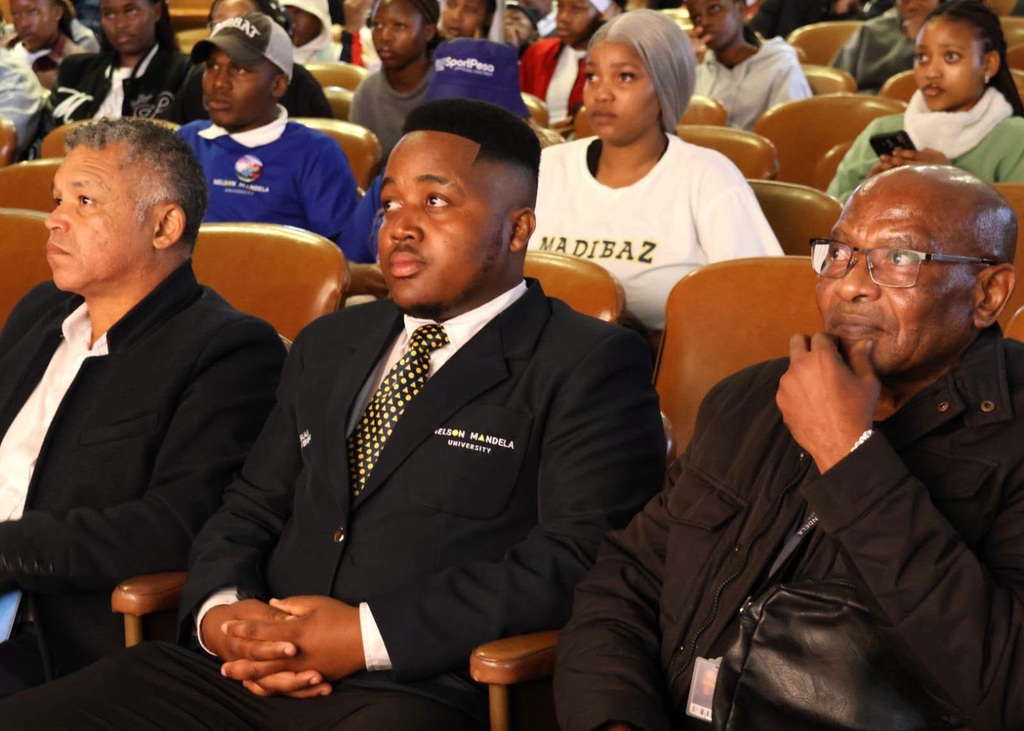
Cassim made the remarks during a visit to Nelson Mandela University (NMU) in Gqeberha on Friday, where he engaged directly with students about funding, food, transport, connectivity and unpaid work-integrated learning stipends.
The session also focused on student accommodation, non-academic barriers to well-being, SETA support, and restoring NSFAS funding for the Extended Studies programmes.
“A responsive government must be prepared to listen when questions are difficult, go where problems are experienced, distinguish between what it knows and what it still needs to establish, and identify clearly where responsibility sits,” Cassim said.
The visit went ahead despite a disagreement between NMU management and the Deputy Minister’s office over the arrangements and timing of the engagement.
Cassim’s office said the university had initially confirmed and supported the visit before later raising security concerns and asking that it be postponed.
NMU said it had welcomed the proposed visit but raised concerns about the short notice, security risks, the possible mobilisation of thousands of students and the impact on the academic programme.
Despite the disagreement, Cassim proceeded with the visit and met students who had raised concerns through his office.
“This is not a ceremonial visit. I am here because students have raised matters with my Office that require attention,” Cassim said.
The Deputy Minister, an NMU alumnus and former SRC president, said he wanted to hear directly from students and find practical solutions to problems affecting their university experience.
He said the Helpdesk had become an important mechanism for identifying recurring challenges across the higher education sector.
“In July alone, it recorded approximately 4,429 queries, including 560 NSFAS-related queries,” he said.
Cassim said the figures highlighted pressure points in the system, but warned that the Helpdesk should not become a place where students receive reference numbers without substantive assistance.
“It must be a mechanism through which we listen, identify patterns, intervene where necessary and follow cases through to substantive responses,” he said.
He said his office had undertaken similar engagements with students and institutions at Unisa, the Central University of Technology and Tshwane University of Technology.
Cassim said the NMU visit followed the same approach: listening to students, establishing the facts, identifying responsibility and determining what action was required.
Among the main issues raised was NSFAS funding and financial exclusion.
Cassim said his office had previously engaged NSFAS leadership over GAP investigations and the difficulties these cases created for students.
He said the department needed an updated picture of students affected by GAP investigations and cases involving dual registration.
A student submission cited during the engagement indicated that 63 NMU students were affected by GAP matters linked to dual registration, although Cassim said the figure still needed to be verified.
He called for clarity on how many students had been defunded, how many had appealed and how many cases remained unresolved.
He also questioned what happened to students who remained academically active but were financially excluded.
“A referral is not a resolution,” Cassim said.
He said students needed to know who was responsible for their cases, what information was still required and when they could expect a response.
Food insecurity was another concern raised during the engagement.
Cassim referred to a 6 May 2026 communication from the university regarding a proposed alternative Meal Management System under which students could opt out of catered meals and receive their food allowance directly into their bank accounts.
He said the status of the required safety and infrastructure assessment needed to be established, including what remained outstanding and when the model could be implemented.
He also called for immediate assistance for students struggling to access food.
Accommodation and transport were also raised.
Cassim said his office needed to establish the current accommodation gap and what immediate measures were available for students unable to secure accommodation on campus.
He said accommodation and transport could not be viewed separately because students living off campus still needed reliable access to lectures, laboratories and libraries.
The Deputy Minister also raised concerns about connectivity, saying reliable Wi-Fi had become essential to participation in higher education.
He called for an assessment of connectivity gaps both on campus and in accredited off-campus accommodation.
Another matter involved about 50 Medical Laboratory Science students undertaking work-integrated learning through the National Health Laboratory Service.
The students reportedly had not received their WIL stipends since July.
Cassim said his office had engaged the Health and Welfare Sector Education and Training Authority to establish whether the students were correctly captured, whether verification was outstanding and what was required for payments to be processed.
“The student should not carry the consequence of an administrative problem between institutions,” he said.
Student wellbeing was also discussed, with Higher Health participating in the engagement.
Cassim said students’ mental and emotional wellbeing could not be separated from the conditions in which they lived and studied.
He said financial exclusion, food insecurity, accommodation problems, transport difficulties and academic disruption could all affect students.
“Are students able to eat? Do they have a safe place to stay? Can they get to class? Do they have access to funding?” he asked.
Cassim told students he could not guarantee that every matter would be resolved immediately because some cases required verification and formal processes.
However, he said students should not be left moving from one office to another without knowing who was responsible for their cases.
He also addressed the absence of NMU management from the engagement.
Cassim said he had hoped university management would participate because some of the concerns raised by students required the institution’s response.
“I am not here to turn that decision into an institutional dispute or speculate about its reasons,” he said.
“But the absence of one stakeholder does not make the issues raised by students disappear.”
The university disputed the suggestion that it had refused to host the Deputy Minister.
In a statement, NMU said it was first notified of the intended visit on 11 September, seven days before the engagement.
It said management had to reconsider longstanding commitments, including preparations for a scheduled Council meeting, while the programme extended across two campuses and included weekend activities.
The university also pointed to the upcoming SRC election process scheduled for Monday, 21 September, saying the possible mobilisation of large numbers of students had implications for safety, security and the academic programme.
NMU said an internal security assessment had identified concerns that were shared with the Deputy Minister’s security detail.
It said it had proposed either proceeding with the visit under an arrangement that clearly allocated responsibilities and liabilities, or rescheduling it to allow the objectives of the visit to be achieved while managing the identified risks.
The university said it remained committed to constructive engagement with the Department of Higher Education and Training.
Cassim, meanwhile, said his office remained prepared to engage with the university through appropriate institutional channels.
The Deputy Minister is scheduled to continue the engagement at NMU’s George Campus on Saturday.
He said the measure of the visit would be whether students saw progress after the engagement.
“The real measure of this visit will not be how many meetings we hold or speeches we make. It is whether the student sees a change after we leave,” Cassim said.
He said this could mean a student’s question being answered, a funding case being addressed, an accommodation problem being escalated or a WIL stipend matter being progressed.
“The work does not end when we leave this room,” he said.
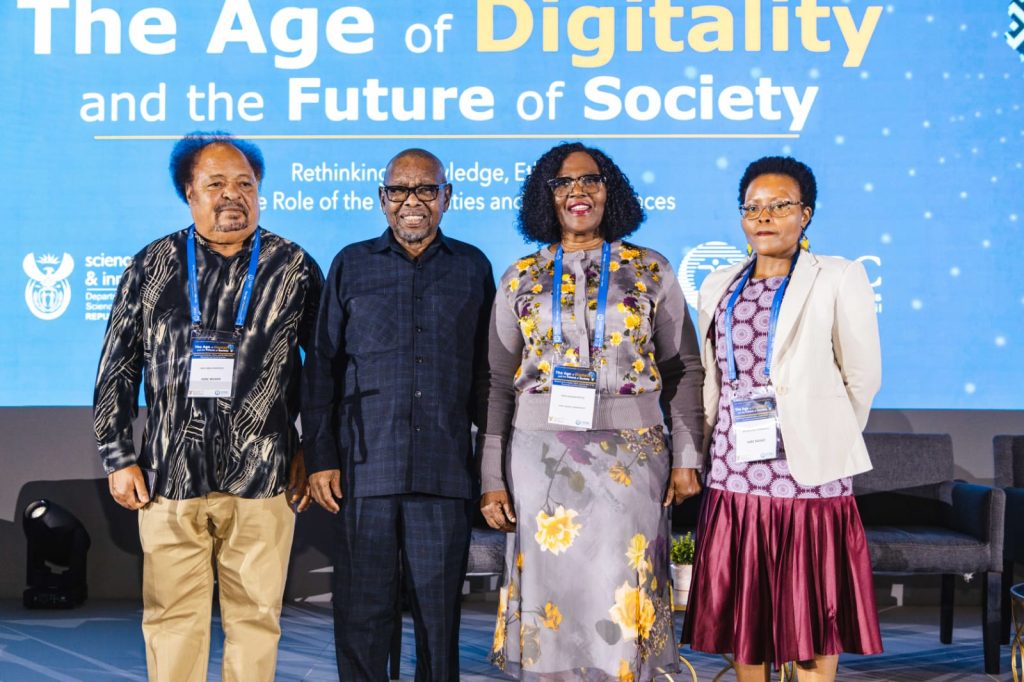
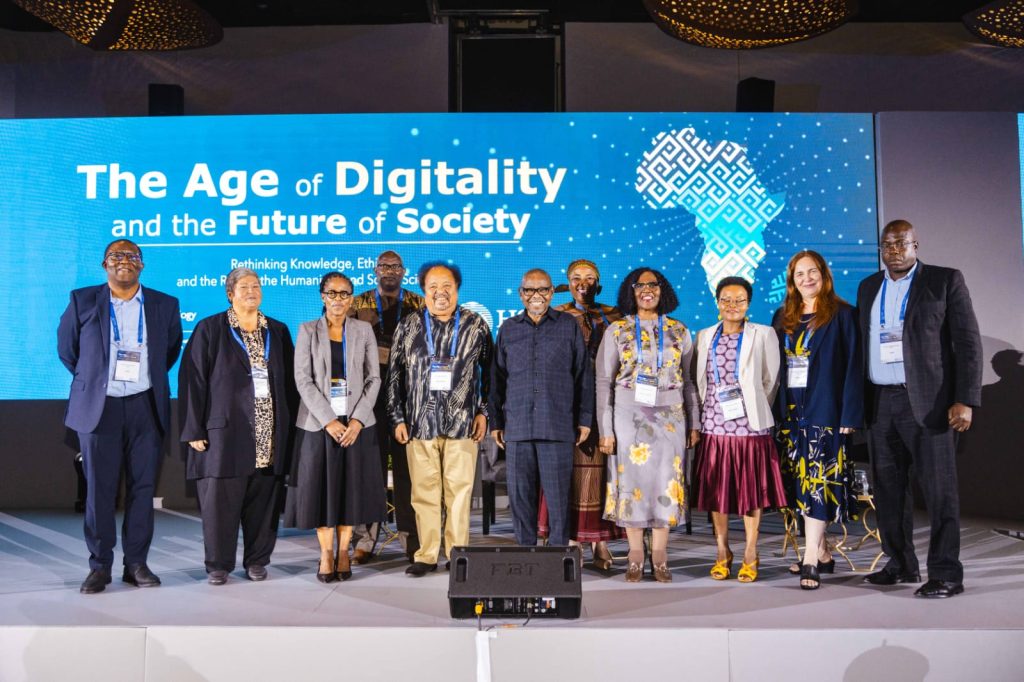
Science, Technology and Innovation Minister Blade Nzimande has warned that artificial intelligence and other emerging technologies could usher in new forms of colonialism in Africa unless their development is governed by an ethical framework.
Nzimande made the remarks in his closing address to the Human Sciences Research Council’s (HSRC) annual conference in Ekurhuleni.
He said AI could not be properly understood without examining the social relations and power structures shaping technological change.
“These narratives sometimes tend to represent technological change as if it evolves outside of social relations and power structures in which it is expressed,” he said.
He said the social sciences and humanities had a critical role to play in examining the promises and dangers of technologies including AI, robotics and bioengineering, as well as the political economy underpinning their development.
Citing US sociologist John Bellamy Foster, he said that the fetishisation of technology could obscure the economic and political forces driving inequality, ecological destruction and threats to democracy.
“We know from history that all the great leaps of technological change, from agrarian to industrial societies to the digital age – are not only the result of specific choices by dominant forces in each historical period, but have also been accompanied by new forms of inequality and social exclusion,” he said.
Nzimande also raised concerns about the effect of technology on mental health and social relations.
“A good case in point is the contradictory impact of social media on communities, including rising levels of suicide and depression in certain demographics,” he said.
He highlighted South Africa’s high suicide burden among young men and said government needed to better understand and address the problem.
Nzimande also questioned how society should value human intellectual labour compared with machine-generated work, particularly in education, the arts and culture.
“If AI becomes smarter than us, in more fields than narrow intelligence domains like chess or mathematics, should we allow it into other areas of human agency?”
He also criticised the influence of powerful technology executives in shaping visions of society’s future.
“It is perhaps not surprising that many of these techno oligarchs have amassed spectacular personal wealth and are often ardent sponsors of right-wing political and social movements across the world,” he said.
Nzimande said an ethical framework for AI would need to address inequality, neo-colonialism and international conflicts rather than treating technological development as politically neutral.
“It must speak against the use of digital tools such as AI in the genocide in Gaza, the invasion of Venezuela, and the Middle East,” he said.
He said such a framework should not be shaped only by governments and experts, but should also include civil society, labour movements and grassroots organisations.
Nzimande said the International Union of Scientists planned to hold a global people’s summit on ethical AI in South Africa in May next year, with the aim of adopting a People’s Charter on ethical AI.
“I wish to commend this effort and hope that it will galvanise as wide as possible a cross-section of social forces, especially from the global south and the wider African continent for this important task,” he said.
He also pointed to the department’s efforts to place science, technology and innovation more centrally within government and society.
“To be sure, when we refer to science here, we refer to both natural and social sciences. We have to remind people of this all the time, as well as humanities, with particular emphasis on transboundary and interdisciplinary knowledge as critical to the future of the national system of innovation,” he said.
Nzimande said the 2019 White Paper on Science, Technology and Innovation and the Science, Technology and Innovation Decadal Plan 2022–2032 recognised the importance of indigenous knowledge systems and ensuring marginalised communities were included in innovation and development.
“Our department has also been looking into programmes to develop African languages through machine learning tools – now widely available – and their integration into our education system.”
He said the HSRC had a central role to play alongside the Council for Scientific and Industrial Research, National Research Foundation, universities and other institutions in monitoring the social consequences of technological change.
“For too long, science and technology have been the preview of elites and experts. We need to find a way of bringing this closer to the people.”
He said the social sciences and humanities were crucial to preserving human qualities such as care, solidarity, cooperation and compassion as machines became more embedded in everyday life.
“After all, these human traits, perhaps uniquely human, have been the key to our survival and eventual flourishing as a species for over 300,000 years of human evolution.”