DA turns up heat on Manamela as NSFAS shortfall heads towards R33bn
Uncategorized

DA turns up heat on Manamela as NSFAS shortfall heads towards R33bn

By Johnathan Paoli

The Democratic Alliance has demanded that Higher Education and Training Minister Buti Manamela put a concrete, funded rescue plan for the National Student Financial Aid Scheme (NSFAS) on the table, saying that universities and students cannot continue carrying the cost of the scheme’s financial crisis.


DA higher education spokesperson Delmaine Christians said Manamela’s acknowledgement of a projected NSFAS shortfall was not enough, and called for urgent measures to deal with billions of rands owed to universities as well as a sustainable funding model.

ALSO READ: Cosatu affiliates square off over federation’s top jobs

“It is no longer sufficient for the Minister to acknowledge that NSFAS has a funding problem. Students and institutions need to know how he intends to fix it,” Christians said.

The DA’s call comes after Parliament was told last month that NSFAS owed universities about R10.49 billion in 2026 tuition payments, with only 61.5% of university allocations having been paid at that stage.

Manamela has warned that the scheme’s financial shortfall could reach R33 billion by 2029 if the current funding model remains unchanged.

Speaking to the media last week, Manamela said government was already engaging the National Treasury over an estimated R15 billion shortfall.

“Last year it was R13 billion. The year before it was R7 billion. The year before it was R5 billion. The first year when we introduced the policy was R2.5 billion. Estimates are that by 2029, we would have a shortfall of R33 billion at NSFAS,” Manamela said.

He said that the problem cannot be attributed solely to governance instability at NSFAS, saying the underlying funding policy itself is unsustainable.

But Christians said talk is cheap and that the figures demonstrated the urgency of producing an immediate intervention and a long-term solution.

“Despite repeated talk shops, the Minister has failed to provide an interim crisis plan to pay money owed, and a long-term sustainable funding model solution to the absolute disaster that is NSFAS. This cannot become another crisis simply rolled into the next academic year,” she said.

Manamela said about R56 billion of his department’s budget was directed towards the scheme.

ALSO READ: OPINION| Polls, predictions and the truth

He warned that a failure of NSFAS would have consequences extending beyond students who rely on monthly allowances.

The minister acknowledged that the scheme still funded hundreds of thousands of students, but said any failure to pay even one student was unacceptable.

Manamela said the government was also considering an income-contingent loan system as part of efforts to develop a more sustainable funding model.

Under such a system, students would not pay upfront and would begin repaying once their income reached a predetermined threshold.

He cited Australia as an example, but said any South African model would have to be adapted to local conditions.

Manamela said stabilising NSFAS and preparing it for the 2027 academic year were immediate priorities.

INSIDE EDUCATION

The post DA turns up heat on Manamela as NSFAS shortfall heads towards R33bn appeared first on Inside Education..
Mpumalanga gives officials until end of week to resolve scholar transport issues
Uncategorized

Mpumalanga gives officials until end of week to resolve scholar transport issues

By Lebone Rodah Mosima 

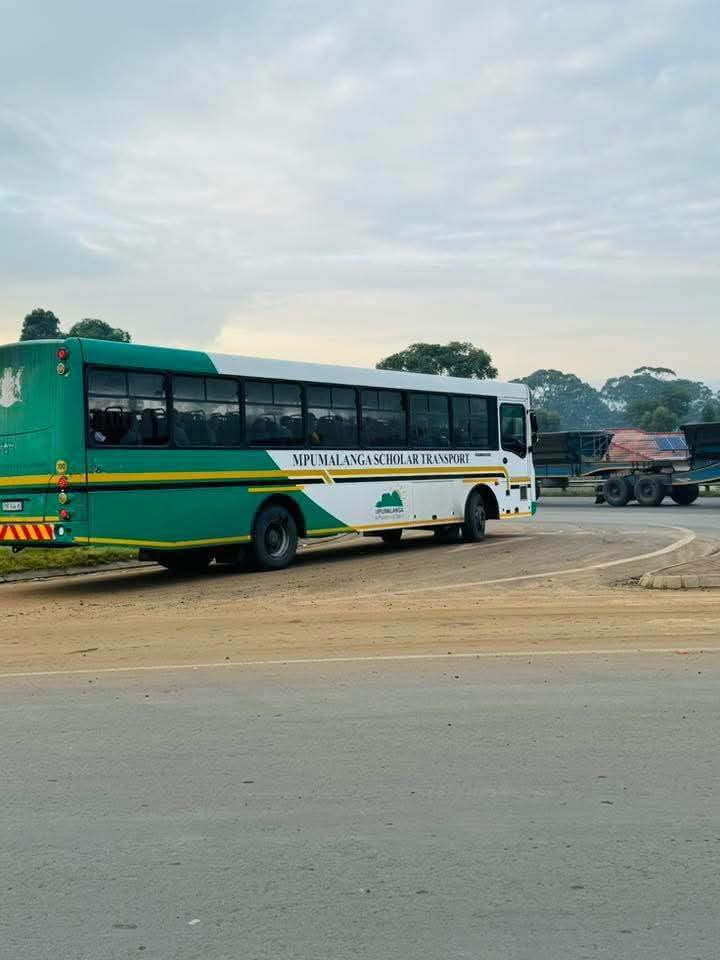
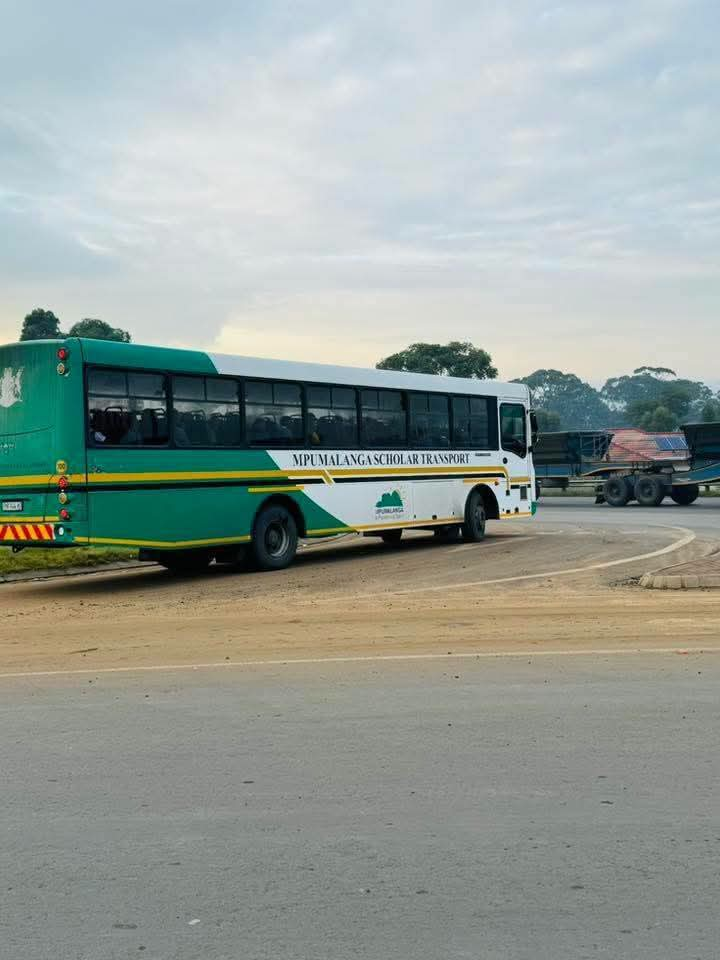
The Mpumalanga government has ordered officials to urgently resolve problems with scholar transport after the introduction of new contracts left learners stranded and triggered protests in parts of the province.

The provincial departments of Public Works, Roads and Transport and Education said outstanding problems should be addressed before the end of this week following the introduction of the new scholar transport contracts, which they said came into effect on 1 September.

ALSO READ: DA turns up heat on Manamela as NSFAS shortfall heads towards R33bn

The departments convened a high-level joint meeting on Sunday to assess the rollout and the disruptions that have followed it.

That meeting was directed by Public Works, Roads and Transport MEC Thulasizwe Thomo and Education MEC Lindi Masina.

The intervention follows complaints from several communities since the new arrangements took effect.

More than 200 learners in Spelanyane and Buyelani in the KaBokweni area were reported to have been left without transport for three days earlier this month after several operators allegedly lost their routes under the new contracting system.

Residents barricaded roads with burning tyres on 4 September, demanding the provincial government step in. The Department of Public Works, Roads and Transport said at the time that the contracts had been awarded through a formal tender process to operators who met the tender requirements.

Learners and community members in Vukuzenzele near Delmas also protested on 3 September over complaints that some pupils had been left behind and that buses were not reaching parts of their designated routes.

The procurement process covered five-year scholar transport contracts in Mpumalanga’s Ehlanzeni, Gert Sibande and Nkangala districts.

ALSO READ: 32 Gauteng independent schools served with closure letters

The two departments said on Monday that despite the disruptions, scholar transport was operating “normally” in most parts of the province, while acknowledging that problems had affected some learners.

“The meeting therefore adopted a coordinated and solutions-driven approach to address these challenges,” the departments said.

“This includes closely monitoring the developments on the ground, identifying areas requiring immediate intervention, and putting in place practical measures to resolve outstanding challenges.”

Officials from both departments have been instructed to strengthen monitoring, engage directly with affected schools and communities and work with scholar transport operators and other stakeholders to resolve problems.

The departments appealed for cooperation and constructive engagement while officials work to resolve the problems.

“The identified challenges must not be allowed to undermine the broader mission of ensuring quality education and creating an enabling environment in which every learner can learn and thrive,” the departments said.

“The safety and wellbeing of learners remain paramount and every effort is being made to ensure smooth operations of scholar transport in the Province,” the departments said.

The government also appealed to affected communities not to resort to intimidation, threats, violence or deliberate disruption of scholar transport operations.

“Such actions place learners, drivers, operators, and members of the public at risk and undermine the collective responsibility to protect the right of learners to education.”

INSIDE EDUCATION

The post Mpumalanga gives officials until end of week to resolve scholar transport issues appeared first on Inside Education..

Uncategorized

Sundowns close in on Chiefs after 13-goal GDL weekend

By Johnathan Paoli

Mamelodi Sundowns sent a warning to Kaizer Chiefs in the Gauteng Development League (GDL) title race, scoring 13 goals in two matches over the weekend as the defending champions closed to within three points of the leaders.

The Brazilians first demolished Africa School of Excellence 8-0 at Clapham High School, Tshwane on Saturday before returning to action on Sunday to hammer Tshwane rivals Rockefvs 5-0 at the Association of the Portuguese Community (ACCP) Sports Grounds.

ALSO READ: Mpumalanga gives officials until end of week to resolve scholar transport issues

Chiefs, meanwhile, suffered a damaging setback in their pursuit of the league title in Naturena, south of Johannesburg, going down 3-1 to Siwelele on Sunday.

The results have intensified the pressure at the top of the GDL, with Chiefs sitting on 56 points and Sundowns three points behind.

Crucially, Sundowns have two games in hand, giving the reigning champions a significant opportunity to overhaul the leaders.

Sundowns’ weekend started with an eight-goal demolition of Africa School of Excellence.

Ntokozo Madondo opened the scoring in the ninth minute after being set up by Thato Moalusi, before Thabang Makoba doubled the lead two minutes later following good work from Siyabonga Mbongo.

ALSO READ: Inclusive education must move beyond specialist teachers

Makoba and Mbongo combined again in the 16th minute to make it 3-0, before Mbongo got on the scoresheet himself in the 39th minute, with Madondo providing the assist.

Mbongo completed his brace before half-time, again benefiting from Moalusi’s delivery, as Sundowns went into the break five goals ahead.

After the break, Liano Snyders made it 6-0 in the 51st minute after receiving a through pass from Mbongo, before Junior Masoeu struck twice to complete the rout.

Snyders provided the assist for Masoeu’s first goal just two minutes later and again supplied the final pass in the 76th minute as Masoeu completed his brace.

ALSO READ: DA turns up heat on Manamela as NSFAS shortfall heads towards R33bn

Having scored eight on Saturday, Sundowns returned to the field less than 24 hours later and produced another great performance against Rockefvs.

Madondo again found the net in the ninth minute before Zayyaan Nizamdin, Kgaogelo Monanyane and Inganathi Simana added goals to give Sundowns a commanding 4-0 lead at half-time.

Makoba added the fifth after the break to complete a six-point weekend for the champions.

The results came at the perfect time for Sundowns, who had been chasing Chiefs at the top of the table while carrying games in hand.

Chiefs’ defeat to Siwelele means the gap has now narrowed further, with the Phefeni Glamour Boys unable to match Sundowns’ momentum.

Siwelele took control of Sunday’s match through Lizalize Mahumza, who opened the scoring in the 18th minute after an assist from Kabelo Mofokeng.

Mahumza struck again three minutes before half-time to put Siwelele 2-0 ahead.

Chiefs found a late lifeline when Lebo Dhlamini scored in the 89th minute, but any hopes of a comeback were ended when Onthatile Lemao scored in the fourth minute of stoppage time to seal a 3-1 victory.

The defeat is a blow to Chiefs’ hopes of completing a successful GDL campaign. The club have already won the GDL Top 8 title and the Gauteng Engen Knockout Challenge this season, but their pursuit of the league championship is now under serious threat.

Elsewhere in the under-19 division on Saturday, Prestige Football Academy and Remember Elite Sport Academy drew 1-1, while Panorama beat Rockefvs 2-1.

Jomo Cosmos defeated the University of Pretoria (Tuks) 2-1, Pitso Mosimane Youth Football beat Highlands Park 2-1 and Randburg overcame Future of Africa 3-1.

Kathorus Hyper Academy defeated Seven’s Academy 2-0, while Joburg City and Wits Juniors drew 1-1.

Sundowns also enjoyed strong results across the younger age groups, beating Africa School of Excellence 5-2 in the under-17s, 2-0 in the under-15s and 6-0 in the under-14s.

Their under-13 side completed an extraordinary weekend by beating Rockefvs 10-1.

With Sundowns having two games in hand on Chiefs, the champions now have the league leaders firmly within their sights.

The two wins have reduced the deficit to three points, while the 13 goals provided further evidence that the title race could be heading for a dramatic finish.

INSIDE EDUCATION

The post Sundowns close in on Chiefs after 13-goal GDL weekend appeared first on Inside Education..

Uncategorized

Deputy minister steps in to restore funding for 182 TUT students

By Johnathan Paoli

The National Student Financial Aid Scheme (NSFAS) has restored funding for 182 Tshwane University of Technology (TUT) students who were defunded under the N+ rule after incorrect qualification codes were entered or updated.

The funding was restored after the Office of Deputy Minister of Higher Education and Training Yusuf Cassim intervened following more than 300 complaints submitted by TUT students through his help desk.

“Although these issues might seem administrative, for students they are highly personal, affecting their ability to register, access allowances for meals, transport or accommodation, and continue their studies. No student should miss academic time due to incorrect data or unresolved issues between the institution and NSFAS,” Cassim said.

The cases submitted to the help desk primarily concerned students who had been defunded under the N+ rule, pending GAP investigations, dual registrations and data-sharing problems between TUT’s financial aid office and NSFAS.

The N+ rule limits NSFAS funding to the minimum duration of a qualification plus one additional year, or two additional years for students with disabilities.

After receiving the cases from Cassim’s office, TUT and NSFAS worked through the individual files and identified 182 students whose qualification codes had been incorrectly updated.

The university subsequently made the necessary corrections, allowing NSFAS to restore the affected students’ funding.

TUT has confirmed that the funding has been fully restored and that September allowances have been paid to the 182 students.

Cassim visited TUT on Wednesday, accompanied by officials from the Department of Higher Education and Training’s university branch and NSFAS.

The delegation met TUT’s senior management, led by vice-chancellor Professor Tinyiko Maluleke, as well as representatives of the institution’s Student Representative Council.

The engagement also uncovered a separate problem involving more than 1,300 students whose accommodation payments remain unresolved.

According to the ministry, 1,212 students had been placed in accredited accommodation after the NSFAS portal closed, but their accommodation costs had not subsequently been paid.

A further 115 students had their NSFAS funding approved after the portal closed and consequently faced the same accommodation payment problem.

Cassim has written to the NSFAS board, asking that the cases be investigated without delay and that affected students be assisted immediately.

The intervention comes as NSFAS continues to work through a broader backlog of funding and allowance disputes affecting students at universities and TVET colleges.

The scheme has confirmed that payments have been processed for students whose GAP investigations were successfully concluded.

Nationally, funding has been reinstated for 2,476 TVET college students, with payments for students with valid registrations processed and issued from 25 August.

A further 3,234 university students have had their funding reinstated.

Cassim’s office said the deputy minister had been consistently following up on students whose funding was restored after the conclusion of GAP investigations to ensure they also received their outstanding allowances.

NSFAS has indicated that students whose GAP investigations have been successfully concluded but who have not yet received their allowances can approach the help desk to have their cases escalated.

Dual registrations have also emerged as a significant source of funding problems.

NSFAS received 2,982 records involving students who were registered at more than one institution. Of these, 1,303 cases have been confirmed and are being paid.

At TUT, 16 cases of dual registration had already been resolved, but the students’ funding had not yet been restored.

Cassim has urged NSFAS to prioritise the outstanding cases.

The ministry said the issues highlighted during the TUT engagement demonstrated how administrative and data-management problems can have immediate consequences for students’ ability to remain at university.

The latest intervention follows growing pressure on NSFAS and universities to resolve funding disputes quickly, particularly where students face disruptions to accommodation, transport and living allowances.

INSIDE POLITICS

The post Deputy minister steps in to restore funding for 182 TUT students appeared first on Inside Education..

Uncategorized

A child’s first 5 years set them up for life. African study explores how to target education spending

By Katherine Theiss and Subha Mani

The first five years of life lay an important foundation for children’s future schooling, health and earnings. Yet over 77% (table 2) of children in sub-Saharan Africa don’t have access to early childhood care and education. This places them at risk of not reaching their development potential.

In response, governments across Africa are increasingly committing to expanding enrolment in pre-primary school.

But research suggests that expanding enrolment is not enough. It’s also important to create healthy, nurturing learning environments that help prepare children for primary school.

Economists like us have an interest in this because we want to be able to help design effective and scalable early childhood education programmes and policies. We need to know:

  • What types of pre-primary education programmes are offered?
  • What effects do these programmes have on children’s developmental outcomes?
  • Which components of pre-primary education bring about these effects?

We set out to answer these questions by reviewing the most recent evidence available on pre-primary education programmes in low- and middle-income African countries. Our research examined why some pre-primary education programmes may be more successful than others.

Our study identified and reviewed the findings from six programmes carried out by local governments in The Gambia, Ghana, Kenya, Malawi and Mozambique. Most were in poor, rural and remote areas.

We found that most programmes focused on play-based learning. And, on average, they generated positive effects on children’s development. The research also suggests that programmes that offer support for parents may generate the largest impacts on children’s development outcomes.

This points to the need for programme planners to recruit high-quality teachers and personnel who can effectively engage with both children and parents.

Studies of child development

To address our research questions, we began by searching for studies on the effects of pre-primary education programmes in low- and middle-income countries in Africa. We only reviewed studies with large enough populations to be meaningful and that used rigorous ways of evaluating the results.

Six programmes met our inclusion criteria. There was one each in four countries – The Gambia, Mozambique, Kenya and Malawi – and two in Ghana.

In particular, we examined the effects on two categories of children’s development: cognitive and socioemotional.

  • Cognitive development. This refers to a child’s thinking process. This outcome is measured by assessing children’s numeracy, literacy, spatial ability, language, communication and executive function skills, such as attention and working memory.
  • Socioemotional development. This encompasses a child’s social and emotional competence, temperament and behaviour regulation. It is measured by assessing children’s awareness of other people’s feelings and how they behave towards others.

On a broad level, we focused on the quality of the classroom environment and the quality of instruction. In particular, we looked at interventions designed to improve teaching practices and teacher-child interactions through play-based learning.

All programmes included teacher training. Some also provided teachers with resources such as basic play and learning materials or teacher guides. In addition, two programmes offered a monthly stipend to teachers who completed training. Teachers did not typically earn a salary.

Most also engaged with parents about school-related activities or educated parents about positive caregiver practices. For example, they encouraged parents to read and play with children, reduce harsh discipline and understand their influence on child development.

Success of programmes

On average, the programmes were successful in improving children’s cognitive, social and emotional development. This finding is important because improvements in these skills early in life are associated with better educational, employment and economic outcomes later in life.

These longer-term benefits can be substantial. For example, in the United States, every dollar invested in the Perry Preschool Program, an early childhood education programme targeted at low-income youth, is estimated to have generated approximately US$7–US$12 in benefits to society.

To explain the positive effects in low- and middle-income African countries, evidence points to the importance of both the classroom and the home environment.

First, successful programmes generally improve teacher practices and classroom quality. Our research shows that teacher training can decrease teacher burnout, increase the use of appropriate instruction materials and improve the quality of teacher-child interactions.

For example, in Ghana, training encouraged teachers to consider children’s ideas during lessons and create opportunities for children to reason and solve problems.

Second, programmes that engage parents may be even more effective in improving children’s development. For example, a programme in Malawi that integrated group-based parenting education sessions into pre-schools with trained teachers brought about even greater gains in children’s language skills and prosocial behaviours.

This programme focused on teaching parents tools for stimulating children’s development and promoting health, such as reading and playing with children and washing hands.

Third, the quality of implementation matters. Recruiting high-quality, experienced teachers is important for the success of the programme.

Where the researchers didn’t find positive programme outcomes, it may have been attributed to inexperienced staff in The Gambia or the difficulties personnel in Ghana experienced in communicating with parents about new approaches to early childhood education.

Implications for policy and practice

The findings suggest that positive caregiving practices should be delivered by qualified personnel who can effectively communicate and engage with caregivers who may have low levels of education or limited access to resources.

Our research has implications for Sustainable Development Goal 4.2. The goal is to provide all children with access to quality pre-primary education by 2030 so that they are ready to enter primary school.

Katherine Theiss is Assistant Professor of Economics, Radford University. Subha Mani is Professor of Economics, Fordham University. This article was first published by The Conversation.

INSIDE EDUCATION

.

The post A child’s first 5 years set them up for life. African study explores how to target education spending appeared first on Inside Education..
Uncategorized

Government plans to expand EDHE student entrepreneurship programme to TVET colleges

By Charmaine Ndlela

The Department of Higher Education and Training is considering expanding its Entrepreneurship Development in Higher Education (EDHE) programme to TVET colleges as government seeks to equip more students with the skills and support to start businesses and create jobs.

Deputy Director-General for the University Education Branch at the department, Professor Thandi Lewin, said discussions were already under way on how the programme, or a similar model, could be introduced in TVET colleges.

Lewin was speaking to Inside Education on the sidelines of the 2026 EDHE Absa Studentpreneurs Indaba at the Birchwood Hotel and OR Tambo Conference Centre in Boksburg on Thursday.

The two-day national gathering brought together about 500 student entrepreneurs, academics, investors, university leaders, industry stakeholders and entrepreneurship ecosystem partners.

Lewin said the expansion was particularly important as TVET colleges increasingly move towards occupational programmes.

“But I think as the TVET colleges go more into the occupational programmes and into that space, we need to really think about how this programme, or a similar programme, can be set up in the TVET colleges. So it is something we’re talking about as a department,” Lewin said.

She said TVET colleges could draw on the experience gained from implementing the programme at universities.

The EDHE programme is currently funded through the University Capacity Development Programme, with a portion of the subsidy allocated to universities being used to support the initiative.

“At the moment, the funding for this programme comes through the University Capacity Development Programme, so it’s specifically a portion of the subsidy that we provide to universities that is top-sliced for this programme,” Lewin said.

“It’s something that could have huge traction in TVET colleges and we can learn a lot from how we’ve used the university programme to implement it in TVET colleges.”

The programme is aimed at making entrepreneurship a broader part of the higher education experience, rather than focusing only on students who already run businesses.

Lewin said it had three main pillars.

The first supports student entrepreneurship through programmes designed to help students start and develop businesses.

The second seeks to embed entrepreneurship in the curriculum so that students, regardless of their field of study, are exposed to entrepreneurial thinking.

The third focuses on developing entrepreneurial universities that can turn research, teaching and innovation into real-world solutions.

“The idea of the programme is to ensure that university students get access to entrepreneurship education throughout their degrees, regardless of which field they’re going into,” Lewin said.

She said the broader objective was to ensure students could either find employment after graduation or create employment for themselves and others.

However, balancing entrepreneurship with academic responsibilities remains a challenge for students running businesses while studying.

Lewin said universities provided various forms of academic and student support, while mentorship through EDHE could help student entrepreneurs manage competing demands.

“The difficulty that probably students who are also running businesses face is the same that students who also work are facing: how to balance your academics with earning money if you are working on the side?” she said.

She said students who chose entrepreneurship needed to develop the ability to manage both their studies and businesses.

“Through this programme, I think some of the mentorship work that gets done through the EDHE programme really helps with that,” Lewin said.

The department also acknowledged that entrepreneurship training alone was not enough, particularly when students and graduates need funding, mentorship and other support to grow their businesses.

Lewin said government departments and agencies would need to work together to ensure young people could access the support needed to turn entrepreneurial ideas into sustainable businesses.

“We also need to work across government to ensure that when people do graduate, and even if they don’t, that they have access to funding opportunities and to mentorship and support that they can gain access to,” she said.

This includes agencies such as the National Youth Development Agency, the Department of Trade, Industry and Competition and the Department of Small Business Development.

The push comes as government increasingly looks to entrepreneurship and skills development as part of its response to high youth unemployment.

Lewin said graduates were generally less likely to be unemployed than young people without higher education qualifications, but the department wanted universities to prepare students to enter the labour market or create opportunities for others.

“The fact is that if you graduate from university you’re far less likely to be unemployed than if you are not making it into university. So graduate unemployment is not as high. Obviously, what we want is to create young people at universities who are able to go out into the world and either find employment or create employment for themselves and for others,” she said.

INSIDE EDUCATION

The post Government plans to expand EDHE student entrepreneurship programme to TVET colleges appeared first on Inside Education..
Uncategorized

DBE turns to classrooms in fight against GBVF with new Life Orientation textbooks

By Lebone Rodah Mosima

The Department of Basic Education is using the classroom as a frontline in the fight against gender-based violence and femicide (GBVF), rolling out new Life Orientation and Life Skills textbooks aimed at equipping learners to navigate issues including consent, healthy relationships, safety, wellbeing and citizenship.

Deputy Basic Education Minister Reginah Mhaule and North West Education MEC Desbo Mohono on Thursday officiated at the At the Crossroads Life Orientation/Life Skills Textbook Activation Launch and Textbook Handover at Rutanang Primary School in the Boitshoko Circuit, Bojanala District.

Mhaule said the rollout includes 14,714 learner textbooks and 250 teacher guides, developed in line with the Curriculum and Assessment Policy Statement (CAPS) for Grades 4 to 12.

The materials will be distributed to 18 schools in the circuit and reach about 9,064 learners.

The Life Orientation textbook project began in 2017, but Mhaule said the Council of Education Ministers later undertook a review of the curriculum to determine whether it adequately reflected the realities faced by learners.

“The honest answer, at the time, was ‘No. Not fully.’ And so, the work began to change that,” Mhaule said.

She said the rollout marked the activation of a programme rather than the conclusion of a project.

“We officially launched the At the Crossroads textbook series nationally in June last year. What we are doing today, here in Bojanala District, is different and, in many respects, more important. We are moving from policy documents to the hands of a Grade 7 learner in Tantana, a Grade 10 learner in Boitekong, a teacher in Lerutlhware preparing tomorrow’s lesson,” she said.

Mhaule said the success of curriculum reform would ultimately be determined in classrooms rather than government offices.

“This is why the training of our Subject Advisors and Heads of Department matters so much. A textbook, however well written, is only as powerful as the educator who brings it to life,” she said.

Mhaule said GBVF was among the most serious threats to the safety, dignity and future of children, particularly girls, and that education had to form part of the response.

“We cannot legislate our way out of this crisis alone. We cannot police our way out of it either,” she said.

“We must educate our way through it, patiently and consistently, from the earliest grades, so that our learners grow up understanding consent, respect, healthy relationships and their own worth, long before those lessons are tested by the pressures of adolescence and adulthood.”

She said this was the purpose of the revised Life Orientation and Life Skills curriculum.

Mhaule thanked the GBVF Response Fund for supporting the programme, particularly the training of Subject Advisors and Heads of Department.

She also acknowledged the Eskom Development Foundation for supporting the printing and distribution of the textbooks, saying its Electricity Safety Awareness Campaign reflected the broader principle that child safety could not be confined to a single lesson or subject.

“Safety on our roads, safety around water, safety around electricity infrastructure, food safety in the school nutrition programme, safety within our relationships and safety with our own bodies,” she said.

“These are all part of the same conversation about protecting the well-being of a child.”

Addressing learners, Mhaule said young people should play an active role in shaping discussions around their safety and wellbeing.

She encouraged them to use the textbooks, ask difficult questions and speak out when they encountered wrongdoing.

“An educated learner who knows their rights is one of the strongest defences we have against gender-based violence, against unsafe choices and against the social ills that continue to threaten the promise of a better life for all,” she said.

Mhaule said the 18 schools in the Boitshoko Circuit would serve as a pilot for the programme, with lessons from its implementation informing its expansion to other provinces.

“To our principals, subject advisors and educators here in the Boitshoko Circuit, you are the custodians of this pilot,” she said.

“What happens in your eighteen schools over the coming months will generate lessons that inform how we take this programme to the Northern Cape, to the Western Cape, and nationwide.”

She urged educators to use the textbooks consistently and participate in monitoring and evaluation processes so that the department could identify what worked and what needed to be improved before the programme was expanded.

Mhaule also described the initiative as an example of the role partnerships can play in addressing social challenges.

“The Department of Basic Education, the National Education Collaboration Trust, the Eskom Development Foundation and the GBVF Response Fund have chosen to walk this road together so that 14,714 learners in this district will open a new textbook tomorrow morning, written for them, about them and in service of their futures,” she said.

She called on other strategic partners to support the initiative, saying there was a need for more organisations to contribute to the programme.

Mhaule said learners stood at a crossroads in making decisions about relationships, safety, citizenship and the people they wanted to become.

“Let us make sure that what we place there is honest, relevant and rooted in respect for their dignity,” she said.

INSIDE EDUCATION

The post DBE turns to classrooms in fight against GBVF with new Life Orientation textbooks appeared first on Inside Education..
Uncategorized

165 Wits students to gain AI-powered development skills

By Levy Masiteng

About 165 third-year Computer Science students at the University of the Witwatersrand will gain access to AI-powered software development tools through a new partnership between the Telkom Foundation, BCX, Alibaba Cloud and Wits.

The Qoder Programme aims to equip students with practical experience in emerging artificial intelligence technologies while they work on real-world software development projects.

The initiative is also intended to prepare young South Africans for an increasingly technology-driven economy and ensure university education keeps pace with changes in the workplace, particularly in software engineering.

“The Qoder Programme is an important step in equipping young South Africans with the digital skills required to thrive in a rapidly evolving technology landscape,” said Maanda Rashaka, senior manager at the Telkom Foundation.

“By partnering with BCX, Alibaba Cloud and Wits University, we are helping students not only engage with emerging technologies such as artificial intelligence, but also use them responsibly and creatively to solve real-world challenges.”

Professor Richard Klein, head of the School of Computer Science and Applied Mathematics at Wits, said AI was already changing how software was developed and applied across industries.

“Artificial intelligence is fundamentally changing the way software is developed, researched and applied across every industry,” he said.

Alibaba Cloud will provide students with access to its Qoder platform, giving them practical exposure to AI-assisted development tools and emerging approaches to software engineering.

BCX, Telkom Group’s technology solutions business, will contribute industry expertise and help strengthen the link between academic learning and the skills required in the technology sector.

Klein said the partnership would help ensure that Wits’ curriculum kept pace with global technological developments.

“It is important that our curriculum evolves alongside these global developments. Through the Qoder Programme, our students gain access to technologies that enhance their learning experience and better prepare them for the realities of modern software engineering,” he said.

According to the partners, students will gain exposure to artificial intelligence, cloud technology, data and modern software development while applying emerging technologies to practical challenges.

The programme will also focus on responsible and creative use of AI as a tool in software development.

Wits said the partnership ultimately aims to strengthen pathways between education, technology and employment while expanding access to future-focused digital skills among young South Africans.

“At the Telkom Foundation, we believe that access to opportunity begins with access to the right tools, knowledge and experiences,” Rashaka said.

INSIDE EDUCATION

The post 165 Wits students to gain AI-powered development skills appeared first on Inside Education..
Mabe unveils new sports facility at ED Mashabane Secondary School
Uncategorized

Mabe unveils new sports facility at ED Mashabane Secondary School

By Charmaine Ndlela

Deputy Minister of Sport, Arts and Culture Peace Mabe on Thursday handed over a new multipurpose sports facility at ED Mashabane Secondary School in Evaton, Gauteng, as part of efforts to expand access to sport and develop young talent.

The facility includes a combi court for soccer, basketball, netball, volleyball and tennis, as well as an outdoor gym, a children’s play area and newly planted trees.

Mabe said the facility, which has an expected lifespan of 14 years, would provide learners with a long-term platform to develop their sporting abilities.

Addressing learners during the handover, she said the investment was also aimed at strengthening the pipeline of athletes who could represent South Africa at future Olympic Games.

“We said in the next coming Olympics we should build a bigger and stronger team to represent South Africa in the Olympics,” Mabe said.

She said the country could not expect young people to compete at the Olympics without first providing the infrastructure and opportunities needed to develop their talents.

“This facility will produce people who are going to represent us in the next Olympics because we cannot say, come participate, be part of the Olympics, but we are not building enabling infrastructure,” she said.

Mabe said she wanted the facility to become a place where learners from different schools and backgrounds could discover and develop their sporting talents.

“We want to see children coming from far and all different schools saying, because of the facility in 2026, we are here because we got an opportunity to go and practise there,” she said.

She urged learners to take pride in the facility and use it responsibly.

“So love this combi court. If you love it, it is going to love you back,” she said.

Mabe said the facility was built to world-class standards and would provide an environment that supports both participation and athlete development.

She also highlighted the specialised material used for the sports surface, saying it was designed to reduce the impact on athletes’ joints.

“This facility is made out of a special plastic and that plastic, I’m told, looks after the joints,” she said.

Mabe said the department’s investment in sports infrastructure was about more than providing a place to play, but about creating opportunities for young people to build discipline, confidence and skills and potentially pursue sport professionally.

As part of the initiative, Mabe distributed sports apparel, books and equipment to three schools in the area: ED Mashabane Secondary School, Tokelo Secondary School and Mosioa Primary School.

The equipment is expected to give learners greater opportunities to participate in different sporting codes and develop their abilities, while the new facility will provide space for training and competitions.

Mabe urged learners to make full use of the facility and take responsibility for protecting and maintaining it.

She said the infrastructure belonged to the community and should remain available to future generations.

The handover forms part of the department’s efforts to strengthen school sport by improving access to sporting infrastructure and providing learners with resources to participate in different sporting codes.

INSIDE EDUCATION

The post Mabe unveils new sports facility at ED Mashabane Secondary School appeared first on Inside Education..

In Pictures: Bullet, dagga and vapes found in Daveyton school raids
Uncategorized

In Pictures: Bullet, dagga and vapes found in Daveyton school raids

By Levy Masiteng 

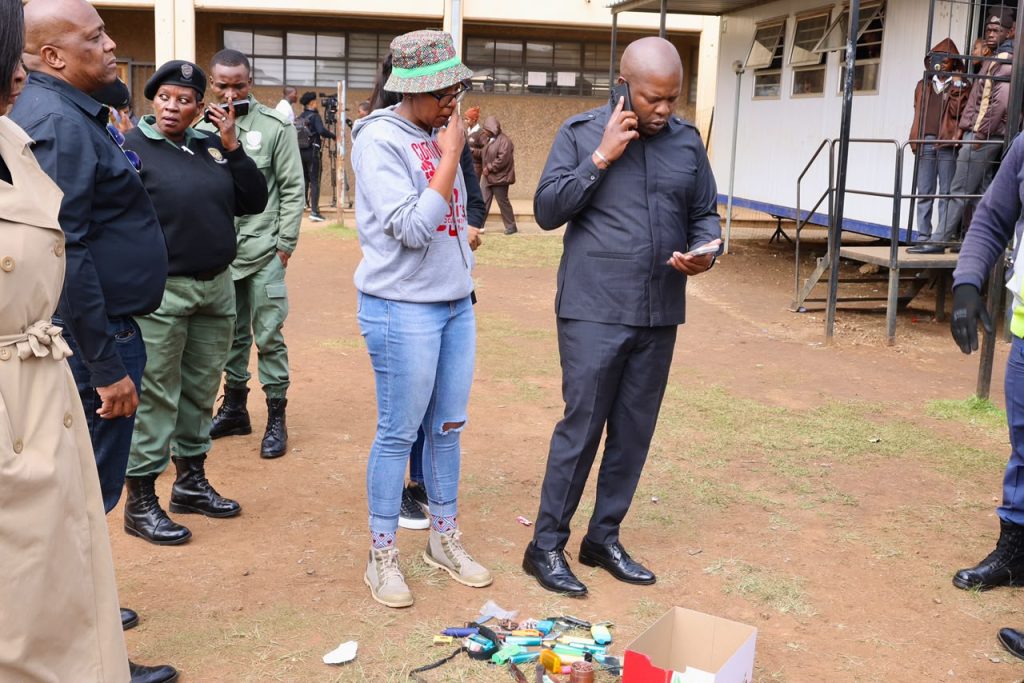
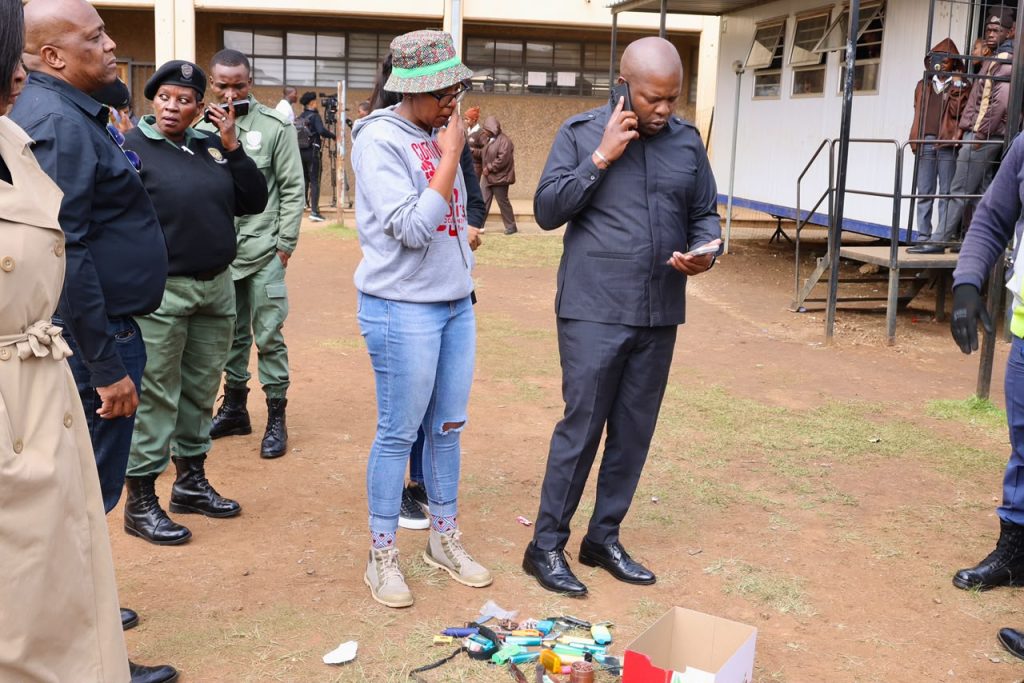
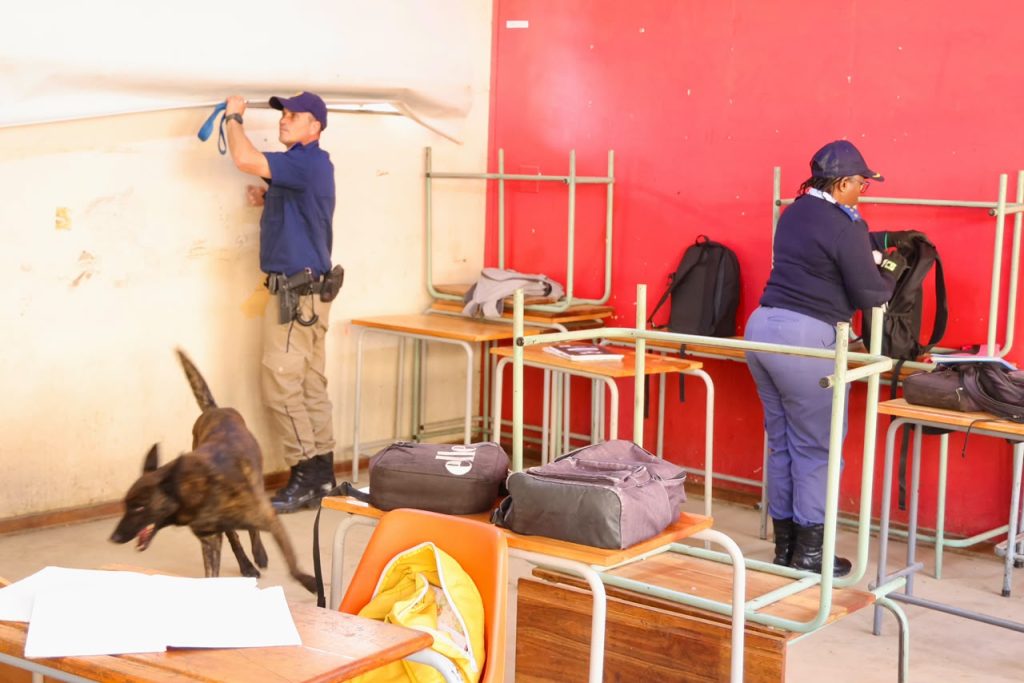
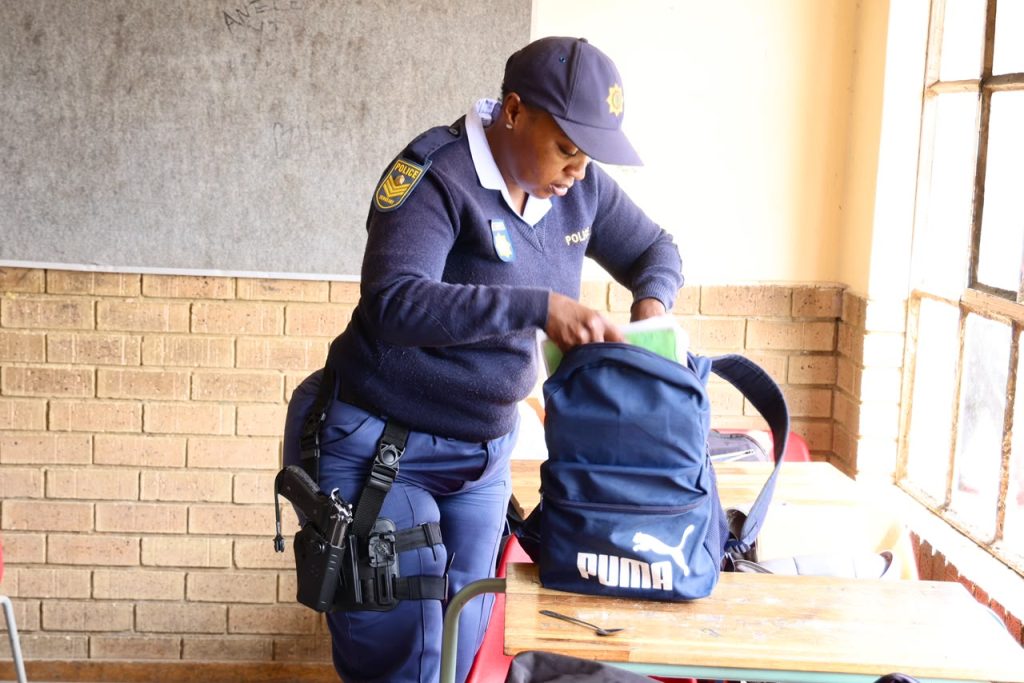
Four schools in Daveyton and Etwatwa were searched on Wednesday in Gauteng’s school safety crackdown, with items seized including a bullet, dagga, vapes, cigarettes and other prohibited items.

The SAPS-led operation was joined by Gauteng Education MEC Lebogang Maile and targeted Phandimfundo Secondary School, Lekamoso Secondary School, Rivoni Secondary School and Hulwazi Secondary School, with learners and school premises searched.

“At Phandimfundo and Lekamoso, officials seized 31 prohibited items, including seven vapes, six small bags of dagga, four loose cigarettes, four pairs of scissors, four boxes of matches and two containers of suspected drugs,” the department said. 

At Rivoni Secondary School, a bullet was found concealed inside the arm-strap worn by a learner. 

Vapes, an Okapi knife and other prohibited items were also seized.

Recent raids at schools throughout the province have repeatedly uncovered vapes and dagga.

In August alone, more than 100 prohibited items, including disposable vapes and suspected dagga, were seized during searches at three Alexandra high schools. 

“It’s a routine for us on Wednesdays to join these searches unannounced throughout the province, but these searches happen regularly,” Maile said.

The province has identified school violence, substance abuse and criminal activity as major threats to teaching and learning. 

INSIDE EDUCATION

The post In Pictures: Bullet, dagga and vapes found in Daveyton school raids appeared first on Inside Education..