Uncategorized

GDE says schools got funds to pay power bills

By Levy Masiteng 

The Gauteng Department of Education (GDE) says schools were allocated funds in November 2025 specifically to settle their municipal obligations, including electricity accounts, amid ongoing concerns over unpaid bills and possible service interruptions.

This followed allegations that the department had shifted the burden of arrear municipal accounts onto schools, a claim it has strongly denied, insisting that the main issue is not a lack of funding, but rather non-payment by some schools despite receiving allocations.

ALSO READ: Draft BELA rules aim to keep pregnant learners in school

In a statement issued this week, the department said several schools in Eldorado Park were among those that received funding for municipal services.

These included Kliptown Primary, which received R233 167, Heerengracht Primary, which received R358 739, Eldorado Park Secondary, which received R523 503, and Eldomaine High School, which received R512 306.

The department said it had also previously communicated with School Governing Bodies about the decentralisation of municipal payments, placing responsibility on schools to manage and settle their own accounts once allocations had been made.

Under the South African Schools Act, schools granted the relevant Section 21 functions may pay for services to the school.

“It is therefore quite concerning that some schools are not paying their municipal accounts despite having received the necessary allocations and being aware of their responsibilities to pay their accounts,” the department said.

ALSO READ: UFH vice-chancellor Sakhela Buhlungu placed on suspension following forensic report

“We wish to reiterate that we are engaging with all municipalities as this challenge is notably experienced across the province. These engagements will assist schools in ensuring they consistently pay their accounts and that their payments and accounts remain accurate at all times.

“Going forward, schools must also ensure that they use the allocations they receive strictly for its intended purposes,” Gauteng Education MEC Matome Chiloane said.

The department has urged affected schools to engage municipalities to negotiate payment arrangements while it facilitates the disbursement of the 2026/27 financial year allocations, which schools are expected to receive on or before 15 May.

In March, it was reported that at least 36 schools across Gauteng experienced electricity disconnections and more than 100 others had received notices warning of possible cuts, particularly in Ekurhuleni and Tshwane.

But GDE spokesperson Steve Mabona disputed those reports, saying schools had mainly received warning correspondence.  

“There is no school that was cut off. The only thing that occurred was that correspondence was circulated to schools that are lagging behind in terms of their municipal services accounts,” Mabona said.

ALSO READ: LaLiga, Royal Bafokeng launch elite youth football academy

He said the responsibility for paying municipal services lies with schools and their SGBs, where the relevant functions have been decentralised.

“In the meantime, the Gauteng Department of Education will continue to engage municipalities not to cut their services, particularly as the interruption of electricity supply may negatively affect teaching and learning,” Mabona said.
INSIDE EDUCATION

Uncategorized

Draft BELA rules aim to keep pregnant learners in school

By Levy Masiteng 

Draft regulations gazetted last week will require schools to support pregnant learners to stay in class and return after childbirth, while requiring pregnancies involving learners under 16 to be reported to social workers and police.

The draft regulations, issued under the South African Schools Act as amended by the BELA Act, require schools to provide a supportive and non-discriminatory environment for pregnant learners.

ALSO READ: UFH vice-chancellor Sakhela Buhlungu placed on suspension following forensic report

In partnership with the Department of Health and the Department of Social Development, schools will need to facilitate access to essential ante natal, post-natal and psychosocial support services for the pregnant learners.

An important provision in the draft regulations is the introduction of mandatory reporting in certain cases. Where a learner under the age of 16 falls pregnant, the school must report the matter to the Department of Social Development and to the South African Police Service.

Department of Basic Education (DBE) minister Siviwe Gwarube said the regulations build on progress already made in addressing learner pregnancy in schools.

ALSO READ: LaLiga, Royal Bafokeng launch elite youth football academy

“We have moved away from a painful past where young girls were expelled or forced out of school due to pregnancy, these practices contributed to alarmingly high dropout rates. These regulations build on that progress and reaffirm our commitment to dignity, inclusion, and equal opportunity,” she said.

Members of the public must submit written comments within 30 days from the date of publication on 25 March 2026, to LearnerPrengancyRegz@dbe.gov.za.

INSIDE EDUCATION

Uncategorized

UFH vice-chancellor Sakhela Buhlungu placed on suspension following forensic report

By Johnathan Paoli

The University of Fort Hare council has placed its vice-chancellor, Sakhela Buhlungu, on precautionary suspension with full pay, pending the outcome of disciplinary proceedings linked to findings from a forensic investigation into senior executive appointments.

‎According to media platform EdNews, a letter on Tuesday signed by council chairperson Siyanda Makaula stated that the decision followed consideration of Buhlungu’s written representations, the forensic report and all relevant circumstances.

‎The move centres on irregularities in the appointment processes of two executive directors, where council approval was not obtained as required under the institution’s statutes.

According to the council, these failures constituted serious breaches implicating senior management decision-making and oversight structures.

The council maintained  that the VC’s continued presence in office could reasonably give rise to risks of interference with potential witnesses or institutional records.

The suspension takes immediate effect and will remain in force until the conclusion of disciplinary proceedings, unless lifted earlier.

The council stressed that the measure does not constitute a disciplinary sanction.

‎Buhlungu has been instructed not to enter university premises without prior written approval and to refrain from contacting staff, students, service providers or other stakeholders on matters related to the investigation.

He is also required to make available any university property or documentation needed for the process and to attend a disciplinary hearing once formally convened.

His employment contract remains in force.

The decision follows a special council meeting held earlier in the month, after the conclusion of a forensic investigation into alleged irregularities in the appointment of the executive director for infrastructure and technology, and the executive director for people management and engagement.

In a statement issued on 20 March, the council said the investigation found that four senior management employees “failed to comply with the requirements of Section 19.1 of the university statute, in that council approval was not obtained” for the appointments.

‎The council confirmed that appropriate disciplinary action has since been imposed on the implicated employees.

The university cited Section 10.1 of its employee relations and procedures, which provides that “where the policies, norms, values, standards and principles of the University of Fort Hare have been violated, the university has the right, through the disciplinary procedure, to apply appropriate corrective action in a fair manner”.

However, the decision to suspend Buhlungu has raised concerns with reports indicating that the vice-chancellor himself flagged the irregularities and attempted to correct them once they came to light, but was ignored.

According to the EdNews, a subsequent forensic investigation did not find wrongdoing on Buhlungu’s part and that tensions between the vice-chancellor and elements within the university leadership have been escalating, particularly following a series of investigations into governance and corruption at the institution.

It has been reported that this move follows a sense of revenge against Buhlungu following his cooperation with probes by the SIU into alleged maladministration at the university.

Buhlungu has been at the forefront of efforts to stabilise the institution, which has in recent years been rocked by governance challenges, including high-profile investigations into procurement and security contracts.

Despite the controversy, the council maintains that due process will be followed.

Formal notice of the disciplinary hearing, including specific charges and logistical details, is expected to be issued in due course in line with university policy.

The unfolding developments place renewed scrutiny on governance processes at the University of Fort Hare, as well as on the balance between accountability and institutional stability at one of South Africa’s historic higher education institutions.

INSIDE EDUCATION

Uncategorized

LaLiga, Royal Bafokeng launch elite youth football academy

By Johnathan Paoli

Spanish football league LaLiga and Royal Bafokeng Sports (RBS) have officially launched a new elite youth football academy in South Africa.

Speaking at the launch event, LaLiga Africa Managing Director Trésor Penku said the partnership reflects a shared commitment to the long-term development of youth football on the continent.

“This launch reflects a shared commitment between LaLiga and the Royal Bafokeng Nation to the responsible and sustainable development of youth football in Africa,” Penku said.

“By combining our methodology with RBS’s infrastructure and long-term vision, we are creating a high-performance environment that will nurture talent and contribute meaningfully to the South African football ecosystem.”

The Royal Bafokeng Sports LaLiga Academy will be based at the Royal Marang Hotel Sports Campus in Phokeng, North West province.

The high-performance facility features six natural grass pitches, two artificial turf pitches, a 7-a-side 7 pitch, and a fully equipped High Performance Centre designed to meet international training standards.

Penku said the initiative brings together LaLiga’s globally recognised youth development methodology and the long-term development strategy of the Royal Bafokeng Nation, which has positioned sport as a key driver of community development under its Vision 2035 framework.

The academy is expected to accommodate approximately 100 players across multiple age groups, including U14, U15, U17, U19 and a senior SARL team.

He said it aims to provide a structured pathway that integrates high-performance training, competitive match exposure and academic support, with players set to compete in community, regional and elite competitions.

Oversight of the programme will be led by a UEFA Pro Licence coach serving as Technical Director, supported by local coaching staff and operating under the direct supervision of LaLiga’s technical team in Spain.

The model is designed to facilitate knowledge transfer while building local coaching capacity and embedding international best practice within the South African football ecosystem.

Royal Bafokeng Sports leadership described the academy as a milestone in expanding access to world-class training opportunities for young athletes in the region.

Acting RBS Managing Director Emile Smith welcomed the partnership with LaLiga as a major milestone in the nation’s journey to develop young football talent.

“Together, we are creating opportunities for aspiring athletes through world-class coaching, mentorship, and access to exceptional facilities. This academy will not only elevate player development but also inspire a deeper passion for football within our communities,” Smith said.

The collaboration forms part of LaLiga’s broader global footprint, which has seen the Spanish league deliver more than 900 international sports projects across over 60 countries in the past decade.

LaLiga Head of Football Projects Juan Florit said the partnership would enable the adaptation of Spanish football expertise to local conditions while strengthening grassroots systems.

“Through collaborations such as this, we are able to share the knowledge and expertise of Spanish football while adapting it to local contexts. Together with the Royal Bafokeng Nation, we aim to identify and develop regional talent and create long-term value for the game,” Florit said.

He said LaLiga’s youth development model has become a benchmark globally, with academy-trained players accounting for 19.8% of total playing minutes in the 2024/25 season and reaching a combined market value of €1.477 billion.

INSIDE EDUCATION

Google, DHET sign MoU to unlock youth opportunities  
Uncategorized

Google, DHET sign MoU to unlock youth opportunities  

By Lebone RodahMosima 

Google South Africa has confirmed that AI is set to add R172 billion in creating new skills and unlocking growth opportunities for all citizens, in order to close the skills gap and empower the youth to innovate for Africa.

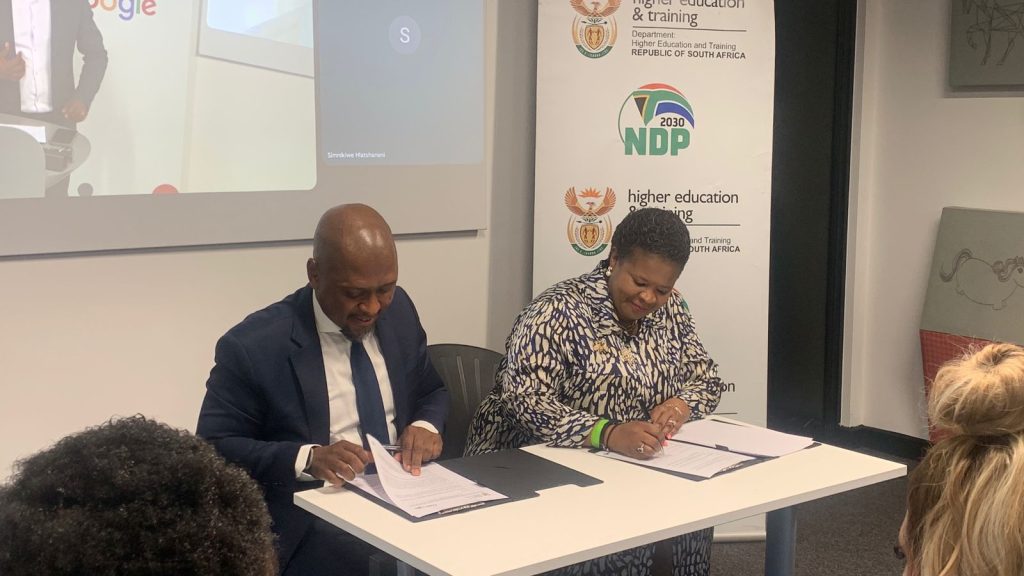
This announcement comes after the official signing of the Memorandum of Understanding (MoU) at Google South Africa’s headquarters in Johannesburg. 

ALSO READ: Chiloane orders probe into fatal Daveyton school wall collapse

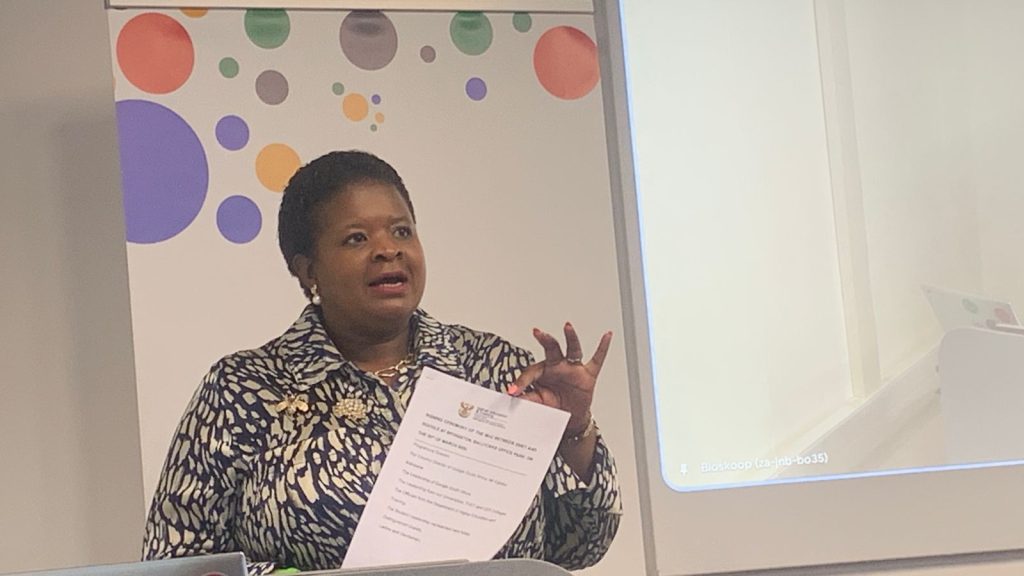
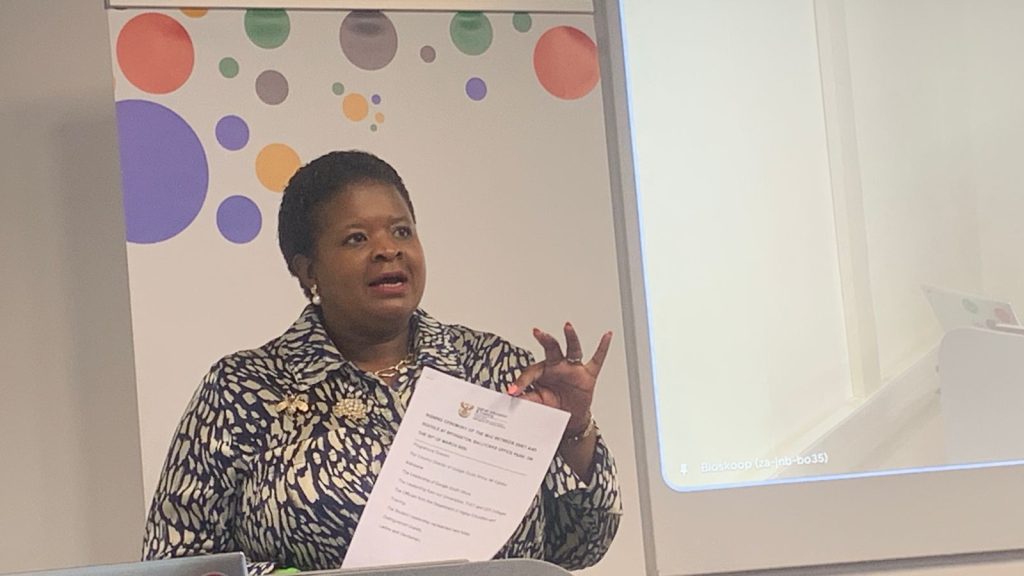
On Monday at, the Department of Higher Education and Training (DHET) said Deputy Minister Gondwe, along with Google Country Director Kabelo Makwane have officiated the MoU signing ceremony on AI and digital skills development. 

The DHET said this “represents a fourth successful public-private partnership for student and youth skills development,” by Gondwe’s office in collaboration with other units and branches within the department. 

”The Google MoU seeks to enhance digital skills, incorporate AI in higher education, and promote workforce development in South Africa. It will offer access to training programmes for public universities, TVET colleges, and CET colleges, including an initial 10 000 Google Career Certificate scholarships,” the DHET said.

Gondwe expressed her eagerness to see this MoU with Google come to fruition.

“This will significantly boost digital skills development across our universities, TVETs, and CET colleges through Google’s Career Certificates, Generative AI for Educators, train-the-trainer model, and the full range of digital and AI programmes,” Gondwe said.

“Digital and AI skills are vital for navigating the modern world and securing future employment opportunities.”

ALSO READ: Manamela: Access alone won’t transform African universities

She emphasises that it is essential that students, especially those in remote and township areas, are prepared for the job market once they leave the sector and possess the right skills for employability, including self-employment and entrepreneurship. 

Makwena added that Google is committed to higher education, emphasising that South Africa’s future is deeply rooted in capacity building. 

“AI has moved from theory to everyday reality. Our research shows digital technology is a massive catalyst for South Africa, with Google tools alone contributing R118 billion to the economy in 2023,” Makwena said. 

“Inclusivity is key; when South Africans build with tools that understand their environment and languages, technology becomes a true driver of growth.”

Both DHET and Google said the MoU will focus on skills training, including ten thousand (10 000) Google Career Certificate scholarships in various fields; AI teacher training: through programmes like Generative AI for Educators and collaborate on a train-the-trainer model to promote wider skills sharing.

Other focuses include Curriculum and Product support, such as providing relevant Google AI products to the public; Device Support; as well as AI Policy, where it’ll “include collaboration on policy and governance, sharing expertise on AI policy development and the use of AI in public institutions.”

The MoU will be executed and carried out over a period of two years.

INSIDE EDUCATION

Uncategorized

Chiloane orders probe into fatal Daveyton school wall collapse

Staff Reporter

The Gauteng education department will appoint a law firm to investigate the collapse of a school wall that killed an 8-year-old learner at Lerutle Primary School in Daveyton, it said on Monday.

Gauteng MEC for Education Matome Chiloane announced the investigation during a visit to the family of Grade 3 learner Lwazi Motuse in Daveyton, Ekurhuleni.

The department said the independent probe would seek to establish the full circumstances surrounding the collapse, in which five other learners were injured.

“We convey our sincerest condolences to the bereaved family. We remain committed to supporting the family and the entire Lerutle Primary School community during this deeply difficult time,” Chiloane said.

The department said it continued to provide psycho-social support to affected learners, teachers and the bereaved family. It confirmed that all other learners injured in the incident had since been discharged from hospital.

The wall collapse is the second fatal school incident this year to trigger an external investigation by Chiloane.

On 18 March, the MEC formally introduced a law firm to investigate the death of 10-year-old Milton Neo Mokgoatsane, a Grade 5 learner at Reagile Primary School in Winnie Mandela, Tembisa, after a goal post fell on him during break time in February.

INSIDE EDUCATION

Santa Shoebox Project opens 2026 applications for schools, ECD centres
Uncategorized

Santa Shoebox Project opens 2026 applications for schools, ECD centres

By Levy Masiteng 

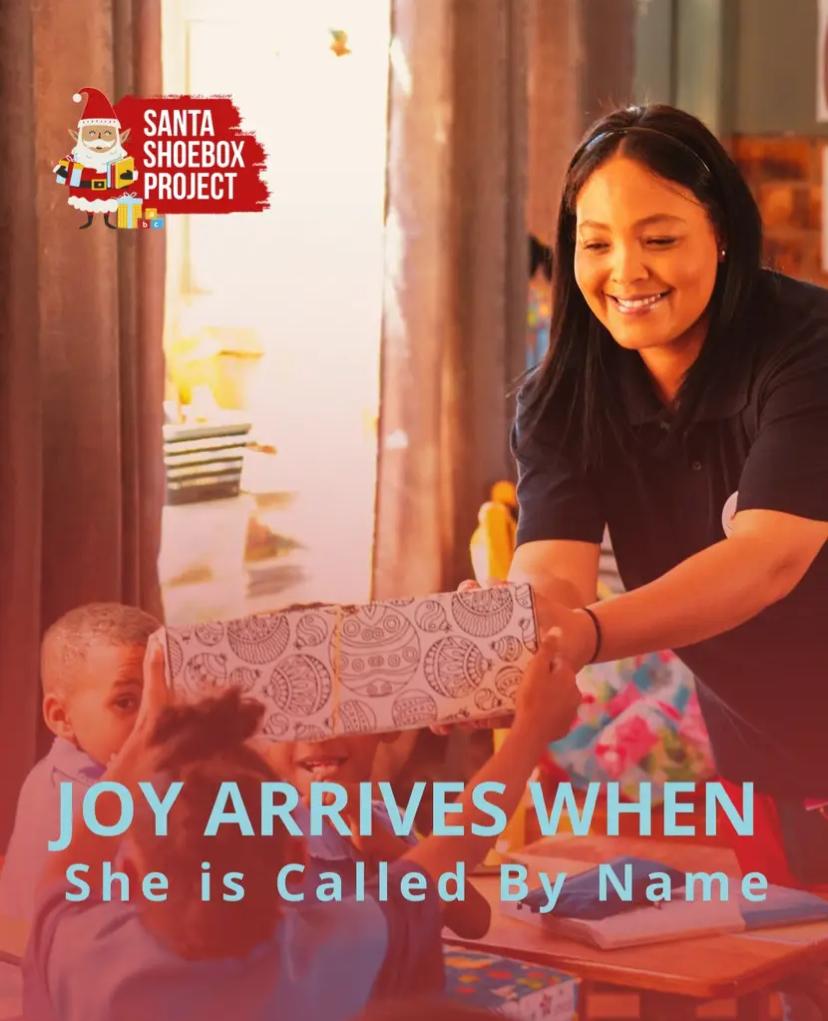
The Santa Shoebox Project has officially announced that applications for its 2026 campaign will open on 7 April and close on 23 April.

As the organisation celebrates its 20th anniversary, it said it is inviting educational institutions serving vulnerable children to become beneficiaries of its initiative, which delivers personalised gift boxes filled with sanitary items, stationery, treats and toys.

Interested schools and ECD centres are asked to apply by registering or logging into their profile on the official Santa Shoebox website and completing the online beneficiary application form in full.

“Incomplete applications will not be considered, and no changes can be made once submitted,” the organisation said.

To be considered, applicant institutions must demonstrate the ability to distribute personalised shoeboxes reliably to each listed child and align with the project’s values and goals.

Importantly, applicant institutions should not be receiving similar support from other organisations, and all applications will be assessed against specific criteria.

By mid-June, applicants will be notified via SMS whether they have been successful.

In a statement, the organisation said applications are open to schools and ECD centres that maintain official class lists identifying children by name, age and clothing size, as each shoebox is individually prepared.

“The project prioritises learners in pre-school, Grade R, Grade 7 and Grade 11, which are key transitional stages in a child’s educational journey,” the statement reads.

It added that both urban and rural areas are encouraged to apply, but preference will be given to rural facilities serving vulnerable children who have not previously received shoeboxes.

According to the project’s CEO, Deb Zelezniak, the need for initiatives like this remains urgent in a country marked by deep inequality.

“The G20 Global Inequality Report highlights a stark divide in educational opportunity: while a child from a wealthy family has a one-in-two chance of studying beyond secondary school, those odds drop to one-in-40 for boys in poverty and a startling one-in-100 for girls,” she said.

She also emphasised the importance of early childhood development in breaking cycles of poverty.

“We’re seeing a very stark chasm of opportunity in South Africa. What is particularly concerning is that we have 8.8 million children in rural communities where ECD centres often operate in survival mode without basic infrastructure or educational materials. That’s where we step in and help.”

Founded in 2006, the Santa Shoebox Project has distributed more than 1.35 million shoeboxes to children in need, while also supporting education through infrastructure upgrades, reading corners and teacher development programmes.

The organisation said the project is open to South African beneficiaries only and that, from 2026, Santa Shoeboxes will no longer be distributed in Namibia.

“The shoeboxes provide practical necessities many families cannot afford, ensuring children feel seen and valued. We look forward to partnering with facilities that share our commitment to uplifting South Africa’s youth in 2026,” Zelezniak said.

The statement also invited members of the public across South Africa to volunteer.

INSIDE EDUCATION

Uncategorized

Higher education must confront inequality beyond enrolment, says Manamela

By Charmaine Ndlela

Higher Education and Training Minister Buti Manamela has called for a fundamental shift in how African universities approach equity, warning that access alone does not guarantee true transformation.

Delivering a keynote address at the Africa Universities Summit 2026 in Nairobi, Kenya on Monday, Manamela said higher education systems across the continent must move beyond enrolment figures and confront deeper inequalities in leadership, employment outcomes and inclusion.

ALSO READ: Santa Shoebox Project opens 2026 applications for schools, ECD centres

Speaking under the theme “Equity, Diversity, Inclusion and Gender Equality in African Higher Education,” Manamela emphasised that education systems are inherently political.

 “There is no neutral education system. Education either reproduces the world as it is, or helps us transform it,” he said.

Using South Africa as a case study, Manamela highlighted significant gains in women’s participation in higher education. In 2023, women made up 62.7% of university enrolments and 65.4% of graduates, reflecting what he described as the impact of “long struggles for access, democracy and redistribution.”

However, he warned that these gains tell only part of the story, “the correct question is not whether women have made progress. Clearly, they have. The question is whether our systems are producing genuine equality.”

Manamela pointed to a growing concern around male disengagement, noting that fewer men are entering and completing higher education, raising broader social questions about schooling, identity and economic participation.

Despite women dominating enrolment and graduation figures, they remain underrepresented in positions of power.

ALSO READ: SA takes first place at African Spelling Bee, world champs up next

In 2023, women accounted for only 33.8% of professors in South African universities.

 “The lecture hall may have feminised, but the senior chair has not,” Manamela said.

He stressed that equity must be measured across the entire system  from access and completion to employment and leadership.

The Minister also highlighted trends in Technical and Vocational Education and Training (TVET), where women again form the majority of enrolments. However, men still dominate certain skills programmes, reflecting ongoing gendered labour-market pathways.

 “The real problem is not women’s progress. The real problem is a society that still produces unequal destinations,” he said.

Challenging long-held assumptions, Manamela noted that women are no longer absent from Science, Engineering and Technology (SET) fields in South Africa, adding that women slightly outnumber men in both enrolments and graduates.

However, he cautioned that representation does not equal equality, particularly in areas such as specialisation, research leadership and pay.

Manamela described the National Student Financial Aid Scheme (NSFAS) as a key instrument of gender transformation. In 2023, 67.4% of NSFAS beneficiaries were women, receiving the majority share of funding.

 “Access to funding does not automatically produce equality in life outcomes,” he said.

The Minister raised concerns about the slow pace of disability inclusion in higher education, noting that students with disabilities make up just over 1% of total enrolment.

He stressed that inclusion must be built into institutional design rather than treated as an afterthought.

Broadening the discussion, Manamela noted that South Africa’s female-majority enrolment is not reflective of the rest of the continent. Across sub-Saharan Africa, women remain underrepresented in higher education, with roughly 80 women enrolled for every 100 men.

He cited Kenya as an example, where tertiary enrolment stands at 13% for men and 10% for women, underscoring ongoing access challenges.

ALSO READ: North West education targets R24m in staff debt

 “Africa is not one gender story,” he said.

Manamela urged universities to adopt a more rigorous and transparent approach to transformation, including publishing annual data on enrolment, retention, completion, employment outcomes and leadership representation.

He also called for stronger alignment between higher education and broader social systems, including labour markets, communities and public policy.

 “The higher education question is inseparable from the social question,” he said.

In closing, Manamela emphasised the need for a balanced and inclusive approach to equality that does not pit one group against another.

 “Not equality for women at the expense of men. Not concern for boys as a backlash against women’s progress. Not access without success. Not inclusion without power. But real equality,” he said.

The Africa Universities Summit 2026, which brings together higher education leaders from across the continent, is set to conclude tomorrow.

INSIDE EDUCATION

Uncategorized

Weekend Roundup | Jansen says postgraduate education needs reset, eThekwini students rally against GBVF and more

Read: Jansen says postgraduate education needs reset

South African universities need to recover the intellectual purpose of postgraduate education, resist xenophobia in the academy, and improve the quality of supervision, Professor Jonathan Jansen said at a national higher education colloquium this month.

Jansen, a distinguished professor of education at Stellenbosch University, made the remarks while delivering the keynote address at the third Enabling Quality Postgraduate Education colloquium, held in Gauteng on March 16 and 17.

The colloquium brought together academics, postgraduate supervisors, and higher education specialists to examine how to strengthen research culture and postgraduate training across the country.

For the full story, click the link below:

ALSO READ: Chiloane wants stronger school sports drive to grow Gauteng talent

Gauteng MEC for Education, Sport, Arts, Culture and Recreation Matome Chiloane used the Gauteng Sport Indaba in Boksburg this week to call for wider school sport participation, stronger talent pathways and more investment in township facilities.

Speaking at the indaba, Chiloane said Gauteng needed a more integrated approach to sport from school level upward.

“This Indaba anchors a clear vision, which is a seamless, integrated, and lifelong pathway for every citizen,” Chiloane said.

“This vision requires data-driven decision-making, strong governance, inclusive facility planning, and a united focus on literacy, equity, and building a business case for funding sports and recreation in the province.”

He said too many pupils were falling out of organised sport because schools remained heavily concentrated around a narrow set of codes.

For the full story, click the link below:

ALSO READ: eThekwini, DUT students rally against GBVF in awareness hike

eThekwini Municipality and activist group Mzansi Act Now led a four-kilometre awareness hike on Saturday with 50 female Durban University of Technology students in a campaign against gender-based violence and femicide.

The initiative, led through the municipality’s Community Services Committee, aimed to educate and empower young women while linking physical activity to advocacy, awareness and healing, the city said in a statement.

The municipality said the session focused “not only on physical wellness, but also on promoting healing as a critical component of long-term solutions to gender-based violence”.

“We are excited to be partnering with Mzansi Act Now and various stakeholders in delivering youth development programmes where participants can grow, support one another, and learn together,” Community Services Committee Chairperson Councillor Zama Sokhabase said.

INSIDE EDUCTION

Uncategorized

OPINION| SA’s real EdTech revolution must start with the forgotten classroom

By Dr Mario Landman

South Africa currently operates in a volatile and disruptive environment, where the promise of the fourth industrial revolution (4IR) frequently clashes with the harsh realities of the digital divide.

While global conversations are dominated by high-tech features like immersive learning and automated grading, many South African students continue to face unreliable connectivity, frequent power cuts, and outdated hardware.

Pouring resources into cutting-edge technology that only benefits a few risks deepening existing socioeconomic fractures and leaving “forgotten classrooms” further behind.

However, a new wave of context-specific innovation is proving that high impact does not always require high bandwidth.

The “digital divide” in South Africa is characterised by uneven access to information and communication technologies, particularly in rural and underprivileged communities.

For these students, the high cost of data and access to adequate devices are major barriers to academic success.

True innovation in this context means “designing for disruption”, creating tools that assume power and internet access will fail. This approach moves away from heavy, bandwidth-intensive applications toward lightweight, “offline-first” solutions that utilise caching and low-bandwidth content.

Designing for disruption

A primary example of this locally responsive innovation is The Invigilator App ™.

Developed by South African entrepreneurs, the app was born from the realisation that international proctoring solutions were often unsuitable for the local landscape because they required high-speed internet and high-end devices.

Instead, The Invigilator App is mobile-centric, designed to run on entry-level smartphones that are far more accessible to the average South African student, while also offering a lightweight desktop version for PC use that can operate on relatively low-specification devices.

To maintain academic integrity in remote environments, the app utilises advanced AI and machine learning to simulate the presence of a physical invigilator.

It performs random checks throughout an assessment, including facial recognition to verify identity and liveness, GPS tracking to identify proximity-based collusion, and audio analysis to detect unauthorised conversations.

Crucially, the app is engineered to be data-efficient and features offline capabilities, allowing students to complete their examinations without a constant internet connection and syncing their data once they reconnect. This ensures that a student’s geographical location or financial status does not prevent them from earning a qualification of integrity.

Inclusive pedagogy

Beyond assessment, tackling inequality requires a shift toward inclusive pedagogy.

AI-driven tools are now being used to provide multilingual support in all 11 official South African languages, which is a vital intervention for students who often struggle when transitioning from home-language instruction to English in the foundational phase.

By using advanced natural language processing, these tools ensure that linguistic diversity and inclusivity become an asset rather than a barrier to learning.

Furthermore, predictive student support systems are being deployed to monitor real-time engagement and performance data. These tools are built on the principle of “intelligence augmentation,” using data to identify at-risk students far earlier than traditional methods would permit.

By bridging the “recognition-to-response gap,” these systems allow educators to provide essential mentorship and psychosocial support to combat high dropout rates.

The development of these tools follows a “teacher first, tech second” philosophy, ensuring that technology empowers educators rather than replacing them.

In this model, the human remains the central instructional decision-maker, while AI handles administrative burdens and provides insights that a human might miss.

Additionally, the rise of portable micro-credentials allows for flexible, stackable learning outcomes that respond directly to the needs of the 4IR labour market, providing students from disadvantaged backgrounds with clear signals of their expertise to potential employers.

National Policy Framework

For EdTech to truly function as a scalable and inclusive solution, it must be supported by a robust national policy framework.

Current efforts by the Department of Higher Education and Training (DHET) are beginning to prioritise ICT infrastructure and digital literacy through strategic public-private partnerships.

Initiatives like the distribution of mobile devices to funded students and the rollout of fibre connections to technical colleges are critical steps toward ending bandwidth poverty.

Ultimately, the goal of EdTech in a developing nation should be to empower educators and students through technology that respects their constraints. By focusing on low-bandwidth, high-impact tools — like The Invigilator App and offline-capable learning platforms — South Africa can ensure that the technological revolution becomes a bridge to equity rather than a wall of exclusion.

True progress lies in celebrating contextual innovation and rewarding the creativity required to make learning accessible for all.

Landman is Executive: Educational Technology and Innovation in the Academic Centre of Excellence at The Independent Institute of Education.

INSIDE EDUCATION