Uncategorized

Gwarube: AI can’t replace basic learning

By Charmaine Ndlela

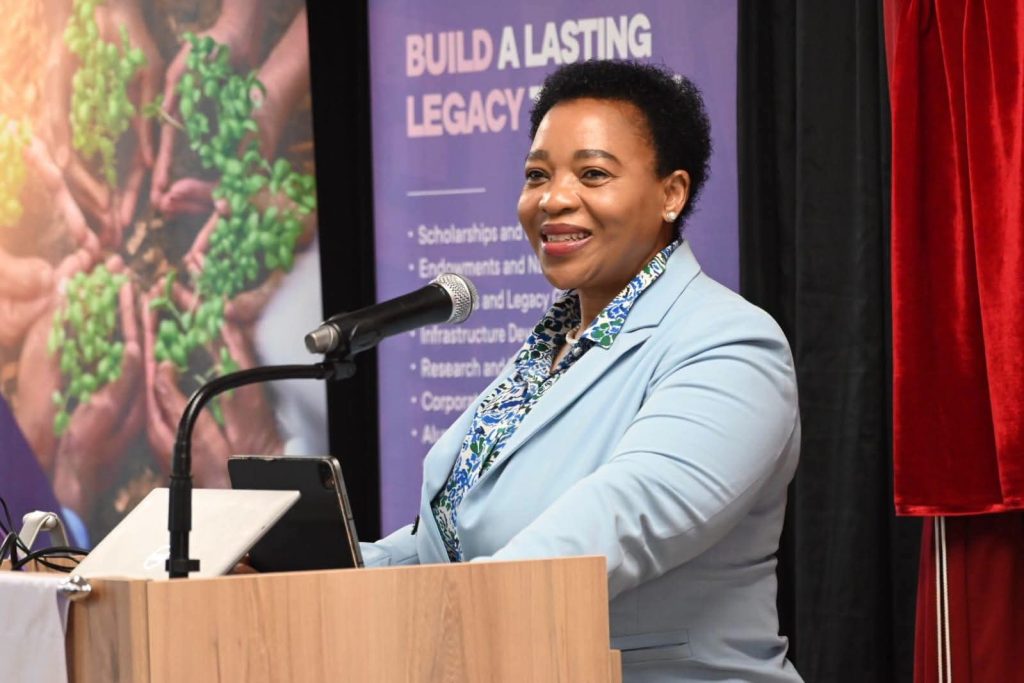
Basic Education Minister Siviwe Gwarube has called for stronger education systems across Africa, saying technology and artificial intelligence cannot replace basic literacy and numeracy skills.

Speaking at the Education World Forum 2026 in London, Gwarube highlighted South Africa’s efforts to strengthen foundational learning and expand Early Childhood Development (ECD) programmes.

“South Africa is investing R10 billion over three years to expand Early Childhood Development, and a further R496 million to create 115 000 ECD spaces in three of our most rural provinces of Limpopo, KwaZulu-Natal and the Eastern Cape. These investments signify our commitment to children whose futures should not be determined by the circumstances of their birth,” she said.

“As a country we can be proud of the strategic shift we have made towards strengthening the foundations of learning.”

The R496 million allocation is linked to an outcomes-based early childhood development fund aimed at expanding access to early learning in Limpopo, KwaZulu-Natal and the Eastern Cape.

The Education World Forum is being held in London from 17 to 20 May under the theme “Educating for a Shared Future: Peace, Planet, Purpose and Pathways”. The forum brings together education ministers, policymakers and education sector leaders to discuss the future of global education systems.

Gwarube said South Africa had made a strategic shift towards prioritising foundational learning for the country’s 13.7 million learners.

“Strong futures require strong foundations,” she said.

She said the issue was particularly important for Africa, which has the youngest population in the world, making education critical to turning demographic growth into economic opportunity.

“If Africa is to rise, Africa’s children must rise first,” she said.

Referring to South Africa’s literacy crisis, Gwarube said about eight in 10 children could not read for meaning by the age of 10.

She described this as more than a literacy challenge, calling it a “future-readiness crisis” that affected learners’ ability to succeed in gateway subjects such as Mathematics, Science and Technology.

“When a child cannot read for meaning, every subject becomes difficult and opportunities become limited,” she said.

While many countries were discussing artificial intelligence, automation and the future digital economy, Gwarube said governments had to recognise that meaningful innovation could not happen without strong educational foundations.

“No country can build a high-tech economy on weak educational foundations,” she said.

“No country can leapfrog literacy, and no country can automate its way around numeracy.”

Gwarube said the future economy would require children who could think critically, solve problems, adapt and create, rather than learners who only knew how to operate technology.

She posed what she described as an urgent question for learners facing the future: “Will I be able to read well enough to participate in that future at all?”

INSIDE EDUCATION

The post Gwarube: AI can’t replace basic learning appeared first on Inside Education..
Imbali woman graduates as nurse at 54
Uncategorized

Imbali woman graduates as nurse at 54

By Lebone Rodah Mosima

Imbali resident Thobeka Dumakude has graduated from the Durban University of Technology (DUT) with a Bachelor of Health Sciences in Nursing at the age of 54.

“I wanted to prove to myself and to others that dreams do not expire. Education has no age limit. It took me six years instead of four years to complete my qualification,” she said.

“It was hard adapting to the academic environment. I found myself studying alongside students younger than my own children, but I never gave up. I was determined to finish what I had started,” she said.

The university praised Dumakude’s determination, resilience and perseverance, saying these qualities had enabled her to realise her lifelong ambition of serving communities through healthcare.

Dumakude’s childhood dream of becoming a nurse was put on hold after she became pregnant at the age of 19. She later had to find employment and care for her child.

“Prior to studying at DUT, Thobeka worked as an administrator for a non-governmental organisation that assisted patients living with HIV and AIDS,” the university said.

“This was where her love for nursing resurfaced after her five-year work contract ended and her internet café business was not making enough profit.”

Dumakude enrolled at DUT in 2020, more than 30 years after completing matric. The university said she had to balance family responsibilities, academic pressure and the challenge of adapting to student life alongside much younger classmates.

Her four-year qualification eventually took six years to complete as she worked through difficulties in her studies.

Dumakude is currently completing her community service in a psychiatric ward at Jubilee District Hospital in Hammanskraal.

Her duties include caring for mental healthcare patients, participating in multidisciplinary teamwork, administering treatment, monitoring patients, and supporting patients and families through mental health challenges.

“She plans to study further, specialising in Mental Health Nursing after realising there is a great need for mental health support in society,” the university said.

Dumakude said her future goal is to work alongside other healthcare professionals to address mental health issues in communities and contribute positively to people’s wellbeing.

“Graduating was one of the proudest moments of my life,” she said.

“Walking across the graduation stage made me feel confident, empowered, and fulfilled, knowing that I had achieved something no one can ever take away from me.”

Dumakude encouraged people who believe it is too late to pursue their academic dreams not to give up on education.

She said her graduation showed that perseverance, prayer, courage and lifelong learning could open doors at any stage of life.

INSIDE EDCUATION

The post Imbali woman graduates as nurse at 54 appeared first on Inside Education..
Uncategorized

Gauteng records 26 088 new hypertension cases among adults under 45

By Levy Masiteng 

Gauteng recorded 69 125 new hypertension cases in the 2025/26 financial year, including 26 088 among adults aged 18 to 44, as health authorities warned that high blood pressure was increasingly affecting younger residents.

The figures were released by the Gauteng Department of Health in a statement issued on Sunday to mark World Hypertension Day, observed annually on 17 May.

“The Gauteng Department of Health has noted with concern the increasing number of adults under the age of 45 diagnosed with hypertension across the province,” the department said.

“During the 2025/26 financial year, from April 2025 to March 2026, Gauteng recorded 69 125 new hypertension cases across the province. Of these, 26 088 cases were recorded among adults aged between 18 and 44. Contributing factors include unhealthy eating habits, obesity, lack of physical exercise, smoking and excessive alcohol consumption.”

Hypertension, or high blood pressure, is often described as a “silent killer” because many people do not experience symptoms until serious complications develop.

“Hypertension, commonly known as the ‘silent killer’, often develops without noticeable symptoms and remains one of the leading contributors to stroke, heart disease, kidney failure and premature death,” the department said.

The department said routine screening remained critical, especially because many residents may not know their blood pressure status.

“As hypertension frequently presents without symptoms, routine screening remains essential. In a bid to strengthen early detection and prevention efforts, the Department screened approximately 8.7 million adults for hypertension across Gauteng during the 2025/26 financial year.”

Public healthcare facilities in the province provide free blood pressure checks and chronic disease management services for people diagnosed with hypertension, diabetes and related conditions.

“In addition, public healthcare facilities provide free blood pressure screening and integrated chronic disease management services for individuals diagnosed with hypertension, diabetes and related conditions,” the department said.

The department said its ward-based outreach teams and community health workers would continue providing health education, promoting healthier lifestyles and encouraging residents to undergo free blood pressure screening at public healthcare facilities and during community outreach activities.

“To reduce the risk of hypertension, residents are encouraged to exercise regularly, reduce salt intake, stop smoking and limit alcohol consumption. Individuals diagnosed with hypertension are advised to take their medication as prescribed by healthcare professionals and adhere to treatment plans to effectively manage the condition.”

Residents on chronic medication were also encouraged to register for the Central Chronic Medicine Dispensing and Distribution Programme, which allows patients to collect medication closer to their homes and reduce waiting times at healthcare facilities.

“Residents can also make use of the Central Chronic Medicine Dispensing and Distribution Programme to collect chronic medication closer to their homes and reduce waiting times at healthcare facilities. Visit your nearest clinic to register on the CCMDD system.”

The World Health Organisation said the 2026 World Hypertension Day theme was “Controlling Hypertension Together: check your blood pressure regularly, defeat the silent killer”. It said the day was aimed at raising global awareness about high blood pressure and promoting prevention, detection and control.

The WHO’s Regional Office for Africa said hypertension was rising rapidly across the region, driven by urbanisation, unhealthy diets, physical inactivity and the harmful use of alcohol and tobacco. It said the trend posed a growing threat to health, well-being and sustainable development.

Globally, WHO estimates that 1.4 billion adults aged 30 to 79 had hypertension in 2024, while about 600 million adults with hypertension were unaware they had the condition. It also estimated that only about 320 million adults with hypertension had it under control.

INSIDE EDUCATION

The post Gauteng records 26 088 new hypertension cases among adults under 45 appeared first on Inside Education..
Uncategorized

Checkers campaign raises R1m for stationery packs for nearly 9 000 learners

By Levy Masiteng 

Nearly 9 000 learners across South Africa will receive essential stationery packs after R1 million was raised through the Checkers Act For Change Back-to-School project in partnership with non-profit organisation Meals on Wheels.

The organisation announced on Monday that the fundraising initiative will help provide learners with school supplies, especially in low-income schools.

This includes pens, exercise books, calculators and other classroom essentials.

Meals on Wheels said it is working closely with schools and communities nationwide to ensure the stationery reaches learners and schools most in need.

“We see first-hand the challenges families face every day. Through our network, we’re able to help ensure these supplies reach learners in communities that are often overlooked,” said Gershon Naidoo, the national programmes and marketing director of Meals on Wheels.

The campaign was launched at the start of this year’s academic calendar.

According to the organisation, funds were raised through the sale of a limited-edition Act For Change exam pad, sold in Checkers stores and on the Checkers Sixty60 app, with R2 from every purchase going directly towards the stationery fund. 

Customers also contributed by donating R5 at till points in stores nationwide.

Several leading stationery brands supported the initiative by contributing a portion of proceeds from selected products. 

These included Pritt, Bostik, Henkel, Staedtler, Penflex, Bic, Butterfly, Casio, KV Art, Freedom Stationery, Bidvest, Palm Stationery, CTP Stationery, Sappi and Plastafrica.

Naidoo said access to basic school supplies can significantly improve a learner’s ability to participate confidently in class and focus on their education.

He said the overwhelming support for the campaign demonstrated how small contributions can collectively create meaningful change.

“Ensuring learners have the basic tools they need allows them to focus on learning and engage more fully in the classroom,” chief sustainability officer at the Shoprite Group, Sanjeev Raghubir said. 

INSIDE EDUCATION

The post Checkers campaign raises R1m for stationery packs for nearly 9 000 learners appeared first on Inside Education..
UKZN PhD explores medicinal potential of invasive bugweed
Uncategorized

UKZN PhD explores medicinal potential of invasive bugweed

By Lebone Rodah Mosima

Dr Myuri Parusnath has earned a PhD in Biology from the University of KwaZulu-Natal for research into plant-based bioactive compounds in Solanum mauritianum, commonly known as bugweed.

Her study, titled “Secretory, Phytochemical and Biological Activities of Solanum mauritianum Scop. (Solanaceae),” examined the chemical and biological properties of the plant, which is classified as an invasive species in South Africa.

Parusnath said plants that thrive across diverse environments often develop complex chemical defence systems, some of which may have medicinal value.

“In this study, I investigated the microscopic structures of the plant, analysed its chemical composition and evaluated several biological activities, including antioxidant, antibacterial and cytotoxic properties,” Parusnath said.

“The aim was to explore whether this plant could serve as a potential source of natural bioactive compounds.”

She said the research was particularly relevant given the growing problem of antibiotic resistance and the need to explore alternative therapeutic options.

“In many parts of the world, medicinal plants remain an important component of healthcare, and scientific studies such as this help validate and expand our understanding of their potential applications,” she said.

Parusnath’s interest in the field was rooted in a longstanding curiosity about science and the natural world.

“Always fascinated by how biological systems function and how research can uncover new insights, the possibility of exploring plants as sources of biologically active compounds and contributing to discoveries that might one day support therapeutic development strongly motivated her work,” UKZN said.

The research adds to the growing body of knowledge about plant-derived compounds and their potential value.

“By examining the chemical composition and biological activity of Solanum mauritianum, my research helps build a scientific foundation that future studies can expand upon, particularly in the search for plant-based therapeutic agents,” Parusnath said.

Parusnath remains actively involved in academic life and student development.

She serves as a First-Year Experience Coordinator in the College of Agriculture, Engineering and Science and works as a part-time lecturer in Biology in the School of Agriculture and Science.

“Long-term she aspires to build a career in academia and research while mentoring and supporting future generations of students,” UKZN said.

“Parusnath credited several people who helped her reach this milestone including her supervisor, Professor Yougasphree Naidoo, and co-supervisor, Professor Moganavelli Singh, who mentored and guided both her master’s and doctoral studies.”

Parusnath also expressed gratitude to her parents, brother and friends for their support during her studies.

She emphasised the importance of maintaining balance. In her spare time, she enjoys going to the gym, exploring creative interests such as makeup, and spending time with friends and family.

Reflecting on the broader significance of her achievement, Parusnath said she hoped her journey would inspire others, particularly young women considering careers in science.

“Doctoral graduates represent a small proportion of the global population, and women remain underrepresented in many scientific fields,” she said.

“Through my work and example, I hope to encourage more women to pursue paths in science, research and higher education.”

INSIDE EDUCATION

The post UKZN PhD explores medicinal potential of invasive bugweed appeared first on Inside Education..
Uncategorized

Latest militant attacks on schools in Nigeria leave more than 80 children missing, officials say

A wave of militant attacks on schools in Nigeria over the past week has left more than 80 children missing, local officials and a rights group said Sunday, the latest in school abductions in the West African country where the government is battling an array of jihadi and other armed groups.

The attackers targeted a primary school in the conflict-battered state of Borno, in Nigeria’s northeastern corner, sometime between Wednesday and Thursday. The militants abducted 42 children there, in the Askira Uba and Chibok areas.

Amnesty International said that attack took place in the village of Mussa near Sambisa Forest, a stronghold of militants from Boko Haram and its splinter group, an Islamic State affiliate known as the Islamic State West Africa Province.

Across the country, two secondary schools in the southwestern Oyo state were attacked hours apart on Friday, and at least 40 children were abducted there, according to Amnesty’s Nigeria branch. Such abductions are rare in this particular area.

The rights group warned on Sunday that the threat of abduction is forcing many children out of school, while underage girls are being pulled out of classrooms and forced into marriage by families seeking to protect them from school attacks.

Peter Wabba, a government official from Mussa, said on Sunday that he was told the “exact number” of children abducted in Oyo was 48.

“The government is assuring us that they are doing their possible best to see that these children are rescued but up till now, we are still waiting,” he told The Associated Press.

Amnesty also said that the authorities “never fulfill promises to investigate the incidents and bring the perpetrators to justice.”

“Victims and their families continue to be denied access to justice,” it said.

On Saturday, police spokesperson Ayanlade Olayinka told the AP that three gunmen were detained in connection with the Oyo attack, which took place in the Oriire area, about 220 kilometers (135 miles) from the city of Lagos.

The suspects were identified by the community and arrested, Olayinka said. Police did not say if they were searching for more suspects.

Abductions of schoolchildren are common in Nigeria, Africa’s most populous nation, especially in the country’s north. Last year, two mass abductions from schools rocked the nation, with over 300 children taken in the northern region.

School kidnappings have come to define insecurity in Nigeria, and analysts say it’s often because armed gangs see schools as strategic targets they can exploit to draw more attention.

AP

The post Latest militant attacks on schools in Nigeria leave more than 80 children missing, officials say appeared first on Inside Education..
Gauteng Education announces review of school funding model
Uncategorized

Gauteng Education announces review of school funding model

By Johnathan Paoli

Gauteng Education MEC Lebogang Maile has announced the review of the department’s decentralised management model used in public schools following mounting debt to municipalities, widespread billing disputes and disruptions to teaching caused by water and electricity cut-offs.

In a press briefing at Lyndhurst Primary School in Johannesburg on Sunday, Maile maintained that despite the potential benefits that decentralisation could provide to the province, it has become inevitably necessary to review the model.

“For this reason, we are reviewing the de-centralisation model. This has been made necessary by the impediments that it has posed, particularly as it pertains to challenges with financial management and sound governance, which result in the non-payment of municipal services,” Maile said.

Maile outlined the growing financial and infrastructure pressures facing Gauteng’s education system, warning that rapid in-migration, overcrowding and ageing infrastructure were threatening the sustainability of basic education in the province.

ALSO READ: Advtech group announces a new era as IIE Rosebank College renamed Rosebank International 

This follows a ruling by the North Gauteng High Court earlier in the month that schools could not have their electricity disconnected over unpaid municipal property rates, ordering Tshwane to immediately restore power to affected schools and prohibiting future disconnections.

Maile welcomed the judgment, saying it reaffirmed education as a constitutionally protected right that should not be interrupted because of financial disputes.

He acknowledged, however, that municipalities themselves were under severe financial strain due to poor revenue collection, rising debt and the broader cost-of-living crisis affecting households and businesses.

Maile said Gauteng’s public school system had expanded dramatically since 1994, with learner numbers increasing from about 1.4 million in 1995 to double that, or 2.8 million, in 2026.

Gauteng MEC Lebogang Maile. Photo: supplied

Although the provincial education infrastructure budget had grown from R1.63 billion in 2021/22 to R2.84 billion in 2025/26, he said the increase remained insufficient to meet infrastructure backlogs, maintenance needs and the impact of inflation.

Maile also highlighted the province’s unique challenges, including schools built on dolomitic land, which require costly specialised engineering and foundation designs.

ALSO READ: Varsities take dental technicians council to court over training impasse

The MEC provided a detailed overview of municipal debt owed by Gauteng schools.

According to the provincial government, schools owe municipalities nearly R584 million for accounts older than 60 days, while debt to Eskom stands at R6.32 million.

The largest share of municipal debt is owed to the City of Johannesburg at R390.71 million, followed by the City of Ekurhuleni at R75.14 million and Tshwane at R51.7 million.

Maile said part of the problem stemmed from estimated billing and schools being under-billed initially before municipalities later applied revised charges based on actual meter readings.

“In some cases, schools have been significantly impacted by inflationary pressures that are not of their own doing. In these instances, there has been a misalignment between increases in municipal tariffs and the annual incremental allocations provided to schools in terms of the National Norms and Standards for School Funding that is issued in terms of Section 35 of the South African Schools Act (SASA),” the MEC said.

He said schools had struggled to absorb sharp tariff increases that exceeded annual state funding allocations.

The MEC said the decentralisation model, introduced mainly for Section 21 schools, transferred responsibility for paying municipal services from the Gauteng Department of Education to individual schools and their School Governing Bodies.

He said the system was intended to promote financial autonomy, accountability and faster decision-making at school level, allowing schools greater flexibility in procurement and resource allocation.

However, Maile admitted the model had also produced serious unintended consequences, particularly for no-fee and low-income schools.

Among the challenges identified were rising municipal debt, weak financial management capacity among some School Governing Bodies, disputes over historical debt, and interruptions to teaching and learning caused by electricity and water disconnections.

He said some schools had inherited debt accumulated before decentralisation was implemented, while others were struggling with escalating operational costs and inadequate funding.

ALSO READ: Amajimbos team named ahead of U17 Afcon in Morocco

Maile said his department is now reassessing the decentralisation approach and consulting stakeholders on reforms aimed at strengthening governance, improving financial management and protecting teaching and learning from service disruptions.

He said schools should ultimately focus on delivering quality education rather than becoming overwhelmed by administrative and financial burdens.

He added that the provincial government would continue engaging municipalities through intergovernmental structures to ensure compliance with the High Court ruling and assist schools contesting billing disputes.

“Residents of Gauteng must recognise that schools are properties of their communities. Above all, education is a social responsibility and a public good. We all need to play our part in strengthening the education ecosystem in our province – it is in our collective interest,” Maile said.

INSIDE EDUCATION

The post Gauteng Education announces review of school funding model appeared first on Inside Education..
Advtech group announces a new era as IIE Rosebank College renamed Rosebank International 
Uncategorized

Advtech group announces a new era as IIE Rosebank College renamed Rosebank International 

By Charmaine Ndlela 

Advtech group has officially rebranded IIE Rosebank College to Rosebank International (RI) , marking a major milestone in its ambition to become a fully-fledged private university and expand its footprint across Africa

The launch, held at the Braamfontein campus on Friday under the theme, “Educating Africa’s Next Era,” signalled the institution’s broader expansion of access to higher education across the continent.

RI confirmed during the launch its existing operation in Ghana through the establishment of Rosebank International University College (RIUC), marking Advtech ‘s first university outside South Africa.

Speaking at the launch, Geoff Whyte, Group CEO of Advtech, said the institution was experiencing rapid growth and was on track to become South Africa’s largest private tertiary institution.

“This name change and new corporate identity better reflect Rosebank International’s ambition to become Africa’s largest and most respected private university. We are already making good progress towards this goal with significant and accelerating enrolment growth both locally and abroad,” Whyte said.

He revealed that Rosebank International added more than 10,000 students during the latest registration cycle, with student growth occurring at nearly three times the rate of its closest competitor.

Deputy Minister of Higher Education and Training Dr Mimmy Gondwe welcomed the launch, describing it as an important development for the country’s higher education sector.

“This development reflects the kind of bold private-sector innovation South Africa needs in the Higher Education sector to drive skills development. Together, the public and private sectors can work towards realising our shared goal of expanding access to quality university-level education while producing skilled graduates who are empowered to drive our economy and the African continent forward,” she said.

Gondwe said the department will continue to pursue partnerships focused on technology, innovation and digital literacy to strengthen educational access and student support.

“May this launch mark not only the beginning of a new chapter for Rosebank international but a also renewed commitment to building a higher education system that is inclusive, innovative , globally revelant and responsive to the future of our continent,” she said.

Managing director and President of Rosebank International, Professor Linda Meyer said the rebrand represented more than a name change but an opportunity in creating international academic collaboration.

She described the transition as a “defining moment in higher education”, saying Rosebank International aims to become a globally respected Pan-African institution focused on transformation through education.

She highlighted the role of education in addressing South Africa’s unemployment crisis, noting that graduates continue to have significantly lower unemployment rates compared to the broader youth population.

” Education remains the single greatest force for transformation in Africa. Our mission is to democratise access to quality higher education, pursue excellence without compromise and prepare graduates who will lead with integrity, purpose and impact,” Meyer said.

Meanwhile, Chief Mabizela Director; Operations and Sector Support of Universities South Africa (USAF) described the transition as a “declaration of intent”. 

“This rebranding reflects a vision of growth and internationalisation, positioning Rosebank International as a pioneer among private higher education institutions.” 

Rosebank College was established in 1948. 

Inside Education 

The post Advtech group announces a new era as IIE Rosebank College renamed Rosebank International  appeared first on Inside Education..
Uncategorized

Varsities take dental technicians council to court over training impasse

By Lebone Rodah Mosima

Three universities of technology have launched a high court application in Pretoria over an unresolved dispute with the South African Dental Technicians Council (SADTC).  

In a joint statement, the Cape Peninsula University of Technology (CPUT), Durban University of Technology (DUT), and Tshwane University of Technology (TUT) said discussions with the SADTC on accreditation, assessment and registration processes had continued since 2019 without resolution.

ALSO READ: Aid reaches flood victims in Hluvukani as families rebuild after devastating rains

The three universities are the only South African institutions training dental technicians and technologists.

They said the unresolved discussions had resulted in no new student intakes over a number of years, placing the programmes at risk.

“The five students who graduated from TUT since 2023 constitute the country’s graduate output,” the universities said.

“Dental technicians and technologists are essential members of the oral healthcare team. A prolonged shortage will harm public access to dental services.”

The universities said that technician work undergoes multiple layers of professional review before reaching the dentist, who retains final responsibility for patient care.

The institutions are asking the high court for various orders, including setting aside what they said was SADTC’s unfair and unilaterally imposed current final practical examination framework.

According to the statement, the framework requires a diploma student to fail if any one of 112 binary pass/fail criteria is failed. The universities said the framework was not aligned with national or international norms and standards.

They are also asking the court to require the SADTC to register 159 “pipeline students” who lawfully completed their qualifications before 2022.

ALSO READ: Durban-born researcher advances personalised TB treatment

The universities said the application was launched to enable the sustainable continuation of dental technology training and to ensure continued student intake in the programmes.

“We call on the Department of Higher Education and Training and the National Department of Health to support a swift, constructive outcome that safeguards high-quality dental technology education and meets South Africa’s oral health needs,” the universities said.

INSIDE EDUCATION

The post Varsities take dental technicians council to court over training impasse appeared first on Inside Education..
Uncategorized

Taxi fares rise as fuel hikes squeeze commuters

By Levy Masiteng 

Commuters in several provinces will pay more for minibus taxi trips after taxi associations this week announced fare increases on local and long-distance routes.

In the Western Cape, the South African National Taxi Council (SANTACO) confirmed during a media briefing in Bellville on Thursday that fares on several routes would increase from Monday.

ALSO READ: WATCH: Oupa Bafana Sindane, who is this friend of Amanda du Pont, Joe ‘Ferrari’ Sibanyoni?

Speaking at the briefing, Cape Organisation for the Democratic Taxi Association (CODETA) chairperson Nceba Enge apologised to commuters for the short notice.

“We want to apologise to the commuters for maybe not giving them enough notice. But prior to this increase, we issued a statement where we notified our commuters that prices will increase because operators cannot pay for their vehicles. Their vehicles are being repossessed by financial institutions. So that forced us with no choice but to increase,” he said.

Enge said CODETA and the Cape Amalgamated Taxi Association (CATA) had met in Nyanga to discuss the effect of rising fuel costs before consulting regions across the Western Cape.

Commuters on some local routes can expect increases of between R2 and R3, while long-distance routes will also be affected.

The single-trip fare to the Eastern Cape will increase from R1,000 to R1,150, while the special Thursday trip will rise from R1,250 to R1,400. The special Wednesday trip will increase from R1,200 to R1,350.

Passengers travelling to Saldanha will also pay more, with the single-trip fare increasing from R1,000 to R1,200 and the special trip fare rising from R1,300 to R1,450.

The long-distance fare increases are expected to take effect from Thursday, 21 May.

Gauteng

In Gauteng, the Hebron Taxi Association said its fare increases would take effect from next month. The association said local-distance fares would increase by R3, while short-distance commuters would pay R5 more.

ALSO READ: Swartruggens 11 in court today after 481kg meth bust

The Hammanskraal Taxi Organisation also confirmed fare increases from next month, with local routes increasing by R3 and short-distance fares by R5.

Similarly, the Northern Tshwane Taxi Industry announced fare hikes effective from next month, with commuters expected to pay an additional R3 on local trips and R5 on short-distance routes.

Limpopo

In Limpopo, the Seshego Polokwane Taxi Association (SPTA) confirmed that fare increases would come into effect from Monday.

Affected routes include Seshego to Polokwane town, Extension 70s, Emdo, Ladanna, Mall of the North and surrounding areas. The fare is expected to increase by R5.

ALSO READ: Fourth taxi boss joins the dock as we dig deeper into Joe ‘Ferrari’ Sibanyoni

“After careful consideration, the industry has been left with no choice but to adjust fares in order to keep services running and protect the long-term sustainability of public transport for commuters,” SANTACO said.

INSIDE EDUCATION

The post Taxi fares rise as fuel hikes squeeze commuters appeared first on Inside Education..