Mhlauli encourages ‘curiosity’ at Vredenburg digital library handover
Uncategorized

Mhlauli encourages ‘curiosity’ at Vredenburg digital library handover

By Charmaine Ndlela

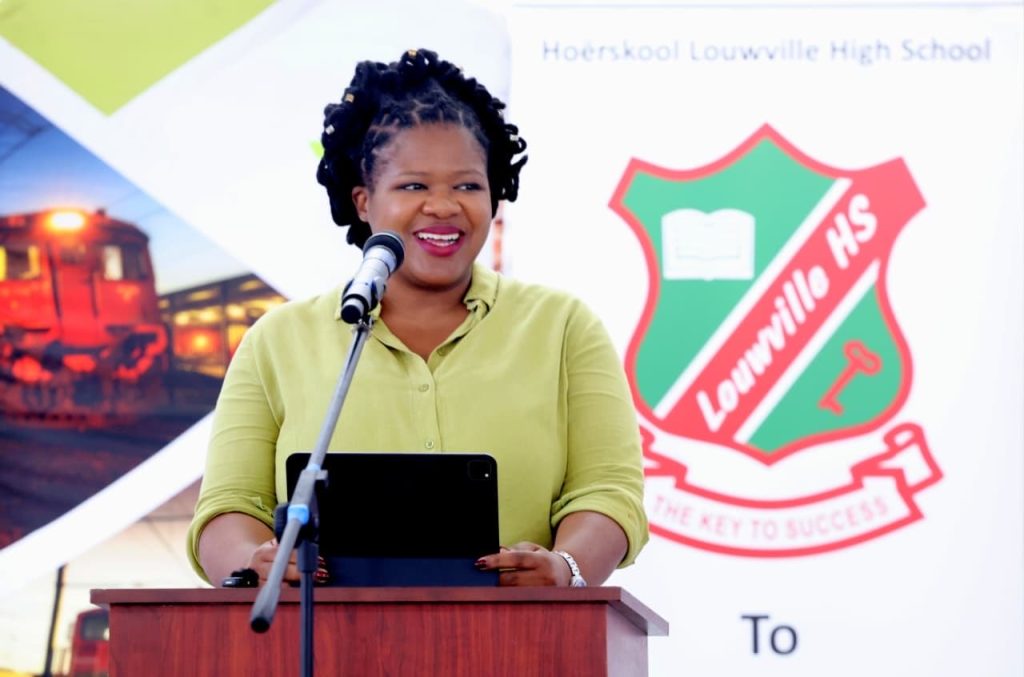
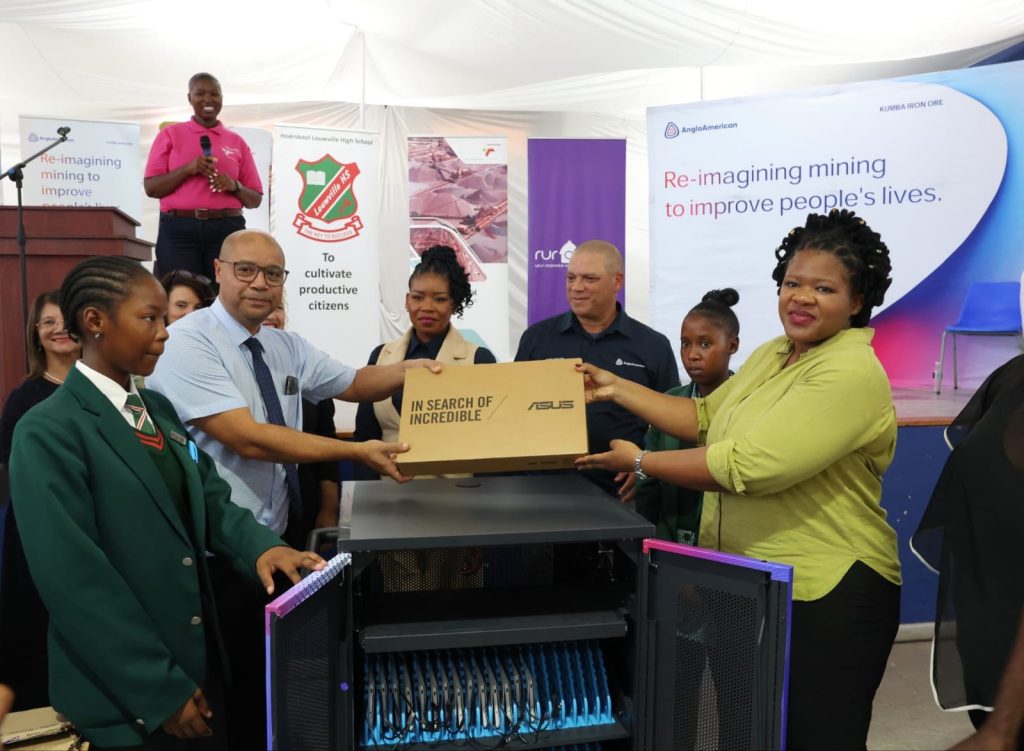
Deputy Minister in the Presidency Nonceba Mhlauli urged learners at Louwville High School in Vredenburg to embrace “curiosity” as she handed over a Mobile Digital Library.
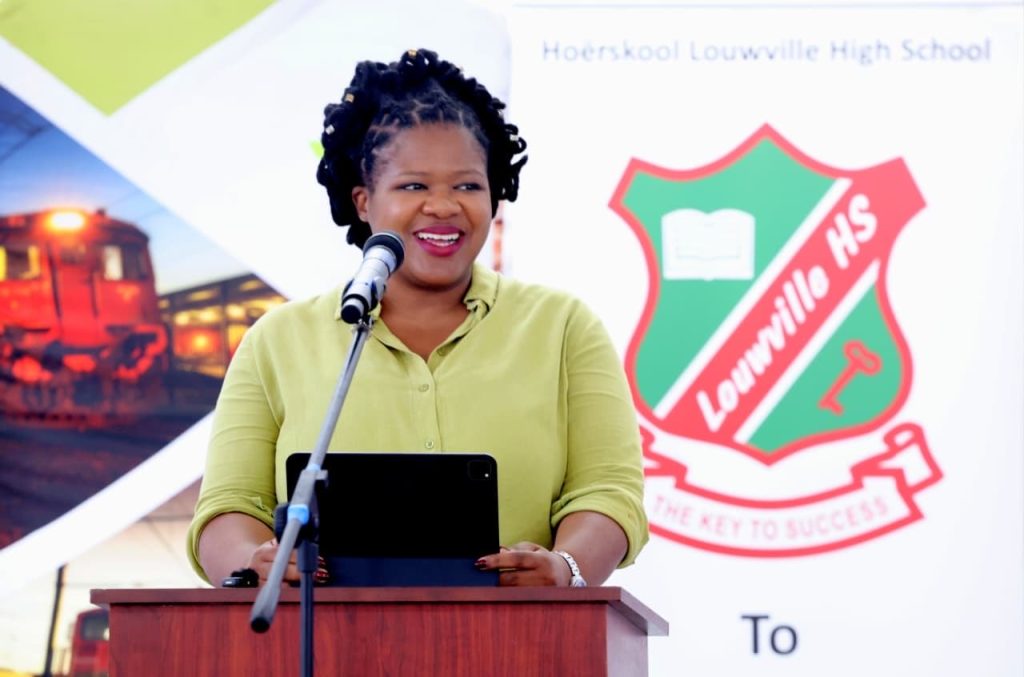
The handover forms part of a partnership between government, Kumba Iron Ore, Transnet and RuraTech to improve access to educational resources in communities facing connectivity and infrastructure constraints.

ALSO READ: Two Gauteng learners killed in separate stabbings

Speaking at the event, Mhlauli said the project was about more than delivering equipment.

“This moment represents not just the unveiling of a resource, but the opening of opportunity,” she said.

She praised the role of the partners in making the initiative possible.

“I would like to commend our partners Kumba Iron Ore, Transnet, and RuraTech for their commitment to investing in young people and in the future of this country. This is what meaningful partnership looks like.”

Mhlauli said the collaboration reflected a broader approach to development.

“It is not only about corporate social responsibility. It is about co-creating solutions that have lasting impact. When we align resources, expertise, and intent, we move faster and we move further.”

Addressing learners directly, she urged them to make full use of the facility.

ALSO READ: Universities start autumn graduation season

“This library is for you. It is a space where curiosity must be encouraged, where questions must be asked, and where dreams must be nurtured. Use it fully. Use it boldly,” she said.

“Explore subjects beyond your textbooks. Learn new skills. Discover careers you may never have imagined. Teach yourselves to code, to research, to think critically, and to innovate.”
She said the country’s future would depend on young people who can adapt, solve problems and lead.

“The future economy will reward those who create, who solve problems, and who lead.”

Mhlauli also called on teachers and the rest of the school community to ensure the facility becomes part of daily school life.

“This facility will only succeed if it becomes integrated into the daily life of the school. Let it not stand as a symbol. Let it function as a tool,” she said.

“Encourage its use in classrooms. Embed it into teaching and learning. Support learners in navigating this digital space responsibly and productively.”

ALSO READ: DHET urges business to back youth skills at Midvaal imbizo

Linking the handover to the country’s broader constitutional and human rights commitments, Mhlauli said access to education and information had to be realised in practice.

“Human Rights Day reminds us that rights must be lived, not only remembered. The 30 years of our Constitution remind us that those rights must be protected, deepened, and made real in the lives of our people,” she said.
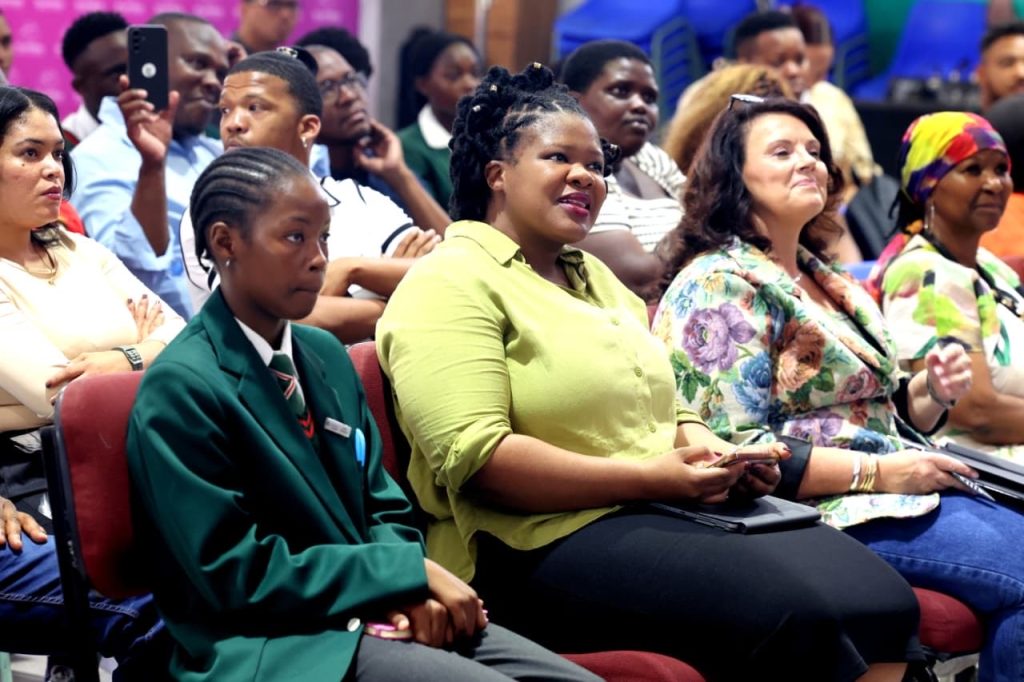
Deputy Minister in the Presidency Nonceba Mhlauli urged learners at Louwville High School in Vredenburg to embrace “curiosity” as she handed over a Mobile Digital Library.

“Through this Mobile Digital Library, we take a meaningful step toward ensuring that the right to education and access to information is realised in practice.”

She said investment in young people would shape the country’s long-term future.

“When we invest in young people, we invest in the future of our economy, our democracy, and our nation,” she said.

“Today marks a beginning — a beginning of expanded horizons, new opportunities, and a future where every learner, regardless of where they are born, has the tools to succeed.”
INSIDE EDUCATION

Uncategorized

Two Gauteng learners killed in separate stabbings

By Levy Masiteng 

Two Gauteng learners have been killed in separate stabbing incidents, raising renewed concern over violence affecting school communities.

The incidents involved a 17-year-old Grade 8 learner from Forest High School in Johannesburg, and a Grade 12 learner from Daleview Secondary School in Ennerdale, the Gauteng Department of Education said on Tuesday.

ALSO READ: UKZN professor wins inaugural global dermatology award

It said preliminary reports indicated that the Forest High learner was severely beaten and stabbed on Friday, 20 March, at Rotunda Park, near the school, after classes.

He was taken to a local hospital and later transferred to another facility, where he died from his injuries.

In a separate incident on Monday (yesterday) a Grade 12 learner from Daleview Secondary School was stabbed to death in an open veld between the school and a local store while walking home after school.

“The circumstances surrounding these incidents are currently under investigation by police,” the department said.

The department said psycho-social support services had been mobilised and would be provided to learners, educators and the bereaved families.

Gauteng MEC for Education Matome Chiloane said the deaths were a loss for the province’s education community.

ALSO READ: DA wants ETDP SETA hearing over R637.6m audit findings

“We extend our heartfelt condolences to the families, friends, and both school communities affected by these tragedies. Violence against our learners, whether within or outside school premises, is unacceptable and cannot be tolerated.

“We call on communities to work closely with law enforcement to ensure that those responsible are brought to justice, and to stand united in protecting our children so that our schools remain safe spaces for teaching and learning,” said Chiloane.

INSIDE EDUCATION

Uncategorized

Universities start autumn graduation season

By Charmaine Ndlela 

Autumn graduation season has started at South African universities, with Wits, UJ and Rhodes already hosting ceremonies, while Limpopo, the University of the Free State, Mpumalanga and Pretoria are due to hold graduations in April and May.

The University of the Witwatersrand has opened its autumn graduation season, with 5,565 students set to graduate between 18 and 27 March.

Wits said the ceremonies cover the faculties of Science, Commerce, Law and Management, Humanities, and Engineering and the Built Environment, while Health Sciences will graduate later in the year.

ALSO READ: UKZN professor wins inaugural global dermatology award

Wits will also confer an honorary Doctor of Science in Engineering on African entrepreneur and computer scientist Sir John Wilfred Lazar on 27 March. Wits Vice-Chancellor and Principal Zeblon Vilakazi said: “Graduation is a powerful reminder of what it means to push beyond limits and emerge stronger on the other side. As we celebrate our graduands, who are stepping into the next chapter of their journeys, we are equally honoured to recognise Sir John, whose life’s work exemplifies innovation, leadership, and meaningful impact.”

At the University of Johannesburg, autumn graduation ceremonies are also under way. The university recently conferred an honorary Doctorate in Philosophy (Honoris Causa) on former Namibian first lady Monica Geingos, recognising her advocacy on health equity, youth empowerment and structural inequality. In remarks published by UJ, Geingos told graduates: “The critical skills needed for the future are the ability to package, internalise, work and process information quickly.”

The University of Limpopo has announced that its autumn graduation ceremonies will take place from 7 to 15 April at the Onkgopotse Tiro Hall.

ALSO READ: DA wants ETDP SETA hearing over R637.6m audit findings

The University of the Free State is scheduled to hold its ceremonies from 10 to 18 April, while Rhodes University’s March graduations run from 25 to 27 March.

The University of Mpumalanga has published graduation information showing a special ceremony on 5 May, followed by its main graduation sessions from 6 to 9 May.

The University of Pretoria, meanwhile, has scheduled its autumn graduation ceremonies from 4 to 29 May, according to its official academic calendar.

INSIDE EDUCATION

DHET urges business to back youth skills at Midvaal imbizo
Uncategorized

DHET urges business to back youth skills at Midvaal imbizo

By Levy Masiteng 

A call for business to open its doors to young people and help bridge South Africa’s skills gap took centre stage at the 2nd Youth Skills and Business Imbizo held in Midvaal on Monday.

Delivering the keynote address, Deputy Minister of Higher Education and Training Mimmy Gondwe urged industry leaders to actively partner with government by offering internships, apprenticeships and workplace training opportunities.

“We cannot solve unemployment without your participation,” Gondwe said. “We cannot build a skilled workforce in isolation from the workplace. A qualification without workplace experience is incomplete.”

The event was hosted by the Department of Higher Education and Training in collaboration with Midvaal Local Municipality.

It brought together government, business, education institutions and young people to address the country’s youth unemployment crisis.

South Africa’s youth unemployment rate stood at 43.8% in the fourth quarter of 2025, according to the latest official labour force data.

Gondwe said more than three million young people are not in employment, education or training. Official figures show about 3.5 million people aged 15 to 24 fell into that category in the fourth quarter of 2025, accounting for 34.0% of that age group.

She challenged business leaders directly, asking: “If we skill and train young people in the skills you need and demand, will you be able to absorb them?”

Gondwe called on companies to “open your workplaces, provide internships, offer apprenticeships and create continuous pathways for practical training”.

Midvaal Mayor Peter Teixeira echoed the urgency of empowering young people, saying the imbizo was more than just a discussion platform.

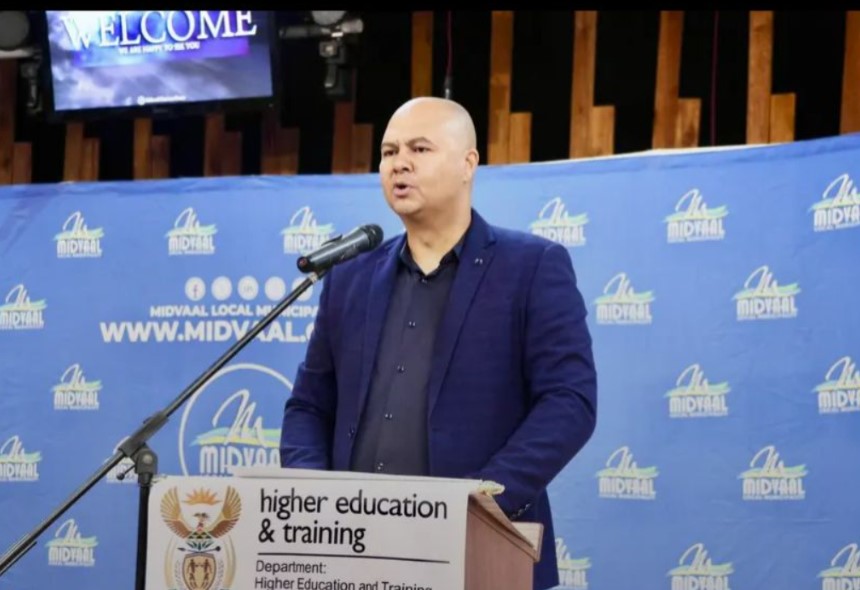
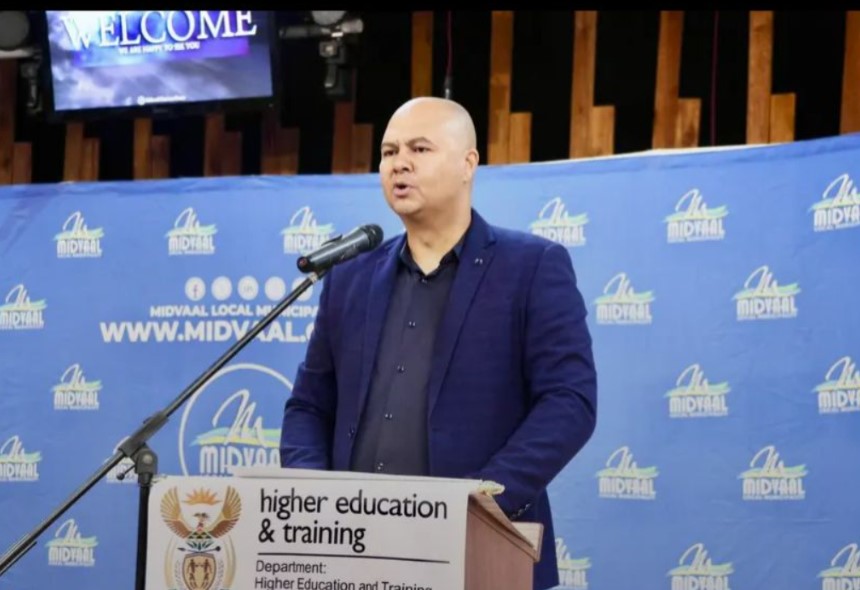
Midvaal Mayor Peter Teixeira.

“These summits and imbizos are not just talk shows,” Teixeira said.

“We are talking about real, tangible opportunities that are transforming lives, restoring hope and equipping our young people with the skills they need to participate meaningfully in the economy.”

A key highlight of the day was the municipality’s Mayoral Student Financial Aid Programme, which Midvaal increased to more than R1.1 million for the 2026 academic year.

The programme builds on several years of investment in education.

According to Teixeira, since its launch, Midvaal has committed R750,000 annually toward student support, covering tuition, registration, books and laptops.

“To date, more than R2.6 million has been disbursed, benefiting at least 101 students.”

Teixeira said it is part of a strategy to create opportunities for young people through partnerships with institutions such as the Vaal University of Technology and various Sector Education and Training Authorities.

“Our responsibility is to ensure that no young person is left behind due to lack of resources,” he said. “Today is about building a better future for yourselves — use this opportunity wisely.”

Gondwe praised Midvaal’s proactive approach, saying that investing in youth is an investment in the country’s future.

“This is the kind of leadership we must recognise and build upon,” she said. “Now is the time to scale that impact, align skills with opportunities, and ensure every young person has a pathway into the economy.”

She urged the young people in attendance to use the information shared at the event to help open doors for themselves.

INSIDE EDUCATION

Uncategorized

Wits postgrads challenge surprise coding course

By Thapelo Molefe

Wits postgraduate students are protesting against a compulsory data analysis course they say was introduced after enrolment, adding that the change was imposed without proper consultation and is causing serious academic and psychological pressure.

At the centre of the dispute is a Data Analysis (R/Python) course introduced this year for Master of Commerce students in Inequality Studies under the Southern Centre for Inequality Studies (SCIS).

Students say the course was not part of the programme curriculum when they applied, were accepted, and enrolled, but that it is now being enforced as a requirement for graduation.

The fallout has already seen at least one student leave the programme. Class representative Ziyaad Dockrat has since deregistered, saying the pressure surrounding the course forced him to leave the programme.

Dockrat had initially raised concerns with the university, stating that the course had not been communicated as part of the programme, and questioned its compulsory status. At the time, he and other students understood the course to be for non-degree purposes.

However, students were later told that they would be required not only to enrol but to pass the course in order to graduate.

“I deregistered because of the pressure,” Dockrat said, adding that the sudden shift in requirements created uncertainty and fundamentally changed the conditions under which he had enrolled.

He has since enrolled in another programme at the university.

In an email to the School of Economics and Finance, Dockrat wrote that “there was no indication that a Data Analysis course would also be introduced as a requirement,” adding that student contracts “do not state that new compulsory courses may be added during the course of the programme”.

He described the decision to introduce the course “a week after enrolment” and automatically add students to it as raising “questions about fairness and transparency in programme requirements”.

Dockrat further said that the compulsory nature of the course was difficult to justify given that it is offered for non-degree purposes.

“Introducing a new requirement after students have already enrolled places them in a position where they must comply with conditions that were not part of the initial agreement,” he wrote.

Several students who spoke on condition of anonymity echoed these concerns, describing confusion around the course requirements and the strain of being forced to take on a technically demanding subject mid-semester.

One student said they were initially exempt from the course, only to be forced to enrol later.

“I was explicitly exempted from taking it… now, mid-semester, I’m suddenly being forced to enroll,” the student said. “I’ve already missed tests… and I’m trying to catch up on content I’ve never been exposed to before.”

According to multiple accounts, students were informed during orientation in February that failure to complete the course would prevent them from graduating.

Student Mantoa Selepe said the course was introduced after enrolment and enforced despite being classified as non-degree, raising academic, financial, and performance concerns.

“The main issue is that it was not part of our curriculum, and now it is being forced on us,” she said.

“Most of our research is qualitative, so we don’t need coding, and it does not align with inequality studies.”

Selepe said the course also placed an unexpected financial burden on students.

“Many of us did not budget for this course because it was never included in the programme,” she said.

“Now we are expected to take it on without any preparation, both academically and financially.”

“It is like coercion because they’re telling you that you’re not going to graduate,” she said.

Selepe also raised concerns about high failure rates, saying that the course could push students out of the programme.

“All the students who wrote the test failed,” she said. “In this programme, if you fail one course, you are out, so this could mean many students will be forced to leave.”

She questioned why a non-degree course is being enforced as compulsory.

“If something is non-degree purpose, why should this course be compulsory now?” she asked.

Students say that the course is not aligned with the programme’s focus on political economy and qualitative research.

“Our research is qualitative… and then they bring Python. What are we doing with coding?” Selepe said.

Others raised concerns about workload and duplication, noting that they are already undertaking research methodology training.

“There is also uncertainty regarding overlap with existing research training,” Dockrat wrote, adding that the additional course reduces time available for core academic work.

The pressure appears to be taking a toll beyond academics.

Selepe said Dockrat’s departure showed the impact on students, adding that several others were struggling and seeking support.

Another student said the course was “affecting my academic work and well-being very negatively.”

In response to student concerns, Head of Department Adeola Oyenubi defended the inclusion of the course, saying that data analysis skills are essential in a modern, data-driven economy.

“It turns out that this is an important skill in today’s labour market,” Oyenubi said in correspondence to students.

“We had to update our programme to fit the market.”

He acknowledged that learning programming is “hard and time consuming” but said that maintaining academic standards was necessary.

“We will rather be ‘harsh’ and turn out market ready students than do otherwise,” he said.

Oyenubi also rejected criticism of assessment methods, telling students: “You don’t get to decide how you are tested, you are not the expert on that.”

On concerns about fairness, he suggested that the requirement had been communicated during orientation and that students should have sought clarity at that stage.

Responding to media enquiries, Oyenubi said the university would provide a detailed response after internal consultation.

Students have escalated the matter to the Department of Higher Education and Training but say they have received no response.

They are now calling for urgent intervention and a review of the requirement, saying that the retrospective imposition of coursework undermines trust in academic processes.

INSIDE EDUCATION

Uncategorized

Rwanda edge SA Under-19 Women by four runs in Lagos

By Johnathan Paoli

Rwanda beat South Africa Under-19 Women by four runs on the DLS method in a rain-affected Nigeria Cricket Federation Women’s T20 International Invitational match in Lagos on Sunday, handing the visitors their first defeat of the tournament.

Rwanda made 101/7 in a reduced 14-over contest at the Tafawa Balewa Square Cricket Oval before restricting South Africa to 100/4, despite a late push from captain Mieke van Voorst.

The result was a setback for the South Africans after their dominant opening win over Ghana on Saturday, when Van Voorst starred in a 99-run victory.

Cricket South Africa marketed the Nigeria tour as an important part of the side’s build-up to next year’s Under-19 Women’s T20 World Cup, with head coach Dinesha Devnarain saying before the tournament that “With 11 months to go before the World Cup, game time is crucial, and the T20 Invitational in Nigeria will provide that in abundance, with intense competition expected against experienced teams.”

Asked to bat first, Rwanda recovered from early pressure to post a competitive total. C. Uwase top-scored with 26 off 21 balls, while Fanny Utagushimaninde added 24. South Africa struck early through Ashleigh van Wyk and Miya Lalor, who took two wickets each, but Rwanda found enough late runs to push beyond the 100 mark.

South Africa’s reply began steadily, with Ashley Barnard making 21 and Danelie Boshoff helping guide the side to 29 without loss after four overs. Van Voorst then anchored the chase with an unbeaten 34 off 27 balls, sharing a key stand with Van Wyk, who made 10.

But Rwanda held their nerve in the closing stages. Rosine Irera and Diane Bimenyimana struck at crucial moments, and South Africa fell just short of the revised target of 105, finishing on 100/4 as Rwanda secured victory by four runs on the DLS method.

The win sent Rwanda to the top of the standings, while South Africa were left to regroup ahead of their next fixtures in Lagos.

South Africa are scheduled to face Zimbabwe Under-19 Women on Tuesday, followed by Nigeria on Wednesday.

INSIDE EDUCATION

Uncategorized

UKZN professor wins inaugural global dermatology award

Staff Reporter

The University of KwaZulu-Natal’s head of dermatology, Professor Ncoza Dlova, has been named one of the inaugural recipients of the Beiersdorf Icons of Care Award.

The prize recognising leaders in dermatology for achievements, innovation and dedication that have advanced skincare.

UKZN said on Monday that Dlova was selected after a review of more than 100 dermatologists from around the world and was recognised for her sustained contribution to dermatology across scientific research, mentoring and patient care.

ALSO READ: DA wants ETDP SETA hearing over R637.6m audit findings

She will be formally honoured at the Beiersdorf Icon Exchange event at the Denver Art Museum on Thursday, 26 March.

A full professor and the immediate past dean of UKZN’s School of Clinical Medicine, Dlova was the first African dean in the school’s 73 year history. Her academic and research interests include ethnic skin and hair, global health and medical education.

Dlova has authored more than 135 scientific publications and holds a B rating from South Africa’s National Research Foundation. She serves on several international dermatology boards and societies.

Her honours include membership of the American Dermatology Association, the Maria Duran Award from the International Society of Dermatology, and a board position at the International League of Dermatology Societies, where she represents Africa as the first fully elected African representative in the organisation’s 89 year history.

More recently, she has received the Gold Award from the South African Medical Research Council in 2024, the Fellowship in Arts and Sciences Award from the South African Medical Association in 2024, and the UKZN Living Legends Award in 2023, among other honours.

ALSO READ: Ramaphosa: Mankweng operation shows what SA’s health system can achieve

“I’m truly grateful and humbled by this recognition. I hope that through this accolade, I can inspire and encourage the next generation to dream bigger, work harder, and believe in the impact they can make,” said Dlova.

UKZN Deputy Vice Chancellor and head of the College of Health Sciences Professor Busisiwe Ncama said, “Congratulations on this wonderful recognition. Looking at the criteria, you truly deserve it. Advancing scientific knowledge and building the next generation of dermatologists has been your signature. May you keep growing from strength to strength.”

INSIDE EDUCATION

Uncategorized

DA wants ETDP SETA hearing over R637.6m audit findings

By Lebone Rodah Mosima

The Democratic Alliance has asked Parliament’s higher education committee to summon ETDP SETA’s leadership after Auditor-General findings showed serious record-keeping and internal control failures, with R637.6 million in grant expenditure allegedly not being substantiated.

DA Deputy Spokesperson on Higher Education and Training Karabo Khakhau said that the Auditor-General of South Africa’s findings reflected a “shocking failure” of governance regarding discretionary grants at the ETDP SETA.

“According to the Auditor-General’s findings, a staggering R637.6 million in grant expenditure could not be substantiated due to missing records, with auditors unable to confirm the validity of the spending,” Khakhau said.

The funds were intended to support critical skills development programmes, including bursaries, internships and work-integrated learning opportunities for young South Africans.

The DA’s statement comes just days after President Cyril Ramaphosa said at News24’s On The Record summit that the SETA system “must be changed”, with his office later stating that government was working to replace it with a “fit-for-purpose system” that better links training to jobs.

In her statement, Khakhau said the AG report found not only administrative failure, but a betrayal of young people who rely on SETAs to access training and employment pathways.

“At a time when South Africa faces a deepening youth unemployment crisis, such gross mismanagement undermines both economic growth and public trust.”

According to the report, performance targets were not met, with some programmes using as little as 22% of their allocated budgets.

Khakhau said the findings raised questions about whether funds were not only mismanaged but potentially misappropriated.

“Equally concerning is the apparent absence of consequence management,” she said.

“The report indicates that no consistent disciplinary action has been taken against officials responsible for irregular or wasteful expenditure.”

Khakhau further said the alleged mismanagement had entrenched a culture of impunity within an institution tasked with empowering the next generation.

She said the DA would demand full accountability from the ETDP SETA’s executive leadership as well as its board.

“We will push for a comprehensive explanation of how such a vast sum of public money could be spent without adequate records, and what steps will be taken to recover any lost funds,” she said.

Khakhau said the matter reflected the overall problems in the SETA system.

“Increasingly, the entire SETA system looks to be a massive scheme for misappropriation where billions disappear, and ANC cadres are appointed to the highest levels,” she said.

The ETDP SETA was unavailable for comment.

INSIDE EDUCATION

Uncategorized

Ramaphosa: Mankweng operation shows what SA’s health system can achieve

By Cyril Ramaphosa

Last week, surgeons at Mankweng Hospital in Limpopo completed a remarkable operation.

A team of doctors, nurses and other health workers successfully separated conjoined twins in a complex operation that demanded extraordinary skill and precision.

We owe the medical teams that performed the operation, that helped deliver the twins and that are now caring for them our deepest admiration and gratitude.
 
This achievement is more than a medical milestone. It is proof of what our public health system is capable of. It is a reminder that South Africa possesses world-class medical expertise, not only in the private hospitals in our cities, but also in public facilities serving communities that have historically been neglected and underserved.
 
It is also the visible outcome of sustained national investment in cultivating medical excellence. This includes heavily subsidising the country’s medical schools, providing study bursaries for needy medical students, and providing on-the-job training through the Internship and Community Services Programme.
 
And yet, for every story of excellence like Mankweng, we know there are too many South Africans who cannot access the quality healthcare they need and deserve.
 
Our Constitution guarantees every person the right of access to healthcare services. That right cannot depend on where you were born, how much you earn or where you live. A child in rural Limpopo has the same right to quality healthcare as a child in the suburbs of Johannesburg or Cape Town. 
 
Closing the gap between the constitutional promise of healthcare and the daily lived reality is precisely what motivates the National Health Insurance (NHI).

The NHI is more than a funding mechanism. It is a commitment, grounded in our constitutional values, that every South African will have access to quality health services without suffering financial hardship. It is the instrument through which we will ensure that the skills and dedication on display at Mankweng are available to all our people, regardless of their ability to pay.
 
To realise this vision, we need genuine and sustained partnerships between the public and private health sectors, as well as academic institutions, medical professionals, pharmaceutical companies, non-governmental organisations and communities. 
 
South Africa has a well-equipped and well-funded private healthcare sector, with some of the finest hospitals, specialists and medical technology on the continent.

Yet only around 16% of South Africans have access to these facilities.

By contrast, the majority of the population, some 84%, uses public health facilities. On average, the amount of money spent each year on a person who uses private health care is around five times what is spent on someone in the public sector.
 
These two parts of our healthcare system cannot continue to operate in parallel, as if serving two separate nations. They must work together in service of one nation.
 
There are few people in South Africa who can disagree with this view, and there are a great many role-players who are eager for collaboration.

They recognise that there is both a great need and much opportunity to build stronger partnerships in health care. 
 
We should be doing more to share skills and knowledge across the public-private divide, as happens when private specialists contribute time to public hospitals.

It means investing in the training and retention of healthcare workers so that public facilities do not continue to lose their best people to private employers or to opportunities abroad. 
 
As we prepare to implement the NHI, we are already making significant investments to strengthen our public health infrastructure.

We are building and refurbishing clinics and hospitals, expanding our community health worker programme, working to ensure the availability of essential medicines, introducing digital systems and improving the management of facilities.
 
At the heart of all of this are the women and men who dedicate their lives to healing others. The surgeons at Mankweng did not separate the conjoined twins for recognition or reward, but because they understood their responsibility as health professionals.

We owe it to every healthcare worker to give them the support, tools and working conditions they need to do their vital work.
 
The great achievement at Mankweng Hospital has shown us what is possible. It has also reminded us of what is necessary: a health system that serves every South African with excellence, compassion and dedication.

Equal access to quality health care must be the standard we set and the constitutional promise that we keep.

Cyril Ramaphosa is President of Soth Africa.

INSIDE POLITICS

Uncategorized

Weekend Roundup | Intimidation culture” choking Services SETA, Gauteng launches specialised sports school, and more

The administrator of the Services Sector Education and Training Authority (SETA), Lehlogonolo Masoga, has condemned what he described as a culture of intimidation and victimisation of whistleblowers, warning that it undermines governance and cripples the entity’s performance.

Masoga said the climate discourages employees from speaking out against wrongdoing, allowing corruption and maladministration to persist unchecked.

“You can imagine that if employees are aware that there is a culture of intimidation in the organisation, it suppresses open engagement,” he said on Friday.

Click on the link below to read the full story:

ALSO READ: Gauteng launches specialised sports school at Vorentoe

Gauteng Education MEC Matome Chiloane on Thursday launched the Vorentoe Sports School of Specialisation in Johannesburg, with the province using the event to showcase its 38th specialist school and a new private-sector investment in the campus.

The Gauteng Department of Education said ION Holdings would build new classrooms, upgrade parking and sports facilities, and contribute towards a new pavilion at the school, in efforts to link academic performance with elite sport development.

Chiloane said the launch marked “a massive milestone for education and school sports” in the province.

ALSO READ: Gina tells funders to explain rejected start-up applications

Deputy Minister of Science, Technology, and Innovation Nomalungelo Gina has accused government-owned funding agencies of stifling innovation by rejecting start-up applications without feedback.

Speaking at the opening of Innovation Week at Nasrec, she said the state funders needed to stop dismissing applications without guidance and instead help entrepreneurs improve and resubmit them.

“To the funders, especially government-owned funding instruments like the Innovation Fund, the Industrial Development Corporation, the Public Investment Corporation, the National Empowerment Fund, and others, please stop this practice of rejecting people’s applications without informing them where their applications or business plans fell short,” Gina said.

Click the link below to read the full story:

INSIDE EDUCATION