Uncategorized
By Johnathan Paoli
Africa must move beyond speeches and conferences and take concrete steps to transform the teaching profession, Eswatini’s education minister has warned.
Speaking during the official opening of the Pan-African Conference on Teacher Education (PACTED) 2026 in Eswatini on Monday, Education and Training Minister Owen “Handsome” Nxumalo said governments need to create an environment in which teachers were valued, protected, professionalised and empowered.
Africa was confronted by teacher shortages, uneven deployment and rapidly changing demands brought by technology and artificial intelligence.
“This conference must not be remembered merely for eloquent speeches and discussions. It must be remembered for concrete and actionable outcomes that will transform our education systems,” Nxumalo said.
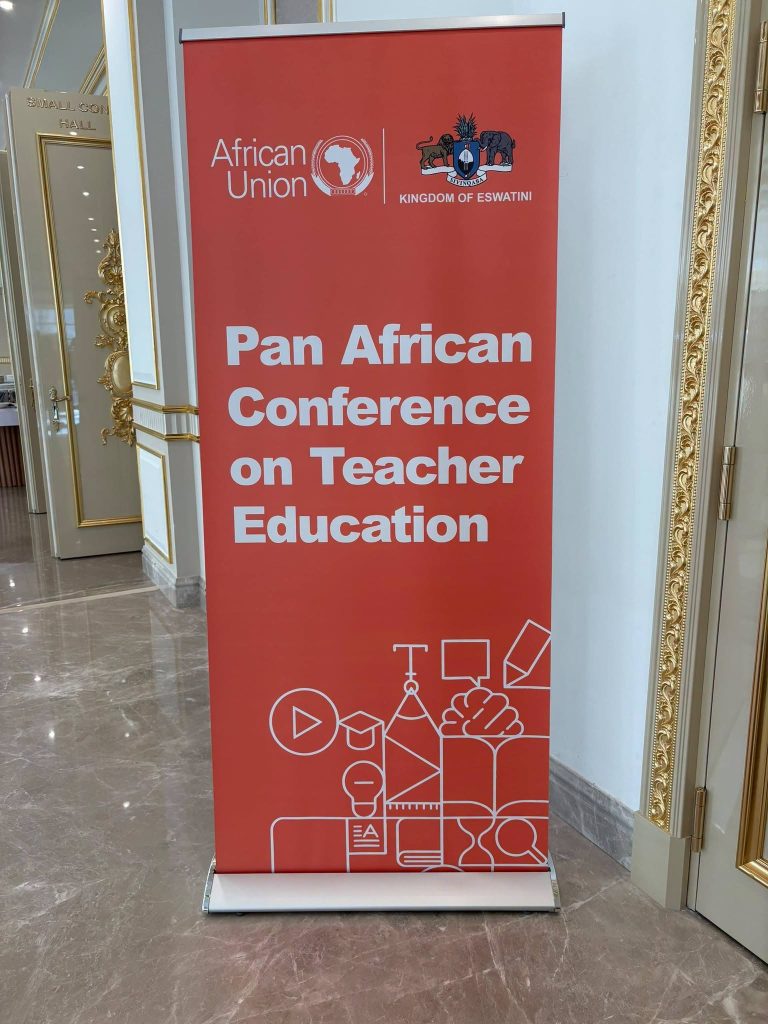
The three-day conference, hosted by the African Union and the Kingdom of Eswatini, brought together more than 400 delegates from across Africa. They included governments, education policymakers, teachers and their organisations, teacher-training institutions, universities, researchers, development partners, civil society and the private sector.
Held under the theme “Transforming the teaching profession for Africa’s future: innovation, recognition, mobility, artificial intelligence, inclusion and professional excellence”, the conference coincided with World Teachers’ Day.
It gave African governments and education stakeholders an opportunity to recognise the contribution of teachers while considering how the profession should be strengthened for the future.
Nxumalo said the timing was significant as Africa faced major challenges affecting its education systems.
“Today, 5 October, can rightly be called doubly significant, as we officially bear witness to the opening ceremony of PACTED 2026, while simultaneously joining the global community in commemorating World Teachers’ Day,” he said.
Teachers were responsible for shaping the social fabric of African societies and remained fundamental to the continent’s development ambitions, he said.
Teacher shortages, uneven deployment, artificial intelligence, digital transformation, climate change and changing labour markets were creating new demands on education systems.
A central issue at the conference is investment in the teaching profession, with Nxumalo stressing the importance of sustainable domestic financing, professional development and better support for educators.
He also highlighted teacher mental health, motivation and working conditions as critical issues for retaining skilled professionals in classrooms.
The conference will consider the Continental Teacher Qualification Framework, which is intended to strengthen professional standards, licensing systems and career pathways. It also promotes the mutual recognition of teacher qualifications across African countries.
Nxumalo said greater recognition of qualifications could support teacher mobility and contribute to continental integration.
On artificial intelligence and digital technology, delegates will discuss how tools can support teachers in rural and underserved communities without replacing them.
Education International for Africa Director Dennis Sinyolo also called for greater investment in teachers, education infrastructure and teaching and learning resources.
Sinyolo said 233 million children remained out of school globally, including 110 million in Africa.
He argued that progress towards Sustainable Development Goal 4 on quality education was still insufficient.
He said some teachers were not paid regularly, with some reportedly going as long as two years without salaries.
“Let’s pay our teachers decent salaries, so that they can focus on what they know how to do best, to teach, not to worry about where the next meal will come from,” Sinyolo said.
He said digital technology could transform education if implemented through a human-centred approach, but warned that it should never replace teachers.
“The teacher-student relationship, that interaction is sacrosanct and must be protected,” he said.
The South African Democratic Teachers’ Union also used World Teachers’ Day to call for greater investment in public education, citing overcrowded classrooms, inadequate resources, administrative pressures and concerns about violence against teachers.
Basic Education Minister Siviwe Gwarube paid tribute to South Africa’s teachers, saying almost half a million educators were helping to build the country’s future.
“Every single time you walk into a classroom, you are building the future of this country brick by brick, learner by learner. We appreciate the work that you do,” Gwarube said.
PACTED 2026 will continue until Wednesday, when the African Union Continental Teachers’ Awards will recognise outstanding teachers for professional excellence, innovation, leadership and community impact.
The conference is also expected to produce an Eswatini Declaration on Transforming the Teaching Profession in Africa, alongside action frameworks and roadmaps covering teacher mobility, qualification recognition, digital education and AI.
INSIDE EDUCATION
The post ‘Move beyond talk’: Africa urged to act on teacher crisis appeared first on Inside Education..